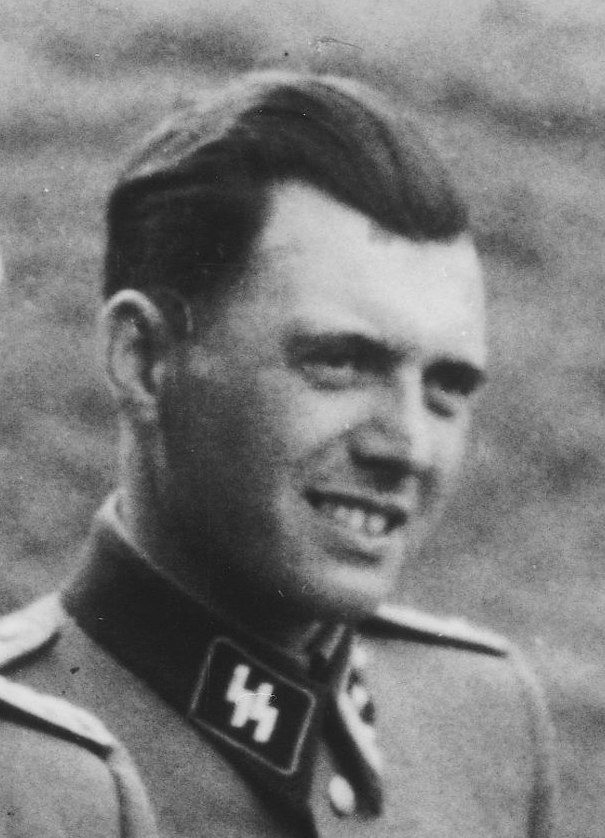
Josef Mengele
 Germany
anthropologist•military physician•physician writer
Birthday
+1911-03-16
Birth Sign
Pisces
Birthplace
Günzburg
Age
Died at 67
About
Born in Günzburg, Germany, on March 16, 1911, Josef Mengele began his career with a passion for anthropology and medicine. He earned doctorates in both fields and was embarking on a research path before World War II consumed Europe. Mengele joined the Nazi Party in 1937 and the SS paramilitary organization in 1938, rising through the ranks. At the outset of the war, he served as a medical officer on the Soviet front. His transfer to the concentration camp service in early 1943 brought him to Auschwitz, a posting he saw as a unique opportunity to pursue his genetic research interests using human subjects.
Fame & Fandom
The cultural presence of Josef Mengele remains a unique phenomenon in historical memory, defined not by adoration but by the enduring weight of his atrocities. There is no formal fandom name, no organized fan clubs, and no community of admirers; instead, the global audience engages with him through the lens of horror, legal accountability, and Holocaust remembrance. This absence of a traditional fanbase reflects the universal condemnation of his actions as a Nazi physician at Auschwitz, where he earned the moniker "Angel of Death" through selections on the arrival ramp and cruel medical experiments. While some might seek a subculture around infamous figures, the response to Mengele is strictly one of memorialization for victims and ongoing efforts to expose his crimes, such as the recent opening of Swiss intelligence files in 2026. Despite this lack of a celebratory following, his notoriety remains staggering, placing him among the most recognized figures in true crime history worldwide. According to the iFANN Global Fame Rankings, he holds significant standing across multiple categories, reflecting how deeply his story permeates media coverage and public consciousness. He is currently the 90th most famous person in Germany, a position that has shifted slightly down from last cycle. From his homeland, he stands as the 44th most famous person from Germany, holding steady against other historical figures. Most notably, within the genre of true crime, he ranks as the 4th most famous person in True Crime, maintaining that spot consistently. These placements confirm that while no fans gather to celebrate him, his legacy commands an intense, global attention.
Interesting Facts and Legends
Josef Mengele was born in Günzburg, Germany, in 1911 and held doctorates in both anthropology and medicine before joining the SS. He served as a medical officer on the Soviet front before transferring to Auschwitz in early 1943, where he conducted horrific experiments on twins and attempted to change eye colors by injecting chemicals into prisoners' eyes. His nickname "Angel of Death" stems from his role in selecting prisoners at the arrival ramp, deciding who would be sent to gas chambers or forced into labor. After the war, he vanished and lived under assumed names in Argentina, Paraguay, and Brazil until his death by stroke in 1979 while swimming in Bertioga. His remains were not identified until 1985 when they were exhumed. The legend of his escape and evasion of justice has become a central part of Holocaust lore, often retold alongside stories of survivors like Erno Spiegel, who saved 80 boys from Mengele's experiments. Recent developments include Switzerland opening its long-sealed intelligence files on Mengele in May 2026, a move that has renewed interest in what secrets those documents might hold about his postwar life. Survivor accounts, such as those of Dr. Edith Eger, continue to shape the narrative of resistance against his cruelty.
Death & Aftermath
Died
+1979-02-08 (aged 67)
Death Place
Bertioga, São Paulo, Brazil
Cause of Death
Stroke and drowning
Josef Mengele died on February 8, 1979, in Bertioga, Brazil, while swimming in the Atlantic Ocean off the coast. He suffered a massive stroke and drowned shortly after, with his body washing ashore two days later. Brazilian police identified him through dental records and a wedding ring bearing the name Wolfgang, matching the identity of Wolfgang Gerhard registered at a nearby boarding house. The official cause of death was recorded as drowning resulting from a heart attack or stroke based on the coroner's examination. Public reaction to his passing was defined by relief rather than mourning, vigils, or memorials offered by any institution or peer group.
His funeral remained a private affair held in Santos, where he was buried in the Vila Mazzei cemetery under the alias Wolfgang Gerhard. The grave was initially unmarked and kept secret by his family to prevent it from becoming a site for neo-Nazi pilgrimages, leading to reports that his remains were later moved within the same cemetery to maintain anonymity. Posthumous interest focused on historical documentation rather than celebration, including a 2026 biopic titled Angel of Death by Russian filmmaker Kirill Serebrennikov. While various governments had maintained active manhunts throughout his life, those efforts ceased upon his death.
Awards & Accolades
Keywords
Quick Facts
- Profession
- anthropologist, military physician, physician writer
- Born
- +1911-03-16
- Birthplace
- Günzburg
- Died
- +1979-02-08
- Death Place
- Bertioga
- Gender
- Male
- Spouse
- Irene Schoenbein, Martha Mengele
- Birth Sign
- Pisces
Personal Details
- Spouse
- Irene Schoenbein, Martha Mengele
Join the community
fans discussing