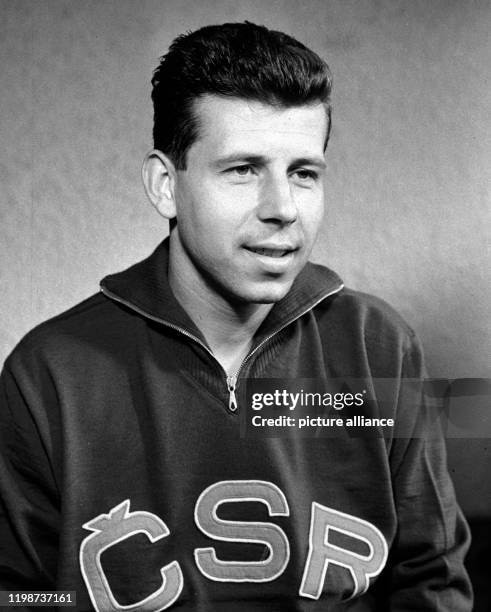
Josef Masopust
 Czechia
association football player•association football coach
Birthday
February 9, 1931
Birth Sign
Aquarius
Birthplace
Střimice, Czechoslovakia (now Czech Republic)
Age
Died at 84
Height
5 ft 10 in (1.77 m)
About
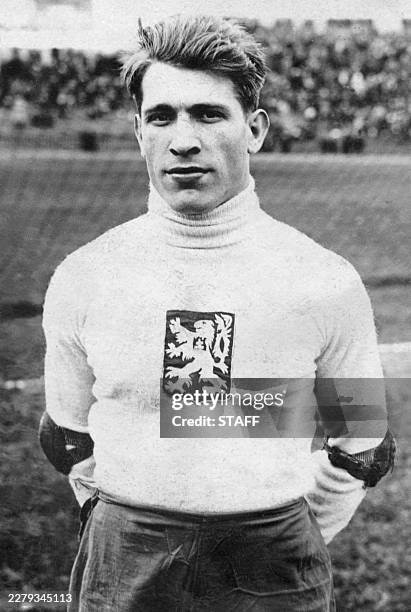
Josef Masopust was a Czech footballer and coach, widely regarded as one of the greatest midfielders of his generation and the finest player his country has ever produced. An elegant, intelligent playmaker, he combined stamina, vision, and a graceful dribbling style nicknamed "the slalom" that left defenders grasping. He was the creative heart of the Czechoslovak national team during its golden era, leading the side to the 1962 World Cup final, where he scored the opening goal against Brazil. That same year, he won the Ballon d'Or, becoming the first Czech and the first player from an Eastern Bloc country to receive the award. At club level, he spent 16 years at Dukla Prague, winning eight league titles and three domestic cups, and later played briefly in Belgium. After retiring, he managed the Czechoslovak national team and several clubs. He was named Czech Footballer of the Century in 2000 and UEFA's Golden Player for the Czech Republic in 2003. His legacy is honored with statues in Prague and his hometown, and he remains a symbol of Czech footballing excellence.
Early Life & Background
Masopust was born in the coal-mining village of Střimice, the fourth of six children in a miner's family. The village no longer exists, it was demolished in the 1950s to make way for coal extraction. During World War II, his village was used as a forced labor camp by the Nazis, and he grew up under German occupation in harsh poverty. At age 14, he joined the youth team of ZSJ Uhlomost Most in 1945, where he spent five years developing his skills in local leagues. He made his top-level debut at 19 with first-division club ZSJ Technomat Teplice, playing 54 matches and scoring 10 goals between 1950 and 1952. After completing compulsory military service, he was conscripted into the Czechoslovak Armed Forces team, ATK Praha, later renamed Dukla Prague in 1956. His transfer from Teplice was reportedly coerced by the communist regime, which used the army club to stockpile the nation's best talent.
Career Growth
Masopust's breakthrough came as the creative engine of Dukla Prague and the national team. Over 16 years at Dukla, he made 386 league appearances and scored 79 goals, winning eight Czechoslovak league titles (1953, 1956, 1958, 1961, 1962, 1963, 1964, 1966) and three national cups (1961, 1965, 1966). Dukla also reached the semi-finals of the 1966–67 European Cup. Internationally, he earned 63 caps and scored 10 goals for Czechoslovakia, helping the team finish third at the 1960 European Championship. His defining moment came at the 1962 World Cup in Chile, where he captained the side to the final. In the 15th minute against Brazil, he collected a through ball and fired a low one-touch shot past Gilmar to give Czechoslovakia a 1-0 lead. Brazil eventually won 3-1, but Masopust's performance earned him the Ballon d'Or later that year, making him the first Czech and first Eastern Bloc player to win the award. He ended his playing career with two seasons at Belgian club Crossing Molenbeek, making 43 appearances and scoring 9 goals. After retiring, he became a respected coach, managing Dukla Prague and the Czechoslovak national team from 1984 to 1987.
Career Timeline
Public Image & Style
Masopust was consistently described as humble, fair, and sportsmanlike. Czech football federation head Miroslav Pelta called him "a unique personality on and off the field." His elegant, intelligent playing style earned him comparisons to Hungarian great József Bozsik, and his dribbling was nicknamed "the slalom" by fans. In an era when Eastern Bloc players rarely received Western recognition, his Ballon d'Or win was a landmark moment that proved world-class talent could not be overlooked. He was not a tabloid figure; his personal life remained private and stable. Today, he is revered in Czech and Slovak football culture, with annual commemorations on the anniversary of his death and statues that serve as pilgrimage sites for fans.
Fame & Fandom (iFAMOUS Rankings)
For decades, the reverence for Josef Masopust has been woven into the very fabric of Czech national identity rather than a distinct fan club with a unique name. His support base was organically tied to the pride of Czechoslovakia during its golden era, where he served as the creative heart of the national team. Following his passing in 2015, this organic devotion manifested through state-sanctioned memorials and tributes organized by the Czech Football Association and UEFA, including the posthumous President's Award. While modern digital activism or grassroots campaigns like billboards and streaming pushes remain undocumented for him, his legacy is sustained through annual journalistic retrospectives and the enduring memory of his "Knight of the Pitch" reputation. The cultural mythology surrounding him rests entirely on verified historical milestones: captaining the 1962 World Cup final squad, scoring against Brazil, and becoming the first Central European winner of the Ballon d'Or. This status as a national icon means fans generally refer to him simply as a legend or the "Czech Pelé," reflecting a deep respect that transcends typical supporter group rituals. Despite this profound historical impact, iFANN's Global Fame Engine has evaluated this person, but they do not currently hold a placement in the published rankings, meaning they are not ranked within the Global Top 1,000 or any specific scope list.
Interesting Facts and Legends
Masopust's unique dribbling style, characterized by swaying past opponents, earned him the fan-given nickname "the slalom." His coach Jaroslav Vejvoda famously advised, "If you don't know what to do with the ball, pass it to Masopust," highlighting his central role in the team's strategy. He was frequently compared to Hungarian legend József Bozsik due to their similar elegant playmaking abilities. When named Czech Footballer of the Century in 2000, he humbly suggested the title should belong to Josef Bican instead. Pelé, who included Masopust in the FIFA 100, praised his sportsmanship following the intense 1962 World Cup final. That match remains a defining legend, with his opening goal often described as giving him "100 seconds of immortality" before Brazil's comeback. A secondary story from his career highlights his gentlemanly demeanor, earning him the title "Knight of the Pitch" for his conduct in an era of rough play. The symbolic bookend to his life occurred when he passed away on June 29, 2015, just one day before the anniversary of the 1962 final. His birthplace, Střimice, was later demolished for coal mining after he left the village.
Notable Quotes
“I would have given the title to Josef Bican.”
“If you don't know what to do with the ball, pass it to Masopust.”
“It was a gesture I will never forget.”
“It's an irreplaceable loss. He was a unique personality on and off the field.”
Family & Personal Life
Masopust was born to a coal miner father and grew up with five siblings in the village of Střimice. He married Alena Masopustová, and they had two children together. His family life remained largely private, consistent with his humble and reserved personality. Alena predeceased him, though the exact date is not widely reported. Masopust was known for his modesty and fairness, values he carried from his upbringing. His household today is remembered through his legacy, with statues and annual commemorations by Czech football authorities and Dukla Prague fans.
Notable Connections
Masopust was coached by Jaroslav Vejvoda at Dukla Prague, who famously said to pass him the ball when in doubt. He was compared to Hungarian legend József Bozsik. Pelé included him in the FIFA 100 and praised his sportsmanship after the 1962 World Cup final. Fellow Czech legend Josef Bican was someone Masopust considered more deserving of the Century title. Other Czech greats like František Plánička and Antonín Panenka were ranked below him in the century vote.
Relationships & Dating History
Masopust was married to Alena Masopustová, his lifelong partner. The exact year of their wedding is not widely documented, but they were together from the 1950s until his death in 2015. They had two children. Masopust was known for his stable, private family life, and there are no documented public relationships, affairs, or high-profile flings outside his marriage. He was not a tabloid figure. As of his death, he was widowed, as Alena had predeceased him.
- MarriedAlena Masopustová1950 - 2015Lifelong partner; they had two children together. She predeceased him.
Death & Aftermath
Died
June 29, 2015 (aged 84)
Death Place
Prague, Czech Republic
Cause of Death
Natural causes (undisclosed)
Tributes poured in from UEFA, FIFA, and national football associations immediately following the news, with the organization honoring him posthumously on June 30, 2015, by awarding him the UEFA President's Award. This recognition reaffirmed his status as the most outstanding player of the past 50 years for the Czech Republic, a title he had received during UEFA's Jubilee celebrations in 2004. Major outlets like the BBC, The Independent, and The Telegraph published extensive obituaries describing him as a knight of the game while highlighting his pivotal role in leading Czechoslovakia to the 1962 World Cup final. Josef Masopust passed away on June 29, 2015, in Prague, Czech Republic, at the age of 84. Reports from ESPN, the Boston Globe, and other major sources simply stated that he died or passed away, inquest, or specific medical ruling.
The circumstances were consistent with natural causes given his advanced age, though no formal medical documentation regarding the exact cause was released to the public by hospitals, families, or coroners. While specific details regarding the funeral service, burial location, or eulogies delivered were not made public, the sheer volume of international coverage indicated a global moment of silence and remembrance. His legacy remains cemented in Czech football history through the annual Masopust Trophy awarded to the best Czech footballer and the statue titled Josef Masopust se Zlatým míčem by artist Stanislav Tereba.
Net Worth (Estate Value)
$1 Million
iFANN Editorial Team estimate
As a footballer who played in communist-era Czechoslovakia, Masopust did not earn the multi-million-dollar salaries of modern players. His lifetime earnings were modest, derived from his playing salary at Dukla Prague and later at Crossing Molenbeek, as well as his coaching roles. After his death in 2015, his estate likely generates some income from image rights, legacy licensing, and the statues that honor him, but no specific figures are publicly reported. Per iFANN's editorial analysis, his net worth is estimated at around $1 Million as of 2026, reflecting the modest wealth typical of his era.
Awards Won (4)
Masopust won the 1962 Ballon d'Or as European Footballer of the Year, becoming the first Czech and first Eastern Bloc player to do so. He was voted Czech Footballer of the Century in 2000 and named UEFA Golden Player for the Czech Republic in 2003. He was also included in Pelé's FIFA 100 list in 2004.
1962 · European Footballer of the Year
Dukla Prague / Czechoslovakia
2000 · Player of the Century
Career
Known For
1962 FIFA World Cup
1962 · Captain, scored in final
Ballon d'Or
1962 · Winner
Dukla Prague
1952-1968 · Midfielder, 8 league titles
Czechoslovakia national team
1954-1966 · Midfielder, 63 caps
Keywords
Sources
Quick Facts
- Profession
- association football player, association football coach
- Born
- February 9, 1931
- Birthplace
- Střimice, Czechoslovakia
- Died
- June 29, 2015
- Death Place
- Prague, Czech Republic
- Gender
- Male
- Birth Sign
- Aquarius
Personal Details
- Full Name
- Josef Masopust
- Height
- 5 ft 10 in (1.77 m)
- Spouse
- Alena Masopustová
- Children
- Two
Frequently Asked Questions
How old was Josef Masopust when he died?
Did Josef Masopust win the Ballon d'Or?
Was Josef Masopust married? Did he have children?
What was Josef Masopust's net worth in 2026?
How many caps did Josef Masopust have for Czechoslovakia?
Join the community
fans discussing