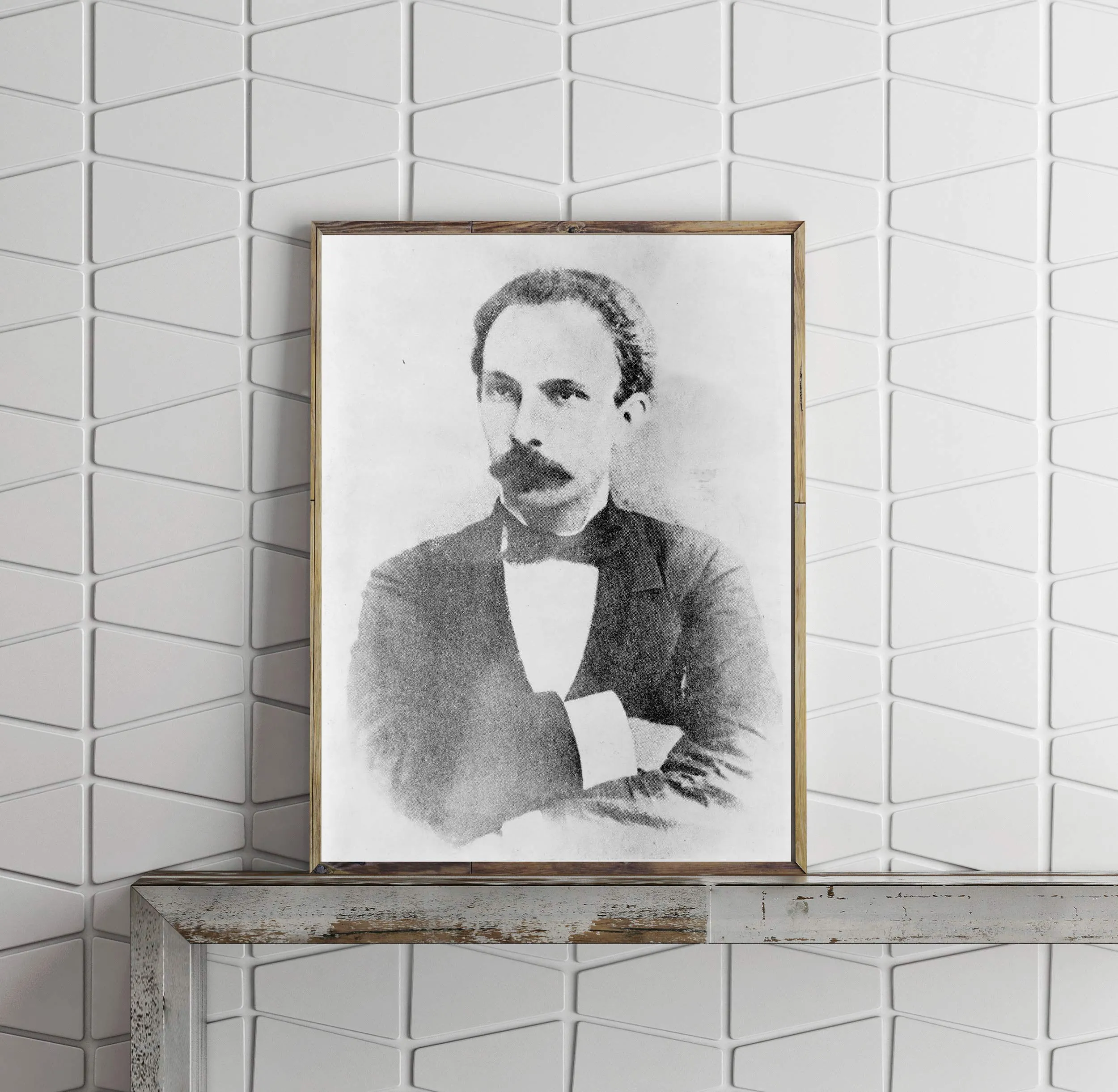
José Martí
 Mexico
poet•essayist•journalist•political activist
Also known as: El Apóstol, Cuba's National Hero
Birthday
January 28, 1853
Birth Sign
Sagittarius
Birthplace
Havana, Cuba
Age
Died at 42
Height
5 ft 4 in (163 cm)
About
José Julián Martí Pérez was a Cuban nationalist, poet, philosopher, essayist, journalist, translator, and political activist revered as the "Apostle of Cuban Independence" and Cuba's national hero. Born in Havana during a period of intense colonial tension under Spanish rule, Martí dedicated his short life to the cause of liberating his homeland, ultimately sacrificing himself on the battlefield at the age of 42. His literary output, which includes poetry, essays, letters, and children's literature, established him as a foundational figure in Latin American literature and modernismo.
Although his physical life ended in 1895, his intellectual presence remains active in global discourse regarding anti-colonialism and hemispheric identity. In 2026, scholars continue to publish new analyses of his work, exploring his prescient warnings about American imperialism and his relevance to contemporary geopolitical tensions. His image is ubiquitous across Latin America, appearing on currency, stamps, and monuments, serving as a constant reminder of the struggle for sovereignty. The University of Miami hosts annual lectures in his honor, and his name graces the capital's main airport, cementing his status as a living symbol of national pride rather than a historical relic.
Early Life & Background
José Julián Martí Pérez entered the world on January 28, 1853, in Havana, Cuba, the son of Mariano Martí y Blanco, a Spanish military officer, and Leonor Pérez Cabrera, a woman of mixed African and Spanish descent. From an early age, Martí displayed a precocious intellect and a deep sensitivity to social injustice. He suffered from physical frailty, including a leg injury sustained as a child that left him with a permanent limp; historical accounts describe him as standing approximately 5 feet 4 inches (163 cm) tall with a slight build, often concealing his disability by wearing high boots and long coats.
His childhood was marked by political turmoil. In 1868, following the outbreak of the Ten Years' War against Spain, Martí was expelled from school for writing a satirical letter mocking a teacher's support for the Spanish crown. This act led to his arrest in 1869. At the age of 16, he was convicted of treason and sentenced to six years of hard labor in the San Lázaro quarries, where he was forced to work in chains. He was released after serving only eight months due to international pressure and poor health, but the experience left him scarred physically and psychologically, fueling his lifelong hatred of oppression.
Following his release, he continued his education, eventually earning a law degree from the University of Havana in 1878, though he never practiced law professionally. Instead, he turned to journalism and teaching. He fled into exile in Spain in 1871, where he studied law and began publishing poetry and political essays. By 1875, he had moved to Mexico, then to Guatemala, and finally settled in New York City in 1881, where he would spend the majority of his remaining life.
Career Growth
Martí's career was defined by his dual role as a writer and a revolutionary organizer. Before achieving fame as a statesman, he was a prolific journalist. In Madrid, he wrote for various publications, establishing a reputation for his sharp wit and moral clarity. Upon moving to the Americas, he worked tirelessly to unify the Cuban exile community.
In the 1870s, he published La Edad de Oro (The Age of Gold), a magazine for children, demonstrating his belief in the importance of educating the youth for future freedom. From 1881 to 1892, based in New York City, Martí became the leading voice of the Cuban independence movement in the United States. He founded the newspaper Patria ("Fatherland") in 1892 to serve as the official organ of the Cuban Revolutionary Party.
In 1892, he successfully unified the fragmented Cuban exile factions in the U.S. and Florida to form the Cuban Revolutionary Party (PRC). This organization was crucial in raising funds and organizing the logistics for the Second Cuban War of Independence. His major works include the poetry collections Ismaelillo (1882), dedicated to his son; Versos Libres (1882); and Versos Sencillos (1891). The latter contains the famous poem "Yo soy un hombre sincero," which later became the lyrics for the iconic song "Guantanamera." He also wrote the play Abdala (1891) and numerous essays on politics, culture, and race.
Career Timeline
Public Image & Style
José Martí is portrayed as the embodiment of Cuban patriotism, intellectual integrity, and self-sacrifice. He is seen as a saintly figure, a "Apostle" who gave his life for his country. His image is clean-cut, serious, and dignified, often depicted in formal attire with a contemplative expression. Media portrayals emphasize his role as a thinker and a warrior-poet. His physical appearance, characterized by a slight build, dark hair, a prominent nose, piercing eyes, and a distinctive limp, adds to the narrative of a man who overcame physical limitations to achieve great things.
Fame & Fandom (iFAMOUS Rankings)
José Martí's devotees have never adopted a formal fandom name; his following is better described as a national and ideological reverence that has persisted for over a century. He is known by honorific titles, "The Apostle," "Cuba's National Hero", rather than fan-coined monikers. The most striking ritual is the annual Marcha de las Antorchas, held on the eve of his birthday, when thousands of students march through Havana with torches, ending at the site of his teenage imprisonment. This devotion is institutionalized in Cuba and among diaspora communities, inspiring projects like the José Martí Scholarship and the José Martí Brigade, which organizes volunteer work on the island. His legacy also surfaces in contemporary commentary, as when a 2026 article drew parallels between Martí and Bad Bunny as hemispheric cultural figures.
In the iFANN Global Fame Rankings, José Martí holds a notable placement: the 37th most famous person from Mexico, a position that has held steady from the previous cycle. This ranking reflects his enduring resonance as a literary and political symbol, though it is only one measure of his outsized influence.
Interesting Facts and Legends
Martí's poem "Versos Sencillos" provided the lyrics for "Guantanamera," one of the most famous Cuban songs in history, despite him never intending it to be a song. He founded La Edad de Oro, a magazine specifically for children, making him one of the first Latin American writers to focus on juvenile literature. He was fluent in Spanish, English, French, and Italian, and could read several other languages. He was one of the youngest political prisoners in Cuban history, arrested at age 16. The story of him riding a white horse into battle is a popular legend, but historical records suggest he fought on foot or on a standard horse without such theatricality.
Notable Quotes
“Liberty is the soul of the world.”
“To write is to live.”
“I am not a patriot because I love my country, but because I love justice.”
“There is no more beautiful thing than the truth.”
Family & Personal Life
Jose Martí was married once to María del Carmen Zayas-Bazán y Hidalgo. They met in Havana in the early 1870s while Martí was still a student. They married in 1877 in Madrid, Spain. The marriage was brief and reportedly unhappy; they separated shortly after, and there is no evidence of children from this union. Martí had one known illegitimate child: a son named José Francisco Martí y Zayas-Bazán, born in 1877 to a woman named Carmen Zayas-Bazán. The identity of the mother remains a subject of historical debate, though the child was raised by the mother and not by Martí, who was in exile.
Notable Connections
María del Carmen Zayas-Bazán, José Francisco Martí, Máximo Gómez, Rubén Darío, Gabriela Mistral
Relationships & Dating History
José Martí was married once. His spouse was María del Carmen Zayas-Bazán y Hidalgo (often referred to as Carmen Zayas-Bazán). They met in Havana in the early 1870s while Martí was still a student. They married in 1877 in Madrid, Spain. The marriage was brief and reportedly unhappy; they separated shortly after, and there is no evidence of children from this union. Martí had one known illegitimate child: a son named José Francisco Martí y Zayas-Bazán, born in 1877 to a woman named Carmen Zayas-Bazán (possibly a relative or a different individual with the same surname, though some sources suggest the mother was a woman named Carmen Zayas-Bazán, distinct from his wife, or simply that the child was named after his wife's family). However, the most widely accepted historical account is that Martí had a son named José Francisco, born in 1877, whom he loved deeply and addressed in his poetry collection Ismaelillo. The identity of the mother remains a subject of historical debate, with some suggesting it was a woman named Carmen Zayas-Bazán, while others believe it may have been a different woman entirely, though the child was raised by the mother and not by Martí, who was in exile.
Regarding dating history, as a man who lived much of his adult life in exile and was consumed by the cause of Cuban independence, Martí did not have a public dating history in the modern sense. His primary relationship was with his wife, María del Carmen Zayas-Bazán, which ended in separation before his death. There are no documented romantic relationships, engagements, or flings outside of his marriage. He remained focused on his political mission until his death. As of his death in 1895, he was widowed (in the sense that his marriage had ended and he died alone in battle) and had no surviving spouse or partner at the time of his passing.
- MarriedMaría del Carmen Zayas-Bazán y Hidalgo1877 - 1878Married in Madrid, separated shortly after; no children together.
Death & Aftermath
Died
May 19, 1895 (aged 42)
Death Place
Dos Ríos, Oriente Province, Cuba
Cause of Death
Killed in action during battle
José Martí fell on May 19, 1895, at the Battle of Dos Ríos in the province of Oriente while leading a charge against Spanish colonial forces. He died during direct military engagement alongside General Máximo Gómez, reportedly falling with his sword drawn after being shot or cut down in the melee near the banks of the Yateras River. While unconfirmed accounts over the decades speculated about suicide or execution after surrender, these theories are widely rejected by historians who affirm he died heroically in combat. The public reaction to his death was immediate and profound, transforming him from a political leader into a national symbol across Latin America and the United States.
Tributes poured in from peers including Rubén Darío, and despite Spanish censorship in Havana, the news sparked widespread mourning and secret gatherings. His remains were initially buried in an unmarked grave or left on the battlefield, a fact that contributed to the legend of his martyrdom rather than a legal determination of cause. It was not until 1905 that his remains were exhumed from a mass grave in Santiago de Cuba and re-interred in the Colón Cemetery in Havana at the Tumba del Apóstol, where they remain a major pilgrimage destination.
Posthumously, Martí's legacy has been monumentalized through countless releases, films such as El Apóstol, and dedications including the José Martí International Airport in Havana and the University of Miami lectures. His literary rights and personal effects were managed by family members and later by the Cuban state, which nationalized his intellectual property as a matter of national heritage.
Net Worth (Estate Value)
$0
iFANN Editorial Team estimate
As José Martí died in 1895, he left no personal estate in the modern financial sense. His net worth at the time of death was negligible, as he lived in poverty and relied on donations from the exile community. Today, his "estate value" is measured in cultural and intellectual capital rather than liquid assets. The Cuban state manages his intellectual property, and his legacy generates revenue through tourism (visits to his tomb, museum, and the airport), educational programs, and the sale of his works. However, no specific dollar figure exists for his estate, as it was absorbed into the national patrimony of Cuba. The economic impact of his legacy is estimated in the billions of dollars annually through tourism and cultural exports, but this is not attributed to a personal estate.
Awards & Accolades
View 8 records, honours and achievementsKnown For
Cuban Independence Movement
1895 · Leader
Versos Sencillos
1891 · Poet
Patria
1892 · Founder
Keywords
Sources
Quick Facts
- Profession
- linguist, poet, writer
- Born
- January 28, 1853
- Birthplace
- Havana
- Died
- May 19, 1895
- Death Place
- Oriente Province
- Gender
- Male
- Spouse
- María del Carmen de Zayas-Bazán e Hidalgo
- Birth Sign
- Sagittarius
Personal Details
- Full Name
- José Julián Martí Pérez
- Height
- 5 ft 4 in (163 cm)
- Spouse
- María del Carmen Zayas-Bazán y Hidalgo
- Children
- José Francisco Martí
- Education
- University of Havana (Law degree, 1878)
Frequently Asked Questions
What was José Martí's full name?
How did José Martí die?
Who was José Martí married to?
What is the most famous song based on José Martí's work?
Where is José Martí buried?
Similar People
Join the community
fans discussing