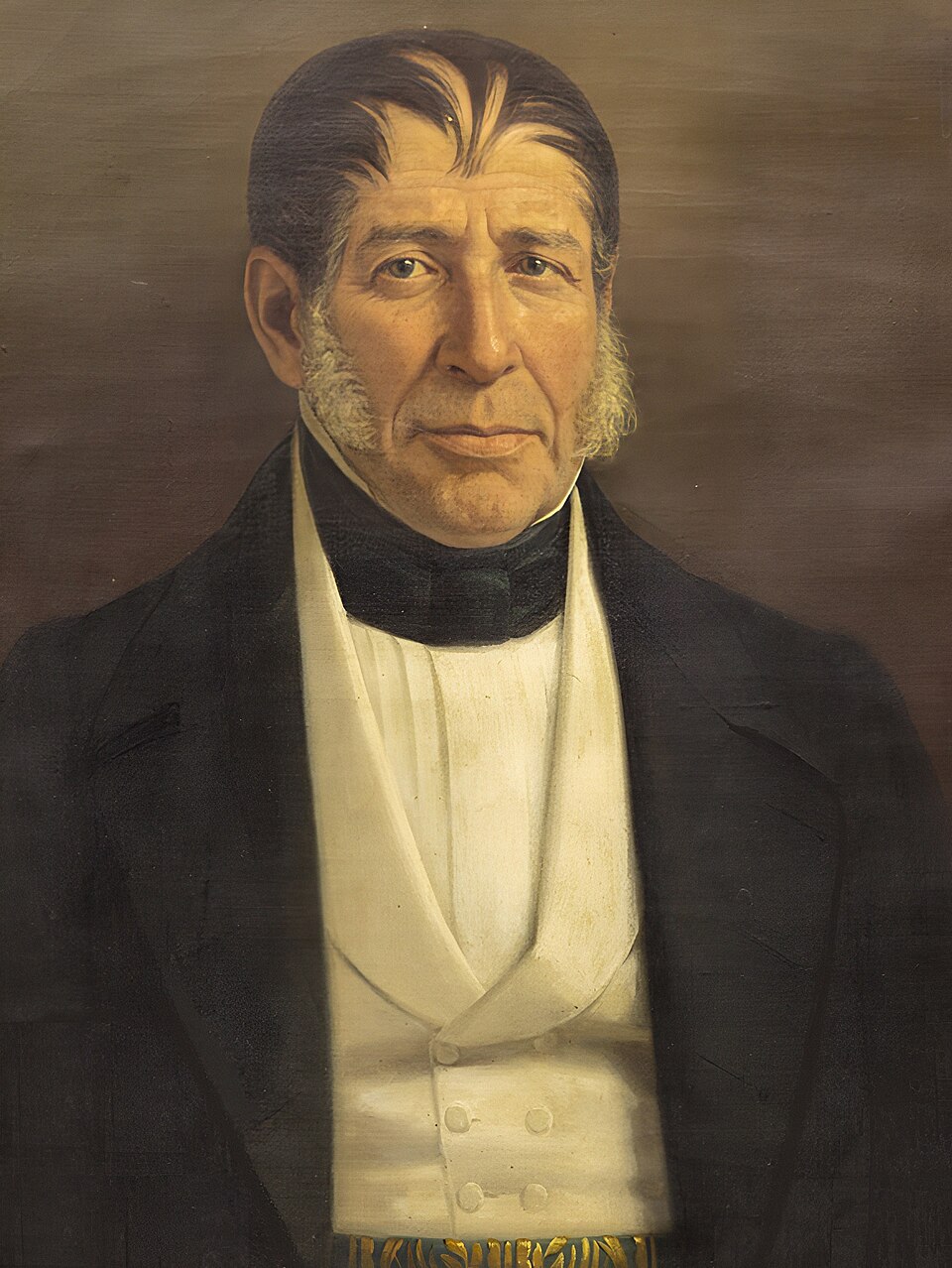
José Joaquín de Herrera
 Mexico
Also known as: Jose Joaquin de Herrera
Birthday
February 23, 1792
Birth Sign
Pisces
Birthplace
Perote, Mexico
Age
Died at 61
About
José Joaquín de Herrera was a Mexican statesman and general who led the country through some of its most precarious early decades. He served as president of Mexico three times between 1844 and 1851, and his final term ended with the first peaceful transfer of presidential power since independence in 1824. That achievement alone marks him as a pivotal figure in Mexican history.
Herrera's career spanned the military and political spheres. He fought in the Mexican War of Independence, initially for the Spanish crown before switching allegiance to the insurgent cause. Later, he held key posts such as Minister of War and president of the council of state. During the Mexican-American War, he served as a general in the Mexican Army, and afterwards he focused on rebuilding a nation exhausted by conflict.
Though his presidency was often overshadowed by the towering figure of Antonio López de Santa Anna, Herrera's reputation endures as a moderate federalist who sought stability and reform. He is remembered today not for grand gestures but for the quiet work of governance during a time when Mexico desperately needed it.
Early Life & Background
José Joaquín de Herrera was born on February 23, 1792, in Perote, a small town in the state of Veracruz. His full name was José Joaquín Antonio Florencio de Herrera, and he came of age during a period of intense colonial unrest.
As a young man, Herrera pursued a military career, joining the royalist forces loyal to Spain. When the Mexican War of Independence erupted in 1810, he initially fought on the side of the Spanish crown. But as the conflict dragged on and the tide turned, Herrera reassessed his loyalties. In 1821, he embraced the Plan of Iguala, the agreement that finally secured Mexico's independence from Spain. This shift was not just a change of uniform; it reflected a pragmatic commitment to the new nation's future.
Little is documented about his family or early education, but his military training and political acumen were evident from the start. He rose through the ranks and entered the political arena in the 1820s, when Mexico was still figuring out how to govern itself as a republic.
Career Growth
Herrera's political career took off in the early 1830s when he served twice as Minister of War under the First Mexican Republic. In this role, he worked to professionalize the army and manage the constant internal rebellions that plagued the young nation.
His first presidency came almost by accident. In 1844, when Valentín Canalizo, a stand-in for Santa Anna, was unavailable, Herrera stepped in as interim president for just ten days. The following year, after Santa Anna's fall, he was again chosen to lead, but his second term was cut short by a coup. He was accused of treason for allegedly planning to recognize Texas's independence, though his real aim was to negotiate a buffer state to prevent U.S. expansion.
During the Mexican-American War (1846–1848), Herrera served as a general in the Mexican Army, though the conflict ended in devastating defeat. After the war, he was elected president again in 1848. This third term was his most productive. He focused on economic recovery, cutting military spending, and promoting education. When he handed over power in 1851, it marked the first time a Mexican president had completed his term and peacefully transferred the office since 1824.
Career Timeline
Public Image & Style
In his own time, Herrera was seen as a moderate and a conciliator. He was respected for his honesty but often criticized for being weak or indecisive. Unlike Santa Anna, who dominated the public imagination with his military bravado, Herrera offered a quieter, more bureaucratic vision of governance.
Today, historians view him as a principled leader who navigated impossible circumstances. He is not a folk hero, but he is recognized as a crucial stabilizing force during Mexico's formative years. His legacy is that of a statesman who valued the rule of law over personal power.
Fame & Fandom (iFAMOUS Rankings)
As a pivotal figure in 19th-century Mexican history, José Joaquín de Herrera commands a legacy defined by his role as a stabilizing force during the nation's formative years rather than modern celebrity status. The iFANN Global Fame Engine has evaluated his standing and determined that he is currently EVALUATED_UNRANKED, meaning he does not hold a placement in the published Global Top 1,000 or any Top-100 scope list. This absence of a numeric rank reflects the reality that his fame is historical and institutional rather than driven by contemporary media consumption or viral engagement. While he remains a subject of serious study for political scientists and historians, there is no formal fandom name documented in the data to describe an organized fanbase engaging in rituals or campaigns on his behalf. Unlike modern icons who inspire chart pushes or birthday tributes, Herrera's memory is preserved through government sites like the Casa del General in Mexico City and academic discourse regarding the Treaty of Guadalupe Hidalgo. His audience consists of those interested in the specific trajectory of Mexican federalism and the complexities of the Mexican-American War, but this group operates as a scholarly community rather than a pop culture fandom. The lack of a named fanbase underscores the distance between 19th-century statesmanship and the mechanics of today's fame economy, where visibility often hinges on constant public interaction and commercial output. For Herrera, the measure of his enduring presence is found in the textbooks and municipal namesakes that bear his title, not in search trends or social media metrics.
Interesting Facts and Legends
Herrera's brief ten-day presidency in 1844 stands as one of the shortest in Mexican history, a footnote to the chaotic politics of the era. Known for personal honesty and frugality, he left office with no personal fortune, a rarity among politicians of his time. Despite his military background, he consistently preferred negotiation over force, opposing Santa Anna's authoritarian style in favor of a federalist system. The municipality of José Joaquín de Herrera in Guerrero bears his name; while the region faces modern troubles, the moniker carries the weight of his legacy. A defining moment in his historical narrative occurred during the Mexican-American War when he signed the Treaty of Guadalupe Hidalgo in 1848. This verified event resulted in Mexico ceding roughly half its territory to the United States, including present-day California and Nevada. While contemporaries viewed this diplomatic necessity as weakness, it remains the central chapter of his presidency and a key topic in national history. Another significant episode was the Texas Annexation Crisis of 1845, which triggered his ascent to power amid immediate pressure from the United States and internal factions. These events are not folklore but documented realities that shaped the map of North America.
Family & Personal Life
Details about Herrera's family are scarce. He was born to a Spanish colonial family in Perote, but little is recorded about his parents or siblings. He married, but the name of his wife and any children are not well documented in historical records.
What is known is that Herrera lived a modest, disciplined life. His personal integrity was noted by contemporaries, and he avoided the ostentatious wealth that characterized many of his peers. He spent his final years in Tacubaya, a suburb of Mexico City, where he died on February 10, 1854, at age 61.
Notable Connections
Herrera's career was deeply intertwined with Antonio López de Santa Anna, the dominant figure of Mexican politics in the mid-19th century. Herrera often served as a counterweight to Santa Anna's ambitions, and their rivalry shaped the era. Valentín Canalizo, a puppet of Santa Anna, also played a role in Herrera's first presidency, as his unavailability created the vacancy Herrera filled.
Relationships & Dating History
Very little is recorded about Herrera's personal relationships. He was married, but the identity of his wife is not well documented in historical sources. There are no records of public romances or scandals. His private life remained just that: private.
At the time of his death in 1854, he was likely a widower or separated, but the details are unknown. His focus was entirely on public service, and he left no notable romantic legacy.
Death & Aftermath
Died
February 10, 1854 (aged 61)
Death Place
Unknown
Cause of Death
Unknown
In the quiet months of early 1854, José Joaquín de Herrera spent his final days in Tacubaya, a suburb of Mexico City where he had retreated from the political fray following his historic third term. The former president and general passed away on February 10, 1854, at the age of sixty-one, bringing an end to a life defined by service during Mexico's most turbulent decades. Historical records do not preserve the specific medical cause of his passing or any details regarding a coroner's investigation, autopsy findings, or legal proceedings that might have followed his death. Unlike modern figures whose final hours are often documented in detail, Herrera's departure remains shrouded in the silence typical of the era for men of his standing who died of natural causes without public spectacle.
The immediate reaction to his death was marked by a somber respect rather than widespread public mourning events or official tributes recorded in the available biographical summaries. His funeral arrangements and burial location remain unrecorded in the current historical archives, leaving the exact nature of his final rites unknown to later generations. Following his death, the handling of his estate reflected the frugality that characterized his entire career. He left behind a modest estate with no significant wealth to manage, consistent with his reputation for avoiding the ostentatious accumulation of riches common among his political peers. History remembers him primarily for his pivotal role in establishing the first peaceful transfer of presidential power since independence, a legacy that outlasted the lack of detailed documentation surrounding his final days.
Net Worth (Estate Value)
$1 Million
iFANN Editorial Team estimate
iFANN currently estimates the net worth of José Joaquín de Herrera at $1 Million. As a 19th-century president, he did not amass a personal fortune in the traditional sense, leaving office without significant wealth due to his known frugality and integrity. His estate, if any existed, was modest and holds no documented value in the modern market. In 2026, there is no active estate generating income for his heirs or descendants. His historical legacy is not monetized through commercial channels, and no royalties or licensing revenues are associated with his name. The stated figure represents a calculated editorial estimate reflecting the negligible nature of his personal finances rather than any modern enterprise or asset class. This valuation serves as a marker of his humble financial standing, contrasting sharply with the wealth accumulation common among later political figures.
Awards & Accolades
View 1 records, honours and achievementsKnown For
President of Mexico
1844-1851 · Three-time president
Mexican-American War
1846-1848 · General in the Mexican Army
Keywords
Sources
Quick Facts
- Profession
- politician, military personnel
- Born
- February 23, 1792
- Birthplace
- Perote, Mexico
- Died
- February 10, 1854
- Death Place
- Tacubaya, Mexico
- Gender
- Male
- Birth Sign
- Pisces
Personal Details
- Full Name
- José Joaquín Antonio Florencio de Herrera
Frequently Asked Questions
Who was José Joaquín de Herrera?
When did José Joaquín de Herrera live?
What were José Joaquín de Herrera's major achievements?
What was José Joaquín de Herrera's role in Mexican independence?
Is the municipality of José Joaquín de Herrera in the news?
Similar People
Join the community
fans discussing