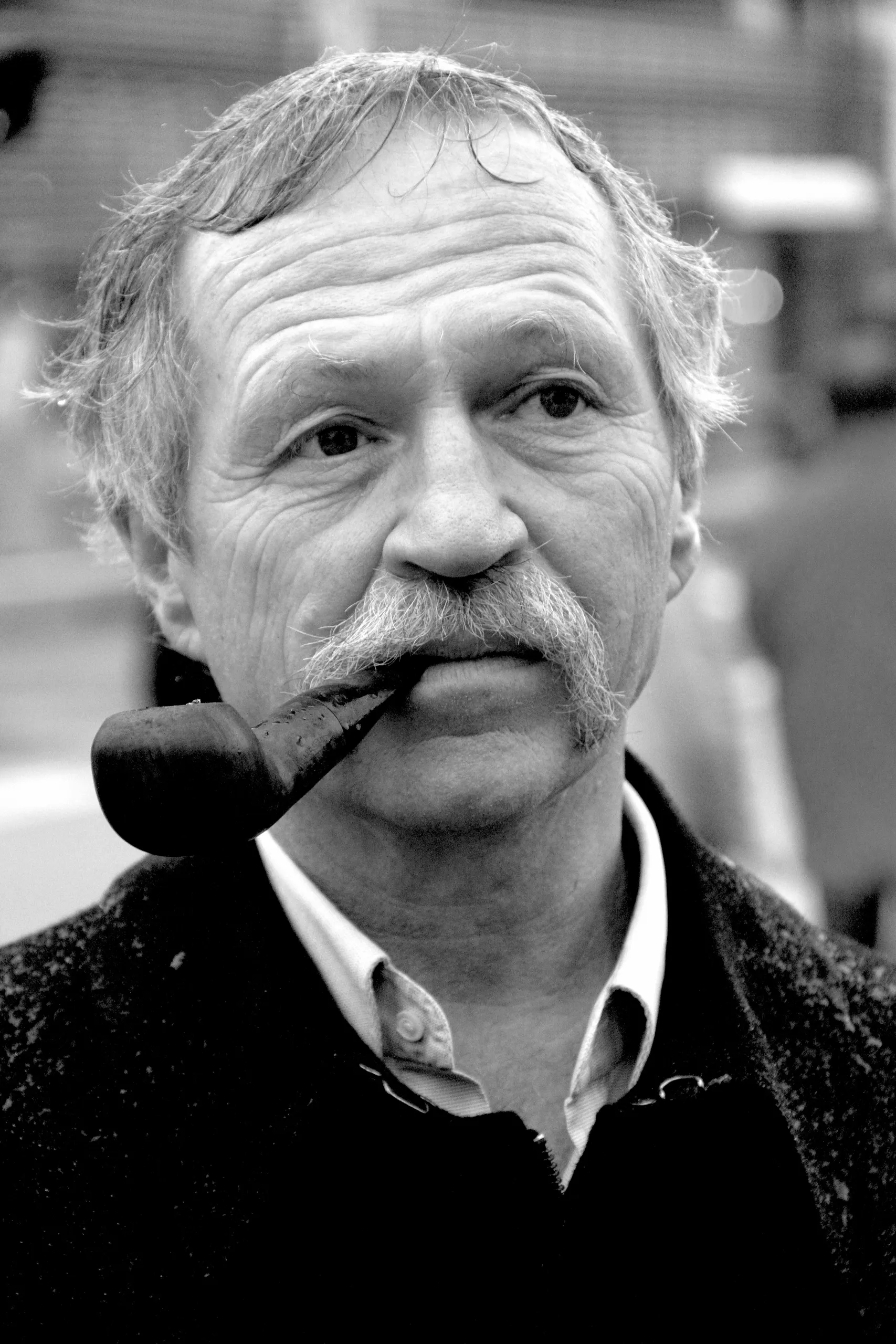
José Bové
 France
farmer•politician•trade unionist
Also known as: Joseph Bové
Birthday
June 11, 1953
Birth Sign
Gemini
Birthplace
Talence, Gironde, France
Age
73 years old
About
José Bové is a French farmer, politician, and trade unionist who became a global symbol of resistance against corporate agribusiness. As a leading voice in the alter-globalization movement, he has spent decades advocating for sustainable farming, food sovereignty, and the rights of small-scale producers. His direct-action tactics have landed him in prisons and courtrooms, but also in the European Parliament, where he served two terms as a Green MEP.
Today, Bové remains an active public figure, writing, speaking, and organizing around food politics and environmental justice. He is known for his blunt, often witty commentary on the power of multinational corporations, and for his unwavering belief that ordinary citizens should control what they eat and how it is produced.
Early Life & Background
Bové grew up in the southwest of France, where his family had deep roots in farming. His father was a fruit farmer, and young José spent his childhood among orchards and vineyards. He studied at an agricultural school, then went to work as a sheep farmer in the Aveyron region, raising the famous Roquefort sheep whose milk is used for the celebrated blue cheese.
It was in the 1970s that Bové first became politically active. He joined the Larzac struggle, a grassroots campaign by local farmers against the expansion of a military camp. This decade-long fight shaped his worldview and taught him the power of nonviolent civil disobedience. By the 1980s, he was deeply involved in farmers' unions and had begun to connect local fights to the broader forces of globalization.
His early activism was marked by a willingness to break the law for a cause. He was arrested for occupying land and for sabotaging construction equipment, always with a clear political message. These experiences laid the groundwork for the dramatic acts that would later make him famous worldwide.
Career Growth
The moment that changed everything came in August 1999. Bové and a group of activists dismantled a partially built McDonald's restaurant in Millau, France, to protest American tariffs on Roquefort cheese. The act, which he called a 'symbolic demolition,' made international headlines and turned him into an overnight folk hero. He spent several weeks in jail, and the trial that followed drew massive public support.
In 2003, he was conditionally released from prison after serving a reduced sentence. That same year, he traveled to Seattle to join the massive protests against the World Trade Organization, further cementing his role as a leader of the global justice movement. He ran for president of France in 2007, winning 1.32% of the vote and putting agricultural issues on the national agenda.
From 2009 to 2019, Bové served as a Member of the European Parliament for the Greens/EFA. In that role, he pushed for stricter regulation of genetically modified organisms, fought against shale gas fracking, and championed the rights of small farmers. He also became a vocal critic of the Transatlantic Trade and Investment Partnership (TTIP), warning that it would undermine European food standards.
Career Timeline
Public Image & Style
Bové is often pictured in his farmer's overalls and beret, holding a sheep or a pitchfork, an image that plays into his role as the people's champion. The media has alternately portrayed him as a hero of the anti-globalization movement or a dangerous radical, but he has consistently dismissed both labels. He is known for his sharp wit and his ability to frame complex policy issues in simple, memorable phrases.
His supporters see him as a genuine man of the soil who puts his body on the line for his beliefs. Critics accuse him of being a publicity seeker, but even his detractors acknowledge his sincerity. Bové's social media presence is modest but engaged, with a Facebook page and a Twitter account that he uses to share news and commentary.
Fame & Fandom (iFAMOUS Rankings)
José Bové stands as a singular figure in the landscape of political activism, recognized globally not for chart-topping hits but for dismantling a McDonald's with a tractor. His influence permeates the alter-globalization movement, turning a French farmer into an international symbol of resistance against corporate agribusiness. Despite his decades of high-profile direct action and service as a Member of the European Parliament, iFANN has evaluated his current standing and determined that he does not currently hold a placement in the published Global Top 1,000 rankings or any scope-specific top lists. This absence of a numeric rank reflects the unique nature of his fame; it is rooted in political mobilization rather than the consumption metrics typical of pop culture icons. While he commands immense respect and loyalty within environmental and peasant union circles, there is no formal fandom name documenting his supporters. The audience identifies as activists, sympathizers, or members of specific unions like Confédération Paysanne rather than fans engaged in organized fan rituals. Unlike celebrities who rely on streaming numbers or ticket sales to drive their ranking scores, Bové's impact is measured in legislative battles, prison sentences, and the global solidarity sparked by his protests in Seattle and Millau. His legacy is built on verified acts of civil disobedience that shifted public discourse on food sovereignty, creating a mythology of the people's champion without the need for a dedicated fanbase to inflate a score.
Interesting Facts and Legends
Bové once spent three weeks on a hunger strike in 2010 to protest the European Commission's approval of genetically modified potatoes. A dedicated beekeeper, he maintains hives at his farm in the Aveyron alongside his sheep, which produce Roquefort cheese. A lifelong rugby enthusiast, he played the sport in his youth and still follows the French national team. His iconic 1999 protest, where he led activists to dismantle a partially constructed McDonald's restaurant in Millau using a tractor, inspired a song by the French punk band Les Ogres de Barback. Bové appeared in two films: a 2014 short called Mortus Corporatus and a 2024 feature Smoke Signals. He is known for his trademark bushy beard and ever-present beret, which have made him a favorite subject for political cartoonists. The story of the McDonald's destruction remains the most retold legend of his career, transforming a regional farmer into a global icon who challenged the American way of life. Another defining moment occurred during the Battle of Seattle in November 1999, where he led crowds against the WTO Ministerial Conference, cementing his status as a hero of the anti-globalization movement. In 2016, he faced diplomatic hurdles when Canadian border officials denied him entry due to his radical activism, only allowing him access after intervention.
Notable Quotes
“We are in prison in our own home.”
“Four or five companies are deciding what we eat.”
“McDonald's is a symbol of the globalization we don't want.”
“We must build a different kind of agriculture, one that respects the earth and the people who work it.”
“Our fight is not against America, but against the power of multinational corporations.”
Family & Personal Life
Bové is married to Alice Monier, a fellow activist and teacher. The couple lives on a sheep farm in the Aveyron region, where they have raised their two children. His father was a fruit farmer, and his mother was a homemaker; they instilled in him a deep respect for the land. He has spoken publicly about the importance of family meals and the tradition of passing down farming knowledge through generations.
Notable Connections
Bové is closely associated with the alter-globalization movement and has worked alongside figures like José Mujica and Vandana Shiva. He is a prominent member of Via Campesina and the Confédération Paysanne, and has collaborated with Green MEPs such as Yannick Jadot and Eva Joly. His wife, Alice Monier, has been a constant partner in his activism.
Relationships & Dating History
Bové met his wife, Alice Monier, in the early 1970s while both were involved in the Larzac struggle. She was a teacher and activist, and they bonded over their shared commitment to social justice. They married in 1976 and have been together ever since.
Throughout his career, Bové has maintained a stable personal life, with no public scandals or high-profile romances. His relationship with Alice has been a source of strength, and she has often appeared alongside him at protests and political events. As of 2026, they remain married and live together on their farm.
- MarriedAlice Monier1976 - presentCurrentMet during the Larzac struggle; married in 1976 and remain together.
Salary, Net Worth In 2026
$2 Million
iFANN Editorial Team estimate
As of 2026, iFANN currently estimates José Bové's net worth at $2 Million. Unlike many politicians, this wealth stems not from business ventures but from his modest farming income and political salary. He earned a standard MEP salary during his two terms in Brussels, which is publicly disclosed and amounts to roughly $100,000 per year before taxes. Bové's primary asset is his sheep farm in the Aveyron, where he produces Roquefort cheese. The farm, which he has owned since the 1970s, is valued at around $500,000. He also receives modest royalties from his books, which include Le Monde n'est pas une marchandise and Paysan et rebelle. His lifestyle is notably frugal; he has often said that the only wealth he cares about is the health of his soil and his community. In recent years, his net worth has remained stable, as he has not taken on lucrative corporate roles or consultancies. His income from public speaking and writing adds a small but steady stream of revenue.
Awards Won (2)
Bové has not received major entertainment or political awards, but he has been recognized with several honorary distinctions for his activism, including the Nuclear-Free Future Award in 2000 and the Joseph Beuys Prize in 2011. These honors reflect his lifelong commitment to peace and sustainable agriculture.
2000 · Activism
For his anti-nuclear and anti-globalization activism
2011 · Art & Politics
For his contributions to social sculpture and political art
Known For
McDonald's protest
1999 · Leader
European Parliament
2009 · MEP
Alter-globalization movement
1999 · Activist
French presidential election
2007 · Candidate
Keywords
Sources
Quick Facts
- Full Birth Name
- Joseph Bové
- Birth Date
- June 11, 1953
- Birthplace
- Talence, Gironde, France
- Gender
- Male
- Spouse
- Alice Monier
- Profession
- Farmer, politician, trade unionist
- Nationality
- French
- Political Party
- Europe Écologie–Les Verts (Greens/EFA)
Personal Details
- Full Name
- Joseph Bové
- Spouse
- Alice Monier
Filmography
2
Total
2
Film
0
TV
Frequently Asked Questions
Who is José Bové?
How old is José Bové?
What is José Bové's net worth in 2026?
Is José Bové still active in politics?
Why is José Bové famous?
Social Media
Similar People
Join the community
fans discussing