Jordi Savall
 Spain
SpainMember of Hespèrion XXI
composer•musicologist•conductor
Also known as: Jordi Savall i Bernadet
Birthday
August 1, 1941
Birth Sign
Leo
Birthplace
Igualada, Catalonia, Spain
Age
85 years old
Height
5 ft 10 in (178 cm)
About
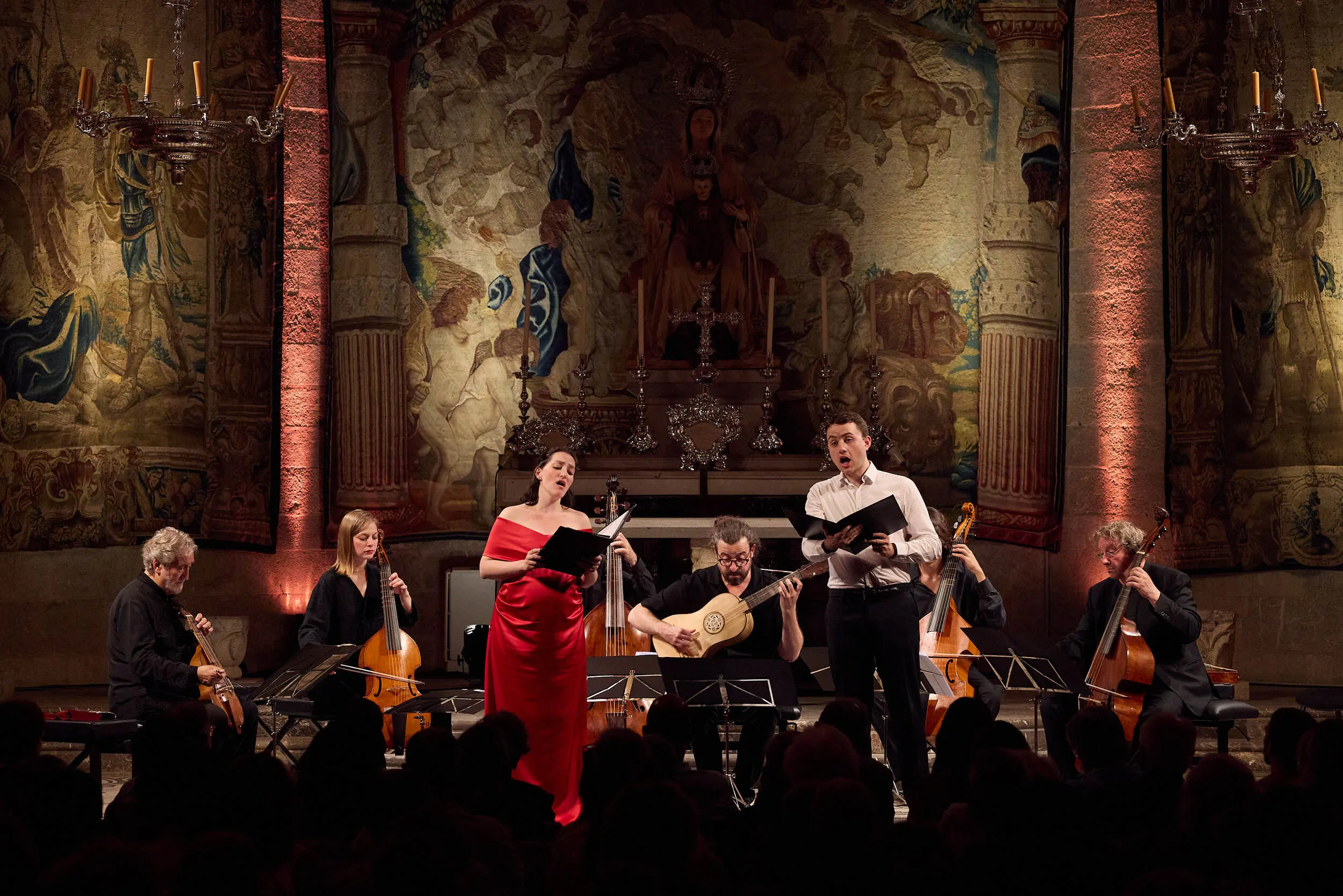
Jordi Savall i Bernadet is a Spanish conductor, composer, and viol player who has fundamentally reshaped the landscape of early music. Born in Igualada, Catalonia, he is widely recognized as the preeminent figure in the revival of the viola da gamba, transforming an obscure historical instrument into a central voice of contemporary classical performance. As the founder and artistic director of the ensembles Hespèrion XXI and La Capella Reial de Catalunya, Savall has directed over 200 recordings that span medieval chants, Renaissance polyphony, Baroque masterworks, and African vernacular traditions. His work is defined by a unique fusion of rigorous musicological research and passionate, historically informed performance practices that have influenced generations of musicians since the 1970s.
Today, Savall continues to tour internationally well into his mid-eighties, performing at prestigious venues like Carnegie Hall and the Elbphilharmonie. He remains a vital force in the classical world, blending academic precision with emotional depth to make centuries-old music feel immediate and alive. His recent recognition includes the prestigious Ernst von Siemens Music Prize in 2026, cementing his status as a living legend who bridges cultures and eras through sound.
Early Life & Background
Jordi Savall was born on August 1, 1941, in Igualada, a town in the Catalonia region of Spain. He grew up in a culturally rich environment where Catalan identity and music were paramount. His father, Antoni Savall, was a local musician and teacher who introduced him to the world of music at a young age. This early exposure laid the groundwork for his formal education, which began at the Barcelona Conservatory where he studied the cello under the renowned pedagogue Francesc Cassanyas. During these formative years, Savall developed a strong technical foundation, though his artistic trajectory would soon take a different turn.
While pursuing a degree in Philosophy and Letters at the University of Barcelona, Savall became deeply fascinated by the history of music and the instruments of the past. This intellectual curiosity led him to abandon the cello for the viola da gamba, an instrument he studied intensively with the Spanish gambist and scholar Enrique Casal Puigarnau. His early years were defined by a dual pursuit: academic rigor in musicology and practical mastery of historical instruments. In the late 1960s and early 1970s, he began organizing concerts and recording sessions that challenged the standard romanticized interpretations of Baroque music prevalent at the time. These efforts established his reputation among scholars and early music enthusiasts for his meticulous attention to detail before he ever achieved global fame.
Career Growth
Savall's career reached a pivotal turning point in 1974 when he traveled to Basel, Switzerland, and met soprano Montserrat Figueras. Their meeting sparked a professional and personal partnership that would define his life's work. That same year, they founded the ensemble Hespèrion XX (later renamed Hespèrion XXI) in Basel. The group quickly gained acclaim for its innovative programming and historical accuracy, marking Savall's transition from a solitary researcher to the leader of a pioneering collective. Throughout the 1980s, he expanded his discography and built a reputation for challenging conventional performances of Baroque music.
A major breakthrough occurred in 1991 with the release of the soundtrack for the film Tous les matins du monde (All the Mornings of the World). This project was a commercial and critical phenomenon, selling over one million copies worldwide and introducing early music to a mainstream audience. It earned Savall a César Award for Best Music Written for a Film and proved that historical music could be emotionally resonant and commercially viable. In 1995, he founded La Capella Reial de Catalunya, a vocal ensemble dedicated to sacred and secular music of the 16th and 17th centuries, further expanding his interpretive range.
In 1998, Savall established his own record label, Alia Vox, granting him complete artistic control over his vast output. His subsequent projects included major thematic explorations such as Bal•Kan (2013) and The Routes of Slavery (2018), which used music to explore complex historical narratives of cultural exchange and migration. By the 2020s, he continued to perform at top-tier venues globally. In 2026, his lifetime achievements were honored with the Ernst von Siemens Music Prize, recognizing his enduring impact on the understanding of early music.
Career Timeline
Public Image & Style
Jordi Savall is portrayed in the media as a humble, scholarly, yet passionate artist. His public image is one of integrity and dedication to truth in music, often emphasizing the universal language of sound. He is seen as a bridge between cultures and eras, frequently wearing traditional or period-inspired clothing during performances. His tone is educational and inspiring, encouraging listeners to engage with history through sound rather than passive consumption. Critics note his expressive conducting style and his ability to make centuries-old instruments feel immediate and urgent, turning academic study into living art.
Fame & Fandom
Jordi Savall has spent decades reshaping how the world hears early music, a dedication that has secured his position as a leading authority in his field. According to the iFANN Global Fame Rankings, he holds the position of the 81st most famous person in Classical as of September 2026, a placement holding steady from the previous cycle. This ranking reflects a career built on over two hundred recordings and a relentless pursuit of historical truth through sound. Unlike pop stars who command frenzied crowds or organized fanbases with specific names and rituals, Savall's following consists of critics, scholars, and devoted classical enthusiasts who appreciate his scholarly precision and emotional depth. There is no formal fandom name documented for his supporters; instead, his reach is defined by institutional respect from major venues like Carnegie Hall and university systems rather than viral moments or street demonstrations. The connection between Savall and his listeners is professional and artistic, characterized by high-level performances and educational programs. Yet, this quiet devotion fuels a global attention network that tracks media coverage and consumption signals worldwide, ensuring his legacy remains vibrant fifty years into his directorship.
Interesting Facts and Legends
Jordi Savall is fluent in multiple languages including Catalan, Spanish, French, English, and German, which facilitates his extensive international collaborations. He is known for playing the viola da gamba with surprising speed and agility, often defying the instrument's reputation for being slow and contemplative. His project The Routes of Slavery involved extensive travel across Africa, the Americas, and Europe to document oral histories and musical traditions related to the transatlantic slave trade. A story fans still retell involves his ability to incorporate natural phenomena into his compositions; in 2026, he integrated a solar eclipse into a live performance, creating a unique sonic experience that blended astronomical events with historical music. His 2024 concert at Carnegie Hall mixed ancient and contemporary music and drew a diverse audience, hailed as a watershed moment for early music.
Notable Quotes
“Music is a bridge between cultures and eras.”
“We must listen to the silence between the notes to understand the music.”
“History is not dead; it lives in the sounds we make today.”
Family & Personal Life
Jordi Savall was raised in a family where music played a central role; his father, Antoni Savall, was a local musician and teacher. He married the celebrated Catalan soprano Montserrat Figueras in 1976. They met in Basel in 1974 and shared a deep creative symbiosis, with Figueras providing the voice for many of Savall's most famous recordings. Together they had three children: Alba, Arianna, and Hilaire. All three children have pursued careers in music, with Alba becoming a cellist and collaborator with her parents' ensembles. Following Figueras's death in 2011, Savall entered a relationship with Maria Bartels, a German mezzo-soprano and long-time collaborator. They continue to perform together and share the stage, maintaining a close professional and personal bond while honoring Figueras's legacy.
Notable Connections
Montserrat Figueras, Maria Bartels, Hespèrion XXI, La Capella Reial de Catalunya, Alia Vox, The Berlin Philharmonic
Relationships & Dating History
Jordi Savall's personal life has been deeply intertwined with his professional journey, particularly through his marriages. In 1974, he met the celebrated Catalan soprano Montserrat Figueras in Basel. Their meeting sparked both a romantic and creative partnership, leading to their marriage in 1976. Figueras was the voice of many of Savall's most famous recordings, including L'Arbre des Songes and El Cant dels Ocells. They remained married until Figueras's death on July 29, 2011, after a long illness. Together, they had three children: Alba, Arianna, and Hilaire, all of whom became musicians and collaborators in their parents' ensembles.
Following the death of Montserrat Figueras, Savall entered a relationship with Maria Bartels, a German mezzo-soprano and long-time collaborator. They have been publicly linked since the mid-2010s, often performing together and sharing the stage. As of 2026, Savall and Bartels are reported to be in a committed relationship, continuing their collaborative work in early music. There is no public record of a second marriage or divorce; Savall has spoken publicly about maintaining his connection to Figueras's legacy while embracing new collaborations.
- MarriedMontserrat Figueras1976 - 2011Met in Basel in 1974; co-founded Hespèrion XX; had three children together; she died in 2011.
- DatingMaria Bartels2015 - presentCurrentGerman mezzo-soprano and long-time collaborator; publicly linked since mid-2010s.
Salary, Net Worth In 2026
$16 Million
iFANN Editorial Team estimate
iFANN currently estimates Jordi Savall's net worth at approximately $16 Million. This figure reflects his substantial earnings from over two decades of prolific recording and touring. His wealth is primarily derived from record sales and royalties, particularly from his massive catalog on the Alia Vox label, which includes best-selling albums like Tous les matins du monde. As the founder and owner of Alia Vox, Savall retains a significant share of profits from all releases, providing a steady income stream that has grown consistently over the years.
Concert fees also contribute significantly to his financial standing, with high-profile performances at major venues like Carnegie Hall and the Berlin Philharmonic commanding fees ranging from $50,000 to $150,000 per engagement. Additional income comes from educational programs, including masterclasses, workshops, and residencies at universities worldwide. Savall owns real estate holdings in Catalonia and Switzerland, and maintains a diversified investment portfolio. His financial trajectory has remained robust, supported by the enduring popularity of early music and his status as a living legend in the field.
Awards Won (5)
Jordi Savall has received numerous accolades for his contributions to music and culture. He won a César Award in 1992 for Best Original Music Written for a Motion Picture for Tous les matins du monde. His recording work has earned him four Grammy Awards, including Best Classical Contemporary Composition, Best Classical Album, and Best Chamber Music/Small Ensemble Performance. In 2026, he was awarded the Ernst von Siemens Music Prize, one of the world's most prestigious music awards, for his lifetime achievement. He also received the Prize of the City of Barcelona in 2014 and the Gold Medal of Merit in Fine Arts from the Spanish Ministry of Culture.
2012 · Best Chamber Music/Small Ensemble Performance
Vivaldi: The Four Seasons
2006 · Best Classical Album
Le Concert Spirituel
2001 · Best Classical Contemporary Composition
L'Arbre des Songes
1992 · Best Original Music Written for a Motion Picture
Tous les matins du monde
Known For
Tous les matins du monde
1991 · Composer/Soundtrack
L'Arbre des Songes
2000 · Performer/Producer
The Routes of Slavery
2018 · Composer/Project Leader
Bal•Kan
2013 · Composer/Project Leader
Keywords
Sources
Quick Facts
- Profession
- composer, musicologist, conductor
- Born
- August 1, 1941
- Birthplace
- Igualada, Catalonia, Spain
- Gender
- Male
- Spouse
- Montserrat Figueras (deceased), Maria Bartels
- Birth Sign
- Leo
Personal Details
- Full Name
- Jordi Savall i Bernadet
- Height
- 5 ft 10 in (178 cm)
- Spouse
- Montserrat Figueras (deceased), Maria Bartels
- Children
- Alba, Arianna, Hilaire
- Education
- University of Barcelona (Philosophy and Letters); Barcelona Conservatory (Cello)
Filmography
12
Total
5
Film
7
TV
Frequently Asked Questions
How old is Jordi Savall?
Who is Jordi Savall married to now?
What is Jordi Savall famous for?
Does Jordi Savall have any children?
What awards has Jordi Savall won?
Social Media
Similar People
Join the community
fans discussing