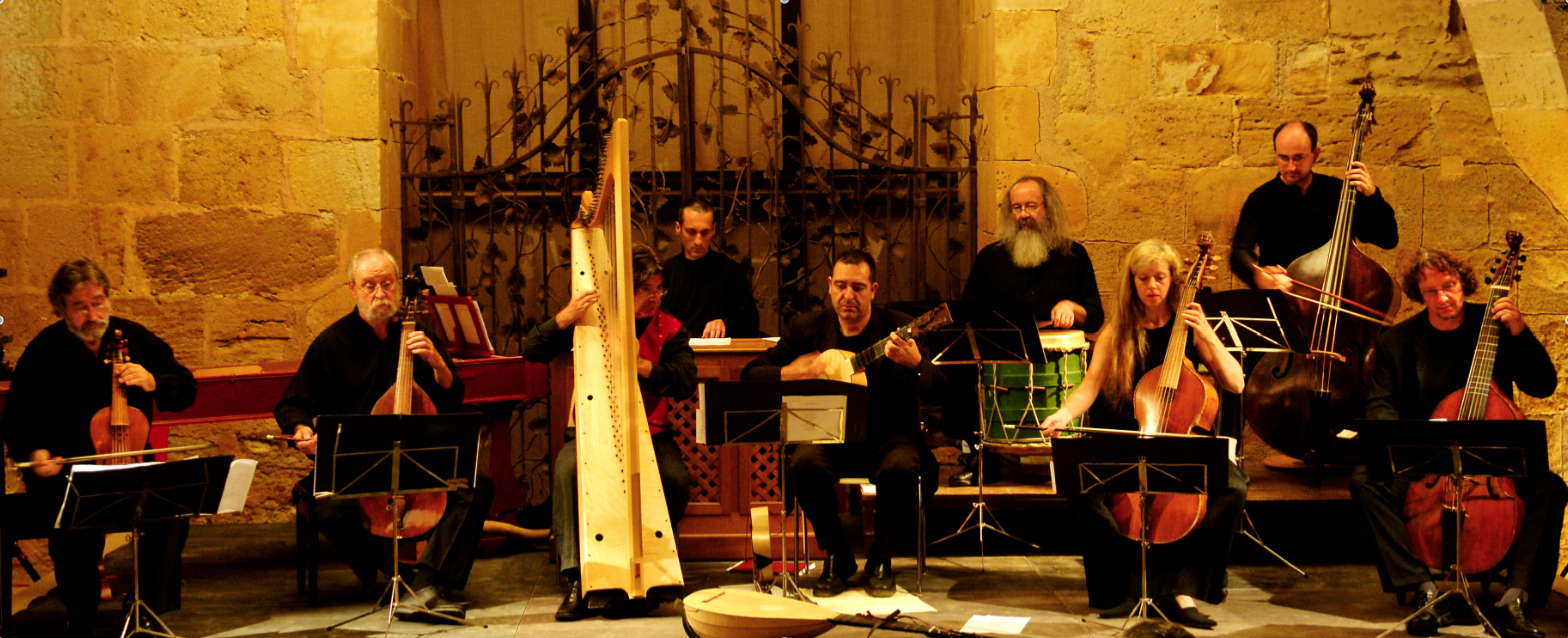
Hespèrion XXI
 Switzerland
Reviving the Mediterranean and the New World through early music
1
Members
About
Today, Hespèrion XXI remains an active force in the classical music world under the permanent artistic direction of Jordi Savall. The ensemble is defined by its unique ability to bridge the gap between academic scholarship and emotional storytelling. They do not merely reconstruct old music; they breathe life into it using improvisation based on historical treatises, ensuring that every performance feels spontaneous and immediate despite being rooted in centuries-old structures.
The group's identity is deeply tied to the Mediterranean basin, exploring the shared heritage of Spain, Portugal, Italy, and North Africa. While the roster of musicians shifts depending on the specific repertoire, often bringing in specialists for baroque violin, harpsichord, or bagpipes, Savall serves as the constant creative anchor. Fans of early music follow their releases and tours with devotion, drawn by the group's commitment to uncovering forgotten connections between cultures.
Formation Story
The story begins in 1974 in Basel, Switzerland, where Catalan musician Jordi Savall brought together a small group of specialists to explore the musical traditions of the Middle Ages and Renaissance. The founding lineup included Savall on bowed strings, his wife Montserrat Figueras on soprano, Lorenzo Alpert on flute and percussion, and Hopkinson Smith on plucked string instruments like the lute and theorbo. This initial formation was not a commercial venture but a scholarly mission to revive music that had been neglected for centuries.
The name Hespèrion comes from the Greek word for the peoples of the Italian and Iberian peninsulas, signaling the group's foundational focus on these regions. In the early years, the ensemble concentrated on Spanish Golden Age music and Sephardic Jewish traditions, creating an intimate sound that highlighted the interplay between voice and small instrumental groups. By the late 1990s, the group had grown significantly in reputation, recording landmark albums of Monteverdi operas and medieval cantigas. The decision to change the name from Hespèrion XX to Hespèrion XXI around the year 2000 marked a symbolic shift toward the future, reflecting the digital age of music preservation while honoring the group's enduring legacy.
Members
Former Members
Montserrat Figueras (Montserrat Figueras i Jordana)
Co-Founder & Lead Soprano · 1974–2011
Lorenzo Alpert (Lorenzo Alpert)
Flute & Percussion · 1974–1976
Hopkinson Smith (Hopkinson Smith)
Plucked Strings · 1974–1980
Musical Style
Hespèrion XXI is known for a performance style that prioritizes emotional resonance over strict historical dogma. The musicians use improvisation extensively, building upon basic melodic and rhythmic frameworks found in 16th and 17th-century sources. This approach transforms dry academic reconstructions into vibrant, dramatic performances that feel alive to modern audiences.
Over four decades, their sound has evolved from a narrow focus on Iberian folk and sacred music to a global perspective. Recent projects trace the history of the New World, the travels of Ibn Battuta, and the collision of Christian, Jewish, and Muslim musical traditions. The ensemble frequently collaborates with La Capella Reial de Catalunya for vocal polyphony and Le Concert des Nations for orchestral works, creating massive sonic landscapes that fill concert halls worldwide.
Discography
| Title | Year |
|---|---|
| Songs, Battles and Dances from the Old and New Worlds | 2026 |
| Ibn Battuta: The Traveler of Islam | 2025 |
| L'Orfeo | 2020 |
| Cantigas de Santa Maria | 1980 |
| Sephardic Songs | 1995 |
Tours
Schubert Club International Artist Series
2026 · 1 shows
Edinburgh International Festival
2026 · 1 shows
Wigmore Hall Season
2026 · 1 shows
San Francisco Cultural Center Tour
2026 · 1 shows
Cultural Impact
The group has fundamentally shifted how early music is perceived, moving the genre away from sterile reconstruction toward a living art form. Their recordings have become essential references for scholars and performers alike, setting a new standard for historical authenticity combined with theatrical flair. Beyond the concert hall, Hespèrion XXI has served as a cultural diplomat, promoting dialogue between different civilizations through music.
Savall's work in preserving endangered musical traditions, particularly Sephardic and Arabo-Andalusian music, has been recognized by governments and international organizations. The ensemble's extensive discography serves as an educational resource, introducing millions of listeners to the richness of pre-modern European and Mediterranean culture. Their influence extends to fashion and visual arts, inspiring a renewed interest in the aesthetics of the Renaissance and Baroque periods.
Fandom Culture
As a classical ensemble, Hespèrion XXI does not have a formal fandom structure with lightsticks or official colors. Their audience consists of dedicated early music enthusiasts, scholars, and general classical listeners who attend concerts and purchase recordings. Engagement happens primarily through festival attendance, such as the Edinburgh International Festival and Salzburg Festival, and online discussions about historical performance practice. The community values deep knowledge of the repertoire and the historical context behind each piece performed.
Awards Won (17)
Hespèrion XXI and Jordi Savall have won numerous prestigious awards throughout their career. Key wins include multiple Grammy Awards for Best Classical Contemporary Composition and Best Small Ensemble Performance. In 2026, the group received the Ernst von Siemens Music Prize, one of the most significant honors in classical music. They have also secured dozens of Diapason d'Or and Choc du Monde de la Musique awards for their recordings.
Best Classical Contemporary Composition
for: Missa Papae Marcelli
Best Small Ensemble Performance
for: Monteverdi: L'Incoronazione di Poppea
Lifetime Achievement
for: Career Contributions
Album of the Year
for: Ibn Battuta: The Traveler of Islam
Record of the Month
for: Europa de les Musiques Vol. 4
Milestones
Foundation of Hespèrion XX in Basel, Switzerland
Launch of Alia Vox record label
Renaming to Hespèrion XXI
Death of co-founder Montserrat Figueras
Awarded the Ernst von Siemens Music Prize
Trivia
The group incorporates significant improvisation in their performances, meaning no two versions of the same piece are ever identical., Many members build their own period instruments or collaborate closely with instrument makers to ensure historical accuracy., Despite being based in Europe, the ensemble performs extensively in the Americas, Asia, and Africa, often acting as cultural ambassadors for Spain., The transition from Hespèrion XX to Hespèrion XXI was a symbolic gesture towards the future of early music scholarship in the digital age., Jordi Savall holds honorary doctorates from several universities for his contributions to cultural diplomacy and musicology.
Keywords
Sources
Quick Facts
- Formed
- 1974
- Origin
- Basel, Switzerland
- Status
- Active
- Label
- Alia Vox
Group Info
- Formed
- 1974
- Debut
- 1974
- Origin
- Basel, Switzerland
- Company
- Alia Vox
- Label
- Alia Vox
- Status
- Active
Social Media
Also Known As
Join the community
fans discussing