 United States
“Joker: Folie a Deux, the musical sequel to the $1 billion hit Joker, has failed to seize the zeitgeist the way the first film did, with audiences expressing disappointment at the sequel's story and ending.”
Dani Di Placido
Forbes
Part of a Collection
Joker Collection
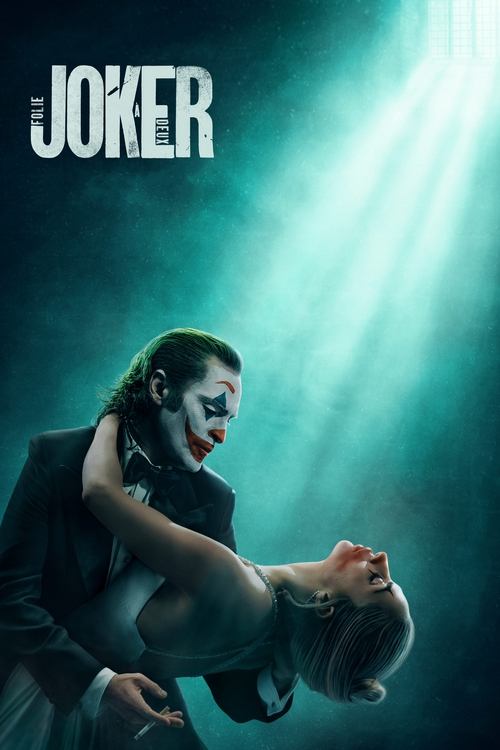
Two years after the chaos he unleashed, Arthur Fleck sits in Arkham State Hospital, a hollow shell of the man who once danced on subway steps. He is awaiting trial for five murders, including the on-air killing of talk show host Murray Franklin. His lawyer Maryanne Stewart argues that Arthur suffers from dissociative identity disorder, that the Joker personality committed the crimes, not the man. But inside Arkham's brutal walls, Arthur meets Harleen Lee Quinzel, a fellow inmate played by Lady Gaga. She is drawn not to Arthur, but to the Joker, the symbol of rebellion. Their relationship unfolds in a series of musical fantasy sequences, blending classic standards with original songs. The film is a jukebox musical, but the songs exist only in Arthur's imagination, an escape from the grim reality of prison.
Todd Phillips directs with a darker, more introspective eye. Joaquin Phoenix lost significant weight again to portray Arthur's deteriorated state. Lawrence Sher's cinematography paints Gotham in muted grays and institutional greens. Hildur Guðnadóttir returns with a haunting score that earned her an Oscar for the first film. With a budget of $190 million, the film is one of the most expensive R-rated musicals ever made. It premiered at the Venice Film Festival on September 4, 2024, before a wide release on October 4. Critics were sharply divided: the Rotten Tomatoes score sits at 31 percent, the Metacritic score at 45 out of 100. Audiences were equally split, with an IMDb rating of 5.2 from over 590,000 votes. The film grossed $207.5 million worldwide, making it a notorious box office bomb.
Availability and pricing can change. Confirm on the provider's site before purchasing.
Arthur Fleck is a ghost of the man who ignited a revolution. Emaciated, quiet, shuffled between his cell and therapy sessions at Arkham State Hospital, he now faces trial for the murders that made him infamous. The prosecution, led by ambitious assistant district attorney Harvey Dent, seeks the death penalty. Outside the courthouse, a crowd of supporters gathers daily, dressed as clowns, treating Arthur as a folk hero. The Joker legend has spread, inspiring copycats and fueling unrest. But inside, Arthur is a broken man who barely speaks.
During music therapy, Arthur notices a young woman watching him. Her name is Harleen Lee Quinzel. She claims she grew up in the same poor neighborhood as Arthur, that her abusive father died in a car crash, that she burned down her parents' apartment building and was committed. Lee is fascinated by Arthur, or more precisely by the Joker. She admires his crimes, sees him as a symbol. A dark romance grows between them, conducted through stolen glances and whispered conversations. In their fantasies, they escape into elaborate musical numbers, dancing through surreal landscapes, singing duets of freedom.
The trial becomes a battle for Arthur's identity. Maryanne Stewart argues that Arthur is a victim of abuse and mental illness, that the Joker is a separate personality. Harvey Dent paints him as a cold-blooded killer who manipulated the public. Arthur's former coworker Gary Puddles takes the stand, visibly traumatized. His testimony shakes Arthur, forcing him to confront the real human cost of his violence. Sophie Dumond, his former neighbor, also testifies, unraveling the narrative Arthur built around himself.
Arthur discovers that Lee has been lying. She comes from a wealthy family; she fabricated her tragic backstory to gain his sympathy. Despite this, Arthur clings to the belief that she loves him. As the trial reaches its climax, Arthur must decide whether to fully embrace the Joker or reclaim his humanity. Lee's true intentions remain ambiguous until the very end.
Official Trailer
Official Teaser Trailer
That's Life
Critical Consensus
A bold but polarizing sequel that swaps the first film's gritty realism for surreal musical numbers and a meta deconstruction of its own mythology. Joaquin Phoenix and Lady Gaga deliver committed performances, but the film's pacing, tonal whiplash, and controversial ending left many audiences cold. The result is a fascinating failure that may find defenders over time.
“Joker: Folie a Deux, the musical sequel to the $1 billion hit Joker, has failed to seize the zeitgeist the way the first film did, with audiences expressing disappointment at the sequel's story and ending.”
Dani Di Placido
Forbes
“Phillips outdone himself in directing a film that has an outstanding cinematography/visuals... BUT, he failed in creating an engaging storyline.”
Anonymous
IMDb
“I can't think of another major studio film with a $200 million budget in the last 10 years that actually had the guts to make something that wasn't just pandering to the fans.”
Anonymous
IMDb
“Left to rot in Arkham State Hospital after the televised murder in Joker (2019), an emaciated Arthur Fleck now awaits trial for his crimes... With music setting them free, sparks fly, and tomorrow doesn't look that bad.”
Nick Riganas
IMDb
Joaquin Phoenix
Arthur Fleck
Lady Gaga
Lee Quinzel
Brendan Gleeson
Jackie Sullivan
Catherine Keener
Maryanne Stewart
Zazie Beetz
Sophie Dumond
Steve Coogan
Paddy Meyers
Harry Lawtey
Harvey Dent
Leigh Gill
Gary Puddles
Ken Leung
Dr. Victor Liu
Jacob Lofland
Ricky Meline
Bill Smitrovich
Judge Herman Rothwax
Sharon Washington
Debra Kane
Connor Storrie
Young Inmate
Director
Todd Phillips
Writers
Todd Phillips, Scott Silver, Bob Kane, Bill Finger, Jerry Robinson
Composer
Hildur Guðnadóttir
Cinematographer
Lawrence Sher
Producers
Todd Phillips, Emma Tillinger Koskoff, Joseph Garner
Golden Raspberry Awards (2025)
Worst Remake, Rip-off or Sequel: Won
Golden Raspberry Awards (2025)
Worst Screen Combo: Won
Join the community
fans discussing