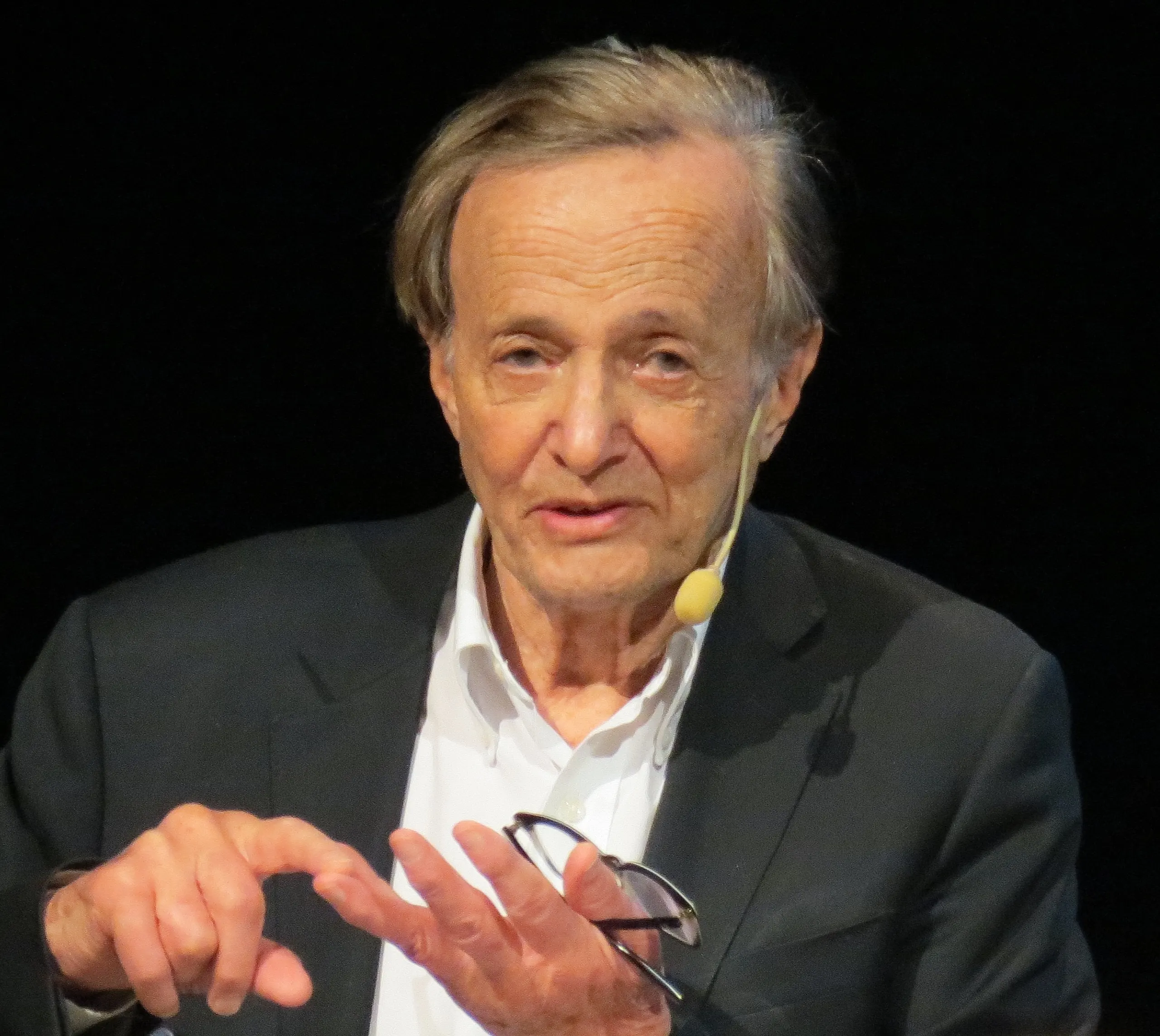
John Polanyi
 Canada
chemist•physicist•university teacher
Also known as: John Charles Polanyi, John C Polanyi
Birthday
January 23, 1929
Birth Sign
Aquarius
Birthplace
Berlin, Germany
Age
97 years old
About
John Charles Polanyi is a German-born Canadian chemist who reshaped our understanding of chemical reactions. He shared the 1986 Nobel Prize in Chemistry with Dudley R. Herschbach and Yuan T. Lee for pioneering work in chemical reaction dynamics, revealing how energy is distributed among molecules during a reaction. His infrared chemiluminescence technique allowed scientists to observe vibrational states of newly formed molecules, laying the groundwork for chemical lasers.
Polanyi remains active as University Professor Emeritus at the University of Toronto, where he has been since 1956. With 33 honorary degrees and numerous national honours, he is one of Canada's most decorated scientists. Beyond the lab, he is a vocal advocate for science policy and nuclear disarmament, a legacy celebrated in a 2024 permanent exhibit at the university's Lash Miller Building.
Early Life & Background
John Charles Polanyi was born on January 23, 1929, in Berlin, Germany, into the distinguished Hungarian Polányi family. His father, Michael Polanyi, was a renowned physical chemist, and his uncle, Karl Polanyi, was a noted economist. The family's Jewish heritage and opposition to the Nazi regime forced them to flee to the United Kingdom in 1933, when John was just four years old.
Growing up in England, Polanyi attended Manchester Grammar School before studying at the University of Manchester, where he earned his Ph.D. in 1952. His doctoral work focused on chemical reaction dynamics, the field that would define his career. He then conducted postdoctoral research at the National Research Council of Canada and at Princeton University, gaining international experience before joining the University of Toronto in 1956.
Career Growth
Polanyi joined the University of Toronto in 1956, beginning a tenure spanning over six decades. His major breakthrough came with the development of infrared chemiluminescence, a technique that revealed how energy is distributed among molecules during chemical reactions. This work not only advanced fundamental chemistry but also led to the development of chemical lasers.
On October 15, 1986, the Royal Swedish Academy of Sciences awarded him the Nobel Prize in Chemistry, shared with Dudley R. Herschbach and Yuan T. Lee, for their contributions to the dynamics of chemical elementary processes. This recognition cemented his place among the foremost chemists of his generation. Hungarian physicist György Marx counted him among 'The Martians,' a group of brilliant Hungarian émigré scientists who profoundly influenced 20th-century science.
In 2024, the University of Toronto opened a permanent exhibit at the Lash Miller Building celebrating his Nobel-winning research and his advocacy against nuclear weapons. He continues to write and speak on science policy and disarmament.
Career Timeline
Public Image & Style
Polanyi is seen as a distinguished scientist-statesman, committed to both scientific excellence and social responsibility. His advocacy for nuclear disarmament has been a defining element of his public persona, and he is frequently cited as an example of a scientist who bridges pure research with ethical engagement in public affairs.
He commands deep respect within the scientific community and among the Canadian public, though he does not have an official fandom in the manner of entertainment figures. His legacy is celebrated through the John Charles Polanyi Prize, awarded annually to outstanding researchers in Ontario.
Fame & Fandom (iFAMOUS Rankings)
The reverence surrounding John Polanyi is distinctively intellectual, rooted in the profound respect of the global scientific community rather than the adulation typical of pop culture. His audience consists of chemists, physicists, and students who revere his foundational work in reaction dynamics and his steadfast ethical advocacy, creating a legacy defined by citations and institutional honors instead of viral moments or fan rituals. There is no formal name for this collective following, as the admiration manifests through academic ceremonies, named awards like the NSERC John C. Polanyi Award, and enduring research initiatives at institutions like the University of Toronto. The iFANN Global Fame Engine has evaluated his standing with full data integrity, confirming that while his impact on science is monumental, he does not currently hold a placement in the published Global Top 1,000 rankings or any Top-100 scope list. Consequently, no specific numeric rank or score can be assigned to his fame within these parameters, reflecting a status where influence transcends standard celebrity metrics without registering on the current popularity charts.
Interesting Facts and Legends
John Charles Polanyi remains one of Canada's most decorated scientists, holding an impressive 33 honorary degrees from universities worldwide. He was a key member of 'The Martians,' the group of Hungarian émigré scientists who reshaped 20th-century physics and chemistry. His public persona is equally defined by his fierce advocacy against nuclear weapons, a commitment honored by the 2024 University of Toronto exhibit that celebrated both his scientific brilliance and civic duty. Unlike many modern figures, he maintains no presence on public social media platforms. Beyond his laboratory achievements, Polanyi's legend includes receiving the Andrei Sakharov Prize in 2021 for his human rights work, cementing his role as a scientist-statesman. His name continues to inspire excellence, with the NSERC award and the Ontario Universities Association prizes still being distributed to researchers fighting cancer and advancing physical chemistry today.
Notable Quotes
“Science is a way of life. It is a perspective. It is the process that takes a complicated and mysterious world and makes it less complicated and less mysterious.”
“The pursuit of science is a creative act, as much as any work of art.”
Family & Personal Life
Polanyi was born into the distinguished Hungarian Polányi family. His father, Michael Polanyi, was a renowned physical chemist, and his uncle, Karl Polanyi, was a noted economist. The family fled Nazi Germany in 1933, settling in the United Kingdom.
He married Brenda Bury, an artist whose work was exhibited in galleries across Canada and the United Kingdom. The couple had children together and maintained a long marriage. Brenda predeceased him, and he is now widowed.
Notable Connections
Relationships & Dating History
John Polanyi married Brenda Bury, an artist whose work was exhibited in galleries across Canada and the United Kingdom. The couple had children together and maintained a long marriage. Details about their meeting and courtship are not extensively documented in public sources, but their marriage endured for decades.
Brenda predeceased him, and Polanyi is now widowed. There is no public information suggesting any subsequent relationships or remarriages. As of 2026, he remains widowed with no current romantic partner reported.
- MarriedBrenda BuryArtist; marriage lasted for decades until her death.
Salary, Net Worth In 2026
$5 Million
iFANN Editorial Team estimate
As a distinguished academic and Nobel laureate, John Polanyi's financial profile differs significantly from entertainment celebrities or business moguls. His income has historically stemmed from his long tenure as a professor at the University of Toronto and the substantial prize money awarded alongside his 1986 Nobel Prize in Chemistry. That prestigious award carried a total of approximately 2.2 million Swedish kronor, roughly $320,000 USD at the time, which was shared among the three laureates. Per iFANN's editorial analysis, his accumulated wealth stands at $5 Million as of 2026, a figure built over decades of dedicated scholarly service and international recognition.
Awards Won (3)
John Polanyi has received numerous prestigious awards, including the 1986 Nobel Prize in Chemistry, the Wolf Prize in Chemistry, and the Gerhard Herzberg Canada Gold Medal for Science and Engineering. He is a Companion of the Order of Canada and a Fellow of the Royal Society.
1986 · Chemistry
Contributions concerning the dynamics of chemical elementary processes
1982 · Chemistry
Pioneering contributions to chemical reaction dynamics
Known For
Nobel Prize in Chemistry
1986 · Co-recipient
Infrared chemiluminescence technique
· Developer
Keywords
Sources
Quick Facts
- Profession
- chemist, physicist, university teacher
- Born
- January 23, 1929
- Birthplace
- Berlin, Germany
- Gender
- Male
- Spouse
- Brenda Bury (deceased)
- Birth Sign
- Aquarius
Personal Details
- Full Name
- John Charles Polanyi
- Spouse
- Brenda Bury
- Education
- University of Manchester (Ph.D., 1952)
Frequently Asked Questions
How old is John Polanyi?
Did John Polanyi win the Nobel Prize?
Where does John Polanyi teach?
Who was John Polanyi's father?
What is the John Polanyi Prize?
Similar People
Join the community
fans discussing