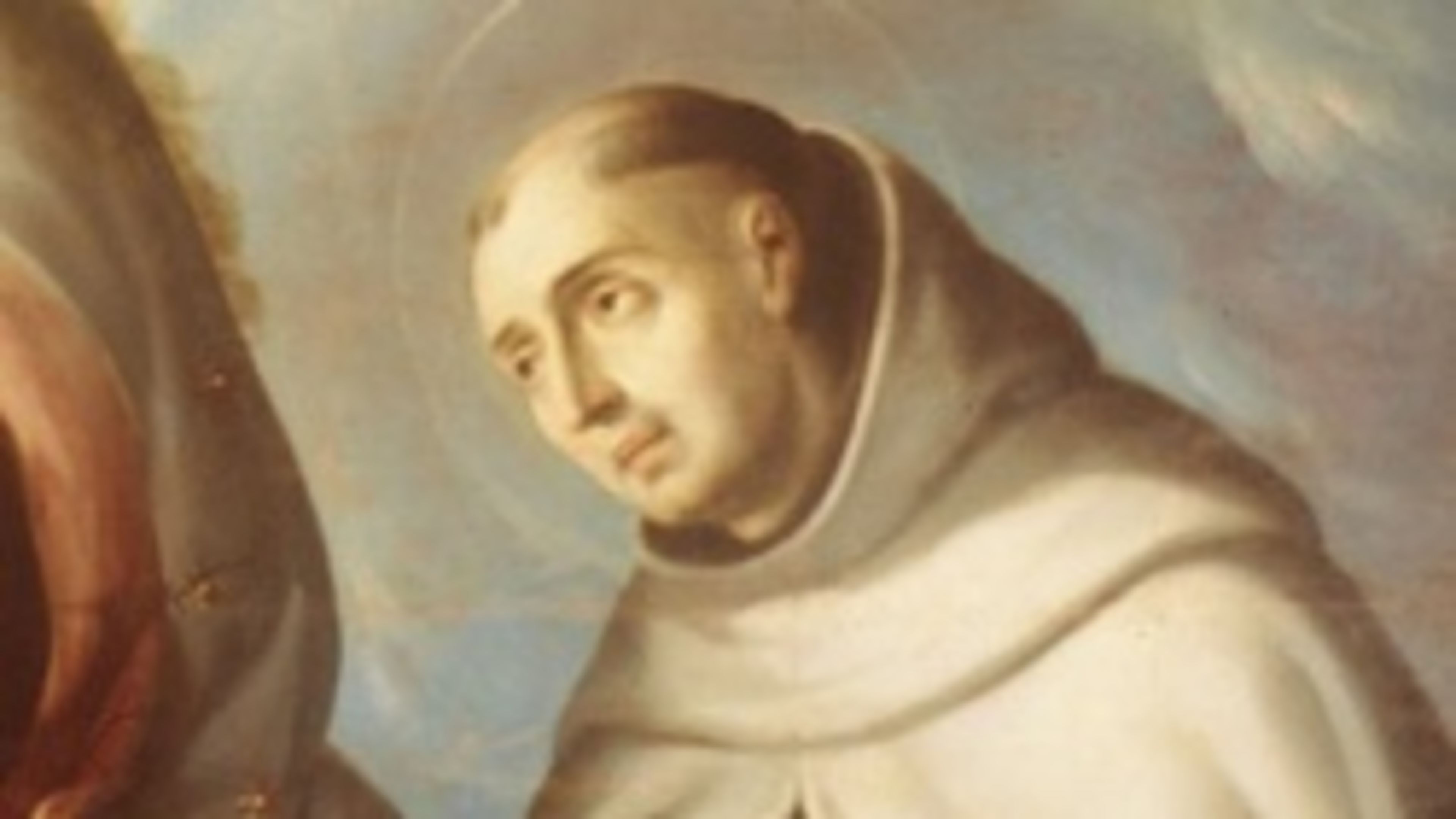
John of the Cross
 Spain
SpainAlso known as: Saint John of the Cross, Juan de Yepes y Álvarez, San Juan de la Cruz
Birthday
June 24, 1542
Birth Sign
Sagittarius
Birthplace
Fontiveros, Spain
Age
Died at 49
About
John of the Cross was a Spanish mystic, poet, and Roman Catholic priest who lived during the 16th century. Born Juan de Yepes y Álvarez in Fontiveros, he became a foundational figure in Christian mysticism and one of the greatest poets of the Spanish Golden Age. As a reformer within the Carmelite Order, he co-founded the Discalced Carmelites with Saint Teresa of Ávila, advocating for a return to strict poverty and contemplative prayer. His life ended on December 14, 1591, in Úbeda, leaving behind a legacy of profound theological writings that continue to influence spirituality today.
Recognized as a Doctor of the Church, John's work focuses on the soul's journey toward divine union through purification. His literary output includes four major poetic works and extensive commentaries that established him as a master of mystical theology. Despite facing severe persecution and imprisonment early in his career, his commitment to spiritual reform remained unshaken, shaping the trajectory of Catholic thought for centuries.
Early Life & Background
Juan de Yepes y Álvarez entered the world on June 24, 1542, in the small village of Fontiveros, Spain. He was the third child of Gonzalo de Yepes, a wealthy merchant whose social standing crumbled after marrying Catalina Álvarez, a woman rejected by her own family for her lower status. Following the death of his father when Juan was very young, the family fell into deep poverty. They relied on charity to survive, a harsh reality that deeply shaped his later values regarding material wealth.
To support himself and his education, Juan worked as an altar boy at the Hospital of San José in Medina del Campo while learning to read and write. His intellectual potential quickly caught the attention of educators, leading to his enrollment at the Colegio de los Escolapios. There, he studied humanities and philosophy with distinction. In 1563, at the age of 20, he entered the Carmelite Order under the name Brother John of St. Matthew. He then pursued advanced theological studies at the University of Salamanca, graduating with a degree in theology in 1568. It was during these formative years that he met Teresa of Ávila, setting the stage for a partnership that would redefine the order.
Career Growth
After his ordination as a priest in 1567, John joined forces with Teresa of Ávila to establish the Discalced Carmelites, a branch dedicated to a stricter observance of the original rule. Their vision sought to strip away the accumulated wealth and laxity of the main Carmelite order. This reformist zeal brought immediate conflict with the Calced Carmelites, who opposed the changes. In November 1577, fellow Calced Carmelites kidnapped John and imprisoned him in a Toledo monastery.
For nine months, he endured brutal conditions in a tiny, windowless cell no larger than six feet long. Subjected to daily beatings and public humiliation, he maintained his resolve and composed poetry during this ordeal. He escaped in September 1578 by squeezing through a small opening in the wall and hiding in a garden. Following his escape, he traveled to Baeza and Granada, resuming his work with Teresa. After her death in 1582, John continued to lead the Discalced Carmelites, facing further opposition and exile. He served as prior in various monasteries, including Pastrana and Úbeda, where he spent his final days leading the order with humility until his death.
Career Timeline
Public Image & Style
John of the Cross is portrayed as the archetype of the humble mystic and the suffering saint. Media and religious texts depict him as a man of deep introspection, unwavering faith, and poetic genius. His image is one of asceticism and spiritual intensity, often associated with the themes of darkness, night, and fire. He is respected not for fame or fortune, but for his profound insights into the human soul's journey toward God. Artistic representations frequently show him in the simple brown habit of the Discalced Carmelites, emphasizing his rejection of worldly comfort.
Fame & Fandom
The devotion surrounding John of the Cross has never resembled a modern pop-culture frenzy; instead, his followers form a dedicated community of theologians, poets, and contemplatives within the Discalced Carmelite Order. This audience engages with his legacy through liturgical celebrations on December 14, spiritual retreats focused on the 'Dark Night of the Soul,' and academic seminars that keep his mystical poetry alive for new generations. Unlike secular stars who rely on viral campaigns or fan clubs, this group shares a common language of complex metaphors found in works like The Living Flame of Love, using them as a shared code for deep spiritual understanding.
In terms of global visibility, John of the Cross is currently evaluated by the iFANN Global Fame Engine but does not hold a placement in the published rankings such as the Global Top 1,000 or any Top-100 scope list. This status reflects his standing as a historical religious figure rather than a contemporary celebrity whose fame fluctuates with media cycles. The absence of a numeric rank here simply indicates that while his spiritual impact is immense, he does not compete in the metrics used for current global celebrity rankings. His fame rests on enduring literary and theological authority rather than transient public consumption signals.
Interesting Facts and Legends
John composed much of his most famous poetry while imprisoned in a cell so small he could barely move. He used scraps of paper and charcoal to write, often hiding his work from his captors to avoid detection. Upon entering the order, he adopted the name 'John of the Cross' to symbolize his identification with Christ's suffering. The dysentery that caused his death is directly linked to the harsh conditions of his imprisonment, which severely weakened his immune system over time. Tradition holds that his last words were, 'I am going to love Him whom I have loved all my life,' encapsulating his lifelong devotion.
Notable Quotes
“For in order to come to taste everything, you must desire to understand nothing.”
“The heart that loves the most is the heart that suffers the most.”
“I am going to love Him whom I have loved all my life.”
“To come to taste everything, you must desire to understand nothing.”
Family & Personal Life
Juan was born into a family of modest means but significant social decline. His father, Gonzalo de Yepes, was a wealthy merchant who lost his status due to his marriage to Catalina Álvarez, a woman of lower birth who had been cast out by her own relatives. Juan was the third child in the family. After his father died when Juan was young, the household faced destitution, forcing them to rely on charitable support from others. This early experience of poverty deeply influenced his later commitment to absolute poverty within the religious order.
Notable Connections
Relationships & Dating History
As a Catholic priest and a member of a mendicant order taking vows of chastity, poverty, and obedience, John of the Cross did not have a romantic life, dating history, or children. His relationships were strictly spiritual and communal, centered on his collaboration with Saint Teresa of Ávila and his relationship with the Discalced Carmelite community. There are no records of any romantic partners, marriages, or engagements. His life was entirely dedicated to his faith and his mission of spiritual reform. He remained celibate throughout his life, viewing his union with God as his primary relationship.
Death & Aftermath
Died
December 14, 1591 (aged 49)
Death Place
Úbeda, Jaén, Spain
Cause of Death
Dysentery exacerbated by imprisonment conditions
The community at the Convent of Úbeda announced the passing of Brother John on December 14, 1591, marking the end of a life defined by profound spiritual endurance. He had been sent to this location in Andalusia to recover from severe illness following years of imprisonment and mistreatment by fellow Discalced Carmelites, where he suffered from dropsy and extreme physical exhaustion resulting from malnutrition during his confinement. Contemporary accounts describe him as dying peacefully while reciting the Litany of Loreto, with no official investigation or legal trial conducted regarding the circumstances of his final days. The immediate reaction remained confined within the Carmelite order and the Catholic hierarchy rather than public spectacle, as his peers mourned his loss deeply despite Saint Teresa of Ávila having died shortly before him in 1582.
His body was buried privately within the convent cemetery at Úbeda immediately following his death, consistent with the customs of the time for religious figures, before eventually being transferred to the Convent of the Discalced Carmelites in Granada where it rests today as a relic. Posthumously, his literary works including The Dark Night of the Soul and The Ascent of Mount Carmel became foundational texts of Christian mysticism, earning him canonization by Pope Benedict XIII in 1726 and the title of Doctor of the Church from Pope Pius XI in 1926.
Net Worth (Estate Value)
$0
iFANN Editorial Team estimate
As a 16th-century monk who took a vow of poverty and died in destitution, John of the Cross had no personal net worth. His estate consisted solely of his manuscripts and the spiritual legacy he left behind. Historical records indicate he died with no financial assets, having embraced a life of absolute poverty throughout his tenure in the Discalced Carmelite Order.
Modern estimates of his 'estate value' are N/A in the traditional sense. Unlike modern celebrities whose estates generate revenue through licensing, royalties, and merchandise, John of the Cross's works are in the public domain. There are no copyright fees or licensing deals associated with his original texts that accrue to a personal estate. While his works generate income indirectly through the publication of books, academic journals, and religious materials, these revenues support the publishers and the Carmelite Order rather than a personal fortune. As a deceased historical figure, he has no current financial assets or net worth projections.
Awards Won (3)
While modern awards did not exist in the 16th century, John of the Cross received the highest possible ecclesiastical honours. He was declared a Doctor of the Church by Pope Pius XI in 1926, recognizing his theological and literary contributions as exceptionally important for the Catholic faith. He was canonized as a saint in 1726 by Pope Pius IX following his beatification in 1675. Additionally, he was named Patron Saint of Contemplatives, Mystics, and Spanish Poets.
1926 · Ecclesiastical Title
Overall Body of Work
1726 · Sainthood
Life and Teachings
Known For
The Dark Night of the Soul
1578 · Poet
Spiritual Canticle
1578 · Poet
Living Flame of Love
1585 · Poet
Ascent of Mount Carmel
1578 · Theologian
Keywords
Sources
Quick Facts
- Profession
- writer, poet, Catholic priest
- Born
- June 24, 1542
- Birthplace
- Fontiveros
- Died
- December 14, 1591
- Death Place
- Úbeda
- Gender
- Male
- Birth Sign
- Sagittarius
Personal Details
- Full Name
- Juan de Yepes y Álvarez
- Children
- Education
- University of Salamanca (Theology degree)
Frequently Asked Questions
Who was John of the Cross?
When did John of the Cross die?
What is John of the Cross famous for?
Did John of the Cross ever get married?
Why is John of the Cross called the 'Mystical Doctor'?
Similar People
Join the community
fans discussing