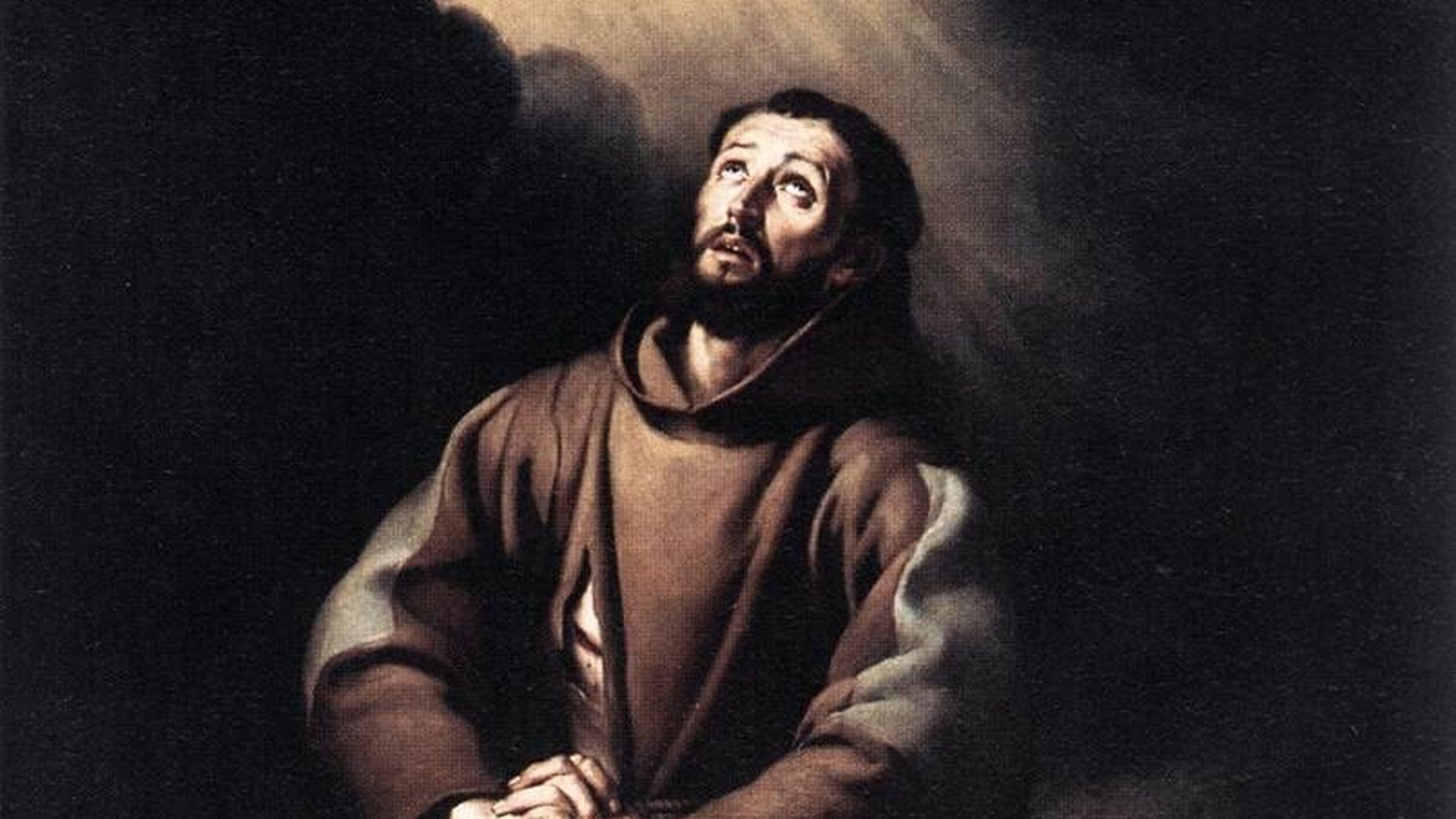
Francis of Assisi
 Italy
ItalyCatholic friar•deacon•mystic•founder of the Franciscan Order
Also known as: Saint Francis of Assisi, Giovanni di Pietro di Bernardone, Il Poverello
Birthday
1182-06-24
Birth Sign
Sagittarius
Birthplace
Assisi, Italy
Age
Died at 44
About
Giovanni di Pietro di Bernardone, universally known as Francis of Assisi, was an Italian Catholic friar, deacon, and mystic who founded the Franciscan Order. Born around 1181 in Assisi, he is celebrated for his radical embrace of poverty, his love for all creation, and his role as a peacemaker. Today, he is the patron saint of animals, the environment, and Italy, and his feast day on October 4 has become World Animal Day. Millions around the world draw inspiration from his simple, joyful faith and his famous prayer, 'Lord, make me an instrument of your peace.'
Early Life & Background
Francis grew up in Assisi as the son of Pietro di Bernardone, a wealthy cloth merchant, and his wife, Madonna Pica. His early years were marked by privilege and a taste for the high life. He was known among the town's youth as a leader in revelry and spent freely on fine clothes and parties. A desire for knightly glory drove him to join a military campaign against Perugia in 1202. The battle went badly. Francis was captured and spent nearly a year in a Perugian prison, where illness and isolation began to chip away at his old ambitions.
After his release, a long convalescence left him restless and searching. Riding through the Umbrian countryside, he came face to face with a leper, a figure he had always recoiled from. In a moment that changed everything, he dismounted, embraced the man, and gave him all the money he had. That encounter marked the beginning of his inner transformation. He began visiting remote churches to pray, and in the dilapidated chapel of San Damiano, he heard a voice from the crucifix: 'Francis, go and repair my house, which, as you see, is falling into ruin.' Taking the words literally, he sold cloth from his father's shop to fund repairs, sparking a bitter conflict with his father. In 1206, before the bishop of Assisi, Francis stripped off his fine clothes, returned them to his father, and declared he had only one Father in heaven. He walked away naked, embracing a life of absolute poverty.
Career Growth
Francis began preaching in the streets of Assisi, calling people to repentance and a simple life. His sincerity drew followers. The first was Bernard of Quintavalle, a wealthy merchant who gave away everything to join him. Soon a small band had formed, living in abandoned leper colonies and working for their food. In 1209, Francis wrote a brief Rule of life drawn from Gospel passages and traveled to Rome with his eleven companions to seek papal approval. Pope Innocent III, after a dream in which he saw Francis propping up the Lateran Basilica, gave verbal approval to the Order of Friars Minor, the Franciscans.
The order grew rapidly, and Francis sent friars across Europe and beyond. In 1219, during the Fifth Crusade, he traveled to Egypt and crossed enemy lines to meet Sultan Al-Kamil. He preached to the Sultan, who was impressed by his courage and holiness but did not convert. The meeting, however, became a model for interfaith dialogue. In 1223, Francis created the first living Nativity scene in the town of Greccio, using a hay-filled manger, an ox, and a donkey to bring the Christmas story to life. The tradition spread worldwide. The following year, while praying on Mount Alverna, Francis received the stigmata, the visible wounds of Christ's crucifixion. He bore them for the remaining two years of his life, keeping them hidden from most people.
Career Timeline
Public Image & Style
Francis of Assisi is one of the most universally beloved saints, admired far beyond the Catholic Church. His image is instantly recognizable: a slight man in a rough brown habit tied with a rope, often surrounded by animals. He is seen as the gentle and joyful saint who kissed lepers and called the sun his brother. Modern environmental movements have embraced him as a patron, and Pope Francis chose his name to signal a papacy focused on the poor and the earth. His message of radical simplicity and peace resonates in an age of consumerism and conflict. Critics sometimes dismiss his ideals as impractical, but his example continues to challenge and inspire people of all faiths and none.
Fame & Fandom
Francis of Assisi commands a devotion that transcends the fleeting nature of modern celebrity, anchored instead by centuries of spiritual pilgrimage and institutional continuity. His followers, known as Franciscans and Catholics worldwide, do not organize chart campaigns or subway ad pushes; they gather in massive numbers to walk the newly unveiled 1,500 km Camino dedicated to him and visit his tomb in Assisi for annual blessings of animals. This is a fandom built on ritual rather than fandom culture, where young pilgrims still seek guidance from Pope Leo's calls to live the Gospel in Francis's mold. The scale of this global attention spans eight hundred years, keeping his legacy vibrant in the digital age. As of August 2026, this enduring influence places him as the 74th most famous person in Italy according to the iFANN Global Fame Rankings. In the broader cultural sphere, he holds the position of the 29th most famous person in Art & Design, reflecting his profound impact on visual history and environmental thought.
Interesting Facts and Legends
Giovanni di Pietro di Bernardone never intended to establish a formal religious order, yet his 'Friars Minor' became one of history's largest mendicant groups. He composed the 'Canticle of the Sun,' an early Italian vernacular poem praising Brother Sun and Sister Death. Legends persist about his ability to tame nature: he once preached to a flock of birds who listened without flying away, and he made a peace pact with a ferocious wolf in Gubbio that agreed to stop attacking people in exchange for food. A verified historical event occurred when he stripped naked in Assisi's public square, renouncing his wealthy father to embrace absolute poverty at the church of San Damiano. While praying on Mount La Verna, he received the stigmata, the only recorded instance of a living person bearing Christ's wounds. His death on October 3, 1226, led to canonization by Pope Gregory IX less than two years later. Modern devotees continue to honor these stories through the annual blessing of animals and large-scale pilgrimages celebrating his legacy of peace.
Notable Quotes
“Preach the Gospel at all times and when necessary use words.”
“For it is in giving that we receive.”
“All the darkness in the world cannot extinguish the light of a single candle.”
“Lord, make me an instrument of your peace.”
“Praised be You, my Lord, through Sister Death.”
Family & Personal Life
Francis's father, Pietro di Bernardone, was a successful cloth merchant who traveled frequently to France for trade. His mother, Madonna Pica, was said to be of noble French origin. Francis was one of several children, though little is recorded about his siblings. After his conversion, his relationship with his father was permanently broken. Pietro disowned him, and Francis publicly renounced his inheritance. He never married or had children, seeing all of creation as his family. In his later years, he was cared for by Clare of Assisi and her sisters at San Damiano, and he referred to them as 'the Poor Ladies.'
Notable Connections
Saint Clare of Assisi was Francis's close friend and spiritual follower; she founded the Poor Clares, the female branch of the Franciscan movement. Pope Innocent III gave the first approval to the Franciscan Order in 1209. Pope Gregory IX, his former protector Cardinal Ugolino, canonized him in 1228. His father, Pietro di Bernardone, opposed his religious vocation, leading to a public break.
Relationships & Dating History
Francis of Assisi had no known romantic relationships. After his conversion, he took a vow of chastity and lived a celibate life. His closest human bond was with Clare of Assisi, but it was a spiritual friendship, not a romantic one. He called her 'Sister Clare' and supported her founding of the Poor Clares. There are no records of any romantic involvement before his conversion either, as his youthful pursuits were focused on knighthood and revelry, not courtship.
Death & Aftermath
Died
1226-10-03 (aged 44)
Death Place
Assisi, Italy
Cause of Death
Reported illness and complications from stigmata
Widespread mourning gripped the citizens of Assisi and the Franciscan order as news spread that their beloved founder had passed away. The faithful viewed his final moments not as a tragedy but as a holy transition, a sacred crossing into eternity. St. Francis died on October 3, 1226, at the Portiuncula near Assisi, Italy, surrounded by companions including Brother Leo. He spent his final days suffering from fever, dysentery, and extreme weakness, compounded by chronic pain from the stigmata he had received years earlier. Hagiographical accounts describe him requesting to be laid naked on the bare earth before reciting Psalm 142 and passing away. His body was carried in procession to the Church of San Giorgio for temporary burial, where rumors of miracles quickly began to circulate among the pilgrims gathering there.
The intense veneration of the populace led to his remains being moved in 1230 to the newly constructed Basilica of Saint Francis of Assisi. Pope Gregory IX presided over the canonization process just two years after his death, formally declaring him a saint in July 1228. This rapid elevation cemented his legacy as the patron saint of animals and the environment. Centuries later, his influence expanded through the growth of the Franciscan Order and the establishment of related foundations like the Capuchins and Poor Clares. Modern commemorations include the annual blessing of animals on October 4. In 2026, the 800th anniversary of his death was marked by the launch of the Cammino di Francesco pilgrimage trail and the release of new literary works honoring his spirit.
Net Worth (Estate Value)
$0
iFANN Editorial Team estimate
Per iFANN's editorial analysis, the net worth of Francis of Assisi stands at $0. As a religious figure who embraced absolute poverty, he owned no personal wealth. He renounced all material possessions in 1206 and lived the rest of his life as a beggar, relying solely on alms. The Franciscan Order he founded also held no property collectively, distributing any donations immediately to the poor. In 2026, no net worth can be assigned to Francis himself; his legacy remains entirely spiritual rather than financial.
Awards Won (1)
Francis of Assisi's primary 'award' was his canonization as a saint by Pope Gregory IX in 1228, just two years after his death. He is recognized as a Doctor of the Church by some, though not officially. His feast day, October 4, is celebrated worldwide and has been designated World Animal Day, honoring his patronage of animals and the environment.
1228 · Sainthood
Life and ministry
Known For
Founding the Franciscan Order
1209 · Founder
Preaching to the birds
1200s · Preacher
Receiving the stigmata
1224 · Mystic
Keywords
Quick Facts
- Profession
- Catholic friar, deacon, mystic, founder of the Franciscan Order
- Born
- 1181-06-24
- Birthplace
- Assisi, Italy
- Died
- 1226-10-03
- Death Place
- Portiuncula, Assisi
- Gender
- Male
- Birth Sign
- Sagittarius
Personal Details
- Full Name
- Giovanni di Pietro di Bernardone
Frequently Asked Questions
Who was Francis of Assisi?
When was Francis of Assisi born?
What is Francis of Assisi best known for?
Why is Francis of Assisi the patron saint of animals?
What is the Franciscan Order?
Similar People
Join the community
fans discussing