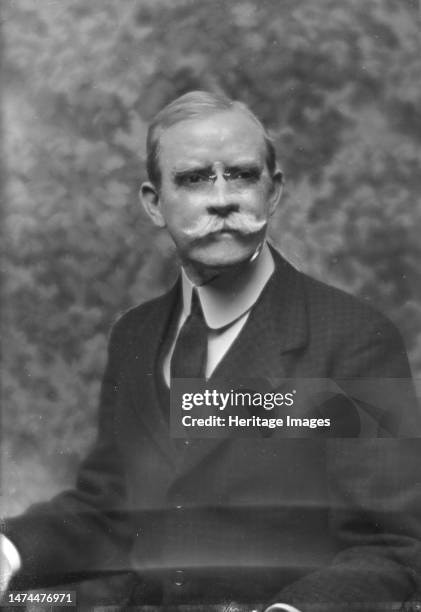
John Henry Patterson
 Ireland
British Army officer•hunter•author
Birthday
November 10, 1867
Birth Sign
Scorpio
Birthplace
Forgney, County Longford, Ireland
Age
Died at 79
Height
5 ft 11 in (180 cm)
About
John Henry Patterson was a British Army officer, hunter, and author from Ireland. Born on November 10, 1867, he led a life as varied as the African savanna and the trenches of World War I. His most famous work, The Man-eaters of Tsavo (1907), recounts his harrowing nine months in 1898-1899 overseeing railway bridge construction in East Africa while two maneless lions killed and ate dozens of workers. Patterson shot both lions, and their story inspired three films: Bwana Devil (1952), Killers of Kilimanjaro (1959), and The Ghost and the Darkness (1996). During the First World War, he commanded the Jewish Legion, a unit often called the first precursor to the Israel Defense Forces. Patterson died on June 18, 1947, at age 79.
Early Life & Background
John Henry Patterson was born on November 10, 1867, in Forgney, County Longford, Ireland, to Henry Patterson, a Protestant. He grew up in a modest household and attended private schools in Ireland before entering the Royal Military Academy at Sandhurst. After commissioning, he served in the British Army, rising to the rank of lieutenant colonel. His military career took him to various postings, but his life changed in 1898 when he was hired by the Uganda Railway Committee to oversee construction of a railway bridge over the Tsavo River in Kenya. The job was dangerous: the region was remote, and workers faced threats from wildlife. Patterson arrived in March 1898, ready to manage the project.
Career Growth
Patterson's breakthrough came during the Tsavo bridge construction. From March to December 1898, two maneless lions terrorized the camp, killing over 130 workers. Patterson tracked and shot the first lion on December 9, 1898, and the second on December 29, 1898. The ordeal made him a legend. He published The Man-eaters of Tsavo in 1907, which became a classic of adventure literature. The book inspired three films: Bwana Devil (1952), Killers of Kilimanjaro (1959), and The Ghost and the Darkness (1996). During World War I, from 1915 to 1919, he commanded the Jewish Legion, a volunteer unit of Jewish soldiers fighting in Palestine. For his service, he was awarded the Distinguished Service Order in 1917. After the war, he wrote With the Judaeans in the Palestine Campaign (1922) and continued to advocate for a Jewish homeland until his death.
Career Timeline
Public Image & Style
Patterson is remembered as a heroic colonial hunter and a military leader. His persona blends Victorian adventure with wartime command. Fans of hunting and military history celebrate his exploits. He has no official fandom name, but his story is popular in hunting and Zionist circles. The tone of his writings is direct and gripping, reflecting his no-nonsense attitude. Media portrayals, especially in The Ghost and the Darkness, emphasize his courage and resourcefulness. Audiences connect with his underdog struggle against nature and his role in Jewish military history.
Fame & Fandom
John Henry Patterson commands a legacy defined by historical gravitas rather than modern celebrity worship. His audience consists primarily of military historians, Zionist scholars, and enthusiasts of colonial-era big-game hunting who revere his documented exploits as foundational to the narrative of the Jewish Legion and the iconic Tsavo lion hunt. Unlike contemporary figures with organized fanbases, social media movements, or self-styled fandom names, Patterson is honored through academic commemoration and institutional preservation. The International Fellowship of Christians and Jews and various Israeli military history groups maintain his memory, treating him as a national hero rather than a pop culture icon. There are no recorded campaigns, fan art communities, or grassroots projects dedicated to promoting his work beyond standard historical archives. While his story inspired three major films, including The Ghost and the Darkness, these adaptations serve to cement his historical status rather than generate a distinct fan movement. iFANN has evaluated his global standing based on available cultural data. John Henry Patterson is currently evaluated as unranked in the iFANN Global Fame Engine, with no placement in the Global Top 1,000 or any Top-100 scope list. The evaluation confirms that while his name carries weight in specific circles, he lacks the broad, viral recognition required for a higher global rank.
Interesting Facts and Legends
The taxidermied skeletons of the two man-eating lions remain the only known specimens of their kind preserved in a museum, displayed permanently at the Field Museum in Chicago. Patterson was a close friend of Chaim Weizmann, the first president of Israel, and served as a military advisor who helped train Jewish soldiers during World War I. Although he never had children, his legacy endures through his writings and the historical significance of the Jewish Legion, often cited as the precursor to the Israel Defense Forces. A defining legend of his life involves the 1898 attack where two maneless lions killed dozens of workers building a railway bridge in East Africa; Patterson successfully hunted both beasts after nine months of conflict. Another pivotal moment occurred in December 2014 when his ashes were exhumed from England and re-interred at Mount Herzl Military Cemetery in Jerusalem, an event attended by high-ranking officials that solidified his status as a foundational figure for the State of Israel.
Notable Quotes
“The lions of Tsavo were not ordinary beasts; they were devils incarnate.”
Family & Personal Life
Patterson married Frances Helena Baker in 1895. The couple had no children. Frances supported his career and accompanied him on some postings. They remained married until Patterson's death in 1947. His father, Henry Patterson, was a Protestant, but little else is known about his family background. Patterson did not have siblings mentioned in historical records. After his death, his estate was managed by descendants or literary agents.
Notable Connections
Patterson was a close friend of Chaim Weizmann, the first president of Israel, and worked with him on Zionist causes. His story was adapted into films starring Val Kilmer and Michael Douglas. He served the Uganda Railway Committee and later the British Army's Jewish Legion.
Relationships & Dating History
Patterson's only known romantic relationship was with Frances Helena Baker, whom he married in 1895. They remained married until his death in 1947. There are no recorded public relationships, engagements, or divorces beyond this marriage. As of 2026, Patterson is deceased, and his marital status was married to Frances until his death.
- MarriedFrances Helena Baker1895 - 1947They married in 1895 and remained together until Patterson's death; no children.
Death & Aftermath
Died
June 18, 1947 (aged 79)
Death Place
Jerusalem, Mandatory Palestine
Cause of Death
Natural causes associated with old age
Immediate tributes flowed from military and Zionist circles following the passing of John Henry Patterson, who was widely recognized for his unique role as the commander of the first official Jewish fighting force under a recognized government in nearly two millennia. These acknowledgments evolved over decades into formal honors, including a ceremony at Tel Aviv's Jabotinsky Institute in December 2015 that declared December 4 as "Patterson Day" to commemorate his contributions to the Zionist cause. The man known for hunting lions in East Africa and leading the Jewish Legion during World War I passed away quietly on 18 June 1947 in Jerusalem, Mandatory Palestine, where he had lived for some time prior to his death.
Historical consensus indicates he died of natural causes associated with old age at the age of 79. His burial took place in Israel despite his Christian background, reflecting his deep commitment to Zionism, and his legacy has been maintained by institutions such as the Israel Defense Forces community. Posthumous recognition continues through the preservation of his literary works and the enduring popularity of film adaptations like The Ghost and the Darkness, which kept his name in the public eye long after his final days.
Net Worth (Estate Value)
As a historical figure, John Henry Patterson's net worth is not publicly tracked. His income came from his British Army pension, book royalties from The Man-eaters of Tsavo and other works, and speaking fees. After his death, his estate has earned posthumous income from book reprints, film adaptations (including The Ghost and the Darkness), and licensing of his story. However, no specific dollar figures are available. The estate is managed by descendants or literary agents. As of 2026, no net worth estimate exists for Patterson.
Awards Won (1)
Patterson was awarded the Distinguished Service Order (DSO) in 1917 for his command of the Jewish Legion during World War I. He received no other major awards from ceremonies like Oscars or Grammys, as his fame was primarily from his book and military service.
1917 · Military
Command of the Jewish Legion
Known For
The Man-eaters of Tsavo
1907 · Author
Command of the Jewish Legion
1915 · Commander
Killing the Tsavo lions
1898 · Hunter
Keywords
Quick Facts
- Profession
- writer, military officer, hunter
- Born
- +1867-11-10
- Birthplace
- Ireland
- Died
- +1947-06-18
- Death Place
- Bel Air
- Gender
- Male
- Birth Sign
- Scorpio
Personal Details
- Full Name
- John Henry Patterson
- Height
- 5 ft 11 in (180 cm)
- Spouse
- Frances Helena Baker
- Education
- Private schools in Ireland; Royal Military Academy, Sandhurst
Frequently Asked Questions
How did John Henry Patterson die?
What is John Henry Patterson famous for?
Did John Henry Patterson have children?
What is the net worth of John Henry Patterson?
Is John Henry Patterson related to the founder of NCR?


Join the community
fans discussing