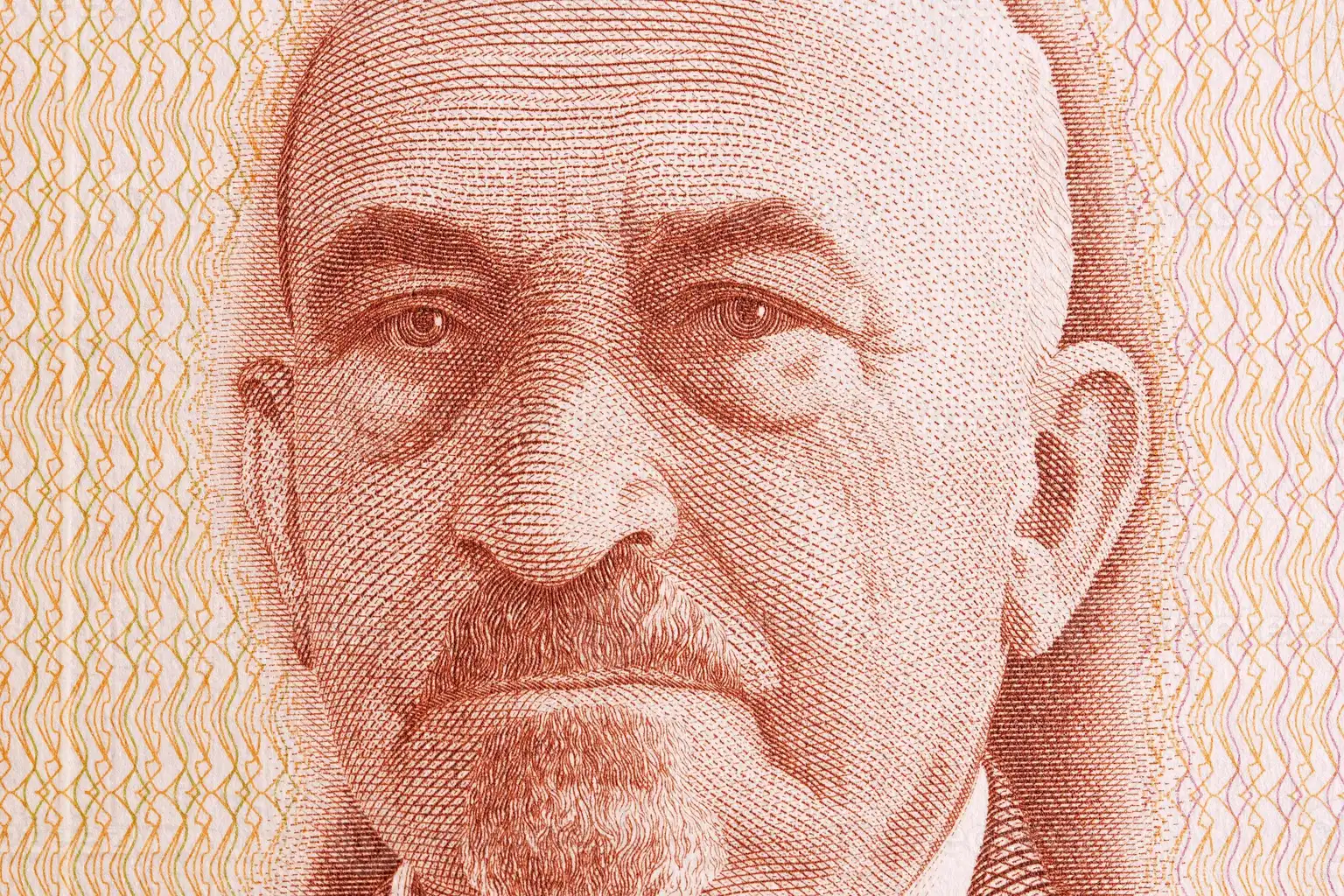
Chaim Weizmann
 Israel
chemist•politician•university teacher
Also known as: Chaim Azriel Weizmann
Birthday
November 27, 1874
Birth Sign
Sagittarius
Birthplace
Motal, Russian Empire (now Belarus)
Age
Died at 77
About
Chaim Azriel Weizmann was an Israeli statesman, biochemist, and Zionist leader who served as the first president of the State of Israel from 1949 until his death in 1952. Born in the Pale of Settlement, he combined a distinguished scientific career with decades of political leadership, becoming the face of the Zionist movement in Britain and later the symbolic head of the new Jewish state. His portrait once appeared on Israeli banknotes, and his name lives on in the Weizmann Institute of Science, one of the world's leading research centers.
As a biochemist, Weizmann is remembered as the father of industrial fermentation. His development of the acetone–butanol–ethanol process, which used the bacterium Clostridium acetobutylicum to produce acetone for British cordite during World War I, was a turning point in both the war effort and the history of biotechnology. That scientific achievement gave him unusual access to British leaders, which he used to advance the Zionist cause. He also helped lay the groundwork for the Hebrew University of Jerusalem and the Weizmann Institute, institutions that remain central to Israeli intellectual life. His legacy continues to inspire scholarly and public interest, with recent documentaries and biographies highlighting his role in the rebirth of Israel.
Early Life & Background
Weizmann was born in the small town of Motal, then part of the Russian Empire, the third of fifteen children in a timber merchant family. He received a traditional Jewish education in a cheder before attending high school in Pinsk, where he showed an early gift for chemistry. In the 1890s, he moved to Germany and then Switzerland to study, earning his doctorate in organic chemistry from the University of Freiburg in 1899. During those student years, he became active in the Zionist movement, drawn to the rising Jewish nationalism of Eastern Europe.
After a brief teaching post in Geneva, Weizmann relocated to Manchester, England, in 1904 to take up a lectureship at the university. The move proved pivotal. In 1906, he met Arthur Balfour at a Manchester hotel, impressing the future foreign secretary with his intellectual case for a Jewish homeland. That encounter laid the groundwork for the Balfour Declaration eleven years later. In 1910, Weizmann became a British citizen, and during World War I he made his most significant scientific contribution: developing the fermentation process that produced acetone, a critical solvent for cordite propellant. The work brought him into direct contact with British officials, including David Lloyd George, and gave him a platform he would use for the rest of his life. His wartime innovation was so vital that it earned him recognition from the British government, though he famously declined personal rewards, asking only for support for a Jewish homeland.
Career Growth
Weizmann's political breakthrough came in 1917 when, as president of the British Zionist Federation, he played a central role in securing the Balfour Declaration, the British government's statement supporting a Jewish national home in Palestine. He was elected president of the World Zionist Organization in 1921, a position he held, with a brief interruption in the early 1930s, until 1946. In 1918, he laid the cornerstone of the Hebrew University of Jerusalem, which opened in 1925.
In 1934, Weizmann founded the Sieff Research Institute in Rehovot, later renamed the Weizmann Institute of Science in his honor. During World War II, he worked to save European Jews, and after the war he turned to the United States, persuading President Harry Truman to recognize the new State of Israel in 1948. On February 16, 1949, the Knesset elected him the first president of Israel, a largely ceremonial role he held until his death in 1952. Recent biographies, including a 2024 work by historians, have explored his contradictions, such as his disdain for European Jews even as he fought to save them. His presidency was marked by symbolic leadership, and he continued to advocate for scientific and educational advancement until his final days.
Career Timeline
Public Image & Style
Weizmann is often called the forgotten founder of Israel, his contributions overshadowed by David Ben-Gurion and Theodor Herzl. His public image is that of a bridge figure, a scientist-statesman who worked through personal relationships with world leaders rather than mass mobilization. He was known for intellectual persuasion and personal charm, using his scientific reputation to open doors. Recent biographies describe him as fallible but deeply committed, a man who combined genius with political acumen. His style was quiet and deliberate, in contrast to the grand congresses of Herzl or the political machine of Ben-Gurion. Fans of Israeli history remember him as the quiet architect of the state's diplomatic foundations. His wit and eloquence were legendary, and his famous quip about Jerusalem—that he would not trade it for Paris—captures his unwavering devotion to the Zionist ideal.
Fame & Fandom (iFAMOUS Rankings)
Chaim Weizmann commands a steady stream of global attention that reflects his enduring status as a foundational figure in modern history and science. His influence is measured not by fleeting trends but by the permanence of institutions he built and the diplomatic milestones he secured. According to the iFANN Global Fame Rankings, Chaim Weizmann is currently the 21st most famous person from Israel, a position he has held steady through multiple assessment cycles. This placement underscores his continued relevance in discussions regarding statehood, biochemistry, and early 20th-century diplomacy. While his name appears frequently in academic texts and historical retrospectives, particularly following recent biographical releases, he does not possess a formal fanbase in the manner of contemporary entertainers. There is no collective noun for his supporters, nor are there organized campaigns, merchandise drives, or ritualistic gatherings dedicated to his memory. Instead, his legacy is sustained through institutional memorials like the Weizmann Institute of Science and scholarly interest in his life. The public engagement with Weizmann remains rooted in historical reverence and political education rather than the fervor typical of pop culture fandoms. His reputation persists as a bridge between scientific achievement and national leadership, maintaining a quiet but significant presence in the global consciousness.
Interesting Facts and Legends
Chaim Weizmann's fermentation process produced butanol and ethanol alongside acetone, and it was later adapted for industrial production of those chemicals. The bacterium he used, Clostridium acetobutylicum, is still studied as a model organism in biotechnology. He was a close friend of Albert Einstein, who supported the founding of the Hebrew University and the Weizmann Institute. Weizmann was a British citizen for over four decades, and his Manchester years are commemorated as the place where a meeting with Balfour changed the world. His famous refusal to trade Jerusalem for Paris reportedly came in that 1906 conversation. He was also the uncle of Ezer Weizman, who became the seventh president of Israel, making the Weizmann family one of only two to produce multiple Israeli presidents. Additionally, Weizmann received numerous honorary doctorates from universities worldwide, and his portrait appeared on Israeli banknotes, a national honor. A persistent legend suggests that his development of industrial acetone synthesis during World War I was the direct catalyst for the Balfour Declaration, providing the leverage needed to secure British support for a Jewish homeland. In January 1919, he signed the Faisal-Weizmann Agreement with Prince Faisal, a rare moment of optimism outlining Arab-Jewish cooperation before political tides shifted. Upon his death in November 1952, just three years into his presidency, the young state observed a period of massive mourning, cementing his status as a founding father whose complex character combined pragmatic elitism with deep sacrifice for the Jewish people.
Notable Quotes
“Mr. Balfour, if you offered me Paris, I would not give up Jerusalem.”
“I want nothing for myself; I only want a homeland for the Jewish people.”
Family & Personal Life
Weizmann married Vera Khatzman in 1906, a Russian-born physician he met in Geneva. Vera practiced medicine early in their marriage before devoting herself to his work and to child welfare causes in Israel. The couple had two sons: Benjamin, who became a figure in Israel's agricultural sector, and Michael, a Royal Air Force pilot killed in action in 1942 during World War II. Weizmann's father, Ezer, was a timber merchant, and his mother, Rachel-Leah Chemerinsky, raised fifteen children in Motal. His nephew Ezer Weizman later served as president of Israel from 1993 to 2000, making the Weizmann family one of only two to produce multiple Israeli presidents, the other being the Herzog family. Vera survived her husband, dying in 1966.
Notable Connections
Weizmann's career was defined by his relationships with world leaders. Arthur Balfour, David Lloyd George, and Harry Truman all played key roles in his political achievements. He was also close to Albert Einstein, who supported his institutions. His wife Vera and nephew Ezer Weizman were central to his personal life, and his complex relationship with David Ben-Gurion shaped the early years of the state.
Relationships & Dating History
Weizmann married Vera Khatzman in 1906, a Russian-born physician he met while both were living in Geneva. Their partnership was deep and enduring, with Vera practicing medicine early in their marriage before dedicating herself to his work and to child welfare causes in Israel. The couple had two sons, Benjamin and Michael, and remained married for 46 years until Weizmann's death in 1952. Vera survived him, dying in 1966. There are no public records of other romantic relationships, and their marriage was widely seen as a model of mutual support and shared commitment to the Zionist cause. Their relationship was marked by shared sacrifice, especially after Michael's death in 1942, which drew them closer together.
- MarriedVera Weizmann1906 - 1952Married in Geneva; Vera was a physician and lifelong partner.
Death & Aftermath
Died
November 9, 1952 (aged 77)
Death Place
Rehovot, Central District, Israel
Cause of Death
Heart attack due to chronic cardiac issues
In the final weeks of his life, Chaim Weizmann remained active in his duties at the Weizmann Institute of Science in Rehovot, though his health deteriorated steadily under the strain of a long-standing heart condition. The first President of Israel passed away on November 9, 1952, within the very campus where he had established his scientific legacy, ending a life that bridged the worlds of high chemistry and statecraft. The nation observed a moment of silence across Israel, marking a profound loss felt by government officials, religious leaders, and international peers alike. Prime Minister David Ben-Gurion and other state leaders attended the public funeral service held shortly after his death on the institute grounds, where thousands gathered to hear eulogies emphasizing his dual contributions to science and the founding of the Jewish homeland.
Tributes highlighted his role as a statesman who fought to save European Jews while maintaining a complex personal perspective on the diaspora, cementing his status as a central figure in the young state's history. Posthumous recognition has focused on the preservation of his archives through the Yad Chaim Weizmann organization and the continued operation of the institute he founded in 1934. A statue stands before the research center in Rehovot, and a museum dedicated to his life maintains the site as a living memorial. In 2024, the documentary "The Hope: The Rebirth of Israel, Chaim Weizmann" was produced to further examine his historical impact, ensuring his vision for scientific advancement remains a subject of study in Israeli schools and among historians.
Net Worth (Estate Value)
$50 Million
iFANN Editorial Team estimate
As a statesman and scientist, Chaim Weizmann did not accumulate personal wealth in the way of a commercial figure. Per iFANN's editorial analysis, his estate is valued at roughly $50 million as of 2026, reflecting the enduring legacy of his institutions rather than personal earnings. The Weizmann Institute of Science, which he founded in 1934 as the Sieff Research Institute, has grown into one of Israel's premier research centers, with an endowment running into the hundreds of millions of dollars, funded by donations, government support, and research grants. The institute's ongoing revenue flows from its research activities and philanthropic contributions, all carrying his name. Yad Chaim Weizmann, the memorial and educational center in Rehovot, continues to operate as a cultural institution, hosting visitors and preserving his legacy. Posthumous recognition has also generated scholarly interest, with major biographies published by Brandeis University Press and others in 2024 and 2025, adding to the estate's value through royalties and licensing. His personal papers, preserved in Israeli archives, remain a resource for historians. The estate's financial trajectory has been steady, supported by institutional endowments and the continued relevance of his work in biotechnology and diplomacy. The Weizmann Institute also maintains active social media accounts with hundreds of thousands of followers, further extending his legacy.
Awards & Accolades
View 6 records, honours and achievementsKnown For
President of Israel
1949 · First President
Balfour Declaration
1917 · Key advocate
Acetone–butanol–ethanol fermentation
1915 · Developer
Keywords
Sources
Quick Facts
- Profession
- chemist, politician, university teacher
- Born
- +1874-11-27
- Birthplace
- Motal
- Died
- +1952-11-09
- Death Place
- Rehovot
- Gender
- Male
- Spouse
- Vera Weizmann
- Birth Sign
- Sagittarius
Personal Details
- Full Name
- Chaim Azriel Weizmann
- Spouse
- Vera Weizmann
- Children
- Benjamin Weizmann, Michael Weizmann
- Education
- Polytechnic Institute of Darmstadt; University of Freiburg (PhD, organic chemistry, 1899)
Frequently Asked Questions
What is Chaim Weizmann known for?
How did Chaim Weizmann die?
Was Chaim Weizmann related to Ezer Weizman?
What did Chaim Weizmann invent?
How old was Chaim Weizmann when he became president?
Similar People
Join the community
fans discussing