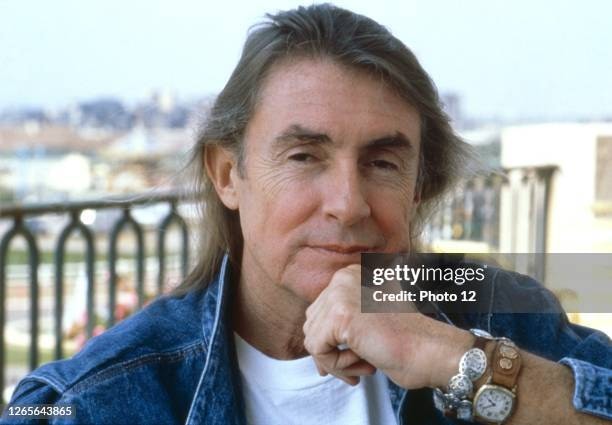
Joel Schumacher
 United States
film director•screenwriter•film producer
Birthday
August 29, 1939
Birth Sign
Virgo
Birthplace
New York City, New York, USA
Age
Died at 80
Height
5 ft 10 in (178 cm)
About
Joel Schumacher was an American film director, screenwriter, and producer whose career spanned five decades and nearly every genre. He started in fashion design before moving into filmmaking, first as a costume designer on movies like Woody Allen's Sleeper, then as a screenwriter on hits like Car Wash and The Wiz. His directorial debut came in 1981 with The Incredible Shrinking Woman, but he broke through in 1985 with the Brat Pack ensemble drama St. Elmo's Fire. Over the next two decades, Schumacher directed some of the most memorable films of the era: the vampire cult classic The Lost Boys, the psychological thriller Falling Down, the John Grisham adaptations The Client and A Time to Kill, and two entries in the Batman franchise. His visual flair, honed during his fashion years, gave his films a distinctive glossy look that audiences either loved or hated. He was a hitmaker who could move from horror to legal drama to musical with ease, even if critics were not always kind. Later in his career, Schumacher returned to smaller, critically praised projects like Tigerland and Phone Booth, which introduced Colin Farrell to Hollywood. He also directed the big-screen adaptation of Andrew Lloyd Webber's The Phantom of the Opera. Schumacher never won a major industry award, but in 2014 the Hamptons International Film Festival gave him a Lifetime Achievement in Directing Award, recognizing his contributions to popular cinema. He died in 2020 at age 80, leaving behind a filmography that reflects both his commercial instincts and his willingness to take risks.
Early Life & Background
Joel Schumacher grew up in the working-class neighborhood of Long Island City, Queens, raised by his widowed mother Marian after his father died of pneumonia when Joel was four. He was an only child and later described himself as an "American mongrel", his mother was a Swedish Jew, his father a Baptist from Tennessee. During his youth, Schumacher experimented heavily with LSD and methamphetamine and started drinking alcohol at age nine. He attended the Fashion Institute of Technology before transferring to Parsons School of Design, graduating with honors in 1965. While still a student, he worked as a design-display artist at Henri Bendel department store. After Parsons, he opened his own boutique called Paraphernalia in the 1960s and became a fashion designer for Revlon in 1966, designing packaging and clothing. His first steps toward film came when he moved to Los Angeles in 1971. He landed a trial job as a costume designer on Play It As It Lays (1972), followed by costume work on Woody Allen's Sleeper (1973) and Paul Mazursky's Blume in Love (1973). Through those connections, he secured his first directing gig on the 1974 NBC television movie The Virginia Hill Story. He also began writing screenplays, selling his first script, Car Wash, in 1976.
Career Growth
Schumacher's theatrical directorial debut came in 1981 with The Incredible Shrinking Woman, starring Lily Tomlin. The film got mixed reviews but showed his visual flair. His first major hit was St. Elmo's Fire in 1985, a coming-of-age drama that cemented the Brat Pack and made Schumacher a name in Hollywood. Two years later he directed The Lost Boys, a stylish vampire horror-comedy that became a cult classic and remains one of his most beloved films. In 1990 he directed Flatliners, a thriller about medical students who induce near-death experiences, starring Kiefer Sutherland and Julia Roberts. The film was a commercial success. He followed with Dying Young (1991), reuniting with Roberts, then Falling Down (1993), a dark drama starring Michael Douglas that earned critical praise. In 1994 he adapted John Grisham's The Client, starring Susan Sarandon and Brad Renfro, which was a box office hit. The next year he took over the Batman franchise from Tim Burton, directing Batman Forever. It grossed over $336 million worldwide, making it one of the highest-grossing films of 1995. In 1996 he directed another Grisham adaptation, A Time to Kill, which introduced Matthew McConaughey to wide audiences and grossed over $115 million. Then came Batman & Robin in 1997, a film widely panned by critics and fans, often cited as one of the worst superhero movies ever made. The film's failure marked a turning point. Schumacher spent the next few years making smaller, more personal films. In 2000 he directed Tigerland, a low-budget Vietnam War training camp drama that introduced Colin Farrell and earned Schumacher some of the best reviews of his career. He followed with the taut thriller Phone Booth (2002), again starring Farrell, which was a commercial hit. In 2004 he directed the film adaptation of Andrew Lloyd Webber's The Phantom of the Opera, a passion project that received mixed reviews but found an audience. His final directorial work was two episodes of the Netflix series House of Cards in 2013 and 2015.
Career Timeline
Public Image & Style
Schumacher was known for his strong visual sensibility, a direct result of his fashion background. His films often featured flamboyant color palettes and glossy production design, which critics sometimes derided as over-the-top but audiences often loved. He was a hitmaker who could move seamlessly between genres, from teen drama to vampire horror to legal thriller to superhero spectacle. After the failure of Batman & Robin, his reputation took a hit, but he regained respect with smaller, grittier films like Tigerland. He had a reputation as an actor's director, helping launch or revive careers: Matthew McConaughey in A Time to Kill, Colin Farrell in Tigerland and Phone Booth. Fans of The Lost Boys and St. Elmo's Fire remain fiercely loyal, and those films have developed cult followings that have only grown since his death.
Fame & Fandom (iFAMOUS Rankings)
Joel Schumacher is currently evaluated by iFANN but holds no placement in the published Global Top 1,000 or any Top-100 scope list. While he lacks a formal moniker for his followers, his legacy has been sustained by a highly active, self-organized fanbase that successfully rewrote the history of his Batman films. The most significant cultural movement involves rehabilitation campaigns where enthusiasts have shifted the perception of Batman Forever and Batman & Robin from universally panned disasters to misunderstood, campy masterpieces. This re-evaluation includes streaming pushes on platforms like Paramount+, retrospective articles analyzing the films' queer aesthetics, and chart discussions on Letterboxd and Reddit that defend his visual style against the critical consensus of the 1990s. His audience is generally subsumed under broader categories such as "Batman fans," "The Lost Boys fans," or general cult cinema enthusiasts, united by a shared experience of enduring initial backlash only to champion these movies decades later. The narrative surrounding his work now centers on the "Batman Redemption," where the fanbase effectively saved his reputation posthumously, transforming a career low point into a celebrated era of camp cinema. There are no records of organized fan-funded projects or birthday billboards specifically created for him, yet the communal bond among those who identify with his neon-noir sensibilities remains strong.
Interesting Facts and Legends
Schumacher started drinking alcohol at age nine and experimented with LSD and methamphetamine in his youth. He referred to himself as an "American mongrel" because of his mixed religious and ethnic background. He directed the INXS music video "Devil Inside" in 1988. A Time to Kill paid Sandra Bullock $6 million for essentially one week of work. Tigerland was made as a kind of "detox" for Schumacher after the failure of Batman & Robin. He worked with Kiefer Sutherland on four films: The Lost Boys, Flatliners, A Time to Kill, and Phone Booth.
A widely retold story in Schumacher's legend concerns the soundtrack for Batman & Robin and rock star Billy Corgan. The tale states that Corgan initially hated the film and refused to participate, viewing it as a disaster. However, Schumacher's insistence led to a compromise where Corgan contributed the track "The End Is the Beginning." Recent reporting confirms this track eventually became a rock anthem symbolizing the film's enduring cult status. Another foundational piece of folklore is his transition from a successful fashion designer to a filmmaker. Before directing Dying Young, Schumacher designed costumes for Henri Bendel, and fans frequently reference this origin story to explain why his films feel so visually distinct from his contemporaries. Upon his death in 2020, a tribute titled "Give me a syringe full of movies!" appeared in The Forward, recounting a personal life with Schumacher. This phrase has become a memorable quote associated with his final days and his intense passion for cinema.
Notable Quotes
“My mother was a Jew from Sweden; my father was a Baptist from Knoxville, Tennessee.”
“I'm an American mongrel.”
“I started drinking at nine and doing drugs at twelve. I was a mess.”
“The Lost Boys is a movie about not wanting to grow up.”
“Batman & Robin was a disaster. I take full responsibility.”
Family & Personal Life
Schumacher was raised by his widowed mother, Marian Kantor, in Long Island City, Queens. His father, Francis Schumacher, died of pneumonia when Joel was four years old. He had no siblings. Schumacher never married and had no children. He was openly gay but kept his personal life private. He owned properties in New York and Los Angeles.
Notable Connections
Schumacher frequently collaborated with actor Kiefer Sutherland, who appeared in four of his films: The Lost Boys, Flatliners, A Time to Kill, and Phone Booth. He worked with Julia Roberts on Flatliners and Dying Young. He cast Colin Farrell in Tigerland and Phone Booth, launching the actor's career. He adapted two John Grisham novels, The Client and A Time to Kill, the latter of which introduced Matthew McConaughey to wide audiences.
Relationships & Dating History
Schumacher was notoriously private about his romantic life. He never married and had no children. As an openly gay man in Hollywood during a less accepting era, he largely kept his personal relationships out of the public eye. No specific romantic partners, dating relationships, or marriages have been confirmed by credible biographical sources. At the time of his death, he was not publicly known to be in a relationship.
Death & Aftermath
Died
June 22, 2020 (aged 80)
Death Place
Unknown
Cause of Death
reported as cancer
Tributes poured in from Warner Bros. executives and fans alike, honoring the director who brought a distinct visual flair to the Batman franchise with films like Batman Forever and Batman & Robin. Retrospective analyses of his work, particularly regarding Batman & Robin and Falling Down, appeared frequently in entertainment news outlets in the years following his passing, indicating a sustained re-evaluation of his filmography by both critics and the public. Joel Schumacher passed away on June 22, 2020, at the age of 80. He had been diagnosed with cancer one year prior to his death, a battle he fought until the end. Family statements and general reporting by major outlets noted his diagnosis without citing a specific hospital statement or legal ruling, attributing his death to natural causes related to this long-term illness.
Details regarding a funeral or memorial service for Schumacher were not made public, and it remains unknown whether he was buried or cremated. His estate has been managed privately by his family without public filings or announcements recorded. No new films directed by him were released after his death, though his existing catalog remained active. Statements by the family confirmed his death, but further posthumous projects or honors were not detailed in available records.
Net Worth (Estate Value)
$60 Million
iFANN Editorial Team estimate
iFANN currently estimates Joel Schumacher's net worth at $60 Million at the time of his death in 2020. The bulk of his wealth came from directing fees on major studio films, particularly the Batman franchise and the John Grisham adaptations. Batman Forever alone grossed over $336 million worldwide, and Schumacher would have earned a substantial upfront fee plus back-end participation. His screenwriting credits on Car Wash, Sparkle, and The Wiz provided ongoing residuals. He also owned a production company, Joel Schumacher Productions, which developed several of his films. Real estate holdings in New York City and Los Angeles added to his portfolio. As of 2026, his estate continues to earn residuals from his extensive filmography, though specific figures are not publicly available. No major posthumous catalog sales have been reported.
Awards Won (1)
Schumacher did not win any major industry awards such as Oscars, Golden Globes, or BAFTAs. In 2014, he received a Lifetime Achievement in Directing Award from the Hamptons International Film Festival.
2014 · Lifetime Achievement
Entire body of work
Known For
St. Elmo's Fire
1985 · Director
The Lost Boys
1987 · Director
Falling Down
1993 · Director
The Client
1994 · Director
Batman Forever
1995 · Director
A Time to Kill
1996 · Director
Tigerland
2000 · Director
Phone Booth
2002 · Director
Keywords
Sources
Quick Facts
- Profession
- film director, screenwriter, film producer
- Born
- August 29, 1939
- Birthplace
- New York City, New York, USA
- Died
- June 22, 2020
- Death Place
- New York City, New York, USA
- Gender
- Male
- Birth Sign
- Virgo
Personal Details
- Full Name
- Joel T. Schumacher
- Height
- 5 ft 10 in (178 cm)
- Education
- Fashion Institute of Technology; Parsons School of Design (graduated 1965)
Frequently Asked Questions
What was Joel Schumacher's net worth when he died?
Was Joel Schumacher married?
What was Joel Schumacher's cause of death?
What movies did Joel Schumacher direct?
Did Joel Schumacher win any Oscars?

Join the community
fans discussing