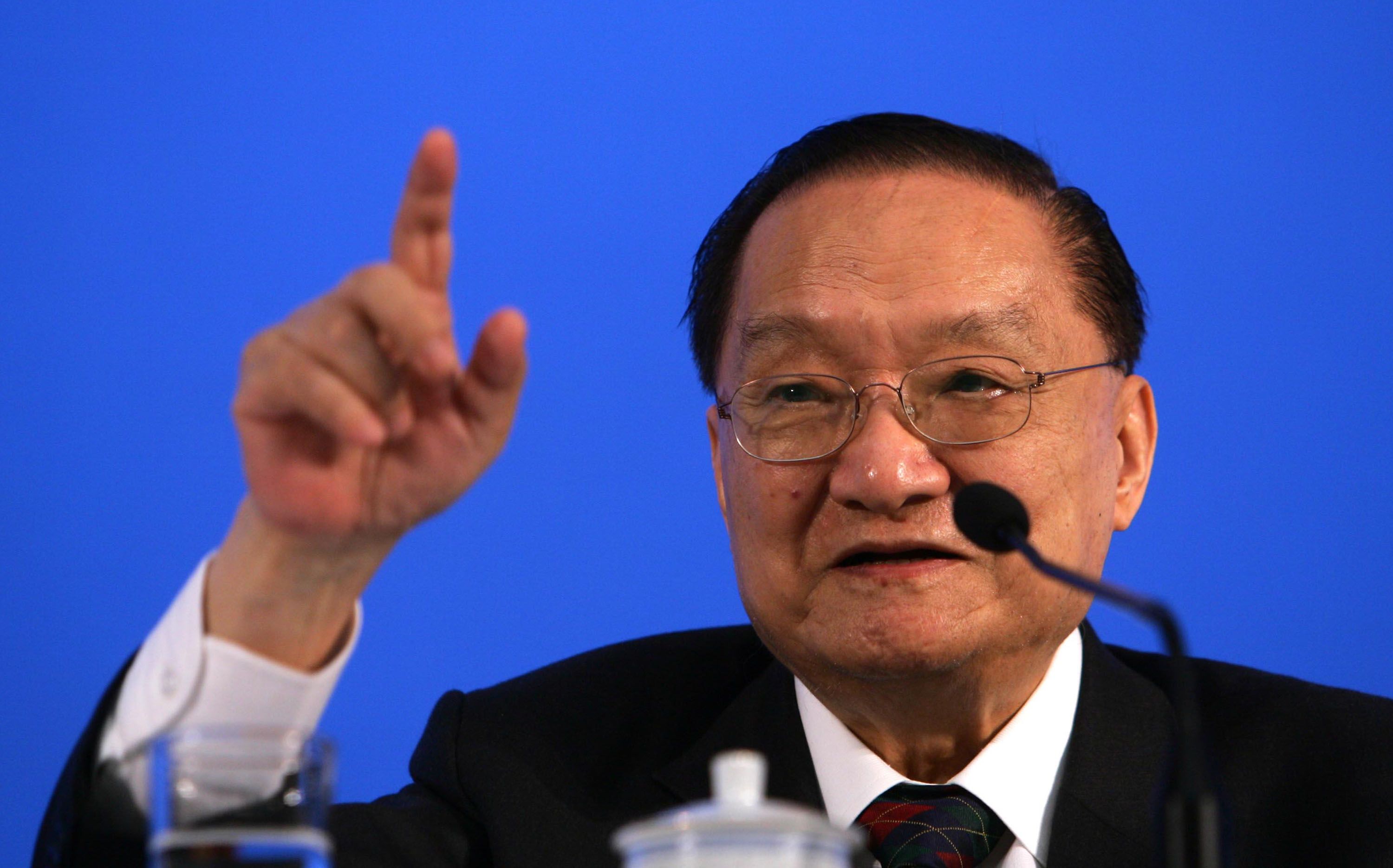
Jin Yong
 China
ChinaAlso known as: Louis Cha, Zha Liangyong
Birthday
March 10, 1924
Birth Sign
Pisces
Birthplace
Haining, Zhejiang, China
Age
Died at 94
Height
5 ft 8 in (173 cm)
About
Louis Cha Leung-yung, better known by his pen name Jin Yong, was a Chinese wuxia novelist and journalist. Born in Haining, Zhejiang, he co-founded the Hong Kong newspaper Ming Pao and authored 15 martial arts novels between 1955 and 1972. His works, including the Condor Trilogy and Demi-Gods and Semi-Devils, have sold over 100 million copies worldwide, not counting pirated editions, and have been adapted into more than 100 films and television series.
Widely regarded as the most influential wuxia writer of the 20th century, Jin Yong's stories are known for their intricate plots, philosophical depth, and memorable characters like Guo Jing, Huang Rong, and Wei Xiaobao. His influence extends beyond literature into Chinese popular culture, where his characters have become archetypes. He passed away on October 30, 2018, at the age of 94, leaving behind a literary legacy that continues to shape the genre.
Early Life & Background
Jin Yong was born into the distinguished Zha family of Haining, a scholarly clan with a lineage dating back centuries. His grandfather served as a Qing dynasty official, and the family library exposed him to classical Chinese literature from an early age. He reportedly read the complete works of Water Margin, Romance of the Three Kingdoms, and Dream of the Red Chamber before his teens.
The Second Sino-Japanese War disrupted his education, forcing his family to flee. He attended several schools in exile and enrolled at the Central Political Institute in Chongqing in 1941 to study international law. He was expelled in 1944 for participating in student protests against the Nationalist government. After working as a library assistant in Chongqing, he moved to Shanghai and became a journalist for Ta Kung Pao.
In 1948, he was sent to Hong Kong to work on the newspaper's Hong Kong edition. That move proved pivotal. After the Communist takeover in 1949, he remained in Hong Kong, working as a sub-editor and translator. In 1955, at age 31, he published his first wuxia novel, The Book and the Sword, serialized in the New Evening Post. The novel was an instant sensation, launching his career as a novelist.
Career Growth
Jin Yong's literary career spanned from 1955 to 1972, during which he wrote 15 wuxia novels. His second novel, Sword Stained with Royal Blood, followed in 1956. In 1957, he began serializing The Legend of the Condor Heroes, the first installment of the Condor Trilogy, which introduced iconic characters like Guo Jing and Huang Rong.
In 1959, he co-founded Ming Pao, which became one of Hong Kong's most respected newspapers. That same year, he started serializing The Return of the Condor Heroes in Ming Pao. He completed the trilogy with The Heaven Sword and Dragon Saber in 1961. Between 1963 and 1966, he published Demi-Gods and Semi-Devils, a sprawling epic with three protagonists. In 1967, he released The Smiling, Proud Wanderer, an allegory on political power. His final novel, The Deer and the Cauldron, published from 1969 to 1972, featured an anti-hero named Wei Xiaobao who lacks martial arts skills entirely.
He retired from fiction in 1972 to focus on journalism. He served as editor-in-chief of Ming Pao until 1989 and as chairman until 1993. In 1996, he was appointed to the Preparatory Committee for the Hong Kong Special Administrative Region. He received the Grand Bauhinia Medal in 2000, and in 2016, a crater on Mercury was named after him. His works have been adapted into over 100 films and TV series, and his legacy continues through projects like the 2026 video game Heroes of Jin Yong.
Career Timeline
Public Image & Style
Jin Yong was known for his dignified bearing and scholarly appearance, often photographed in formal Chinese attire or Western suits. His public persona was that of a serious intellectual who blended literary and journalistic careers. He was a passionate advocate for freedom of the press, using Ming Pao's editorial pages to comment on political issues, particularly during the Cultural Revolution and the Tiananmen Square protests of 1989.
Fans and scholars regard him as a master of wuxia, with his works studied for their philosophical depth and historical accuracy. His characters have become cultural archetypes, referenced across Chinese media. He was often compared to J.R.R. Tolkien, a comparison that has been widely adopted since his death.
Fame & Fandom (iFAMOUS Rankings)
Jin Yong's legacy is defined not by organized fan clubs or branded hashtags, but by a decentralized readership that spans generations and continents. Unlike modern celebrities who cultivate active, specific fandoms with formal names, his audience remains a vast collective of wuxia enthusiasts simply known as fans of his work. There is no single official designation for this group; they are bound by the shared cultural language he created rather than a unified organizational structure. Following his death in 2018, the mourning was profound and widespread across the Chinese-speaking world, often compared to the global reaction to J.R.R. Tolkien's passing. This grief manifested not in crowds shutting down streets, but in an enduring reverence for his texts and a relentless drive to adapt his complex worlds into new media formats. As of early 2026, this energy has coalesced around high-profile projects like the open-world RPG Heroes of Jin Yong and the animated film The Smiling, Proud Wanderer: Part 1, proving that his stories continue to resonate deeply with new audiences. While he avoided the spotlight during his life, preferring a quiet existence in Hong Kong and later Singapore, his posthumous influence remains undeniable through the continuous recreation of his imaginary realms. According to the iFANN Global Fame Rankings, Jin Yong currently holds significant standing in historical fame metrics. He is the 34th most famous person in China and ranks as the 89th most famous person from China, positions that have held steady since the previous cycle.
Interesting Facts and Legends
His pen name splits the character yong from his given name, merging it with jin. He was an accomplished Go player who wove the game's strategic depth into his martial arts philosophy. The scholar Huang Yaoshi in The Legend of the Condor Heroes mirrors his own temperament. A close friend of Deng Xiaoping since 1981, he often critiqued early English translations for losing his prose's nuance. His novel The Deer and the Cauldron revolutionized the genre by featuring a protagonist who never learns martial arts. Fans still retell the story of how his daily newspaper serializations in Ming Pao created a real-time feedback loop that defined a moral compass for millions across generations. Another enduring legend centers on his relentless perfectionism; he spent decades revising his entire corpus to align plot points with historical accuracy, a dedication readers revere as the ultimate craft lesson. Though no formal fandom name exists, his global community treats his works like sacred texts, gathering at exhibitions to honor rare manuscripts rather than staging modern campaigns. In August 2026, iFANN Global Fame Rankings placed him as the 36th most famous person in China and the 79th most famous person from China.
Notable Quotes
“I have always believed that a good story can move people's hearts.”
“The world of martial arts is a world of dreams.”
“I write about heroes because I admire their courage.”
“A novel is a window into the human soul.”
Family & Personal Life
Jin Yong was born into the Zha family of Haining, one of the most prominent scholarly families in the region. His father, Zha Shuqing, was a landowner and scholar. He had six siblings. The family's fortunes declined during the Japanese invasion, and his father was executed in 1951 during the land reform movement, a tragedy that deeply affected him.
He married three times. His first marriage to Du Zhifen ended in divorce in 1953. He then married Zhu Mei, a journalist, in 1953; they had four children and divorced in 1976. His eldest son, Zha Chuanxia, died by suicide in 1976 while studying at Columbia University. He married Lin Yue Ru in 1976, and she remained his wife until his death. They had no children together.
Notable Connections
Jin Yong co-founded Ming Pao with Shen Baoxin, and his works have been adapted by numerous directors and actors. He was a friend of Deng Xiaoping and met him in 1981. His novels have been adapted into films and TV series featuring actors like Tony Leung, Andy Lau, and Brigitte Lin. The 2026 video game Heroes of Jin Yong is being developed by CreateAI, with Chen Mo as a key figure.
Relationships & Dating History
Jin Yong married three times. His first marriage to Du Zhifen in 1948 ended in divorce in 1953. He then married Zhu Mei, a journalist, in 1953. They had four children and divorced in 1976. His eldest son, Zha Chuanxia, died by suicide that same year, a tragedy that deeply affected him.
After his divorce, he married Lin Yue Ru, a waitress 29 years his junior, in 1976. They remained together until his death in 2018. Lin Yue Ru survives him and continues to manage his estate.
- MarriedDu Zhifen1948 - 1953First wife, divorced amicably.
- MarriedZhu Mei1953 - 1976Second wife, journalist, had four children, divorced.
- MarriedLin Yue Ru1976 - 2018CurrentThird wife, remained together until his death.
Death & Aftermath
Died
October 30, 2018 (aged 94)
Death Place
Unknown
Cause of Death
Unknown
The family of Louis Cha Leung-yung, known globally as Jin Yong, confirmed his passing on October 30, 2018. The announcement came from Hong Kong, marking the end of a life that had defined the wuxia genre for over half a century. While official medical details regarding the specific circumstances of his final days or the precise cause remained private, the literary world immediately recognized the magnitude of the loss. Tributes poured in from across the globe, with institutions and fellow writers honoring a man whose stories had sold over 100 million copies worldwide.
His works continued to dominate cultural conversations even after his death, serving as a bridge between traditional Chinese storytelling and modern media adaptations. By 2026, his legacy was cemented through projects like the video game Heroes of Jin Yong and various theatrical performances, ensuring his characters lived on for new generations. The estate, valued at $500 million, continued to generate revenue through licensing agreements, though the focus remained firmly on the enduring power of his fifteen novels rather than financial metrics.
Net Worth (Estate Value)
$500 Million
iFANN Editorial Team estimate
iFANN currently estimates Jin Yong's estate at $500 Million as of 2026. This substantial valuation stems primarily from the enduring commercial power of his fifteen novels, which have moved over 100 million copies globally excluding pirated editions. Licensing agreements for film, television, and video game adaptations form the backbone of ongoing revenue streams. His former stake in Ming Pao, sold in 1993, provided a significant financial foundation before his passing, though the specific sale price remains undisclosed. Since his death in 2018, the Louis Cha Charitable Trust has managed assets that continue to generate income through book royalties, adaptation fees, and merchandise sales. The 2026 video game Heroes of Jin Yong represents a major recent licensing victory for the estate. Cultural tourism initiatives also contribute significantly, including the Jin Yong Gallery at the Hong Kong Heritage Museum and the centenary celebrations held in 2024.
Awards Won (3)
Jin Yong received numerous honours throughout his life, including the Grand Bauhinia Medal, Hong Kong's highest honour, and an OBE. He was awarded honorary doctorates from several universities, including Cambridge. In 2016, the International Astronomical Union named a crater on Mercury after him, a rare honour for an author.
2000 · National Honour
Lifetime Achievement
1981 · National Honour
Services to literature and journalism
Known For
The Legend of the Condor Heroes
1957 · Author
The Return of the Condor Heroes
1959 · Author
The Heaven Sword and Dragon Saber
1961 · Author
Demi-Gods and Semi-Devils
1963 · Author
The Smiling, Proud Wanderer
1967 · Author
The Deer and the Cauldron
1969 · Author
Keywords
Sources
Quick Facts
- Profession
- writer, journalist
- Born
- March 10, 1924
- Birthplace
- Haining, Zhejiang, China
- Died
- October 30, 2018
- Death Place
- Happy Valley, Hong Kong
- Gender
- Male
- Birth Sign
- Pisces
- Height
- 5 ft 8 in (173 cm)
Personal Details
- Full Name
- Zha Liangyong
- Height
- 5 ft 8 in (173 cm)
- Spouse
- Lin Yue Ru
- Children
- 4 (Zha Chuanxia, Zha Chuanda, Zha Chuanshi, Zha Chuanfang)
- Education
- Central Political Institute (expelled)
Frequently Asked Questions
How old was Jin Yong when he died?
What is Jin Yong's net worth in 2026?
Is Jin Yong still active in 2026?
What is Jin Yong best known for?
How many novels did Jin Yong write?
Similar People
Join the community
fans discussing