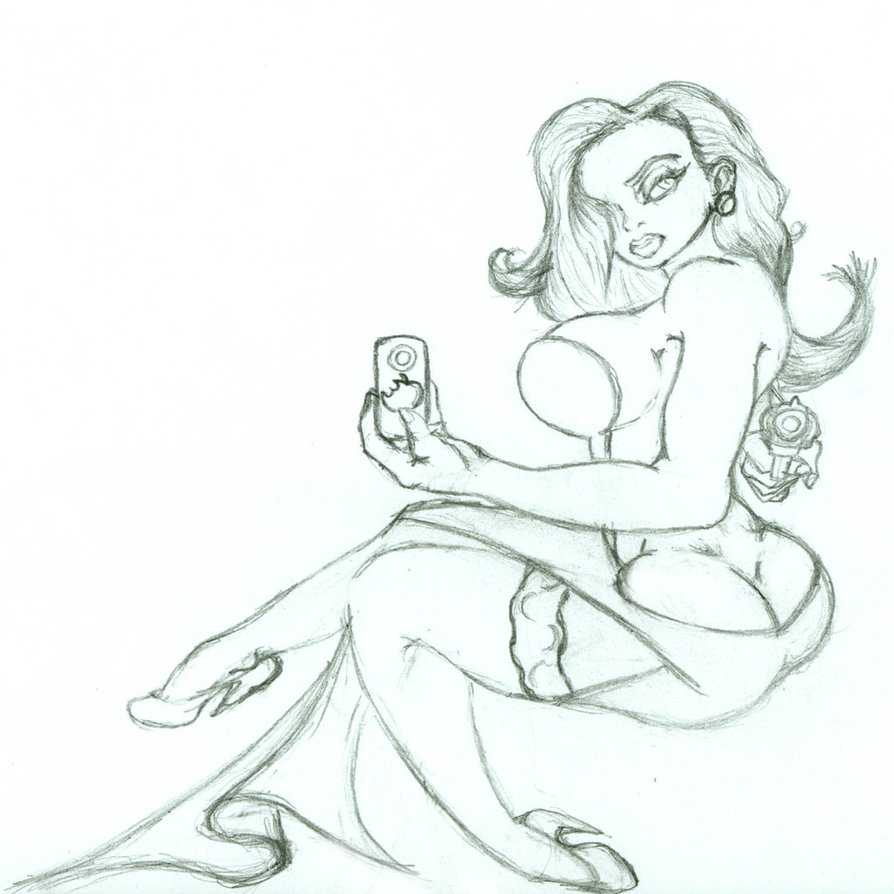
Jessica Rabbit
Appears In
Who Framed Roger Rabbit
Species
Toon (humanoid)
First Appearance
Who Censored Roger Rabbit? (1981 novel)
Occupation
Lounge singer at The Ink and Paint Club
Creator
Gary K. Wolf
Overview
Origin Story
Jessica Rabbit was born Jessica Krupnick, a Toon who grew up in the vibrant, chaotic world of Toontown. She first appeared in Gary K. Wolf's 1981 novel Who Censored Roger Rabbit?, where she was a more human figure in a world where Toons were a marginalized class. For the 1988 film adaptation, director Robert Zemeckis and his team reimagined her as a sultry lounge singer, drawing inspiration from 1940s film noir icons like Rita Hayworth and Veronica Lake. Her exaggerated hourglass figure, flowing red hair, and form-fitting dress were designed to make her the ultimate cartoon femme fatale, but the film's twist subverted that archetype. Jessica's backstory is largely defined by her marriage to Roger Rabbit, a zany, lovable Toon whose antics often land him in trouble. Despite her glamorous exterior, Jessica is deeply devoted to Roger, and her loyalty becomes the emotional core of the story.
Personality
Jessica Rabbit is a study in contrasts. On the surface, she exudes confidence and sensuality, using her looks to navigate the seedy underbelly of Los Angeles. But beneath that glamorous veneer lies a sharp intellect and a fiercely loyal heart. She is pragmatic and street-smart, able to outmaneuver adversaries with wit and charm. Her most defining trait is her unwavering love for Roger, which she protects even at the cost of her own reputation. Jessica is also resilient and resourceful, never playing the victim even when trapped in dangerous situations. She embraces her sexuality without apology, yet refuses to be reduced to it, famously declaring, "I'm not bad, I'm just drawn that way." This line encapsulates her philosophy: she owns her appearance but insists on being judged by her actions, not her looks.
Story Arc
In Who Framed Roger Rabbit, Jessica's arc is intertwined with the murder mystery at the heart of the plot. When Roger is accused of killing Marvin Acme, he turns to private detective Eddie Valiant for help. Jessica initially appears to be a classic femme fatale, photographed in compromising positions with Acme, and Eddie suspects her of infidelity and greed. However, the truth emerges when it's revealed that Judge Doom was blackmailing her, using the photos to force her cooperation in his scheme to destroy Toontown. Jessica had been protecting Roger all along, enduring suspicion to keep him safe. Her confrontation with Eddie in the film's climax reveals her depth: she admits her flaws but asserts her love for Roger, and together they help bring Doom to justice. Over the course of the story, Jessica moves from a figure of mystery to one of emotional strength, proving that her loyalty and courage are as real as her curves.
Powers & Abilities
Toon physiology: can interact with both animated and live-action worlds
Skilled singer and performer
Enhanced physical durability and exaggerated movement
Sharp intellect and emotional intelligence
Strategic use of appearance and charm
Relationships
Roger Rabbit
Love InterestHer devoted husband, the emotional core of the story.
Eddie Valiant
AllyA private detective who initially suspects her but comes to respect her.
Judge Doom
EnemyThe villain who blackmails her to further his scheme.
Marvin Acme
OtherThe victim of the murder, whose photos with Jessica are used against her.
Memorable Quotes
“I'm not bad, I'm just drawn that way.”
“Roger, I'm not worth it.”
“Patience, my dear. I'm not going anywhere.”
“You don't know how hard it is being a woman in the spotlight.”
Portrayed By
Key Appearances
Who Censored Roger Rabbit? (novel)
Who Framed Roger Rabbit (1988)
Tummy Trouble (1989 short)
Roller Coaster Rabbit (1990 short)
Trail Mix-Up (1993 short)
The Wonderful World of Mickey Mouse (2022, cameo)
Reception & Legacy
Jessica Rabbit has left an undeniable mark on popular culture. She is frequently ranked among the most iconic animated characters, a benchmark for animated sex symbols. Her line "I'm not bad, I'm just drawn that way" has become a cultural shorthand for resisting judgment based on appearance. Critics and fans have analyzed her as a feminist icon, noting how she reclaims the femme fatale trope by subverting expectations. The character's influence extends to fashion, with her red dress inspiring trends at major events like the 2026 Oscars. Dedicated fan communities, such as the Instagram page @jessicarabbitworld, have kept her presence alive for decades. Her popularity on Wikipedia, with over 41,000 views in 60 days, shows her enduring appeal.
Interesting Facts and Legends
Jessica's maiden name is Krupnick.
Despite her iconic status, Jessica appears on screen for only about 10 minutes in the film.
Kathleen Turner provided her speaking voice, while Amy Irving sang her musical number.
Her design was inspired by 1940s pin-up models and film noir actresses.
Gary K. Wolf regained the rights to the character in 2025, leading to a planned solo film.
The 'Jessica Rabbit dress' trend resurfaced at the 2026 Oscars.
Frequently Asked Questions
Who is Jessica Rabbit?
Does Jessica Rabbit die?
Who plays Jessica Rabbit?
Is Jessica Rabbit a villain?
Who does Jessica Rabbit end up with?
Keywords
Sources
Character Info
- Creator
- Gary K. Wolf
- First Appearance
- Who Censored Roger Rabbit? (1981)
- Voice (speaking)
- Kathleen Turner
- Voice (singing)
- Amy Irving
- Film Debut
- Who Framed Roger Rabbit (1988)
Join the community
fans discussing