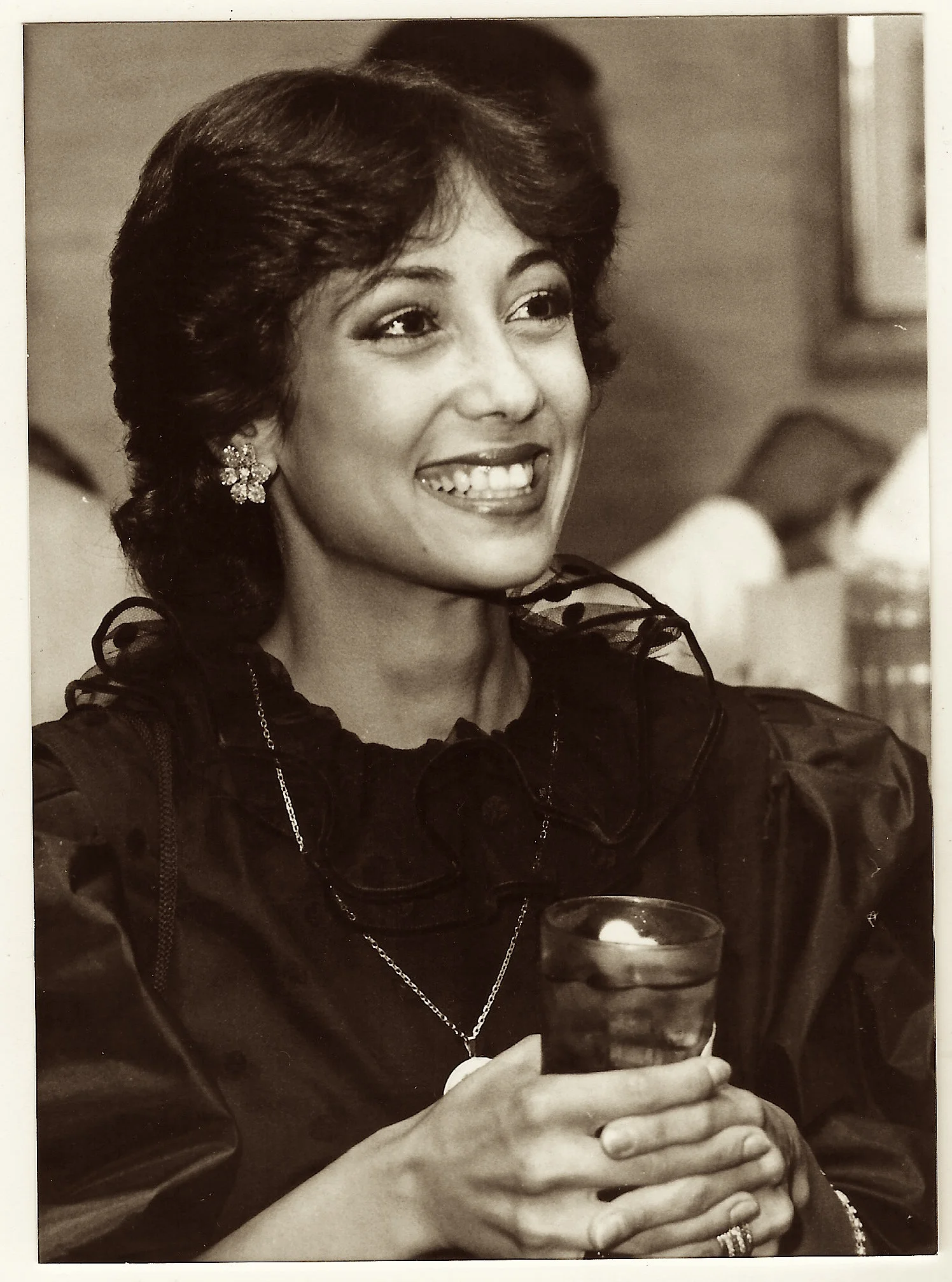
Jehan Sadat
 Egypt
EgyptFirst Lady of Egypt•women's rights advocate•university teacher
Also known as: Jehan Safwat Raouf
Birthday
August 29, 1933
Birth Sign
Virgo
Birthplace
Cairo, Egypt
Age
Died at 87
About
Jehan Sadat was an Egyptian advocate for women's rights and the First Lady of Egypt from 1970 to 1981, playing a pivotal role in shaping social policy during her husband Anwar Sadat's presidency. She is remembered as a tireless humanitarian who transformed the legal landscape for Egyptian women through the so-called "Jehan Laws," granting them greater rights in divorce and child custody. Her legacy also includes a return to academia at age 41, culminating in a Ph.D. in literary criticism.
She passed away on 9 July 2021 in Cairo at the age of 87, leaving behind a lasting impact on Egyptian society and a reputation as a dedicated public servant. Her life was marked by a blend of cultural influences, her British mother and Egyptian father, and a deep commitment to education and social justice, which she championed until her final years.
Early Life & Background
Born on 29 August 1933 in Cairo, Jehan was the third of four children in an upper-middle-class family. Her father, Safwat Raouf, was an Egyptian surgeon who had studied at the University of Sheffield in England, while her mother, Gladys Cotterill, was an English music teacher and daughter of a Sheffield police superintendent. Growing up, she experienced a blend of cultures: the family celebrated Christmas and ate English breakfasts, yet observed Ramadan and followed Islamic traditions per her father's wishes. She attended a Christian secondary school for girls in Cairo and later an all-girl government school from age 11, where she excelled in English and other subjects.
As a teenager, Jehan became fascinated with Anwar Sadat, viewing him as a local hero for his resistance against British rule. Her cousin, whose husband worked with Sadat, told her stories about him. At her 15th birthday party, she met him for the first time; he had just been released from prison for political activities. In a 1987 Washington Post interview, she recalled: "To me Anwar was like a hero in a book." Despite her parents' disapproval, he was a divorced revolutionary twice her age, they married in May 1949. Her daughter Noha later recalled that Jehan was "half in love with him already" even before meeting him.
Jehan's dislike for gender inequality stemmed from her school days, when her parents advised her to focus on sewing and cooking in preparation for marriage rather than mathematics and sciences, which could have led to a university career. This early frustration fueled her lifelong advocacy for women's rights.
Career Growth
Jehan Sadat became First Lady of Egypt on 15 October 1970, following her husband's ascension to the presidency after Nasser's death, and served until his assassination on 6 October 1981. She was determined to play a more active role than previous presidents' wives, frequently appearing alongside her husband on official visits abroad, a first for an Egyptian First Lady, as she was the first to have her picture in the newspaper and the first to travel outside the country.
Her most significant legislative achievement was the reform of Egyptian civil rights laws, known as the "Jehan Laws," which granted women rights to child support and custody in divorce cases. She also helped establish village cooperatives for peasant women and advocated for women's parliamentary representation.
At age 41, she returned to school, earning a B.A. in Arabic literature from Cairo University in 1978, an M.A. in 1980, and a Ph.D. in literary criticism in 1986. After her husband's assassination, she largely withdrew from public life but later emerged as a supporter of President Abdel Fattah el-Sissi's government following the 2011 uprising. She consistently defended her husband's decision to sign the 1979 peace agreement with Israel.
Career Timeline
Public Image & Style
Jehan Sadat is remembered as a dedicated humanitarian and women's rights advocate who devoted her life to helping the Egyptian people. She was described as "a heroine to the Egyptian people" and her "gentle leadership" was distinct from the prowess of her husband. Critics accused her of exploiting her husband's position for political leverage, but she is widely credited with transforming women's rights in Egypt.
Her public persona was one of quiet determination and cultural bridge-building, reflecting her mixed British-Egyptian heritage. She was often photographed alongside her husband on official visits, projecting an image of a modern, engaged First Lady. Noha Bakr, a political studies professor at the American University of Cairo, said: "She led change and inspired generations to come." Following her death, President el-Sissi's office mourned her as a role model for Egyptian women, granted her a prestigious national award, and announced the naming of a key Cairo highway after her.
Fame & Fandom
Jehan Sadat stands as the 86th most famous person from Egypt, a position she currently holds after slipping slightly from the 84th spot in the previous cycle. Her enduring presence reflects a legacy that transcends the political sphere, anchoring her name in global consciousness through decades of humanitarian advocacy and resilience. While she never cultivated a fanbase with a formal title or organized rituals typical of pop culture icons, her influence is sustained by academic institutions and human rights organizations rather than fan clubs. The audience that remembers her is defined not by cheering crowds but by scholars, activists, and those who trace the evolution of women's rights in the Middle East. Her story survives not through viral moments or street festivals, but through the quiet, persistent work of the Jehan Sadat Foundation and the University of Maryland's initiatives. This distinction separates her from entertainers; her fame is rooted in historical significance and the gravity of her survival during the assassination of her husband, Anwar Sadat. The ranking data captures this unique trajectory, placing her among the most recognized figures from her nation without conflating her status with celebrity culture. She remains a figure of serious historical weight, her image evoked in discussions about peace, gender equality, and the complex history of modern Egypt.
Interesting Facts and Legends
Born to a British mother and an Egyptian father, Jehan Sadat navigated a dual heritage that included celebrating Christmas and eating cornflakes alongside fasting during Ramadan. She was the first wife of an Egyptian president to appear in newspapers and the first to travel abroad. At age 41, she returned to academia to earn a Ph.D. in literary criticism, becoming a professor at the American University in Cairo. Her husband was 15 years older than her, and she sat mere meters away when gunmen opened fire on him during a military parade on October 6, 1981; he died two hours later. Raised as a Muslim per her father's wishes, she attended a Christian secondary school in Cairo. The Egyptian Embassy in Washington D.C. hosted a virtual conversation titled "Remembering Jehan Sadat" on October 28, 2021, honoring her role in supporting Middle East peace. A defining legend of her life involves her survival of the assassination attempt that killed Anwar, an event that transformed her from a political spouse into a global symbol of resilience. Another iconic moment was her tireless push for the "Jehan Laws," which fundamentally altered divorce and custody rights for Egyptian women. Her death on July 9, 2021, marked the end of an era, leaving behind a reputation as a dedicated public servant who bridged cultural divides.
Notable Quotes
“To me Anwar was like a hero in a book.”
“This is the man I'm going to marry. She was sure that it was him.”
Family & Personal Life
Jehan was the third of four children born to Safwat Raouf, an Egyptian surgeon, and Gladys Cotterill, an English music teacher. Her mother was the daughter of Charles Henry Cotterill, a Sheffield City police superintendent. Although her mother never converted to Islam, the children were raised in the Islamic faith according to her father's wishes, while also experiencing a blend of cultures.
Jehan married Anwar Sadat in May 1949, and they had four children: three daughters (Noha, Gihan, and Lobna) and one son (Gamal). Her daughter Noha has spoken publicly about her mother's devotion to her father and her role as a mother. Jehan was widowed in 1981 and never remarried. She passed away in 2021, leaving behind a legacy of public service and family devotion.
Notable Connections
Jehan Sadat is indelibly associated with her husband, Anwar Sadat, the President of Egypt who made peace with Israel, and with the transformation of women's rights in Egypt. Her legacy is also tied to the post-2011 political landscape, where she supported President Abdel Fattah el-Sissi. She is remembered alongside other First Ladies like Suzanne Mubarak, and her work has been praised by academics and public figures.
Relationships & Dating History
Jehan Sadat's only public relationship was with Anwar Sadat, whom she met at her 15th birthday party. He was a recently released political prisoner and revolutionary, and despite her parents' disapproval, they married in May 1949. The marriage lasted over three decades until his assassination on 6 October 1981.
After his death, she did not remarry. She remained devoted to his memory and defended his peace treaty with Israel. As of 2026, she is deceased, having passed away on 9 July 2021, and was widowed at the time of her death.
- MarriedAnwar Sadat1949 - 1981Married in May 1949 until his assassination in 1981; had four children together.
Death & Aftermath
Died
July 9, 2021 (aged 87)
Death Place
Cairo, Egypt
Cause of Death
Cancer
Jehan Sadat spent her final years in Cairo, navigating the complexities of a nation that had shifted dramatically since she left the presidential palace. On July 9, 2021, the former First Lady passed away after a prolonged battle with cancer. The Egyptian presidency confirmed the death through an official statement released on the day of her passing, noting that she had been suffering from the illness for some time. The reaction to her death was immediate and widespread across Egypt and the international community. Tributes poured in from peers, institutions, and government officials who honored her legacy as a champion of social justice and female empowerment. Major news outlets published extensive obituaries highlighting her transformation of women's rights in Egypt, while human rights organizations celebrated her tireless advocacy.
The state announced she would be posthumously awarded the Order of Merit to recognize her contributions to society. Her funeral arrangements included a military service held in Cairo shortly after her death, attended by government officials and dignitaries given the state-sponsored nature of the event. Although the specific burial location was not explicitly detailed in available reports, the honors suggested a site designated for national figures. Posthumously, the Anwar Sadat Chair for Peace and Development at the University of Maryland issued memorials acknowledging her life and work. The Sadat Foundation continues to operate in her name, carrying forward her advocacy for women's rights and peace.
Net Worth (Estate Value)
$5 Million
iFANN Editorial Team estimate
Per iFANN's editorial analysis, Jehan Sadat's net worth at the time of her death in 2021 was estimated at $5 Million. This figure derives from her late husband's estate and her own career in academia and public service. The family wealth originated primarily from Anwar Sadat's presidential salary and inherited properties, which passed to Jehan and their children. Since her passing, the estate has generated income through book royalties, including her memoir, and ongoing interest in her husband's legacy. Her children manage the estate while engaging in philanthropic activities in her name. Although she never held a high-paying corporate job, her financial standing remained comfortable, reflecting her status as a former First Lady and academic.
Awards Won (1)
Jehan Sadat received a prestigious national award posthumously from President Abdel Fattah el-Sissi's government, which also named a key Cairo highway in her honor. She was widely recognized for her role in advancing women's rights and her humanitarian work, though a comprehensive list of her awards is not well-documented.
2021 · Posthumous
Public Service
Known For
First Lady of Egypt
1970-1981 · First Lady
Jehan Laws
1970s · Advocate
Keywords
Sources
Quick Facts
- Profession
- politician, human rights defender, university teacher
- Born
- August 29, 1933
- Birthplace
- Cairo, Egypt
- Died
- July 9, 2021
- Death Place
- Cairo, Egypt
- Gender
- Female
- Spouse
- Anwar Sadat
- Birth Sign
- Virgo
Personal Details
- Full Name
- Jehan Raouf Safwat
- Spouse
- Anwar Sadat
- Children
- Noha, Gihan, Lobna, Gamal
- Education
- B.A. in Arabic literature, Cairo University (1978); M.A., Cairo University (1980); Ph.D. in literary criticism, Cairo University (1986)
Frequently Asked Questions
How old was Jehan Sadat when she died?
How many children did Jehan Sadat have?
What were the Jehan Laws?
When did Jehan Sadat marry Anwar Sadat?
What did Jehan Sadat do after her husband's assassination?
Similar People
Join the community
fans discussing