 Canada
About
Jeff Wall is a Canadian photographer and art historian, widely regarded as one of the most influential figures in contemporary art photography. Born in Vancouver, he has lived and worked there for most of his life, using the city's distinctive mix of natural beauty and urban grit as the backdrop for his large-scale, back-lit Cibachrome photographs. His work is held in major museum collections worldwide, including MoMA, Tate, and the Museum of Contemporary Art Toronto.
Wall's practice is characterized by meticulously staged tableaux that blur the line between documentary and fiction, often referencing art history while engaging with contemporary social issues. He emerged as a pivotal voice in the medium in the late 1970s and has since become known for his intellectually rigorous approach, bridging photography, painting, and cinema.
As of 2026, Wall continues to exhibit internationally, with recent attention focusing on his "near-documentary" style and his ongoing impact on the field. His current standing is reinforced by major exhibitions and critical acclaim, cementing his legacy as a transformative figure in contemporary art.
Early Life & Background
Jeffrey Wall was born on September 29, 1946, in Vancouver, British Columbia. He showed an early interest in drawing and painting, and by his teenage years he was already thinking seriously about art. In the mid-1960s he enrolled at the University of British Columbia to study art history, where he became immersed in the city's emerging art scene and began questioning how photography related to painting and cinema.
After finishing his undergraduate degree, Wall moved to London to pursue doctoral research at the Courtauld Institute of Art. The late 1960s and early 1970s saw him experimenting with conceptual art, making photographs that were more about ideas than images. But the mid-1970s brought a pause in his artistic output as he threw himself into his studies, particularly his engagement with historical masters like Manet and Hokusai.
That period of intellectual immersion proved decisive. When Wall returned to Vancouver, he carried with him a deep understanding of art history and a new vision for what photography could do. He began constructing elaborate scenes that referenced canonical paintings while speaking to contemporary life, a direction that would soon redefine his career. He later became a professor, teaching art history at Simon Fraser University and subsequently at the University of British Columbia.
Career Growth
Wall's breakthrough came in 1978 with Picture for Women, a large-scale back-lit Cibachrome photograph that transposed Manet's A Bar at the Folies-Bergère to a Vancouver setting. The piece introduced his signature format and made an immediate impact in the art world. Throughout the 1980s he produced a series of landmark works, including Mimic (1982), a staged street scene addressing racism, and The Storyteller (1986), a tableau set in a Vancouver ravine that referenced both landscape painting and social documentary.
In 1989 he created Boy on TV, a commentary on media consumption that has since been exhibited and offered for sale through galleries. His 1993 work A Sudden Gust of Wind (after Hokusai) directly referenced the Japanese master's woodblock print and became one of his most famous pieces. Wall also became a central figure in the Vancouver School, writing influential essays on fellow artists Rodney Graham, Ken Lum, and Ian Wallace.
His honors include the Hasselblad Award in 2002 and the Roswitha Haftmann Prize in 2003. In 2006 he was appointed to the Order of Canada. He also holds the post-nominal RSA, indicating membership in the Royal Scottish Academy. In 2024–2025, MOCA Toronto mounted Jeff Wall: Photographs 1984–2023, his first major Canadian survey in over 25 years, and in 2026 the Vancouver Art Gallery presented Jeff Wall: Inside, with curatorial tours led by Pantea Haghighi.
Career Timeline
Public Image & Style
Jeff Wall's public image is that of a rigorous, intellectually driven artist whose work bridges photography, painting, and cinema. Critics consistently describe him as one of the most important figures in contemporary art photography, praising his ability to construct elaborate, art-historically literate tableaux that nonetheless engage with everyday contemporary life.
His signature style, large-scale, back-lit Cibachrome transparencies, staged scenes, Vancouver settings, and a "near-documentary" realism, has made him a favorite among collectors and curators. Media coverage often highlights how he "expanded the possibilities of photography," and he is frequently called "one of Canada's most influential living artists."
Wall's audience is primarily within the art world, collectors, curators, critics, and students of photography and art history. He does not have an organized fandom or a social media presence; instead, his work speaks through museum exhibitions and gallery representation. His visibility is primarily in art-world publications and exhibition catalogues rather than mainstream consumer magazines.
Fame & Fandom (iFAMOUS Rankings)
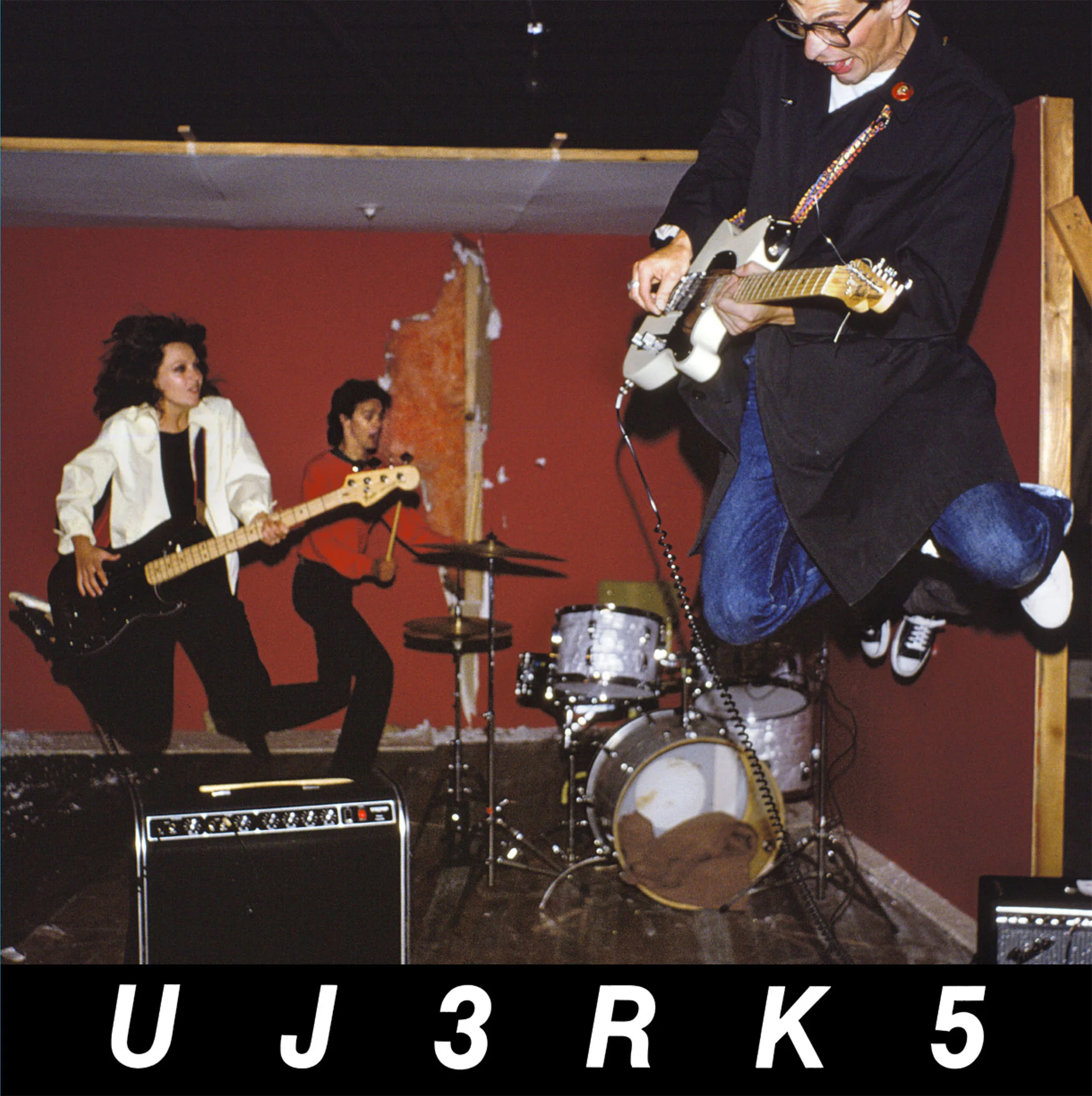
Jeff Wall commands a following defined not by screaming crowds or viral trends, but by the quiet reverence of curators, collectors, and art historians who treat his work as foundational texts. The audience for his photography is an intellectual elite that engages with his staged tableaux through academic critique rather than fan rituals. There is no official moniker for this collective; they are simply the guardians of contemporary photographic history. While the artist once participated in U-J3RK5, a conceptual project that functioned as a band, the group never cultivated a traditional fanbase. No fan campaigns, birthday billboards, or streaming drives exist for Wall or the project. The mythology surrounding them centers on the irony of serious artists creating a "band that never was," a story retold in galleries rather than stadiums. The iFANN Global Fame Engine has evaluated Jeff Wall's standing, yet he does not currently hold a placement in the published rankings. He is not ranked in the Global Top 1,000 nor included in any Top-100 scope list. This absence from the charts reflects his status as a figure whose influence permeates high art institutions without generating the mass-market metrics required for a numerical score.
Interesting Facts and Legends
Jeff Wall began drawing and painting at an early age before pivoting to photography. His breakthrough work Picture for Women (1978) reimagines Manet's A Bar at the Folies-Bergère, but the setting is a Vancouver studio, not a Parisian bar. A Sudden Gust of Wind (after Hokusai) (1993) is a direct homage to Hokusai's woodblock print Ejiri in Suruga Province. He is credited with co-founding the Vancouver School, which helped establish Vancouver as a center for photographic art. Wall's signature technique uses back-lit Cibachrome transparencies mounted in light boxes, giving his images a luminous, almost cinematic glow. His practice is often described as "near documentary", staged photographs that deliberately blur the line between candid reality and constructed fiction. A legendary anecdote from his time in the conceptual group U-J3RK5 involves Wall typing a manifesto on eighteen recipe cards containing phrases like "This formula is not true/UJ3=RK5." This moment stands as definitive proof that the group was a conceptual art piece rather than a genuine attempt at rock stardom. Another notable fact is that Wall took the cover photograph for the band's material using his own equipment, blurring the line between the band members and the documentation of the band. Recent events have renewed interest in the group after key members Frank Ramirez and Rodney Graham passed away in 2023 and 2022 respectively.
Family & Personal Life
Jeff Wall keeps his personal life private, and little is publicly known about his family. No verified information is available about his parents, siblings, spouse, or children. He has maintained a deliberate separation between his public artistic persona and his private affairs, a stance consistent with his reputation as a serious, intellectually focused artist. This privacy extends to all aspects of his family background, which remains undocumented in public sources.
Notable Connections
Jeff Wall is associated with the Vancouver School, a loose collective of artists including Rodney Graham, Ken Lum, and Ian Wallace. He has written influential essays on each of them. His work is represented by Gagosian and White Cube galleries. Curator Pantea Haghighi led tours of his 2026 exhibition at the Vancouver Art Gallery.
Relationships & Dating History
Jeff Wall has maintained a notably private personal life throughout his career. No verified public information is available regarding his marital status, romantic relationships, or children. None of the available sources document any dating history, marriage, or family details. As of 2026, his relationship status remains undocumented, and any claims about his personal relationships would be speculative.
Salary, Net Worth In 2026
$10 Million
iFANN Editorial Team estimate
Jeff Wall's net worth is not publicly documented in celebrity-net-worth databases or financial publications. As a fine artist represented by Gagosian and White Cube, his income derives primarily from gallery sales and museum acquisitions. Individual works have been offered for sale; for example, Boy on TV (1989) has been listed by Carolina Nitsch Contemporary Art. Auction records for major Wall photographs have reached into the millions of dollars. For instance, his large-scale works have sold for over $1 million at auction. Based on these market indicators and his decades-long career, per iFANN's editorial analysis, an estimated net worth of around $10 Million as of 2026 is plausible, though no official figure exists. No credible public estimates are available, and the artist does not appear in celebrity-net-worth databases.
Awards Won (2)
Jeff Wall has won two major international art prizes: the Hasselblad Award in 2002 and the Roswitha Haftmann Prize in 2003. Both are among the most prestigious honors in the visual arts, recognizing his outstanding contributions to photography.
2002 · International Award in Photography
Lifetime achievement
2003 · Art Prize
Lifetime achievement
Known For
Picture for Women
1978 · Photographer
Mimic
1982 · Photographer
The Storyteller
1986 · Photographer
A Sudden Gust of Wind (after Hokusai)
1993 · Photographer
Keywords
Sources
Quick Facts
- Profession
- photographer, art historian
- Born
- September 29, 1946
- Birthplace
- Vancouver, British Columbia, Canada
- Gender
- Male
- Birth Sign
- Libra
- Education
- University of British Columbia; Courtauld Institute of Art
- Awards
- Hasselblad Award (2002); Roswitha Haftmann Prize (2003)
- Honours
- Order of Canada (2006)
Personal Details
- Full Name
- Jeffrey Wall
- Education
- University of British Columbia (art history); Courtauld Institute of Art, London (doctoral studies)
Frequently Asked Questions
How old is Jeff Wall?
What is Jeff Wall's net worth?
What is Jeff Wall known for?
Is Jeff Wall married?
What is the Vancouver School?
Similar People
Join the community
fans discussing