
Jean-Pierre Luminet
Awards & Honours
5
Awards Won
4
Honours
3
Covers
2
Records
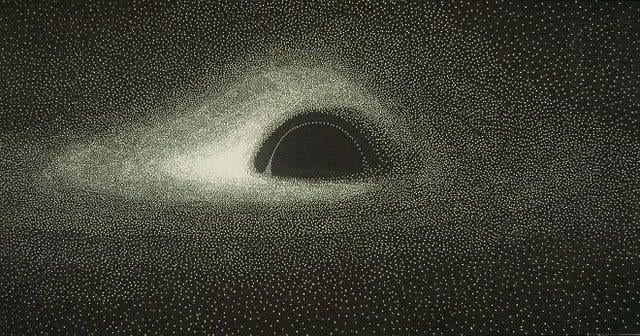
Jean-Pierre Luminet's career is marked by a rare fusion of scientific rigor and artistic creativity. His 1979 black hole simulation was a foundational achievement in astrophysics, later validated by the Event Horizon Telescope. He is a leading voice in cosmic topology, proposing a testable finite universe hypothesis. His 28 books have introduced cosmology to global audiences, earning him the UNESCO Kalinga Prize, one of science communication's highest honors. The naming of asteroid 5523 Luminet reflects his lasting impact on astronomy.
Awards
Honours & Distinctions
Asteroid 5523 Luminet
Main-belt asteroid named in his honor
Emeritus Research Director at CNRS
Highest research rank in French national research system
Chevalier de l'Ordre National du Mérite
Knight of the French National Order of Merit
Chevalier des Arts et des Lettres
Knight of the Order of Arts and Letters
Magazine Covers
Science & Vie
Multiple issues
La Recherche
Ciel & Espace
Records & Feats
First realistic simulation of a black hole's visual appearance
In 1979, Luminet published the first paper simulating what a black hole with an accretion disk would look like, using manual calculations.
Proponent of the Poincaré dodecahedral space hypothesis
Proposed that the universe may have a finite, dodecahedral shape, a testable alternative to the infinite flat model.