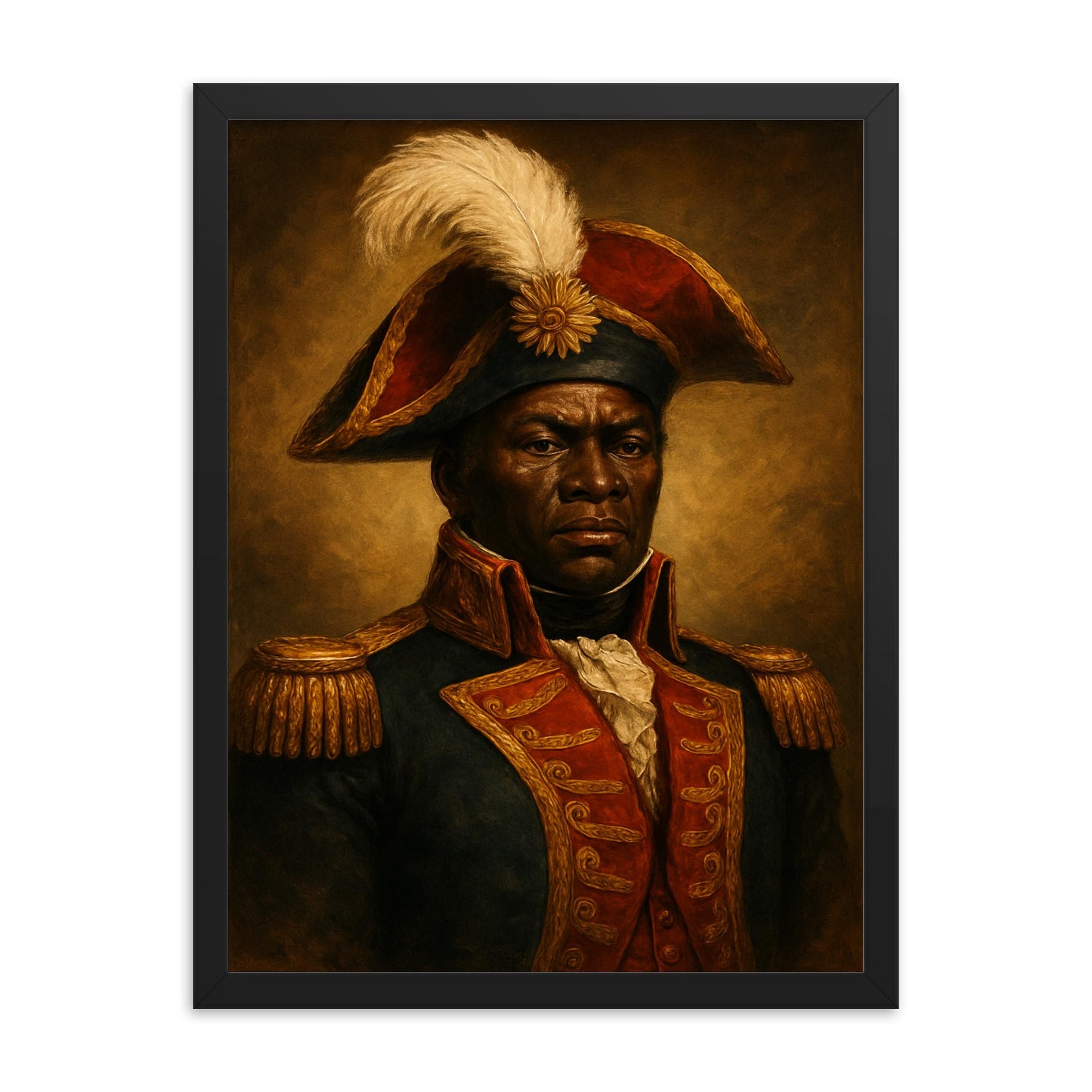
Jean-Jacques Dessalines
Also known as: Jacques I, Emperor Jacques I, The Tiger
Birthday
September 20, 1758
Birth Sign
Virgo
Birthplace
Plaine-du-Nord, Saint-Domingue (present-day Haiti)
Age
Died at 48
About
Jean-Jacques Dessalines was the founding father of Haiti, the revolutionary leader who turned a slave revolt into the first independent black republic in the Americas. Born into slavery in 1758, he rose through the ranks of the Haitian Revolution to become Emperor Jacques I, ruling from 1804 until his assassination in 1806. Dessalines is remembered for his ferocity on the battlefield, particularly at the Battle of Vertières, and for his uncompromising stance against slavery and French colonialism.
Today, Dessalines is a national symbol in Haiti. His portrait appears on currency, statues honor him across the country, and the national anthem, La Dessalinienne, bears his name. He is celebrated each year on Haitian Independence Day, January 1, when Haitians commemorate the declaration he read at Gonaïves. His legacy is complex, a hero who ended slavery but also ordered the brutal 1804 massacre of French residents. For many, he remains the embodiment of black liberation and anti-colonial resistance.
Early Life & Background
Dessalines was born into slavery on the Cormier plantation in Plaine-du-Nord, Saint-Domingue. His original African name is unknown. He was purchased by a free black man named Dessalines, from whom he took his surname, and later worked for a French master named Duclos. The harshness of plantation life marked him deeply, witnesses later noted scars from whippings across his back.
Around 1789, as the French Revolution destabilized the colony, Dessalines joined the French colonial army as an officer, fighting against Spanish and British forces trying to seize Saint-Domingue. He remained with the French even after the massive slave uprising of 1791 in the northern plains. But around 1793, he defected to join the rebel forces led by Toussaint Louverture. His military talent and ruthlessness quickly made him Louverture's principal lieutenant and second-in-command.
Career Growth
Dessalines' military reputation was forged at the Battle of Crête-à-Pierrot in March 1802. For 20 days, his forces held out against French General Charles Leclerc's army, fighting with such determination that Leclerc reportedly offered a reward for Dessalines' head. After Louverture was captured and deported to France in 1802, Dessalines initially submitted to French authority, biding his time. In secret, he organized the remnants of the rebel army.
On May 18, 1803, at the Congress of Arcahaie, he was formally named Général-Chef de l'Armée Indigène. Six months later, on November 18, 1803, his forces defeated the French at the Battle of Vertières, the final major engagement of the Haitian Revolution. On January 1, 1804, Dessalines declared Haiti's independence at Gonaïves, permanently abolishing slavery. He became Governor-General, then crowned himself Emperor Jacques I on September 22, 1804. His reign lasted just over two years, during which he issued the Imperial Constitution of 1805, which banned white ownership of land and established Catholicism as the state religion.
Career Timeline
Public Image & Style
Dessalines is typically depicted in military uniform with a plumed hat, often on horseback, with a stern, commanding expression. In Haitian art and murals, he is a towering, heroic figure. Historical scholarship paints him as a complex leader: a revolutionary who ended slavery but also a brutal autocrat who ordered massacres. Annual commemorations on January 1 and November 18 include reenactments, parades, and ceremonies. His image is used widely in political iconography, and his name is invoked by Haitian leaders across the political spectrum. Social media pages dedicated to him tend to be reverent and educational, focusing on his role in black liberation.
Fame & Fandom (iFAMOUS Rankings)
Jean-Jacques Dessalines commands a global stature that transcends the metrics of modern celebrity, standing instead as a foundational pillar of national identity and historical consciousness. In August 2026, the iFANN Global Fame Engine evaluated his standing and determined that he currently holds no placement within the published Global Top 1,000 rankings or any specific Top-100 scope list, reflecting his status as a figure whose influence is institutional rather than commercial. Unlike contemporary stars who rely on chart positions or viral engagement, Dessalines exists in a category where fame is measured by the endurance of state ceremonies and the depth of spiritual reverence. The Haitian nation itself functions as his primary constituency, with millions participating annually in commemorations that blend political history with Vodou ritual. While there is no formal fandom name documented for his supporters, no equivalent to organized fan clubs or branded social media movements, the collective devotion of the Haitian people serves as a living reflection of his legacy. This veneration manifests not through digital trends but through the annual observance of Dessalines Day, where the state honors his memory with official parades and religious rites dedicated to him as a *lwa*. His image remains a constant fixture in public spaces, from currency to murals, ensuring that his presence is felt daily without the need for active promotion. The absence of a numerical rank in global databases does not diminish his impact; rather, it underscores the unique nature of his fame, which is rooted in the survival of a republic and the enduring power of a revolutionary mythos. His legacy continues to shape geopolitical discourse and cultural narratives, proving that true historical significance often operates outside the conventional frameworks of popularity contests.
Interesting Facts and Legends
Legend holds that Dessalines created the Haitian flag by ripping the white center out of the French tricolor, symbolizing the removal of white rule. Known as The Tiger for his battlefield ferocity, he dictated the Haitian Declaration of Independence despite being illiterate. He spared Polish soldiers who had defected from the French army, granting them citizenship and land, many of whose descendants still live in Haiti today. After his assassination, his body was dismembered by a mob before his remains were interred at the Musée du Panthéon National Haïtien. A widely retold story describes him tearing the white stripe from the French flag to declare that it represented the white oppressors, leaving only blue and red to signify the blood of the enslaved and the freedom of the people. Another pivotal moment involves his proclamation of independence on January 1, 1804, at Gonaïves, which established the first independent black republic in the world. The circumstances of his death in 1806 remain a tragic legend, marking the end of his reign and plunging the nation into instability, a date now honored annually as Dessalines Day. Historians note that during his final years, Dessalines declared, "I have avenged America," a statement that cemented his role as the father of the first independent Black republic. His legacy also includes the controversial 1804 massacre of remaining white French colonists, an event universally referenced as the brutal price of independence and the definitive break from colonial rule. In the realm of religious folklore, he is revered as a *lwa* in the Haitian Vodou pantheon, specifically associated with strength, justice, and the fight against oppression.
Notable Quotes
“Never again shall a colonist set foot on this land as a master.”
“I have avenged America.”
“We must live independent or die.”
“My name has become a horror to all those who wish to enslave my race.”
Family & Personal Life
Dessalines married Marie-Claire Heureuse Félicité around 1790. She was a former slave who became Empress of Haiti. Known for her humanitarian work, she secretly helped French residents escape the 1804 massacre by hiding them in her home. The couple had several children, including a son named Jacques (who died young) and a daughter named Marie-Françoise, though full records are incomplete. After Dessalines' assassination, Marie-Claire lived in obscurity and was granted a pension by later governments. Dessalines' known children did not produce surviving lines that maintained political prominence.
Notable Connections
Dessalines served as principal lieutenant to Toussaint Louverture, the leader of the Haitian Revolution. After Louverture's capture, he took command. His fellow generals Henri Christophe and Alexandre Pétion later turned against him and participated in his assassination. He fought against French General Charles Leclerc. His wife, Marie-Claire Heureuse Félicité, was crowned Empress alongside him.
Relationships & Dating History
Dessalines married Marie-Claire Heureuse Félicité around 1790. She was a former slave who became Empress of Haiti. She was known for her humanitarian efforts, including secretly helping French residents escape the 1804 massacre. The couple had several children. No other documented romantic relationships exist in historical sources. Dessalines died on October 17, 1806, and was never remarried.
- MarriedMarie-Claire Heureuse Félicité1790 - 1806Former slave who became Empress of Haiti; known for humanitarian efforts during the 1804 massacre.
Death & Aftermath
Died
October 17, 1806 (aged 48)
Death Place
Pétionville
Cause of Death
Reported assassination by gunshot wounds
Jean-Jacques Dessalines, the first Emperor of Haiti, was assassinated on October 17, 1806, during a coordinated coup led by rival generals. The event occurred at Pétionville near Port-au-Prince, where the Emperor was ambushed while traveling between locations, resulting in multiple gunshot wounds that caused his death almost instantly. Historical records established this cause through contemporary eyewitness accounts and military dispatches rather than any formal autopsy or legal inquest, as the conspirators immediately seized power to neutralize any judicial inquiry. Following the killing, the nation fractured into civil war between the supporters of Pétion in the south and Christophe in the north.
Instead, Dessalines was initially vilified by the mulatto-led republics that succeeded him, leading to decades where his legacy was suppressed or portrayed negatively in early historiography. His body was reportedly buried in a simple, unmarked grave near the site of the ambush, consistent with the chaotic conditions of the post-revolutionary period, and the precise location of this burial has never been publicly confirmed. Posthumously, he was rehabilitated as a national hero, with October 17 now commemorated annually as Dessalines Day, though these ceremonies have occasionally been marred by violence in recent years.
Net Worth (Estate Value)
$0
iFANN Editorial Team estimate
As an 18th–19th century revolutionary leader who died in 1806, Jean-Jacques Dessalines has no living net worth. Per iFANN's editorial analysis, the total value attributed to his estate is $0. His estate is not privately held; the Haitian government manages his legacy through the Musée du Panthéon National Haïtien (MUPANAH), which houses his remains and artifacts. Posthumous revenue sources include tourism at historical sites like Fort Jacques, licensing of his image on currency and stamps, and merchandise sold at monuments. No private estate exists to generate income, as his family line did not maintain significant wealth after his death.
Awards Won (1)
Dessalines did not receive modern entertainment or performance awards. Posthumously, Haiti's highest national order, the Order of Jean-Jacques Dessalines, was established in his name in 1979. The national anthem, La Dessalinienne, adopted in 1904, honors his legacy.
1979 · National Order
Known For
Haitian Revolution
1804 · Leader
Battle of Vertières
1803 · Commander
Emperor of Haiti
1804 · Monarch
Keywords
Quick Facts
- Profession
- politician
- Born
- +1758-09-20
- Birthplace
- Plaine-du-Nord
- Died
- +1806-10-17
- Death Place
- Port-au-Prince
- Gender
- Male
- Spouse
- Marie-Claire Heureuse Félicité
- Birth Sign
- Virgo
Personal Details
- Full Name
- Jean-Jacques Dessalines
- Spouse
- Marie-Claire Heureuse Félicité
- Children
- Jacques (son, died young), Marie-Françoise (daughter), and several others (names not fully documented)
Frequently Asked Questions
How did Jean-Jacques Dessalines die?
Was Jean-Jacques Dessalines married?
Did Jean-Jacques Dessalines have children?
What was Jean-Jacques Dessalines' net worth?
How old was Jean-Jacques Dessalines when he died?
Similar People
Join the community
fans discussing