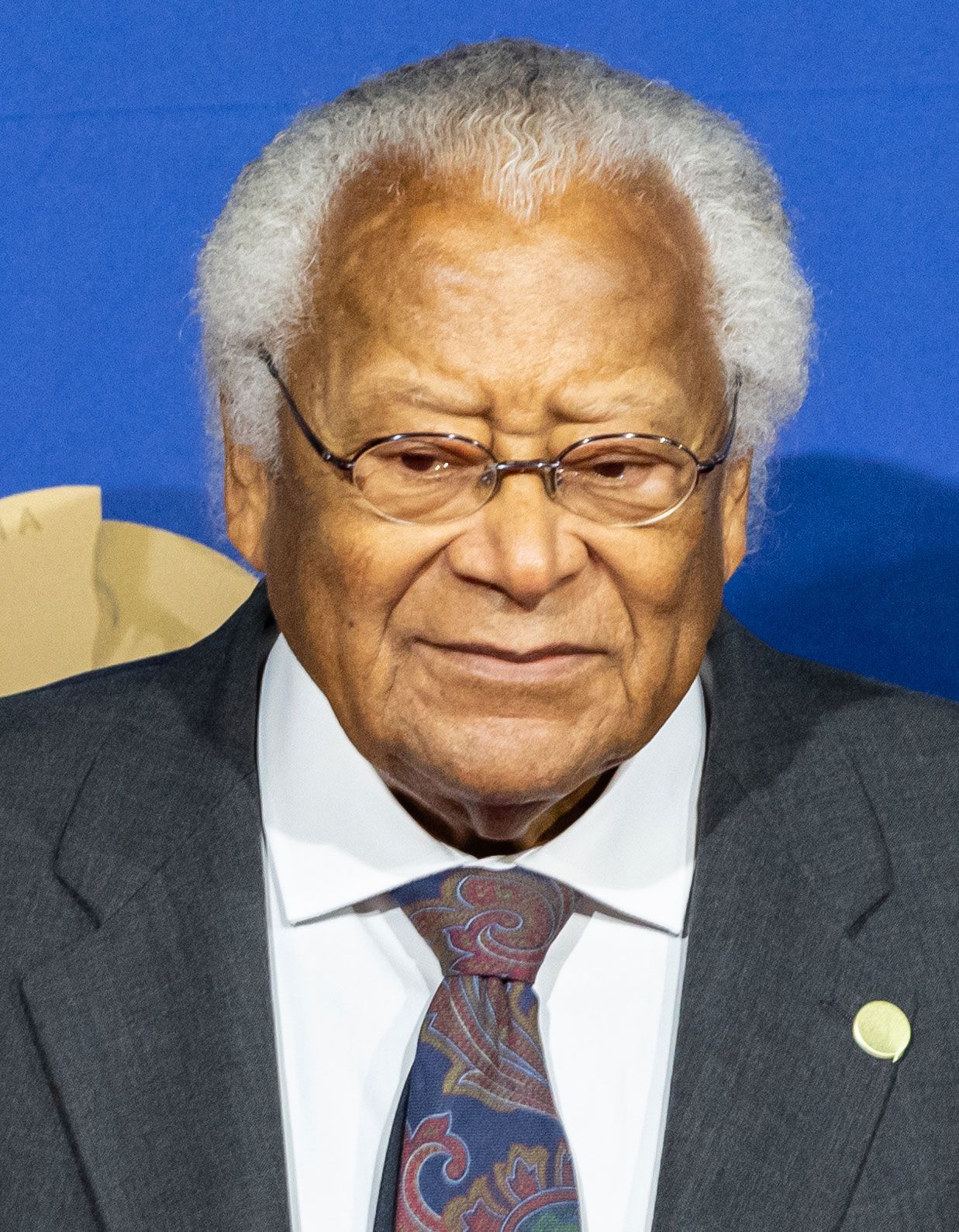
James Lawson
 United States
Activist•University Professor•United Methodist Pastor
Also known as: James Morris Lawson Jr., Reverend James Lawson
Birthday
September 22, 1928
Birth Sign
Virgo
Birthplace
Uniontown, Pennsylvania, USA
Age
Died at 95
About
James Morris Lawson Jr. was an American activist, university professor, and United Methodist pastor who became one of the most influential theoreticians and tacticians of nonviolence within the Civil Rights Movement. Called by Dr. Martin Luther King Jr. "the leading theorist and strategist of nonviolence in the world," Lawson trained generations of activists in the philosophy and practice of peaceful protest.
Lawson's methods shaped the Nashville sit-ins, the Freedom Rides, and countless other campaigns across the South. He served as a mentor to the Student Nonviolent Coordinating Committee and worked alongside King until the latter's assassination in 1968. After decades of pastoral work in Los Angeles, he returned to teaching, sharing his expertise with students at Vanderbilt University and California State University, Northridge.
His legacy is honored through institutions like James Lawson High School in Nashville and a 2026 biography by Emily Yellin. Lawson lived modestly, prioritizing justice over wealth, and his impact continues to inspire activists worldwide.
Early Life & Background
James Morris Lawson Jr. was born on September 22, 1928, in Uniontown, Pennsylvania, into a family steeped in ministry, both his father and grandfather were Methodist ministers. This religious foundation shaped his early worldview, and he received his local preacher's license in 1947 while still a teenager.
After high school, Lawson enrolled at Baldwin-Wallace College in Ohio, earning a bachelor's degree. He then moved to Oberlin College School of Theology, where he studied under A.J. Muste, a prominent pacifist and labor organizer. Muste introduced Lawson to the philosophy and techniques of Mahatma Gandhi's nonviolent resistance, which would become the cornerstone of his activism.
In 1951, Lawson's convictions were tested when he refused to register for the draft during the Korean War. He was imprisoned for 13 months as a conscientious objector, an experience that deepened his commitment to civil disobedience. After his release, he traveled to India in the mid-1950s to study Gandhian philosophy firsthand, absorbing the practical methods of nonviolent struggle that he would later teach.
Returning to the United States, Lawson enrolled at Vanderbilt University's Divinity School in Nashville in 1957. There, he began conducting workshops on nonviolence for students, laying the groundwork for the Nashville Student Movement that would soon make history.
Career Growth
Lawson's breakthrough came in February 1960 when the Nashville sit-in movement, trained under his guidance, successfully desegregated the city's lunch counters. The campaign became a model for protests across the South. In 1960, Vanderbilt University expelled Lawson for his activism, but the university later apologized and awarded him an honorary degree.
Throughout the 1960s, Lawson advised the Student Nonviolent Coordinating Committee (SNCC), helping organize the Freedom Rides of 1961 and the Mississippi Freedom Summer of 1964. He was ordained as a Methodist minister in 1962 and pastored churches in Memphis, where he mentored James Bevel, a key strategist of the Birmingham Children's Crusade. In April 1968, Lawson was in Memphis helping organize the sanitation workers' strike when Dr. King was assassinated.
From 1974 to 1999, Lawson served as pastor of Holman United Methodist Church in Los Angeles, remaining active in labor, immigrant, and anti-war movements. He then taught as a distinguished professor at Vanderbilt and California State University, Northridge, training activists well into his 80s and 90s. In 2021, he received the Community of Christ International Peace Award.
Career Timeline
Public Image & Style
Lawson's public image was that of a disciplined, deeply principled activist who combined Christian faith with rigorous intellectual commitment to nonviolence. He was known for his calm demeanor and exacting standards in training activists, insisting that nonviolence was not merely a tactic but a way of life.
Media portrayals consistently cast him as a "giant" and "prophet" of the Civil Rights Movement, with tributes from organizations like the Children's Defense Fund and the United Methodist Church emphasizing his moral authority. He had no formal fandom, but his legacy is honored through institutions like James Lawson High School and continued scholarship.
Lawson's social media presence was nonexistent, but his teachings live on through the countless activists he trained and the ongoing relevance of his nonviolent philosophy.
Fame & Fandom
For decades, the legacy of Rev. James M. Lawson Jr. has been sustained not by a cult of personality or viral trends, but by a dedicated community of scholars, activists, and former students who treat his life as a living curriculum. While he lacks a formal fandom name typical of pop culture icons, his following is defined by an intellectual devotion to the philosophy of nonviolence, with adherents often gathering for lectures or participating in training workshops that carry forward his teachings. This audience does not seek celebrity gossip; they seek the rigorous discipline of the man Dr. King called the leading strategist of nonviolence in the world.
His enduring presence in global consciousness reflects a unique blend of historical significance and ongoing moral relevance. The reach of his influence spans generations, from the Nashville sit-ins to modern social justice movements, creating a footprint that feels both timeless and immediate. This sustained attention across media coverage, search trends, and educational consumption worldwide ensures his story remains vital rather than archival.
According to the latest data from the iFANN Global Fame Rankings, James Lawson holds a distinct position among religious leaders and historical figures. He is currently the 86th most famous person in Pastors, a ranking that has held steady since the previous cycle. This placement underscores his status as a towering figure within his specific industry, recognized globally for his contributions to peace and civil rights.
Interesting Facts and Legends
James Lawson spent 13 months in federal prison as a conscientious objector during the Korean War, refusing to register for the draft. He traveled to India specifically to study Mahatma Gandhi's nonviolent techniques, a journey that shaped his entire approach to activism. Vanderbilt University's expulsion of Lawson in 1960 was later formally apologized for, and the university awarded him an honorary degree, a rare institutional reversal. Dr. Martin Luther King Jr. personally recruited Lawson to lead nonviolence training for the movement, calling him "the leading theorist and strategist of nonviolence in the world." Lawson mentored James Bevel, who went on to orchestrate the Birmingham Children's Crusade and the Selma to Montgomery marches. He was in Memphis at the time of King's assassination, having helped organize the sanitation workers' strike that brought King to the city.
Legends surrounding Lawson often focus on his legendary training sessions at Fisk University, where he subjected student activists to grueling role-playing exercises involving mock beatings and insults to harden their resolve against violence. These sessions are widely retold as the crucible that forged the disciplined leadership of the 1960s. Another iconic moment in his lore involves his refusal to be intimidated by police dogs and fire hoses during the sit-ins, maintaining a calm demeanor that became a symbol of moral superiority over segregationists. His death on June 9, 2024, at age 95 marked the end of an era, prompting immediate tributes that highlighted his role as the architect of the movement's conscience.
Notable Quotes
“Nonviolence is not a tactic; it is a way of life.”
“We will not be silent.”
“The goal of nonviolence is not to defeat the opponent, but to win their friendship.”
Family & Personal Life
Lawson married Dorothy Wood Lawson in the early 1950s, and the couple remained together for over 60 years until her death in 2015. They had three children: two sons and a daughter, whose names have largely remained private. Lawson's family life was marked by a shared commitment to social justice, though he kept personal details out of the public eye.
His son, John Lawson, appeared at the 2026 launch of Emily Yellin's biography "Nonviolent," indicating the family's ongoing involvement in preserving his legacy. The Lawson household was known for its modesty, reflecting the activist's principles of simplicity and service.
Notable Connections
James Lawson worked closely with Dr. Martin Luther King Jr., who recruited him to lead nonviolence training and called him the movement's leading theorist. He mentored James Bevel, who became a key strategist of the Birmingham Children's Crusade. At Oberlin, he studied under pacifist A.J. Muste, and his son John Lawson has carried on his legacy. Author Emily Yellin wrote the 2026 biography "Nonviolent" about his life.
Relationships & Dating History
James Lawson married Dorothy Wood Lawson in the early 1950s, and the couple remained together for over 60 years until her death in 2015. Their marriage was a partnership rooted in shared values of faith and activism. They had three children together.
There is no documented evidence of any other public romantic relationships in Lawson's life. He remained devoted to Dorothy throughout their marriage, and after her passing, he continued his work as a widower. At the time of his death in 2024, Lawson was widowed, having outlived his wife by approximately nine years.
- MarriedDorothy Wood Lawson1953 - 2015Married for over 60 years until her death.
Death & Aftermath
Died
June 9, 2024 (aged 95)
Death Place
Nashville, Tennessee
Cause of Death
Natural causes
James Morris Lawson Jr., the renowned civil rights activist, United Methodist pastor, and university professor, died on June 9, 2024, at the age of 95 in Nashville, Tennessee. The specific medical facility is not explicitly named. Reports consistently described the event as a natural end of life given his advanced age, with no indication of foul play, accident, or sudden trauma. His final days were marked by his status as an elder statesman of the movement, having spent his later years teaching nonviolence and mentoring activists. The public reaction to Lawson's death was immediate and widespread, characterized by tributes from major civil rights institutions, government bodies, and religious organizations. The King Institute at Stanford University honored him as a minister who trained many activists in nonviolent resistance.
The Children's Defense Fund declared that the nation lost a prophet of nonviolence. Public Counsel highlighted his role as a contemporary of Dr. Martin Luther King Jr. The Wisconsin Department of Public Education issued a statement titled "We Will Not Be Silent: The Legacy of Civil Rights Activist Rev. James Lawson," emphasizing his commitment to peace and justice. Vanderbilt University announced the digitization of his papers, noting he was an architect of the U.S. nonviolence movement. The Nashville Sheriff's Office posted a tribute calling him a fearless strategist of nonviolence who trained generations of activists. The United Methodist News Service published an article titled "The heroic life of the Rev. James Lawson," celebrating his legacy within the church.
Specific details regarding the date, location, and attendees of a private funeral or public memorial service were not provided in the search results. A significant posthumous action was the immediate digitization and public release of "The Rev. James Lawson Papers" by Vanderbilt University Library. Additionally, a documentary film titled A Better Way: James Lawson, Architect of Nonviolence, narrated by Jesse Williams, was scheduled to launch the 2026 African Diaspora International Film Festival in Washington, D.C. Regarding his estate, no specific details on its handling, trusts, or family distributions were reported.
Net Worth (Estate Value)
$1 Million
iFANN Editorial Team estimate
James Lawson lived a life of modest means, consistent with his values of simplicity and social justice. As a minister and professor, his income was modest, and he did not accumulate significant personal wealth. His financial legacy is minimal, but his true wealth lies in the countless activists he trained and the movement he helped shape. Per iFANN's editorial analysis, his estate is estimated to be worth around $1 Million, primarily reflecting modest savings and property. Any posthumous earnings from book royalties or honors are likely to be modest as well. Lawson's focus was never on money, and his impact is measured in the enduring influence of his nonviolent philosophy rather than financial terms.
Awards Won (2)
James Lawson received numerous honors for his lifelong commitment to nonviolence and civil rights. In 2021, he was awarded the Community of Christ International Peace Award. Vanderbilt University, which expelled him in 1960, later issued a formal apology and conferred an honorary degree. He also received the Martin Luther King Jr. Nonviolent Peace Prize and various recognitions from civil rights organizations.
2021 · Peace
Lifetime of nonviolent activism
2006 · Honorary
Lifetime achievement
Known For
Nashville Sit-ins
1960 · Trainer and strategist
Freedom Rides
1961 · Organizer and advisor
Nonviolence Training
1960s · Leading theorist
Keywords
Sources
Quick Facts
- Profession
- Activist, University Professor, United Methodist Pastor
- Born
- September 22, 1928
- Birthplace
- Uniontown, Pennsylvania, USA
- Died
- June 9, 2024
- Death Place
- Los Angeles, California, USA
- Gender
- Male
- Birth Sign
- Virgo
- Spouse
- Dorothy Wood Lawson
Personal Details
- Full Name
- James Morris Lawson Jr.
- Spouse
- Dorothy Wood Lawson
- Children
- Three (two sons, one daughter)
- Education
- Baldwin-Wallace College (BA), Oberlin College School of Theology, Vanderbilt University Divinity School
Frequently Asked Questions
What did James Lawson do in the civil rights movement?
Why was James Lawson expelled from Vanderbilt University?
How did James Lawson learn about nonviolence?
What did Martin Luther King Jr. say about James Lawson?
Where did James Lawson serve as a pastor?
Similar People
Join the community
fans discussing