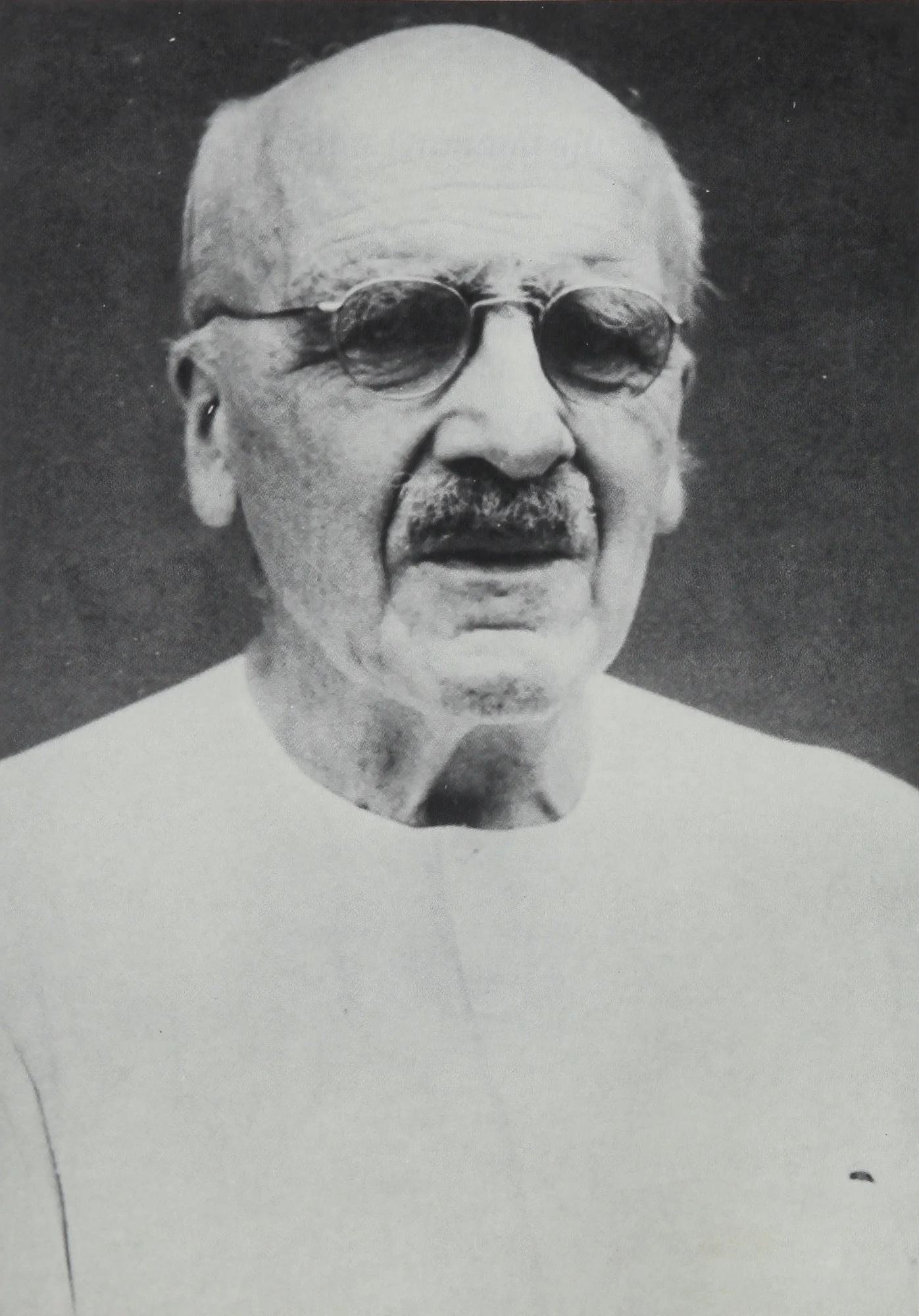
J.B.S. Haldane
Awards & Honours
3
Awards Won
6
Honours
3
Rankings
2
Covers
5
Records
Haldane is celebrated as one of the architects of modern evolutionary biology. His mathematical approach to genetics laid the foundation for the neo-Darwinian synthesis. He formulated Haldane's rule, a lasting principle in speciation genetics. His primordial soup theory remains a cornerstone of origin-of-life research. He was elected a Fellow of the Royal Society at age 39. In India, he is remembered for building the country's genetics research capacity. The Haldane crater on the Moon bears his name.
Awards
Honours & Distinctions
Fellow of the Royal Society
Elected for contributions to physiology and genetics.
Foreign Associate, National Academy of Sciences
Honored for international contributions to science.
Honorary Doctorate
Awarded for his scientific achievements.
Honorary Doctorate
Recognized for his work in India.
Honorary Doctorate
Honored for his contributions to genetics.
Haldane Crater
A lunar crater on the far side of the Moon named after him.
Rankings & Lists
100 Greatest Scientists of All Time
Founders of Modern Evolutionary Synthesis
Most Influential British Scientists
Magazine Covers
Nature
1964-12-05
Obituary: J.B.S. Haldane
New Scientist
1963-01-01
The Polymath of Genetics
Records & Feats
First to mathematically reconcile Mendelian genetics with Darwinian natural selection
Haldane's 1924 paper used statistical methods to show that Mendelian inheritance could explain continuous variation and natural selection, a foundational step in the modern synthesis.
Formulated Haldane's rule on hybrid sterility
In 1932, Haldane proposed that in hybrid offspring, the heterogametic sex is more likely to be sterile or inviable, a principle still used in evolutionary biology.
First to propose the primordial soup theory for the origin of life
In his 1929 essay 'The Origin of Life', Haldane suggested life emerged from a chemical mixture energized by ultraviolet light, a concept that influenced later experimental work.
First to propose that sickle-cell disease confers malaria resistance
In 1949, Haldane correctly hypothesized that the sickle-cell trait persisted in populations because it provided protection against malaria, a classic example of balancing selection.
Coined the term 'clone' for genetic copies
Haldane introduced the word 'clone' in a 1963 speech, derived from the Greek for 'twig', and it became standard terminology in biology.