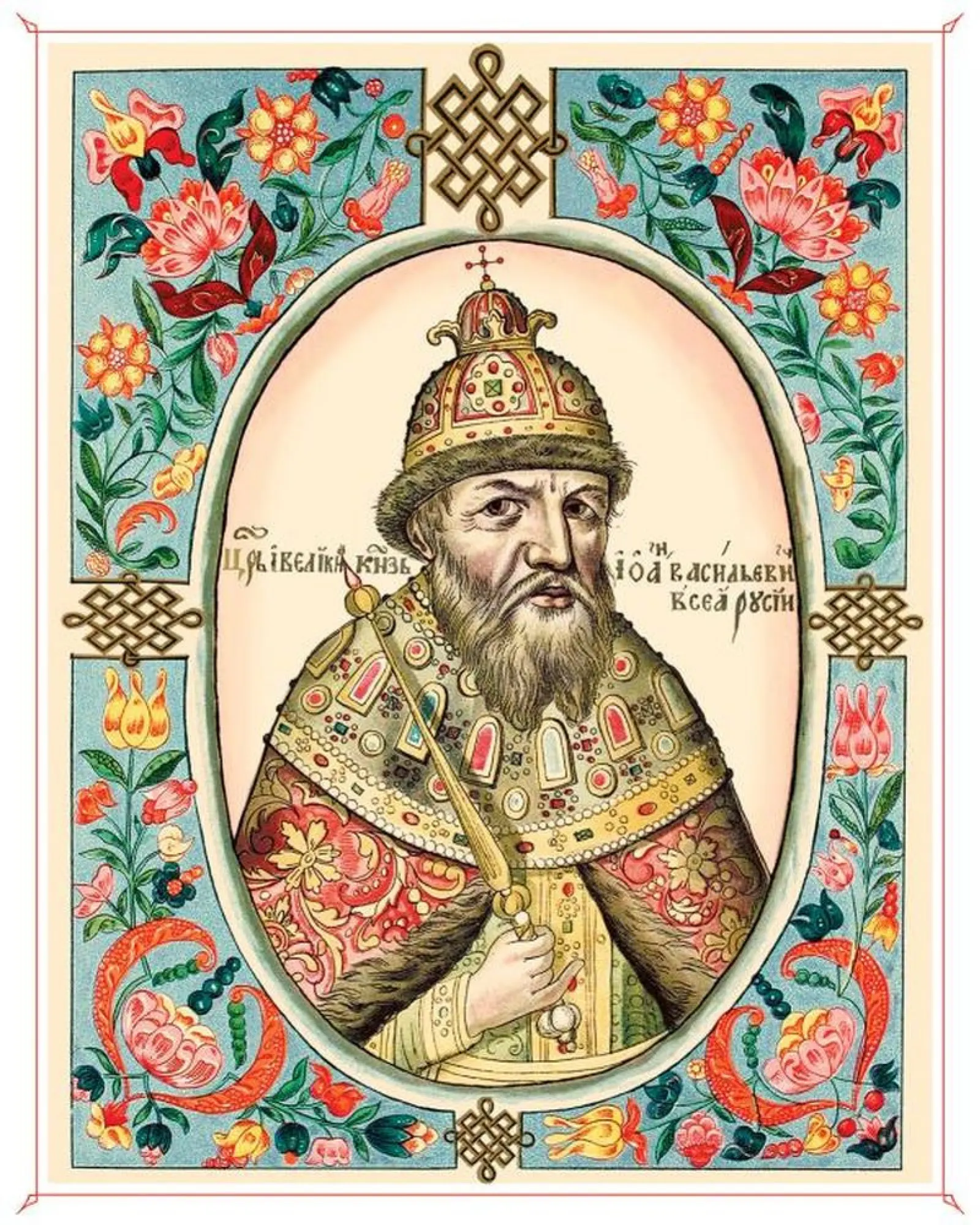
Ivan the Terrible
Also known as: Ivan IV, Ivan Vasilyevich, Grozny
Birthday
August 25, 1530
Birth Sign
Sagittarius
Birthplace
Kolomenskoye, near Moscow
Age
Died at 53
About
Ivan IV Vasilyevich, universally known as Ivan the Terrible, was the first Tsar of all Russia and ruled from 1547 until his death in 1584. A figure of immense complexity, he transformed Russia from a medieval principality into a fledgling empire through massive territorial expansion and centralization of power. His reign marked the beginning of the autocratic system that would define Russian governance for centuries, yet it came at a horrific cost to the population through purges, wars, and economic devastation.
Born in 1530, Ivan ascended to the throne at age three following his father's death. His childhood was defined by political instability and personal trauma, witnessing the execution of his mother and enduring abuse at the hands of rival boyar factions. These early experiences fostered a deep-seated paranoia and distrust of the nobility that would dominate his later rule. Despite this turbulent start, he proved to be a capable administrator who implemented significant legal reforms, established the first standing army, and oversaw the construction of iconic landmarks like St. Basil's Cathedral.
Early Life & Background
Ivan IV entered the world on August 25, 1530, at Kolomenskoye, a royal estate just outside Moscow. As the eldest son of Grand Prince Vasili III and his second wife Elena Glinskaya, he was born into the Rurik dynasty, the oldest ruling house in Russia. His early years were shattered by tragedy; when he was barely three, his father died, leaving him as the nominal ruler but effectively powerless. The real authority fell to various boyar factions, including the Shuysky and Belsky families, who treated the young prince with contempt.
His upbringing was marked by neglect and humiliation. The regents deprived him of basic comforts and subjected him to physical abuse, creating a childhood environment of fear and insecurity. At age eight, he witnessed the execution of his mother, Elena Glinskaya, likely poisoned by the boyars who feared her influence. This event left a permanent scar on his psyche, fueling a lifelong suspicion of the aristocracy. He spent his formative years isolated in the palace, learning theology, history, and statecraft from tutors like Sylvester and Adashev. By 1547, at sixteen, he had gathered enough support to reject the traditional title of Grand Prince and assert his own authority, setting the stage for his coronation as the first Tsar.
Career Growth
Ivan's rise to power began in earnest in 1547 when he was crowned the first Tsar of all Russia at the Dormition Cathedral in Moscow. This event signaled a shift from a medieval principality to an empire. In his early years, he ruled alongside the Chosen Council, a group of reformers that included Metropolitan Macarius and Prince Kurbsky. Under their guidance, he implemented sweeping changes: the Sudebnik of 1550 revised the legal code, the Zemsky Sobor was established to represent different social classes, and the Streltsy, Russia's first standing army, was created. He also oversaw the construction of St. Basil's Cathedral in Red Square to commemorate the conquest of Kazan.
Between 1552 and 1556, Ivan achieved massive military successes by conquering the Khanates of Kazan and Astrakhan. These victories brought the entire Volga River basin under Russian control and opened vital trade routes to Central Asia. However, his later career was marred by the disastrous Livonian War (1558–1583), which drained the treasury and led to military defeats against Poland-Lithuania and Sweden. Seeking to break the power of the boyars who opposed his autocracy, Ivan instituted the Oprichnina in 1565, a policy of terror involving a secret police force that seized noble lands and executed thousands. This period culminated in the Massacre of Novgorod in 1570. Despite these conflicts, Ivan pursued cultural advancements, importing the first printing press to Russia in 1564 and fostering a unique artistic style exemplified by the iconography of the time.
Career Timeline
Public Image & Style
Ivan the Terrible occupies a dualistic space in public memory. He is viewed simultaneously as a visionary statesman who expanded Russia and a paranoid tyrant who destroyed its foundations. Media portrayals range from the sympathetic, tragic figure in Sergei Eisenstein's films to the monstrous villain in Western historiography. His public image is defined by his contrasting roles: the pious Christian ruler who sought to unify the faith and the ruthless despot who slaughtered his own kin. Contemporary descriptions note his intense, piercing gaze and distinctive beard, which have become iconic symbols of his reign.
Modern perceptions of Ivan are heavily influenced by his actions during the Oprichnina and the Massacre of Novgorod. He is often cited as one of the most powerful monarchs in history, yet also one of the most cruel. His legacy is a complex mix of admiration for his administrative reforms and condemnation for his brutality. Recent cultural depictions continue to explore this duality, presenting him as a man torn between divine mission and human madness. The term 'Terrible' itself, derived from the Russian 'grozny,' originally meant 'formidable' or 'awe-inspiring,' reflecting the respect and fear he commanded.
Fame & Fandom
iFANN has not yet collected fame data for this person. As a historical figure from the 16th century, Ivan the Terrible does not appear in modern celebrity rankings or global attention metrics used for living personalities. His fame is measured in historical significance rather than current search volume or social media engagement.
Fandom for Ivan is non-existent in the traditional sense, as he is a historical figure rather than a pop culture star. However, there is a dedicated community of historians, students, and enthusiasts of Russian history who study his reign extensively. Academic projects and documentaries frequently revisit his life, analyzing his impact on Russian identity and governance. Fan campaigns do not exist, but scholarly debates continue to shape how he is understood. In recent years, his image has been revived in Russian nationalist discourse, with some groups advocating for his canonization as a saint. This resurgence reflects a broader trend of reevaluating historical figures through the lens of contemporary political needs.
Interesting Facts and Legends
Ivan possessed talents far beyond politics and warfare. He was a skilled musician and composer, writing several choral works that are still studied today. An accomplished calligrapher, he personally copied manuscripts and owned a library of over 200 books, a rarity for monarchs of his era. One of the most infamous events in his life occurred on November 19, 1581, when he struck his own son, Ivan Ivanovich, in a fit of rage. The blow caused a skull fracture that led to the heir's death days later, an act that effectively ended the direct male line of the Rurik dynasty.
Another legendary aspect of his persona involves the Oprichnina, where he rode a black horse and dressed in black robes, symbolizing his role as a 'monk-king' purging the land of traitors. He was also known for his intense, piercing gaze and a distinctive beard that became part of his iconic image. While some elements of his story are dramatized in folklore, the core events like the killing of his son and the Massacre of Novgorod are supported by contemporary chronicles. His reputation as a 'terrible' ruler stems not just from cruelty but from the sheer scale of his achievements and the depth of his failures.
Notable Quotes
“I am the Tsar of all Russia, and I will rule as I see fit.”
“I am not a tsar, but a simple man.”
“The boyars are my enemies, and I will destroy them.”
Family & Personal Life
Ivan IV was the eldest son of Grand Prince Vasili III and Elena Glinskaya. He had no siblings mentioned in primary records, making him the sole heir to the throne. His childhood was dominated by the loss of his parents; his father died when he was three, and his mother was executed when he was eight. He married eight times, though historical records vary on the number of formal marriages versus concubinage. His first and most celebrated marriage was to Anastasia Romanovna Zakharina-Yuriev in 1547. She was a member of the influential Romanov clan, and their union produced seven children, including the future Tsar Feodor I and Ivan Ivanovich. Her death in 1560 triggered a profound shift in his personality and rule.
Following Anastasia's death, Ivan entered a series of short-lived or politically arranged unions. His final official marriage was to Maria Nagaya in 1580, who gave birth to his youngest son, Dmitry of Uglich, before Ivan's death. There are no recorded 'dating' relationships in the modern sense; all unions were dynastic or political. He left behind multiple children, including Feodor I, Ivan Ivanovich (who predeceased him), and Dmitry of Uglich. His family life was characterized by political alliances rather than romantic love, except perhaps for the intense emotional bond he shared with Anastasia.
Notable Connections
Relationships & Dating History
Ivan the Terrible was married eight times, though historical records vary on the number of formal marriages versus concubinage. His first and most celebrated marriage was to Anastasia Romanovna Zakharina-Yuriev in 1547 when he was 17. She was a member of the influential Romanov clan, and their union produced seven children, including the future Tsar Feodor I and Ivan Ivanovich. Historians widely agree that Anastasia's death in 1560, possibly due to poisoning by boyars, triggered Ivan's descent into paranoia and violence.
Following her death, Ivan entered a series of short-lived or politically arranged unions. In 1561, he married Maria Temryukovna, daughter of the Kuban prince Temruk, to secure alliances with the North Caucasus; she died in 1569 after giving birth to a son, Dmitry. His third wife, Marfa Sobakina, died in childbirth in 1571. Anna Koltovskaya was briefly married in 1571 but was quickly sent to a convent. His fifth wife, Maria Dolgorukova, died in 1573. Anna Vasilchikova was married in 1575 but divorced within months. Vasilisa Melentyeva is often cited as a brief union in 1575. His final official marriage was to Maria Nagaya in 1580; she gave birth to his youngest son, Dmitry of Uglich, before Ivan's death. There are no recorded 'dating' relationships in the modern sense; all unions were dynastic or political, except perhaps for the intense emotional bond with Anastasia. Ivan was widowed by Anastasia and subsequently widowed or divorced by his other spouses. As of his death in 1584, he was not currently single or married, having been a widower since 1580 (Maria Nagaya outlived him).
- MarriedAnastasia Romanovna1547 - 1560First wife, mother of seven children, died possibly from poisoning
- MarriedMaria Temryukovna1561 - 1569Second wife, daughter of Kuban prince, died in childbirth
- MarriedMarfa Sobakina1571 - 1571Third wife, died in childbirth
- DivorcedAnna Koltovskaya1571 - 1571Fourth wife, sent to a convent shortly after marriage
- MarriedMaria Dolgorukova1571 - 1573Fifth wife, died in 1573
- DivorcedAnna Vasilchikova1575 - 1575Sixth wife, divorced within months
- MarriedVasilisa Melentyeva1575 - 1575Brief union in 1575
- MarriedMaria Nagaya1580 - 1584Final wife, mother of Dmitry of Uglich
Death & Aftermath
Died
March 28, 1584 (aged 53)
Death Place
Zvenigorod, Moscow region, Russia
Cause of Death
Sudden stroke or heart attack
Historical chronicles place Ivan's final moments on March 18, 1584 (O.S.), inside his summer residence at Zvenigorod near Moscow. The scene described by court scribes is stark: the Tsar sat playing chess with his favorite boyar, Boris Godunov. When the game ended, Ivan collapsed and lost consciousness almost immediately. He died shortly after, though the exact medical trigger remains debated among historians. Some accounts suggest he choked on food or vomited blood before falling, while modern analysis often points to a combination of chronic alcoholism, lead poisoning from wine stored in lead-glazed vessels, and a catastrophic cardiovascular event.
The immediate aftermath saw the throne pass to his son Feodor I, an intellectually limited ruler whose reign eventually ended the Rurik dynasty and plunged Russia into the Time of Troubles. Ivan was buried in the Archangel Cathedral within the Moscow Kremlin on April 19, 1584, interred alongside other rulers in a grand state affair. His legacy became a polarized symbol of absolute power and tyranny, immortalized in Sergei Eisenstein's films and Alexander Ostrovsky's plays. In recent years, his image has resurfaced in Russian culture, sparking debates about authoritarianism and national identity.
Net Worth (Estate Value)
$0
iFANN Editorial Team estimate
Ivan the Terrible did not possess a net worth in the modern monetary sense, as the concept of personal wealth in dollars or euros did not exist in 16th-century Russia. His fortune was measured in land, serfs, gold, and the vast resources of the Russian state. At the peak of his reign, he controlled the entire treasury of the Russian Empire, which included revenues from trade, taxation, and the newly acquired territories of Kazan and Astrakhan.
While he accumulated immense wealth, much of it was consumed by his military campaigns, particularly the Livonian War, which drained the state coffers. His personal assets included vast estates, palaces, and treasures looted from conquered cities. After his death, his estate passed to his son Feodor I, whose reign ended the Rurik dynasty. Today, his 'wealth' is reflected in the cultural and historical value of his legacy, which continues to generate revenue through tourism, media adaptations, and academic research. No specific dollar figure can be assigned to his estate, as it was entirely tied to the geopolitical and economic structures of his time.
Awards & Accolades
View 9 records, honours and achievementsKnown For
Ivan the Terrible, Part II
1946 · Subject
The Tsar's Bride
1998 · Subject
Ivan the Terrible and His Son
1918 · Subject
Keywords
Sources
Quick Facts
- Profession
- Monarch, Tsar of Russia
- Born
- August 25, 1530
- Birthplace
- Kolomenskoye, near Moscow
- Died
- March 28, 1584
- Death Place
- Zvenigorod, Moscow region, Russia
- Gender
- Male
- Spouse
- Anastasia Romanovna, Maria Temryukovna, Marfa Sobakina, Anna Koltovskaya, Maria Dolgorukova, Anna Vasilchikova, Vasilisa Melentyeva, Maria Nagaya
- Birth Sign
- Sagittarius
Personal Details
- Full Name
- Ivan IV Vasilyevich
- Spouse
- Anastasia Romanovna, Maria Temryukovna, Marfa Sobakina, Anna Koltovskaya, Maria Dolgorukova, Anna Vasilchikova, Vasilisa Melentyeva, Maria Nagaya
- Children
- Feodor I, Ivan Ivanovich, Dmitry of Uglich
- Education
- Theology, history, and statecraft under tutors Sylvester and Adashev
Frequently Asked Questions
Who was Ivan the Terrible?
How did Ivan the Terrible die?
Did Ivan the Terrible kill his own son?
Why is he called 'the Terrible'?
What was the Oprichnina?
Similar People
Join the community
fans discussing