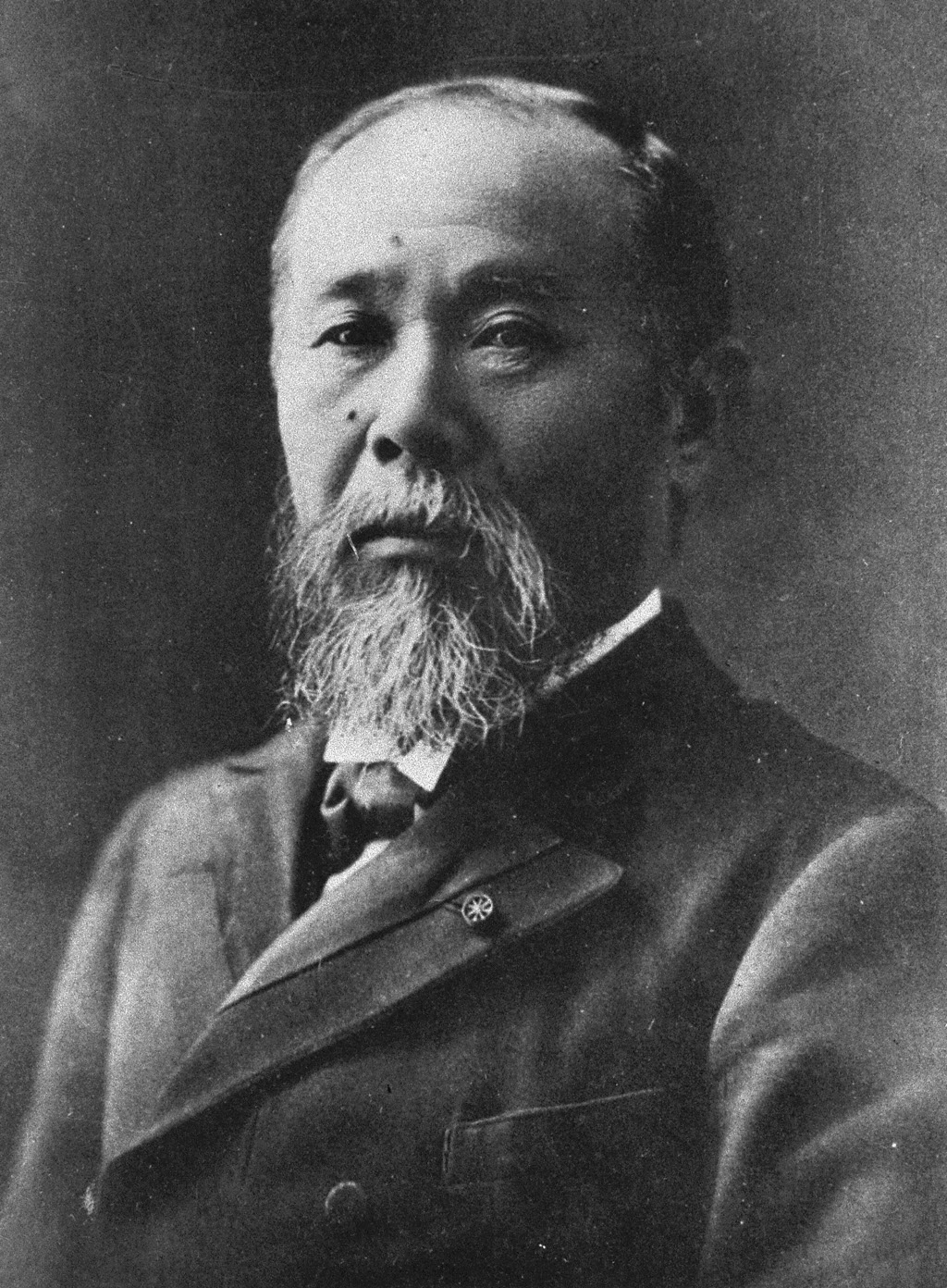
Itō Hirobumi
 Japan
JapanBirthday
+1841-10-16
Birth Sign
Libra
Birthplace
Tsukari
Age
Died at 68
About
Itō Hirobumi, born Hayashi Risuke on October 16, 1841, in the village of Tsukari, rose from humble farming origins to become Japan's first prime minister and one of the most influential architects of the modern Japanese state. His career spanned diplomacy, law, and politics, and he served as prime minister four times between 1885 and 1901. Itō was also a member of the genrō, an elite council of elder statesmen who guided the Empire of Japan through the Meiji era. He is best remembered for drafting the Meiji Constitution of 1889, which established a parliamentary system with a powerful emperor, and for founding the Rikken Seiyūkai political party in 1900. His life ended tragically on October 26, 1909, when he was assassinated by a Korean nationalist in Harbin, Manchuria. Itō's early life was marked by transformation. Born into a poor farming family in the Chōshū Domain, he and his father were adopted into a low-ranking samurai household. After Japan's opening to the West in 1854, Itō became involved in the sonnō jōi movement, which sought to expel foreigners and restore imperial rule. In 1863, he traveled to England to study at University College London, an experience that broadened his view of Western political systems. Following the Meiji Restoration in 1868, he quickly rose through the ranks, serving as a junior councilor for foreign affairs. His work on Western currency systems and tax reform in the early 1870s helped lay the groundwork for Japan's modern economy, and he was a key participant in the Iwakura Mission, a major diplomatic tour of the United States and Europe. As the de facto leader of the Meiji oligarchy by the early 1880s, Itō took charge of drafting the Meiji Constitution. He studied European models, particularly Prussia's, and crafted a document that preserved imperial authority while creating a bicameral Diet. In 1885, he replaced the old Daijō-kan with a cabinet system and became prime minister. Even when not in office, he wielded immense influence as President of the Privy Council and an imperial adviser. On the international stage, Itō strengthened ties with Western powers, oversaw Japan's victory in the First Sino-Japanese War, and negotiated favorable terms that included Taiwan's annexation. After the Russo-Japanese War, he became the first Resident-General of Korea, though his moderate approach to Korean governance clashed with military hardliners. His assassination in 1909 cut short a life that had fundamentally shaped Japan's path to modernity.
Fame & Fandom
Itō Hirobumi stands as a colossus in the landscape of Japanese history, a figure whose influence extends far beyond the grave into the very architecture of modern East Asia. His name carries weight not merely through academic study but through a persistent, global resonance that ranks him among the most recognized historical figures of his origin. According to the 59th most famous person from Japan, a position he has held steady since the previous cycle, his legacy commands attention across continents. This placement within the iFANN Global Fame Rankings reflects a reach that spans decades, capturing the enduring fascination with the man who drafted the Meiji Constitution and shaped an empire. The rankings track this attention through media coverage and consumption signals worldwide, confirming that Itō remains a pivotal subject in historical discourse.
Despite his towering status, Itō does not possess a fandom in the contemporary sense. There is no organized collective, no specific moniker for his followers, and no digital campaigns or birthday billboards dedicated to his memory. He predates the era of celebrity culture where fans gather to cheer; his interactions were strictly diplomatic and governmental. Any engagement with his life today is limited to academic inquiry, historical reenactment, or the passive consumption of documentaries. The absence of a formal fanbase underscores the nature of his existence: a statesman rather than a star. Yet, the stories surrounding him are potent enough to fuel intense debate. The assassination in Harbin in 1909 remains the defining moment, a violent end that triggered geopolitical shifts and cemented his polarizing reputation. While some seek reconciliation between the families of Itō and his assassin, the public narrative remains fractured by the shadows of colonialism and resistance.
Interesting Facts and Legends
Itō Hirobumi was born Hayashi Risuke in the village of Tsukari, rising from humble farming roots to become Japan's first prime minister. He served four separate terms between 1885 and 1901 and helped establish the Rikken Seiyūkai political party. As a member of the genrō, he guided the Empire through the Meiji era with an iron will. His death on October 26, 1909, in Harbin, China, is the most significant event associated with his life. Shot by Korean independence activist Ahn Jung-geun while waiting for a train, the assassination led directly to the formal annexation of Korea later that year.
A recurring legend in historical memory involves the symbolic reconciliation between the sons of Itō and Ahn Jung-geun. Historical accounts cite a meeting in Seoul in 1939 during the Japanese colonial period where the two families sought to bridge the divide caused by the killing. Another notable element of his lore is his title as the "First Man of the Meiji Era," a designation frequently used in media to describe his unparalleled influence. In 2025, the discovery of calligraphy believed to be written by him in South Korea sparked renewed interest in his personal legacy. Contemporary controversies also persist; reports from August 2026 highlighted allegations involving actor Ha Young's great-grandfather for attending an Itō memorial gathering, underscoring how the former statesman remains a focal point for historical tension and political debate.
Death & Aftermath
Died
+1909-10-26 (aged 68)
Death Place
Harbin, Manchuria, Qing Empire
Cause of Death
Assassination by gunshot wounds
Itō Hirobumi died on October 26, 1909, at the Harbin railway station in Manchuria. The first Prime Minister of Japan and former Resident-General of Korea had just arrived from Seoul to discuss border issues with Russian officials when he was shot three times in the abdomen and chest by Korean independence activist Ahn Jung-geun. He fell almost immediately after the attack, dying before any hospital statement could be issued. Japanese authorities swiftly detained Ahn, who was later tried by a military tribunal in Harbin for the murder of a high-ranking statesman. On March 26, 1910, Ahn was executed by hanging in Lushun after confessing to the crime and stating his motive was to stop Japanese expansionism in Korea.
Public reaction to the assassination was deeply divided along national lines. In Japan, Itō was hailed as a national hero and martyr, with tributes pouring in from government officials, the Emperor, and the public. Memorials were erected, and his death served to galvanize support for the annexation of Korea, which was formally completed later that year. Conversely, in Korea and among independence activists, he was viewed as a symbol of colonial oppression, and his death was celebrated as a triumph for sovereignty. This polarization persists in modern historical discourse between the two nations.
A state funeral followed shortly after his death in Tokyo. High-ranking officials, members of the Imperial family, and foreign dignitaries attended the service, where traditional Japanese music played and Shinto priests offered prayers. Itō was cremated, and his ashes were interred at the Tama Cemetery in Fuchu. Posthumously, he received the title of Genrō and the Grand Cordon of the Order of the Chrysanthemum.
Awards & Accolades
Keywords
Quick Facts
- Profession
- politician, diplomat
- Born
- +1841-10-16
- Birthplace
- Tsukari
- Died
- +1909-10-26
- Death Place
- Harbin railway station
- Gender
- Male
- Spouse
- Itō Umeko, Sumiko Ito
- Birth Sign
- Libra
Personal Details
- Spouse
- Itō Umeko, Sumiko Ito
Join the community
fans discussing