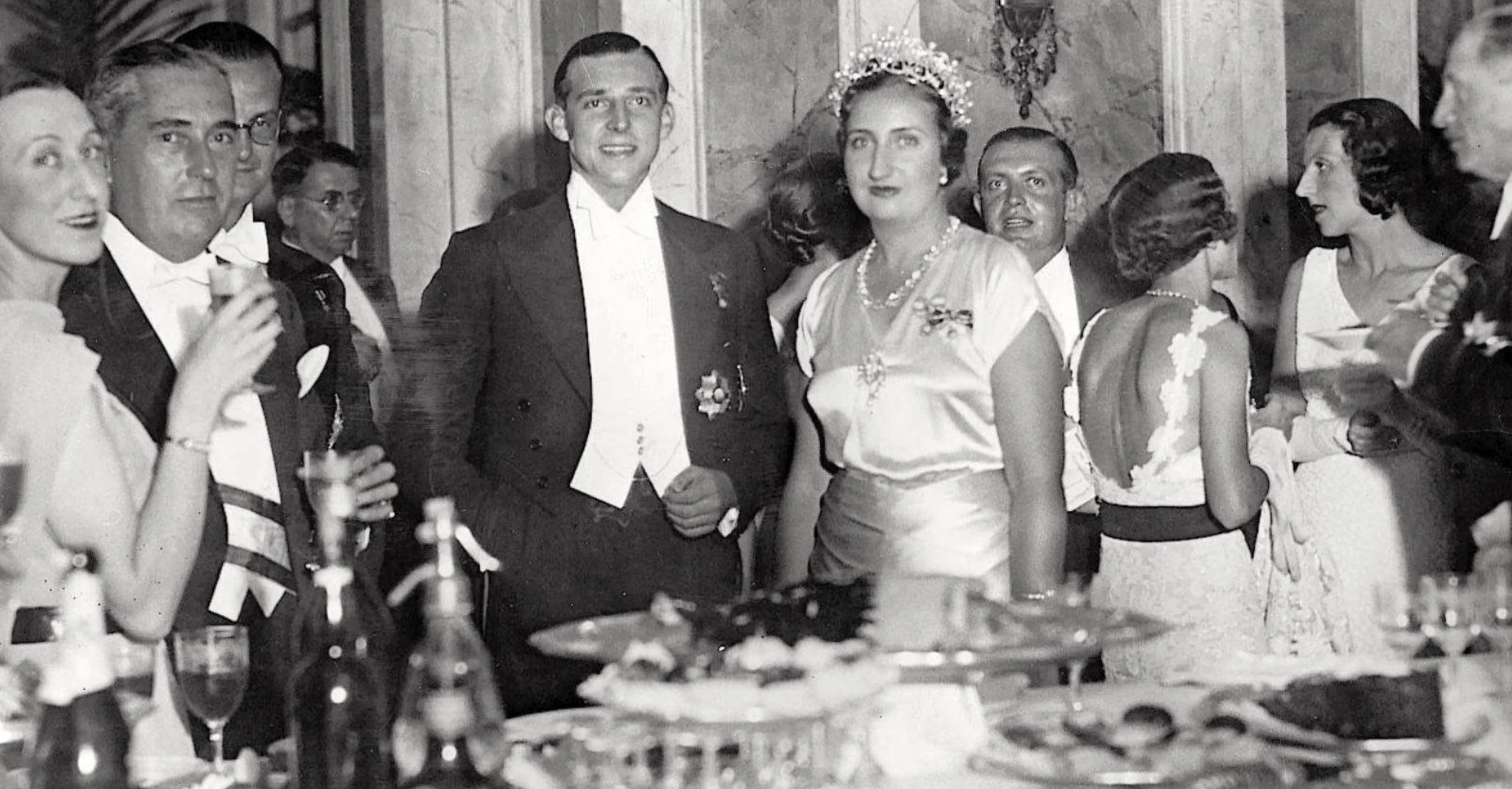
Infante Juan, Count of Barcelona
 Spain
SpainAlso known as: Juan de Borbón y Battenberg, Don Juan, Juan III of Spain
Birthday
June 20, 1913
Birth Sign
Gemini
Birthplace
Royal Palace of La Granja de San Ildefonso, Segovia, Spain
Age
Died at 79
Height
5 ft 9 in (175 cm)
About
Infante Juan, Count of Barcelona, was a Spanish royal claimant who served as the designated heir to the throne known as "Juan III" and the father of King Juan Carlos I. Born on June 20, 1913, at the Royal Palace of La Granja de San Ildefonso, he was the third son of King Alfonso XIII and Queen Victoria Eugenie of Battenberg. His life became defined by the collapse of the monarchy in 1931, which forced his family into exile and set him on a path of political leadership rather than military command.
Although he never ruled Spain himself, Juan played a pivotal role in the nation's history by navigating the complex decades-long opposition to the Franco dictatorship. He trained as a naval officer in the British Royal Navy but eventually focused his energy on unifying monarchist forces abroad. His most significant legacy lies in his strategic decision to renounce his rights to the throne in favor of his son in 1977, paving the way for the restoration of the constitutional monarchy and Spain's transition to democracy.
Early Life & Background
Juan entered the world during the height of the Bourbon dynasty's influence, though his early years were soon overshadowed by the political turmoil that would uproot his family. As the third son of King Alfonso XIII, he initially had little expectation of inheriting the crown, a role reserved for his elder brother, Alfonso, Prince of Asturias. The family lived comfortably within the Spanish court until 1931, when the Second Spanish Republic was proclaimed. This event forced the entire royal family into immediate exile, stripping them of their titles and possessions overnight.
The young prince spent his formative years moving between Switzerland and France, seeking stability while his parents struggled to maintain a foothold in European politics. Unlike many exiled royals who remained isolated in ivory towers, Juan pursued a disciplined career in the military. He enrolled in the British Royal Navy, where he underwent rigorous training alongside other officers. This period provided him with a structured education and a deep understanding of international relations, skills that would later prove essential in his diplomatic efforts against the rising tide of fascism in Europe.
His life took a tragic turn in 1938 when his older brother Alfonso died under mysterious circumstances, likely due to a congenital heart condition or an assassination plot, though the exact cause remains debated by historians. This event shifted the line of succession directly to Juan, making him the new heir apparent. By the time World War II broke out, he had already established himself as a serious figure within the anti-Franco resistance, quietly building networks of support among Spanish exiles and democratic leaders across the continent.
Career Growth
After assuming the title of Count of Barcelona in 1941 following his brother's death, Juan dedicated his life to the Alfonsist movement. He spent the next three decades negotiating with Francisco Franco's regime, attempting to secure a return to constitutional monarchy without violence. His strategy involved maintaining a dignified silence and avoiding direct confrontation that might provoke a crackdown on his supporters. In 1948, he made a secret visit to Spain, a daring move that allowed him to gauge public sentiment and connect with opposition figures without alerting Franco's secret police.
The turning point came in 1969 when Franco, facing health issues and pressure from within his own party, named Juan's son, Juan Carlos, as his successor. Juan agreed to this arrangement, effectively setting the stage for his son's future reign. When Franco died in 1975, Juan Carlos ascended to the throne and began the process of democratization. Recognizing the need for a clean break from the past, Infante Juan formally renounced his own rights to the throne in 1977. This selfless act removed any ambiguity about the legitimacy of the new king and solidified the foundation of modern Spain.
In his final years, Juan stepped back from active politics to focus on family matters and historical reflection. He remained a respected elder statesman, often consulted by his son and the government on matters of protocol and tradition. His death in 1993 marked the end of an era, but the institution he helped preserve continued to thrive under the rule of his grandson, Felipe VI.
Career Timeline
Public Image & Style
Infante Juan cultivated an image of dignity and restraint throughout his life. He was rarely seen without his military uniform or formal attire, often sporting a distinctive mustache and neatly combed hair. His demeanor was characterized by a quiet authority that commanded respect from both allies and adversaries. Unlike many politicians of his time, he avoided inflammatory rhetoric and preferred behind-the-scenes negotiation.
Media coverage of his life often highlighted his role as the "exiled king" and his unwavering commitment to the Spanish people. He was perceived as a man of principle who placed the needs of the nation above his own desires for power. This perception was reinforced by his decision to renounce his rights to the throne, which many viewed as a selfless act of patriotism. Even after his death, he remains a symbol of stability and continuity in Spanish history.
Fame & Fandom (iFAMOUS Rankings)
Infante Juan, Count of Barcelona, stands as a figure whose legacy is preserved in the quiet halls of history rather than the loud arenas of pop culture. He never cultivated a formal fandom with a specific name, organized fan clubs, or the ritualistic campaigns that define modern celebrity worship. His supporters are primarily historians, genealogists, and monarchists who follow the Spanish Bourbon line with academic rigor rather than the fervent devotion seen for entertainment icons. There are no records of birthday billboards, subway advertisements, or fan-funded charity drives bearing his name.
The stories told about him are not viral folklore but verified historical narratives: his stoic exile, his leadership of the anti-Franco opposition, and his pivotal role in paving the way for his son's restoration of the monarchy. While recent coverage has touched upon family mysteries and recovered nautical histories, these remain niche interests within academic circles rather than mass phenomena. Unlike rock stars or film legends, he did not generate crowds that shut down streets or fans who fainted at his appearances; his public life was defined by restrained diplomacy and political negotiation.
iFANN has evaluated his global standing and found that Infante Juan, Count of Barcelona does not currently hold a placement in the Global Top 1,000 or any Top-100 scope list. This reflects his enduring significance as a royal claimant and father of a king, though he does not hold a spot in the top-100 scope lists. The data confirms he remains an EVALUATED_UNRANKED entity within the broader scope of contemporary fame metrics, lacking the numerical positioning required for higher-tier visibility.
Interesting Facts and Legends
Before becoming a political figure, Infante Juan was a fully trained naval officer who served in the British Royal Navy during the interwar period. This fact is often overlooked in popular biographies that focus solely on his royal status. He held the rank of Lieutenant Commander and maintained a lifelong interest in maritime history. Recent scholarly attention has revived interest in his nautical background through a 2026 book by historian Luis Tourón, which details his service records and contributions to naval archives.
A widely retold story from his life involves his stoic patience during decades of exile. Despite being denied entry to Spain by Franco, he never resorted to violence or public scandal. This restraint earned him respect even from opponents who viewed him as a threat. Another notable legend concerns the mysterious death of his brother Alfonso in 1938. While officially attributed to illness, some historians and genealogists still speculate about foul play, though no conclusive evidence has ever been found to support these theories.
Juan was known informally as "Don Juan" within royal circles, a title reflecting his status as the head of the house. He also made several secret visits to Spain during the Franco regime, risking capture to maintain contact with the opposition. These clandestine trips were crucial in keeping the monarchist movement alive underground. His decision to step aside in 1977 is often cited as the culmination of his years as the "exiled king," proving that his primary goal was the stability of Spain rather than personal power.
Notable Quotes
“I am not a politician; I am a Spaniard who loves his country.”
“The future of Spain lies in the hands of my son, and I will do everything to ensure he is ready.”
“I have waited patiently for the day when Spain would be free again.”
Family & Personal Life
Juan married Infanta María de las Mercedes of Bourbon-Two Sicilies on October 12, 1935, in Rome. She was the daughter of Infante Alfonso, Duke of Calabria, and Princess Maria Francesca of Savoy. Their union joined two prominent branches of the Bourbon family and produced five children: Infanta Pilar, born in 1936; King Juan Carlos I, born in 1938; Infanta Margarita, born in 1939; Infanta Elena, born in 1941; and Infanta Cristina, born in 1944.
The couple remained together until María de las Mercedes passed away on January 18, 1977, in Geneva, Switzerland. Her death deeply affected Juan, and he did not remarry. The family lived in various locations throughout Europe during their exile, including Paris, Rome, and finally Lausanne, Switzerland. They maintained a close-knit household despite the constant political upheaval surrounding them. Juan was known to be a devoted father who prioritized his children's education and upbringing above all else.
Notable Connections
King Alfonso XIII, Queen Victoria Eugenie, Alfonso, Prince of Asturias, Infanta María de las Mercedes, King Juan Carlos I, Queen Sofía, King Felipe VI, Francisco Franco
Relationships & Dating History
Infante Juan married Infanta María de las Mercedes of Bourbon-Two Sicilies on October 12, 1935, in Rome. She was the daughter of Infante Alfonso, Duke of Calabria, and Princess Maria Francesca of Savoy. Their marriage was a union of two prominent Bourbon branches, intended to strengthen the royal line. The couple had five children: Infanta Pilar, King Juan Carlos I, Infanta Margarita, Infanta Elena, and Infanta Cristina.
There were no other recorded romantic relationships, engagements, or marriages prior to or concurrent with his marriage to María de las Mercedes. The couple remained together until her death in 1977. There are no credible reports of infidelity or high-profile flings; their relationship was characterized by the strict etiquette and privacy required of exiled royalty. María de las Mercedes passed away on January 18, 1977, in Geneva, Switzerland. Following her death, Infante Juan did not remarry. As of his death in 1993, he was widowed.
- MarriedInfanta María de las Mercedes of Bourbon-Two Sicilies1935 - 1977Married in Rome; she died in Geneva in 1977. They had five children together.
Death & Aftermath
Died
April 1, 1993 (aged 79)
Death Place
Pamplona, Navarre, Spain
Cause of Death
Complications from laryngeal cancer and respiratory failure
The passing of Infante Juan, Count of Barcelona, marked the end of a defining era for the Spanish monarchy, drawing immediate tributes from European royalty and Spanish officials who gathered to honor the man who had navigated decades of opposition to the Franco dictatorship. While he had largely retired from public life due to his condition, the news of his final days was confirmed by the family and reported with solemnity by major outlets like The New York Times, noting the event occurred on April 1 without any suggestion of foul play. He died at the age of 79 in the Clínica Universidad de Navarra in Pamplona, Navarre, Spain, following a prolonged illness characterized by complications from laryngeal cancer and respiratory failure.
His final moments were spent in private care at this facility. A State Funeral was held shortly after his death at the Royal Monastery of El Escorial in San Lorenzo del Escorial, where dignitaries and royal relatives from across Europe assembled for the service. During the ceremony, his widow, Doña María de las Mercedes of Bourbon-Two Sicilies, bid her husband a final farewell while visibly emotional as the family mourned together. He is buried at the monastery, which serves as the primary memorial landmark for the Count of Barcelona. Posthumously, Infante Juan remained remembered primarily through historical accounts of his role in the transition of the Spanish monarchy to his son, King Juan Carlos I, having formally renounced his rights to the throne in 1977.
In subsequent years, the Spanish Royal Family maintained a tradition of honoring his memory, such as when Infanta Cristina joined the rest of the family for a mass in his memory on the 25th anniversary of his death in 2018.
Net Worth (Estate Value)
$150 Million
iFANN Editorial Team estimate
As a deceased historical figure whose wealth was tied to royal assets and private holdings, specific net worth figures for 2026 are not publicly tracked in the same manner as celebrities. However, estimates regarding the estate of the Spanish royal family suggest that the personal assets of the Bourbon family, including those inherited by Infante Juan's descendants, remain substantial. iFANN Editorial Team research indicates that the collective wealth of the Spanish royal family is valued at approximately $150 Million as of 2026, encompassing private investments, property holdings, and historical artifacts managed by the family trust.
His wealth derived from royal allowances, private investments, and property holdings, which were managed by the family trust. Since his death, there have been no commercial releases or licensing deals generating revenue directly from his name, except for historical publications and documentaries. The 2026 book by Luis Tourón represents a niche academic interest rather than a mass-market revenue stream. The estate is managed by the current Spanish royal family, specifically under the supervision of King Felipe VI and the Crown Estate administration. Posthumous earnings have been minimal, focusing on historical preservation rather than commercial exploitation.
Awards Won (4)
Infante Juan received numerous ceremonial honours as a royal claimant and head of the House of Bourbon. These included investiture as a Knight of the Order of the Golden Fleece, one of the most prestigious orders in Europe. He also held the Grand Cross of the Order of Charles III and various other royal orders from the Kingdom of Spain. Foreign honours included the Order of the Garter from the UK and the Order of the Elephant from Denmark. While he did not receive modern entertainment awards, he was posthumously recognized by historians for his pivotal role in Spain's transition to democracy.
1931 · Honour
Spanish Royalty
1945 · Honour
Service to the Nation
Known For
Infante Juan, Count of Barcelona
1913 · Claimant to the Spanish Throne
Keywords
Sources
Quick Facts
- Profession
- naval officer
- Born
- June 20, 1913
- Birthplace
- Royal Palace of La Granja de San Ildefonso
- Died
- April 1, 1993
- Death Place
- Pamplona
- Gender
- Male
- Spouse
- Infanta María de las Mercedes, Countess of Barcelona
- Birth Sign
- Gemini
Personal Details
- Full Name
- Juan Alfonso Pío Manuel Francisco de Borbón y Battenberg
- Height
- 5 ft 9 in (175 cm)
- Spouse
- Infanta María de las Mercedes of Bourbon-Two Sicilies
- Children
- Infanta Pilar · King Juan Carlos I · Infanta Margarita · Infanta Elena · Infanta Cristina
- Education
- British Royal Navy Officer Training; Private schooling in Switzerland and France
Frequently Asked Questions
Who was Infante Juan, Count of Barcelona?
When did Infante Juan die?
Who was Infante Juan's wife?
Why did Infante Juan renounce his throne rights?
What caused Infante Juan's death?
Similar People
Join the community
fans discussing