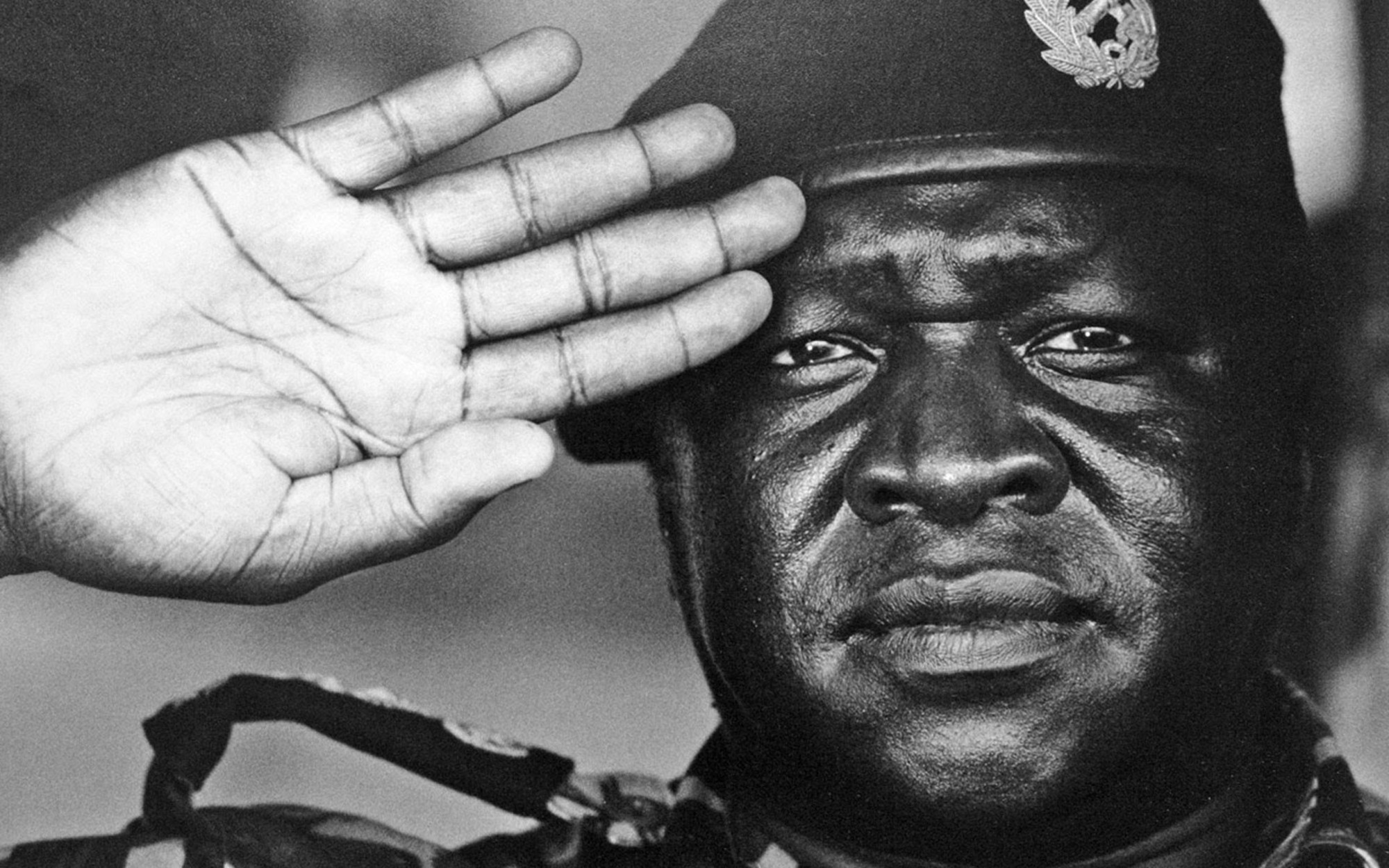
Idi Amin
 Saudi Arabia
Also known as: Butcher of Uganda, Idi Amin Dada
Birthday
1925
Birth Sign
Capricorn
Birthplace
Koboko, Uganda
Age
Died at 78
Height
6 ft 4 in (193 cm)
About
Idi Amin Dada Oumee was a Ugandan military officer and politician who served as the president of Uganda from 1971 to 1979. Known for his authoritarian rule and the brutal human rights abuses committed under his regime, he remains one of the most controversial figures in African history. His presidency saw the expulsion of the Asian minority, political purges, and widespread violence that led to the deaths of hundreds of thousands of Ugandans.
Amin's rule was marked by a shift in foreign alliances, from initial support from Israel and Britain to alignment with Libya and the Soviet Union. His tenure also included Uganda's chairmanship of the Organisation of African Unity in 1975 and the infamous Entebbe hijacking in 1976. After being ousted in 1979, Amin lived in exile in Libya, Iraq, and finally Saudi Arabia, where he died in 2003.
Early Life & Background
Idi Amin was born in the early 1920s in Koboko, a small town in Uganda's West Nile Province. His exact birth year is uncertain, with estimates ranging from 1923 to 1928. He belonged to the Kakwa ethnic group, a minority in Uganda. His father, Andreas Nyabira Tomuresu, was a Kakwa who converted to Islam in 1910, and his mother, Aisha Chumaru Aate, was of Lugbara descent. Amin was raised primarily by his mother and received limited formal education.
In 1946, Amin joined the King's African Rifles (KAR), a British colonial army unit, as an assistant cook. He later claimed to have fought in Burma during World War II, but his service records show he enlisted after the war ended. He was deployed to Somalia in 1949 to fight Shifta rebels and participated in the suppression of the Mau Mau Rebellion in Kenya from 1952 to 1956. In 1959, he attained the rank of effendi, the highest rank available to a black African soldier in the KAR at the time. Alongside his military career, Amin was a champion boxer, holding Uganda's light heavyweight title from 1951 to 1960.
Career Growth
Idi Amin's political rise began after Uganda's independence in 1962, when he became one of the few Ugandan officers in the army. He developed a close relationship with Prime Minister Milton Obote, who appointed him commander of the armed forces in 1966. However, tensions grew between the two, and on January 25, 1971, Amin staged a coup, seizing power while Obote was abroad.
As president, Amin consolidated power through violent purges and ethnic persecution. In 1972, he ordered the expulsion of Uganda's Asian minority, mostly Indian and Pakistani families who controlled much of the country's commerce, devastating the economy. He aligned himself with Libya's Muammar Gaddafi and the Soviet Union, and in 1975 he took over the chairmanship of the Organisation of African Unity. In 1976, he was involved in the hijacking of a French airliner to Entebbe, which led to the Israeli rescue mission. His rule ended in 1979 when Tanzanian forces and Ugandan rebels captured Kampala, forcing him into exile.
Career Timeline
Public Image & Style
Idi Amin's public image was that of a brutal dictator, earning the nickname 'Butcher of Uganda.' His regime was characterized by extreme violence, with estimates of hundreds of thousands of deaths. He presented himself as a Pan-Africanist and anti-imperialist, often making erratic and flamboyant statements. Some in Africa viewed him as a figure who stood up to Britain and Israel, but his legacy remains deeply controversial.
Fame & Fandom
Idi Amin remains a figure of historical infamy, his name echoing through global memory as the 'Butcher of Uganda.' While his reign ended in 1979, his notoriety persists with startling consistency across modern metrics. According to the iFANN Global Fame Rankings, he is currently the 70th most famous person in Sri Lanka, holding steady from the previous cycle. His influence extends beyond his African homeland; data places him as the 5th most famous person from Saudi Arabia, holding steady from the previous cycle. These placements, tracked by the iFANN system which monitors global attention across media coverage, search, and consumption signals worldwide, underscore how a single dictator can retain massive visibility decades after death. Unlike modern entertainers who cultivate active followings, Amin has no organized fanbase. There is no formal fandom name, no birthday campaigns, and no charitable drives in his honor. The only connection to his legacy in recent years involves his grandson, Aziz Abdul, whose boxing career and disqualification at the 2026 Commonwealth Games generated headlines, yet this does not constitute a true fandom for the dictator himself. His audience is one of historical observers and students of tyranny rather than devoted supporters.
Interesting Facts and Legends
Idi Amin was known for his imposing physical stature, standing about 6 feet 4 inches tall and weighing around 250 pounds during his presidency. He was also a skilled boxer, holding Uganda's light heavyweight title for nine years. Amin was a polygamist who married at least six women and fathered dozens of children. He often gave himself grandiose titles, including 'His Excellency, President for Life, Field Marshal Al Hadji Doctor Idi Amin Dada, VC, DSO, MC, CBE,' and he claimed to be the 'Conqueror of the British Empire.' In his later years in exile, Amin was known for eating large quantities of oranges. He died from kidney failure in 2003. Beyond these personal facts, legends of his megalomania endure. A widely retold story describes a Danish journalist challenging Amin to a parachute pistol duel following the Entebbe raid, highlighting his absurd ego. Another verified event cemented his place in folklore: the hijacking of an Air France flight to Entebbe Airport, where Israel launched a rescue mission that Amin had facilitated before threatening to execute hostages if they were harmed. Recent lore connects his past to the present through his grandson, Aziz Abdul, who faced disqualification at the 2026 Commonwealth Games for headbutting an opponent, keeping the family name in the news long after the dictator's death.
Notable Quotes
“I had a dream sent last night from God. He has instructed me to throw out all Asians from the country. Uganda must be for Ugandans only.”
“I am a hero, and I am the conqueror of the British Empire.”
Family & Personal Life
Idi Amin was born to Andreas Nyabira Tomuresu, a Kakwa who converted to Islam, and Aisha Chumaru Aate, a Lugbara woman. He was raised primarily by his mother. Amin married at least six women, including Malyamu, Kay Adroa, Norah, Madina, and Sarah Kyolaba. His wife Kay Adroa was found dead under suspicious circumstances in 1974, and Amin was widely suspected of involvement. Sarah Kyolaba, a dancer he married in 1975, remained with him until his death. Amin fathered dozens of children, some of whom have been involved in politics.
Notable Connections
Relationships & Dating History
Idi Amin was a polygamist who married at least six women. His first known wife was Malyamu, whom he married in the 1960s; they later divorced. He also married Kay Adroa, whose death in 1974 was surrounded by suspicious circumstances, with her dismembered body found in a car trunk. Norah and Madina were also wives during the 1960s, both ending in divorce. His most famous wife was Sarah Kyolaba, a 19-year-old dancer he married in 1975 in a lavish ceremony. She remained with him until his death in 2003.
- MarriedMalyamu Amin1960 - 1970One of his early wives; they later divorced.
- MarriedKay Adroa1960 - 1974Her death in 1974 was under suspicious circumstances.
- MarriedNorah Amin1960 - 1970Divorced.
- MarriedMadina Amin1960 - 1970Divorced.
- MarriedSarah Kyolaba1975 - 2003CurrentHis most famous wife; stayed with him until his death.
Death & Aftermath
Died
August 16, 2003 (aged 78)
Death Place
Jeddah, Saudi Arabia
Cause of Death
Kidney failure
Idi Amin Dada passed away on August 16, 2003, in Jeddah, Saudi Arabia, while receiving treatment for kidney failure at the King Faisal Specialist Hospital & Research Centre. He was approximately 75 years old at the time of his death, though some contemporary accounts estimated his age at 78. His final years were spent in reclusion within the exile community, occasionally making brief radio broadcasts urging a return to power before falling silent. The official cause of death relied on statements from his family and hospital officials rather than a public autopsy or coroner's ruling, meaning the specific progression of his final days remains partially unverified beyond family testimony. A private funeral service followed two days later on August 18, attended only by family members and close associates in a cemetery in Jeddah. No high-ranking foreign dignitaries or Ugandan officials were present to mark the occasion, and the burial took place according to Islamic rites without media spectacle.
While Amin faced numerous human rights charges during his life and immediately following his ouster, these did not extend to his death itself, which was treated as a natural event. In Uganda, the response was characterized by relief rather than grief, with many citizens celebrating the end of his brutal regime. Conversely, some opposition figures and human rights groups used the occasion to reaffirm their commitment to justice for victims of his regime.
Posthumously, Amin has remained a subject of historical study and cultural reference rather than receiving honors or awards. Several books, documentaries, and films have been produced analyzing his life and rule, including The Rise to Power of the Butcher of Uganda and various PBS and JSTOR analyses. His estate has been the subject of speculation, with reports suggesting that assets were seized or dispersed during his exile, but the precise handling of his remaining wealth has never been fully disclosed to the public. Sites associated with his atrocities, such as the torture chambers at the State House, remain as reminders of his tyranny.
Net Worth (Estate Value)
$10 Million
iFANN Editorial Team estimate
Idi Amin's net worth at the time of his death in 2003 was estimated at $10 million, largely accumulated during his presidency through the seizure of property and businesses from expelled Asians. Per iFANN's editorial analysis, this figure reflects the vast wealth extracted under his rule, alongside financial support received from Libya and Saudi Arabia during his exile. After his death, his estate has been managed by his family, though its value has diminished over time.
Awards & Accolades
Known For
President of Uganda
1971-1979 · President
Expulsion of Asians
1972 · Perpetrator
Entebbe Hijacking
1976 · Involved
Keywords
Sources
Quick Facts
- Profession
- politician, military officer
- Born
- 1925
- Birthplace
- Koboko, Uganda
- Died
- August 16, 2003
- Death Place
- Jiddah, Saudi Arabia
- Gender
- Male
- Spouse
- Sarah Kyolaba, Kay Adroa, Malyamu Amin, Madina Amin, Norah Amin
Personal Details
- Full Name
- Idi Amin Dada Oumee
- Height
- 6 ft 4 in (193 cm)
- Spouse
- Sarah Kyolaba, Kay Adroa, Malyamu Amin, Madina Amin, Norah Amin
Frequently Asked Questions
How many people did Idi Amin kill?
How many wives did Idi Amin have?
What happened to Idi Amin's wives?
Where is Idi Amin buried?
Why did Idi Amin expel Asians from Uganda?
Similar People
Join the community
fans discussing