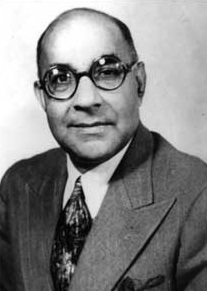
Ibrahim Ismail Chundrigar
 Pakistan
Also known as: Ismail Ibrahim Chundrigar, I. I. Chundrigar
Birthday
September 15, 1897
Birth Sign
Virgo
Birthplace
Godhra, Gujarat, British India
Age
Died at 63
About
Ibrahim Ismail Chundrigar was a Pakistani politician, diplomat, and constitutional lawyer who served as the sixth Prime Minister of Pakistan. Born on 15 September 1897 in Godhra, he trained in constitutional law at the University of Bombay and became one of the founding fathers of the Dominion of Pakistan. His tenure as prime minister lasted just 55 days, from 17 October 1957 to 11 December 1957, when he resigned after losing parliamentary support. That brief stint makes his the third shortest in Pakistan's parliamentary history, behind Shujaat Hussain (54 days) and Nurul Amin (13 days).
A close associate of Muhammad Ali Jinnah, Chundrigar played a pivotal role in the Pakistan Movement before independence. Following the creation of the nation in 1947, he held several critical cabinet positions including Minister of Law and Justice and Minister of Commerce. He also served as Pakistan's Ambassador to the United States from 1954 to 1955. His career was defined by his legal expertise and dedication to establishing the new country's governance frameworks.
Early Life & Background
Ismail Ibrahim Chundrigar entered the world on 15 September 1897 in Godhra, a town in the Kutchi Chundrigar community of Gujarat, British India. He was born into a prominent Muslim family that would later migrate to Pakistan during the Partition. As an only child, his upbringing was shaped by the rising political ferment in British India, particularly the growing demand for a separate homeland for Muslims. His early education took place in India before he moved to Bombay to pursue higher studies.
At the University of Bombay, Chundrigar specialized in constitutional law, a field that would become his defining contribution to history. This rigorous training distinguished him from many of his contemporaries who lacked formal legal credentials. Before entering high-level politics, he practiced law and became deeply involved in the Indian independence movement. He aligned himself with the All-India Muslim League, working closely with its leadership to advocate for the separation of Pakistan. His legal background made him one of the most respected constitutional experts in the region even before the creation of the state.
The pre-fame years were marked by his steady rise as a legal mind within the Muslim League. He participated in the political negotiations that led to the partition of India, leveraging his knowledge of law to shape the arguments for a separate nation. By the time Pakistan was formed in 1947, he had already established a reputation for integrity and legal acumen. These formative experiences in the courts and political circles of Bombay set the stage for his eventual appointment to the highest offices in the land.
Career Growth
Following the creation of Pakistan in 1947, Chundrigar transitioned from a legal practitioner to a key architect of the new nation's governance. He immediately assumed the role of Minister of Law and Justice, a position where he leveraged his expertise to help draft and stabilize the new country's legal framework. His work in this capacity laid the groundwork for the constitutional structure of the young state. He later served as Minister of Commerce, managing economic policies and trade relations during a turbulent period of nation-building.
In 1954, Chundrigar took on a significant diplomatic role as Pakistan's Ambassador to the United States. Serving until 1955, he represented the country on the global stage, navigating complex international relations during the Cold War era. After his return from Washington, he continued his service as Minister of Commerce from 1955 to 1957, further contributing to the economic stability of the nation.
On October 17, 1957, Chundrigar was appointed the sixth Prime Minister of Pakistan, succeeding Feroz Khan Noon. His government was a coalition that faced immediate instability. Just 55 days later, on December 11, 1957, he resigned after losing support in parliament. Despite the brevity of his term, his resignation highlighted the fragility of coalition governments in Pakistan's early years. After stepping down, he retired from active political office and did not hold another major public position before his death in 1960.
Career Timeline
Public Image & Style
Chundrigar projected the image of a dignified and serious statesman, typical of the premiers of the 1950s. He was known for wearing traditional attire such as the achkan, shalwar kameez, and waistcoat, which was standard for leaders of that era. His public persona was built on his reputation as a constitutional expert, with media perceptions focusing on his legal acumen and steady demeanor.
As a politician, he was viewed as a man of integrity who prioritized the rule of law over political expediency. His brief tenure as Prime Minister cemented his image as a leader who understood the complexities of governance but could not overcome the structural weaknesses of the time. The media of his day portrayed him as a dedicated public servant who left office with his principles intact.
Fame & Fandom
Ibrahim Ismail Chundrigar remains a figure of historical significance rather than contemporary celebrity, and his legacy is maintained through state-level commemoration and academic documentation rather than the organized activism typical of modern fanbases. No formal or informal fandom exists for the sixth Prime Minister of Pakistan, and there are no documented fan clubs, social media communities, or grassroots campaigns dedicated to his memory in the manner of pop culture icons. While he is recognized as a founding father of the Dominion of Pakistan, this status refers to political importance rather than the viral mythology or crowd-driven rituals found in entertainment industries.
His tenure, lasting only 55 days before his resignation in December 1957, is frequently cited in historical analyses, yet it has not generated the kind of legendary anecdotes or iconic moments that fuel internet lore. In August 2026, the iFANN Global Fame Engine evaluated Ibrahim Ismail Chundrigar, but they do not currently hold a placement in the published rankings. The system determined that while he holds a distinct place in national history, he does not register within the Global Top 1,000 or any Top-100 scope list due to the absence of active consumption signals worldwide. This evaluation reflects a reality where his remembrance is confined to formal anniversaries and civic infrastructure, such as the road bearing his name, rather than the dynamic engagement of a global audience. The lack of a ranked position underscores the distinction between historical statesmen and figures who drive current cultural conversation, leaving him without a specific ordinal score or rank movement to report.
Interesting Facts and Legends
Despite being a Pakistani Prime Minister, Chundrigar was ethnically Gujarati and born in Godhra, Gujarat, India. He was the only child of his Kutchi Chundrigar family, a detail that often surprises those unfamiliar with his background. His 55-day term as Prime Minister remains a notable statistic in Pakistani political trivia, frequently used to illustrate the challenges of coalition governments in the country's early history.
He was one of the few politicians of his time with a specialized degree in constitutional law, which informed his approach to governance. This legal expertise made him a unique figure among the founding fathers, who often came from diverse professional backgrounds. The road bearing his name, I. I. Chundrigar Road, stands as a testament to his civic contribution in Pakistan.
Unlike modern celebrities, there are no fan legends or viral moments associated with him. His 'mythology' is confined to academic texts and political commentary, where he is remembered for his steady hand in legal matters during a turbulent time. Recent analyses have clarified misconceptions about his departure, noting that his resignation was due to a loss of parliamentary support rather than a formal no-confidence vote in the modern sense.
Family & Personal Life
Chundrigar was born into a prominent Muslim family in Godhra, Gujarat, belonging to the Kutchi Chundrigar clan. He was an only child, and specific details regarding his parents and extended family members are not widely documented in public historical records. Unlike modern figures, the personal lives of mid-20th-century statesmen often remain overshadowed by their public service.
There is no public record of marriages, divorces, or romantic relationships in the manner of entertainment industry figures. His private life was defined by his dedication to the state and his family lineage. While he maintained a low profile regarding his domestic affairs, his commitment to his heritage as a Muhajir (Muslims who migrated from India to Pakistan) remained a central part of his identity throughout his life.
Notable Connections
Muhammad Ali Jinnah, Feroz Khan Noon, Iskander Mirza, Liaquat Ali Khan.
Relationships & Dating History
Death & Aftermath
Died
September 26, 1960 (aged 63)
Death Place
London, United Kingdom
Cause of Death
Natural causes
Ibrahim Ismail Chundrigar spent his final days in a London hospital while abroad, passing away on September 26, 1960, at the age of sixty-three. The historical record treats his death as a matter of natural causes consistent with a former head of government passing away abroad, and no criminal proceedings or civil litigation arose from the event. His final days were spent abroad after serving as Prime Minister for a brief period from October to December 1957, having retired from active political office prior to his death.
Public reaction has been characterized by retrospective acknowledgment rather than immediate large-scale ceremonies, with Pakistani institutions and media outlets observing anniversaries of his death in subsequent years to mark his role as a founding father of the Dominion. Tributes appeared in publications such as the Nation newspaper during the fifty-first and fifty-second anniversaries, focusing on his brief tenure as the sixth prime minister and his contributions to early state history. Specific details regarding the location of his funeral, burial site, or whether his remains were repatriated to Pakistan are not explicitly documented in the surviving sources, though it is presumed standard protocol was followed for a figure of his standing.
His legacy persists primarily within academic works and political commentaries analyzing the instability of Pakistan's parliamentary leadership, where he is frequently cited alongside other leaders whose terms ended prematurely. The handling of his estate remains unrecorded in public sources, and the focus of remembrance consists of annual commemorative articles rather than physical landmarks created immediately after his death.
Awards & Accolades
Known For
Prime Minister of Pakistan
1957 · 6th Prime Minister
Minister of Law and Justice
1947 · Cabinet Minister
Ambassador to the United States
1954 · Diplomat
Keywords
Sources
Quick Facts
- Profession
- politician, diplomat, lawyer
- Born
- September 15, 1897
- Birthplace
- Godhra, Gujarat, British India
- Died
- September 26, 1960
- Death Place
- London, United Kingdom
- Gender
- Male
- Birth Sign
- Virgo
Personal Details
- Full Name
- Ismail Ibrahim Chundrigar
- Children
- Education
- University of Bombay (Constitutional Law)
Frequently Asked Questions
Who was I. I. Chundrigar?
When was I. I. Chundrigar born?
How long was I. I. Chundrigar's term as Prime Minister?
Where did I. I. Chundrigar die?
Why did I. I. Chundrigar resign as Prime Minister?
Similar People
Join the community
fans discussing