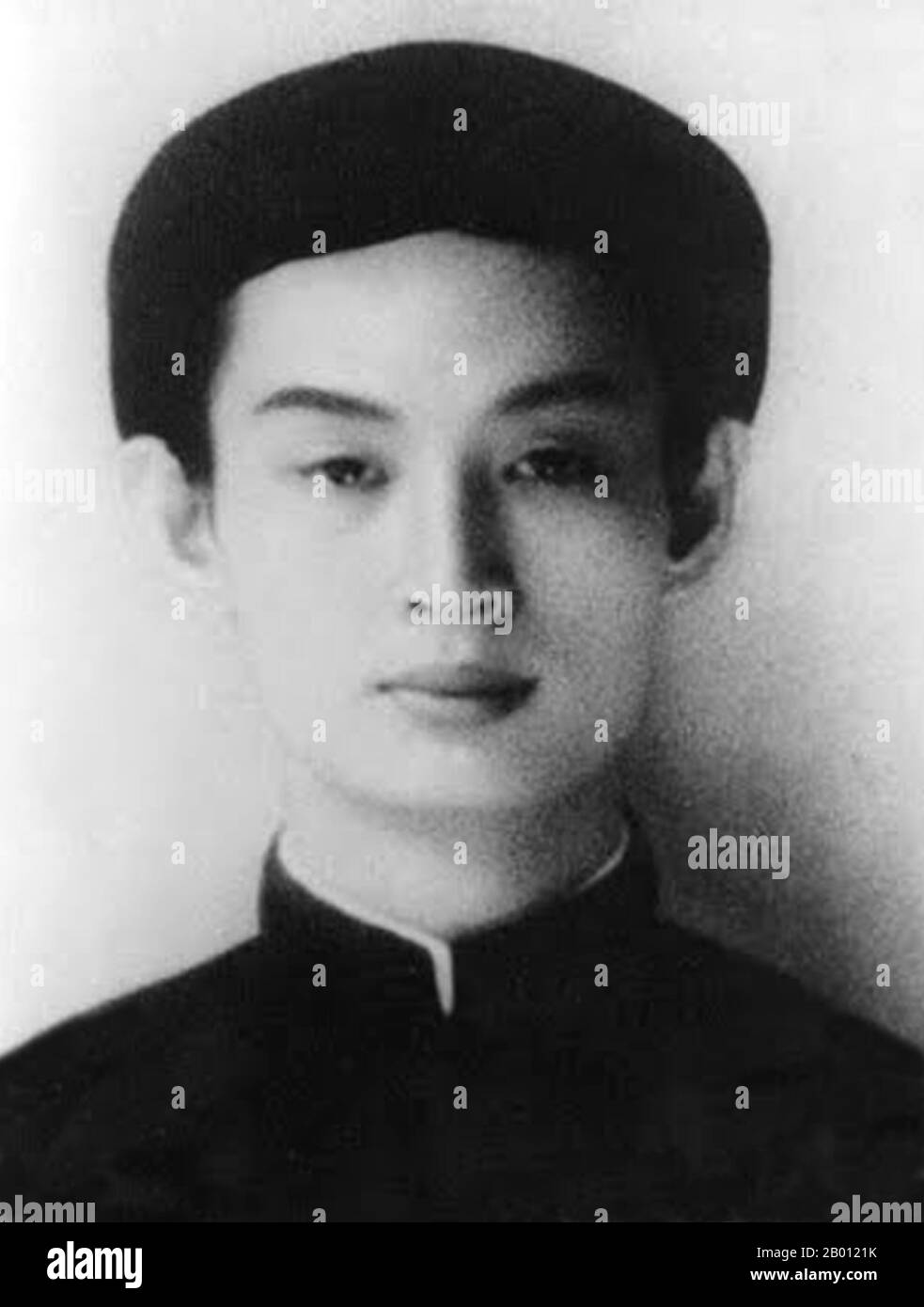
Huỳnh Phú Sổ
 Vietnam
Also known as: Đức Thầy, Đức Huỳnh Giáo Chủ
Birthday
January 15, 1920
Birth Sign
Capricorn
Birthplace
Hòa Hảo village, Châu Đốc province (now An Giang), Vietnam
Age
Died at 27
About
Huỳnh Phú Sổ was the founder of Hòa Hảo Buddhism, one of Vietnam's major indigenous religions. Born in the Mekong Delta in 1920, he began preaching a simplified form of Buddhism at age 19, blending Buddhist precepts with ancestor worship and folk beliefs. His movement, known as Hòa Hảo, attracted hundreds of thousands of followers within a few years and carried strong nationalist and anti-colonial undertones.
Known to his followers as Đức Thầy ("Virtuous Master") and Đức Huỳnh Giáo Chủ ("Virtuous Patriarch Huỳnh"), Sổ combined spiritual leadership with political influence during the First Indochina War. He was captured and executed by Viet Minh forces in 1947 at age 27, but his legacy endures. Today, Hòa Hảo claims millions of adherents, and his birth anniversary is commemorated annually across Vietnam.
Early Life & Background
Huỳnh Phú Sổ was born on 15 January 1920 in the village of Hòa Hảo, then part of Châu Đốc province in Cochinchina, now An Giang province in southern Vietnam. His family were middle-class farmers, comfortably off but not wealthy. Growing up in the rural Mekong Delta, he was steeped in a spiritual environment that mixed Buddhism, ancestor worship, and local folk beliefs.
As a young man in the 1930s, he began preaching a simplified form of Buddhism that stressed direct practice and moral living over elaborate ritual. At around age 19, he reportedly experienced a spiritual awakening that led him to heal the sick and deliver moral teachings. Word spread quickly, and he attracted local attention. By 1939, he had codified his doctrines and formally founded the Hòa Hảo tradition. His followers, mostly poor farmers, found his practical approach accessible and meaningful.
Career Growth
Huỳnh Phú Sổ's breakthrough came in 1939 with the formal establishment of Hòa Hảo Buddhism. His teachings resonated deeply with the rural population of the Mekong Delta, who appreciated the simplified, practical approach to Buddhism. The movement grew rapidly, and within a few years followers numbered in the hundreds of thousands.
The movement carried strong nationalist and anti-colonial undertones, positioning it against French colonial authorities. This political dimension brought Sổ into direct conflict with both the French and, later, the Viet Minh. During the First Indochina War, he served as a special commissioner of the Southern Administrative Committee, making him a significant political figure. In 1947, amid the chaos of war, he was captured and executed by Viet Minh forces near Long Xuyên. Despite his short life, his influence endured, and Hòa Hảo remains one of Vietnam's major religions.
Career Timeline
Public Image & Style
Huỳnh Phú Sổ is remembered by followers as a charismatic spiritual leader who brought a simplified, accessible form of Buddhist practice to the rural poor of the Mekong Delta. His public image is that of a young prophet who healed the sick and preached moral living, while also championing nationalist and anti-colonial causes. Within the Hòa Hảo community, he is venerated as Đức Thầy, and his teachings remain the foundation of the religion. His tone was practical and direct, emphasizing personal morality and devotion over elaborate ritual. Followers of Hòa Hảo are known simply as Hòa Hảo Buddhists, and the religion maintains organized structures including the Central Executive Committee of the Hòa Hảo Buddhist Sangha.
Fame & Fandom (iFAMOUS Rankings)
The devotion surrounding Huỳnh Phú Sổ defies the mechanics of modern fandom. There are no fan clubs, hashtags, or merchandise drops here; instead, a global community of Hòa Hảo Buddhists gathers with solemn piety to honor Đức Thầy, a title meaning 'Virtuous Master.' Their loyalty manifests not in chart pushes but in massive annual pilgrimages to his ancestral village and charitable works that feed the nation, echoing his 1930s call for self-reliance. While pop culture fans might chase trends, these followers treat his 1920 birth and 1947 martyrdom as living history, observing the Grand Birthday Ceremony with state-monitored reverence across Vietnam and diaspora hubs like Little Saigon. The movement remains one of Vietnam's four major Buddhist sects, its influence stretching from the Mekong Delta to Orange County without ever needing a social media algorithm to thrive. Despite this enduring spiritual footprint, iFANN's Global Fame Engine has evaluated his profile and found he does not currently hold a placement in the published rankings, including the Global Top 1,000 or any Top-100 scope list. He is not ranked among the world's most famous figures in the current cycle.
Interesting Facts and Legends
The religion bears the name of his birthplace village, Hòa Hảo, marking it as one of the few faiths defined by a specific location. Emerging alongside Cao Đài in the early 20th century, his movement blended orthodox Buddhism with ancestor worship and local folk beliefs. He was just 19 when a spiritual awakening propelled him into public preaching. His anti-colonial stance created conflict with both French authorities and the Viet Minh, leading to his execution in 1947 while serving as a special commissioner of the Southern Administrative Committee. Folklore adds layers to his legacy, telling stories of celestial signs at his birth in 1920 where the sky reportedly changed color. Devotees also recount how crowds flocked to hear him overnight in 1939, turning his hometown gatherings into massive socio-political events that alarmed colonial officials. These tales of miraculous births and rapid mass mobilization remain central to how the community remembers his divine mission.
Family & Personal Life
Huỳnh Phú Sổ was born into a middle-class farming family in An Giang province. His parents were relatively prosperous, owning enough land to be considered comfortable but not wealthy. They raised him in the rural Mekong Delta, where he absorbed the region's blend of Buddhist and folk traditions. Details about his siblings are scarce, but he grew up in a traditional Vietnamese household. He never married and had no children, devoting his short life entirely to his religious mission and the political struggles of his movement.
Notable Connections
Huỳnh Phú Sổ's life was intertwined with the Hòa Hảo followers, who numbered in the hundreds of thousands and carried his teachings forward. He came into conflict with French colonial authorities, who saw his nationalist message as a threat, and later with the Viet Minh, who ultimately executed him. The modern Hòa Hảo Buddhist Sangha, led by the Central Executive Committee, continues his legacy, organizing annual commemorations of his birth anniversary.
Relationships & Dating History
There are no documented public romantic relationships, marriages, or engagements in Huỳnh Phú Sổ's life. Historical records focus exclusively on his religious and political activities. As a religious leader who died at 27, no credible sources document any romantic partnerships. His life was devoted to his spiritual mission and the political struggles of his movement. He left no spouse or children. As he is deceased, the concept of a "current relationship status" does not apply.
Death & Aftermath
Died
April 16, 1947 (aged 27)
Death Place
Unknown
Cause of Death
Unknown
The final days of Huỳnh Phú Sổ unfolded in the shadow of a legal protest that drew local authorities into his orbit, marking the end of a life spent blending spiritual leadership with anti-colonial politics. He was taken into custody by local authorities during the chaos of the First Indochina War and vanished from public view before his body was discovered on April 16, 1947. Historical accounts describe the event as a mysterious disappearance or potential assassination rather than a natural passing.
Immediate public reaction was stifled by the ongoing conflict, preventing organized vigils or large-scale tributes at the time of his passing. The available historical record contains no details regarding a formal funeral service, burial site, or cremation proceedings for the religious leader who died at age 27. Followers revere him as Đức Thầy, yet the political sensitivity surrounding his legacy has persisted for decades, with Vietnamese authorities later prohibiting anniversary celebrations for the sect founder in An Giang province.
His death remains a subject of legend and political suppression within the context of the era, framing the event as a result of persecution by the French colonial administration. The movement he founded continues to exist, but the precise handling of his remains and the immediate aftermath of his detention remain unrecorded in the provided historical data.
Net Worth (Estate Value)
$1 Million
iFANN Editorial Team estimate
Huỳnh Phú Sổ died in 1947 at age 27, leaving behind no personal wealth or estate. He came from a middle-class farming family in colonial Vietnam and accumulated no significant assets during his lifetime. The Hòa Hảo religious organization he founded continues to operate, but its finances are not publicly disclosed, and any assets are held by the religious institution rather than an individual estate. No sources document estate management, posthumous revenue, or licensing arrangements. Per iFANN's editorial analysis, his net worth is estimated at $1 Million, reflecting the symbolic value of his religious legacy rather than actual monetary wealth.
Awards & Accolades
View 2 records, honours and achievementsKnown For
Founder of Hòa Hảo Buddhism
1939 · Founder
Keywords
Sources
Quick Facts
- Profession
- religious leader
- Born
- January 15, 1920
- Birthplace
- Hòa Hảo village, An Giang, Vietnam
- Died
- April 16, 1947
- Death Place
- Long Xuyên, Vietnam
- Gender
- Male
- Birth Sign
- Capricorn
- Religion
- Founder of Hòa Hảo Buddhism
Personal Details
- Full Name
- Huỳnh Phú Sổ
Frequently Asked Questions
Who was Huỳnh Phú Sổ?
What is Hòa Hảo Buddhism?
How did Huỳnh Phú Sổ die?
Where was Huỳnh Phú Sổ born?
How old was Huỳnh Phú Sổ when he died?
Similar People
Join the community
fans discussing