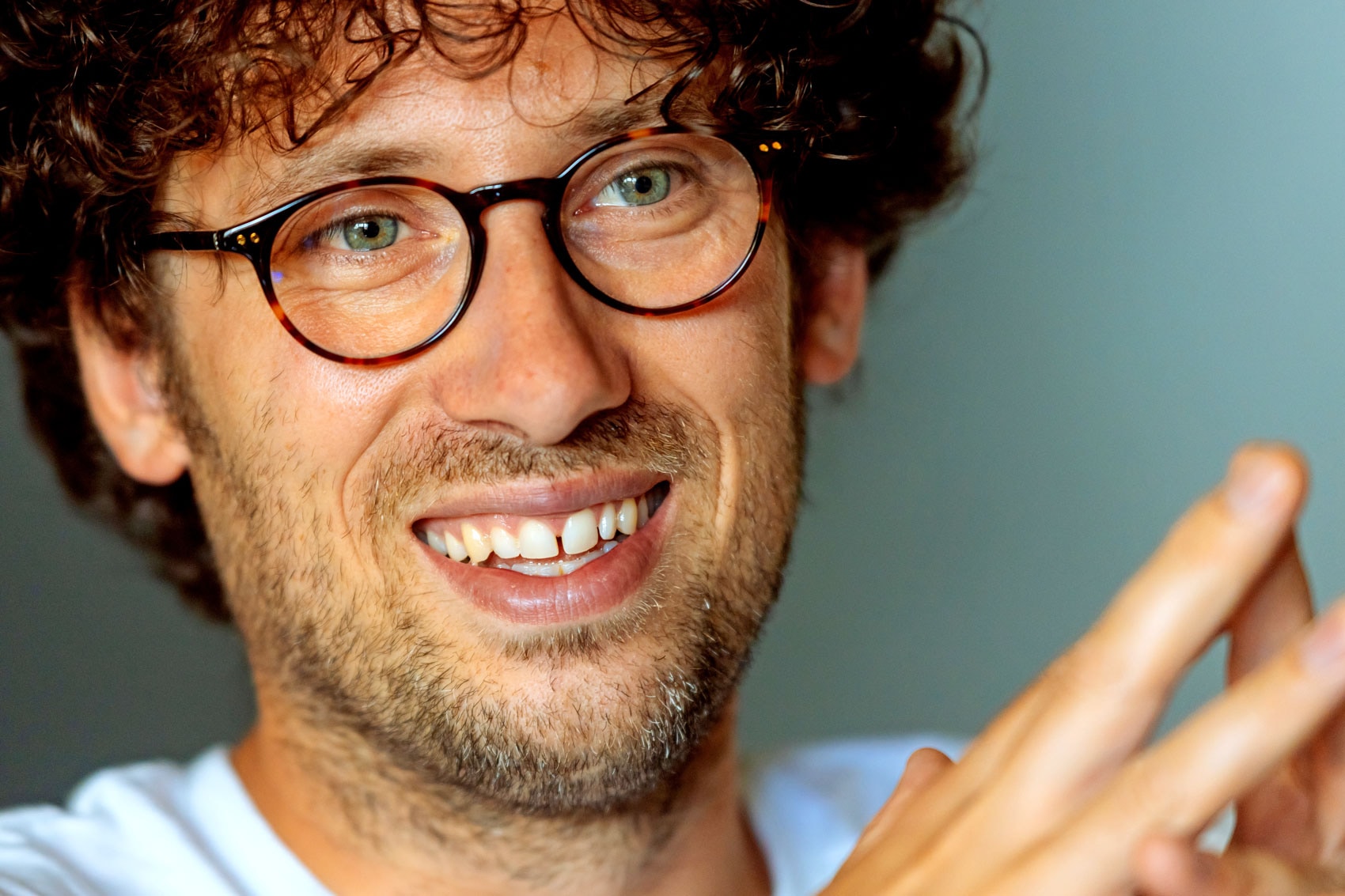
Hugo Duminil-Copin
 France
mathematician•university teacher
Birthday
August 26, 1985
Birth Sign
Virgo
Birthplace
Châtenay-Malabry, France
Age
41 years old
Height
5 ft 11 in (1.80 m)
About
Hugo Duminil-Copin is a French mathematician whose work in probability theory and statistical physics earned him the Fields Medal in 2022, often considered the Nobel Prize of mathematics. Born in 1985, he is a permanent professor at the Institut des Hautes Études Scientifiques (IHÉS) in France and also holds a position at the University of Geneva. His research on phase transitions, how materials change state, like water freezing into ice, has unlocked deep insights into the behavior of complex systems. Duminil-Copin is known for solving problems that had stumped mathematicians for decades, including the exact value of the connective constant for the honeycomb lattice. He is admired within the mathematical community for his clarity, collaborative spirit, and ability to make abstract ideas feel tangible. Despite his celebrity in math circles, he maintains a low public profile and has no social media presence.
Early Life & Background
Hugo Duminil-Copin grew up in the Paris suburb of Châtenay-Malabry. His father taught mathematics, and his mother worked in a lab. He loved sports, basketball and handball especially, and for a time considered becoming a professional athlete. At the Lycée Hoche in Versailles, a prestigious preparatory school, his talent for math began to surface. He entered the École Normale Supérieure (ENS) in Paris in 2004, where he was drawn to probability theory after attending lectures by Fields Medalist Wendelin Werner. For his PhD, he chose to work under Stanislas Smirnov, another Fields Medalist, at the University of Geneva. There, he tackled a problem that had puzzled physicists and mathematicians for decades: the connective constant of the honeycomb lattice. In 2010, during a walk in the park, he had a breakthrough insight that led to the exact solution, proving the constant equals √(2+√2). The result was published in 2012 and immediately recognized as a landmark achievement.
Career Growth
In 2013, at just 28, Duminil-Copin was appointed a permanent professor at IHÉS, one of the world's elite research institutes. He quickly became a leader in probability theory and statistical mechanics. His work on the Ising model and percolation theory, models that describe how order emerges from randomness, transformed the field. He proved the rotational invariance of the Ising model at criticality, a result that had been conjectured for decades. In 2016 he won the European Mathematical Society Prize. The Loève Prize, the top honor in probability, came in 2019. In 2021 he received the Fermat Prize. Then, in 2022, at the International Congress of Mathematicians in Helsinki, Duminil-Copin was awarded the Fields Medal for solving longstanding problems in the probabilistic theory of phase transitions, especially in dimensions three and four. He continues to push boundaries, publishing new results on scaling limits of critical models in 2025, and actively supervises students at IHÉS and the University of Geneva.
Career Timeline
Public Image & Style
Duminil-Copin is consistently described as modest, approachable, and quietly brilliant. In photographs, he wears casual academic attire, button-down shirts, sweaters, jackets, and his demeanor is calm and thoughtful. French media cast him as a national scientific hero after his Fields Medal win, but he shuns the spotlight. He gives clear, accessible explanations in interviews and public lectures. He has no fandom name or social media presence; his admirers are primarily within the mathematical community, where his work is discussed on forums like MathOverflow and Reddit's r/math.
Fame & Fandom (iFAMOUS Rankings)
Hugo Duminil-Copin is currently evaluated by the iFANN Global Fame Engine but holds no placement in the published rankings, a status that reflects his deep roots in academia rather than global celebrity. The August 2026 assessment confirms he has not entered the Global Top 1,000 or any scope-specific top lists. His fame exists in the quiet corridors of mathematics and the specific reverence of the scientific community, far removed from the chaotic energy of pop culture stardom. There is no formal fandom name attached to his name, nor do his admirers engage in organized campaigns, birthday billboards, or social media mobilization. His audience consists of students, researchers, and mathematicians who follow his work with intense focus rather than fanatical devotion. While the public may know him as a Fields Medalist, the concept of a 'fanbase' with rituals or inside jokes simply does not exist for him. He visited Lycée Albert Ier in Monaco, an event reported as standard academic outreach, not a fan gathering. No crowds shut down streets when he appears, and no one faints at his lectures. The only legends surrounding him are intellectual: the moment he solved the honeycomb lattice problem during a park walk, or the moniker 'Mozart of Probability Theory' bestowed by journalists like Dongascience. These stories highlight his genius without creating a cult of personality. His interactions remain strictly professional, grounded in the pursuit of truth rather than the cultivation of a following.
Interesting Facts and Legends
Hugo Duminil-Copin was once a competitive basketball player who nearly pursued a professional sports career before turning fully to mathematics. His most famous breakthrough came unexpectedly; the exact value of the connective constant for the honeycomb lattice, √(2+√2), arrived to him while he was taking a walk in a park. He belongs to a prestigious mathematical lineage where his advisor Stanislas Smirnov won the Fields Medal in 2010, and Smirnov's own mentor, Wendelin Werner, took the honor in 2006. Fluent in French, English, and German, he remains a solitary figure in the public eye, having never written a popular science book. Unlike many of his peers, he shuns social media entirely. The most significant event of his career centers on July 5, 2022, when he received the Fields Medal at the International Congress of Mathematicians for proving the convergence of self-avoiding walks. Media outlets have since dubbed him the 'Mozart of Probability Theory' for his unique aesthetic vision and intuitive grasp of complex systems. This title is a journalistic metaphor celebrating his ability to solve decades-old problems, not a viral folklore story. His work simplifies proofs in percolation theory, earning over 5,743 citations on Google Scholar, yet he operates without the dramatic fanfare typical of modern celebrities.
Notable Quotes
“Mathematics is like a puzzle. You have all these pieces, and you try to put them together. Sometimes it takes years, but when it finally clicks, it's an incredible feeling.”
“I was not a prodigy. I just liked to think about problems for a long time. My father was a math teacher, so there were always books around, but I never felt pressured.”
“It was a very simple idea in the end, but it took a long time to see it. That's often how it works in mathematics, the solution is simple once you find it.”
“Mathematics is not a solitary pursuit. Every result I've achieved has come from discussions with colleagues, sometimes over coffee, sometimes in seminars. The best ideas emerge from conversation.”
“I am very honored, but I also feel that this medal is a recognition of the entire field. Probability theory has been growing rapidly, and I am just one of many people contributing to it.”
Family & Personal Life
Duminil-Copin is married and has children, but he keeps his family life intensely private. His wife's name and the number of his children have not been publicly disclosed. He has mentioned in interviews that his father was a math teacher and his mother worked in a laboratory, but he rarely discusses family details. He lives in France near the IHÉS campus.
Notable Connections
Duminil-Copin's most important collaborator is his PhD advisor Stanislas Smirnov, a Fields Medalist. He also works closely with Ioan Manolescu, Aran Raoufi, Christophe Garban, Gabor Pete, Vincent Tassion, and Hao Wu. His academic mentor Wendelin Werner, another Fields Medalist, influenced his early career.
Relationships & Dating History
Hugo Duminil-Copin is married, but he has kept his wife's identity and the timeline of their relationship entirely private. No public details exist about their courtship or wedding. They have children together, though the number and names are not disclosed. As of 2026, he remains married. There is no public record of any prior relationships or dating history.
- MarriedCurrentWife's identity not publicly disclosed; they have children together.
Salary, Net Worth In 2026
$5 Million
iFANN Editorial Team estimate
Per iFANN's editorial analysis, Hugo Duminil-Copin's net worth stands at $5 Million as of 2026. His financial stability rests primarily on his dual roles as a permanent professor at the Institut des Hautes Études Scientifiques and the University of Geneva, positions that generate an annual salary between €100,000 and €150,000. Additional income flows through research grants secured from the European Research Council and various foundations supporting statistical physics. The Fields Medal itself provided a modest cash award of approximately $11,000, supplementing his earnings. Occasional speaking fees from invited lectures at universities worldwide add to his portfolio, though these remain secondary to his academic base. Since joining IHÉS in 2013, his wealth has accumulated steadily, reflecting the consistent nature of academic employment. Book royalties contribute negligibly given his lack of popular science publications. Despite his immense intellectual impact, his financial profile remains modest compared to the fortunes of entrepreneurs or entertainment icons.
Awards Won (9)
Hugo Duminil-Copin has won the highest honors in mathematics. He received the Fields Medal in 2022, the Loève Prize in 2019, the Fermat Prize in 2021, and the European Mathematical Society Prize in 2016. He also won several prizes from the French Academy of Sciences, including the Prix Jacques Herbrand and the Prix Jacques Neveu.
2022 · Mathematics
Probabilistic theory of phase transitions
2021 · Mathematics
Phase transitions
Known For
Fields Medal
2022 · Recipient
Loève Prize
2019 · Recipient
Fermat Prize
2021 · Recipient
EMS Prize
2016 · Recipient
Connective constant of honeycomb lattice
2012 · Discoverer
Keywords
Quick Facts
- Profession
- mathematician, university teacher
- Born
- +1985-08-26
- Birthplace
- Châtenay-Malabry
- Gender
- Male
- Birth Sign
- Virgo
Personal Details
- Full Name
- Hugo Duminil-Copin
- Height
- 5 ft 11 in (1.80 m)
- Children
- Yes (number and names not public)
- Education
- École Normale Supérieure (ENS), Paris; Université Paris-Sud (Master's); University of Geneva (PhD, 2013)
Frequently Asked Questions
Is Hugo Duminil-Copin married?
What is Hugo Duminil-Copin's net worth?
How old is Hugo Duminil-Copin?
Does Hugo Duminil-Copin have children?
What did Hugo Duminil-Copin win the Fields Medal for?
Similar People
Join the community
fans discussing