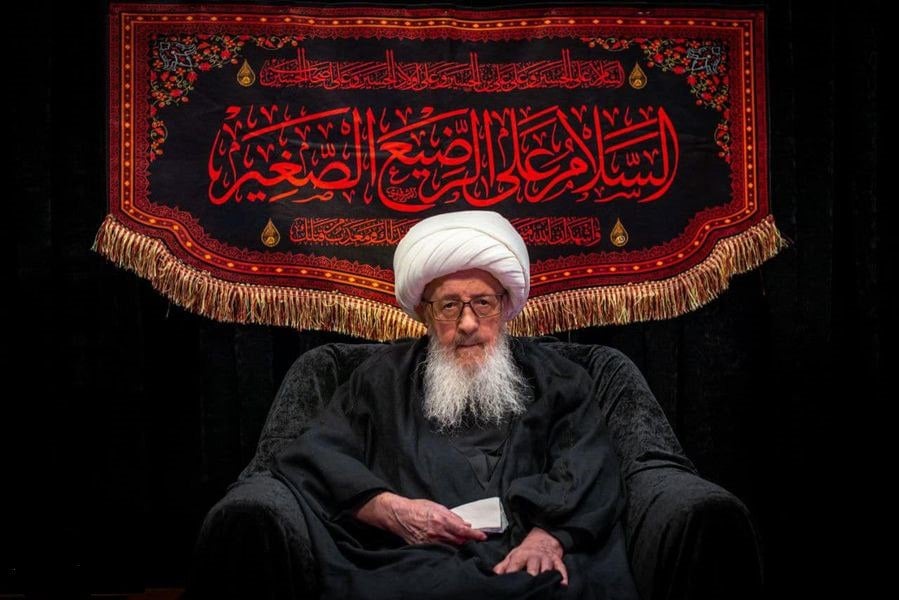
Hossein Wahid Khorasani
 Iran
IranAlso known as: Ayatollah Vahid Khorasani, Husayn Wahid Khurasani
Birthday
January 1, 1921
Birth Sign
Capricorn
Birthplace
Nishapur, Iran
Age
105 years old
About
Hossein Wahid Khorasani, born Mohammad-Hossein Molla-Saleh in Nishapur on January 1, 1921, is an Iranian author, Islamic jurist, and one of the most senior Shia maraji' alive today. As head of the Qom Seminary for decades, he holds a position of immense authority in Shia religious education, guiding thousands of clerics in their studies. Many scholars regard him as the most learned living Shia authority, a reputation built on his rigorous jurisprudence and mastery of Islamic texts.
His rulings and teachings shape the religious lives of millions of followers worldwide, who look to him as a source of emulation. Though his public presence is scholarly rather than media-driven, his influence permeates Shia thought and practice. At 105, he remains an active figure in religious leadership, a rare elder in a tradition that values both age and erudition.
Early Life & Background
Born in Nishapur, a city in northeastern Iran steeped in religious history, Khorasani grew up during the twilight of the Qajar dynasty. His early education took place in the traditional Islamic seminaries of Iran, where he displayed a precocious aptitude for jurisprudence. In 1949, at age 28, he made the pivotal move to Najaf, Iraq, the heart of Shia learning, to study under Grand Ayatollah Sayyid Abu al-Qasim al-Khu'i. Under al-Khu'i's tutelage, he immersed himself in the principles of jurisprudence and theology, absorbing the rigorous methods that would define his career.
He spent decades in Najaf, teaching and refining his scholarship. The 1979 Iranian Revolution and the establishment of the Islamic Republic prompted a relocation to Qom, Iran, where he joined the seminary that would become his lifelong base. This period marked the transition from student to master, setting the stage for his rise to marja' status.
Career Growth
Khorasani's breakthrough came with his attainment of marja' status, a recognition of his exceptional jurisprudential expertise. He became head of the Qom Seminary, a role he has held for over four decades, cementing his influence over Shia clerical training. His published works, including a widely circulated English-language Risalah, extend his reach to global Shia communities.
His career has been marked by a willingness to take independent stances. In 2011, he resisted the mass executions of political prisoners, a rare public dissent. In 2020, he publicly disagreed with Supreme Leader Khamenei's edict on the end of Ramadan, and he has advocated for separating religion from politics. These positions have made him a figure of interest in discussions about Iran's religious future.
Career Timeline
Public Image & Style
Khorasani's public image is that of a scholarly, independent-minded authority. He is portrayed in media as a counterweight to political control of religion, with some outlets calling him Iran's alternative leader. Within the Shia community, he is revered as a marja' whose rulings guide millions. His tone is scholarly and authoritative, and his content consists of religious rulings and lectures. His followers are known as muqallids, those who emulate his legal opinions.
Fame & Fandom
Hossein Wahid Khorasani currently holds no placement in the iFANN Global Top 1,000 or any scope-specific ranking list. The iFANN Global Fame Engine evaluated his profile in August 2026 and determined that he does not meet the threshold for a published ordinal rank. While he commands immense authority within the Shia world as a senior marja' and head of the Qom Seminary, his influence operates through theological guidance and political commentary rather than the metrics that drive global celebrity charts. His followers are known as muqallids, individuals who emulate his legal opinions, but this relationship is defined by religious adherence rather than pop-culture fandom. There is no documented fanbase name associated with him, nor are there organized campaigns, birthday billboards, or viral social media trends characteristic of entertainment figures. His official presence is managed through institutional channels like the office's Instagram account, which disseminates fatwas and statements rather than facilitating fan interaction. Unlike stars who rely on chart pushes or crowd reactions, Khorasani's legacy is built on his longevity since 1921, his independent stance against political control of religion, and his rigorous jurisprudence. He stands apart from the machinery of fame, existing as a figure whose significance is measured in spiritual weight and historical endurance rather than search volume or consumption signals.
Interesting Facts and Legends
Born Mohammad-Hossein Molla-Saleh in Nishapur on January 1, 1921, Khorasani has lived through the reigns of multiple Iranian monarchs and the founding of the Islamic Republic. He was born during the Qajar dynasty, making him a living link to Iran's pre-modern past. As one of the few clerics willing to publicly contradict Supreme Leader Ali Khamenei on religious edicts, he maintains a reputation as an independent-minded authority. His English-language Risalah is widely circulated, though unofficial versions exist. OpenSanctions lists him as linked to sanctioned entities, reflecting his political significance. He issued a fatwa stating that any aggression against a Sunni nation is a duty for all Shia Muslims to defend. Reports also surfaced that he disagreed with Khamenei regarding the end of Ramadan observances. These instances highlight his role as a counterweight to state narratives, reinforcing his status as a scholar who prioritizes traditional jurisprudence over political alignment.
Notable Quotes
“Send my Salaams to all Husseini associations and tell them that...”
“The separation of religion from politics is essential for Iran's future.”
“I disagree with the edict on the end of Ramadan; the moon sighting is clear.”
Family & Personal Life
Details about Khorasani's family are scarce, as his personal life has remained private. He was born to a religious family in Nishapur, though specific names are not publicly documented. His household today is not a subject of public record, and he has not shared information about children or pets. His life has been devoted to scholarship, with family matters kept out of the public eye.
Notable Connections
Khorasani is associated with Grand Ayatollah Abu al-Qasim al-Khu'i, his primary teacher in Najaf. He has publicly disagreed with Supreme Leader Ali Khamenei. His mission maintains ties with Grand Ayatollah Shirazi's network. Former president Ebrahim Raisi's relationship with the seminary was a public topic.
Relationships & Dating History
Salary, Net Worth In 2026
Unknown
iFANN Editorial Team estimate
No credible public information exists regarding Hossein Wahid Khorasani's personal net worth. As a religious cleric who has devoted his life to scholarship, his financial affairs remain private. Shia maraji' typically do not accumulate personal wealth in the manner of public figures; seminaries and charitable activities are funded through religious taxes and donations. The iFANN Editorial Team's research traces the economic reality of his position to these traditional funding streams rather than personal accumulation. No financial outlets report figures for him, and any estimate would be purely speculative.
Awards & Accolades
View 5 records, honours and achievementsKnown For
Head of Qom Seminary
Decades · Chancellor
Marja' Status
Undated · Source of Emulation
English Risalah
Undated · Author
Keywords
Sources
Quick Facts
- Profession
- ulema, Islamic jurist, marji'
- Born
- January 1, 1921
- Birthplace
- Nishapur, Iran
- Gender
- Male
- Birth Sign
- Capricorn
Personal Details
- Full Name
- Mohammad-Hossein Molla-Saleh
Frequently Asked Questions
How old is Hossein Wahid Khorasani?
Is Hossein Wahid Khorasani the head of the Qom Seminary?
What is Hossein Wahid Khorasani's net worth?
Does Hossein Wahid Khorasani support the Iranian government?
Where did Hossein Wahid Khorasani study?
Similar People
Join the community
fans discussing