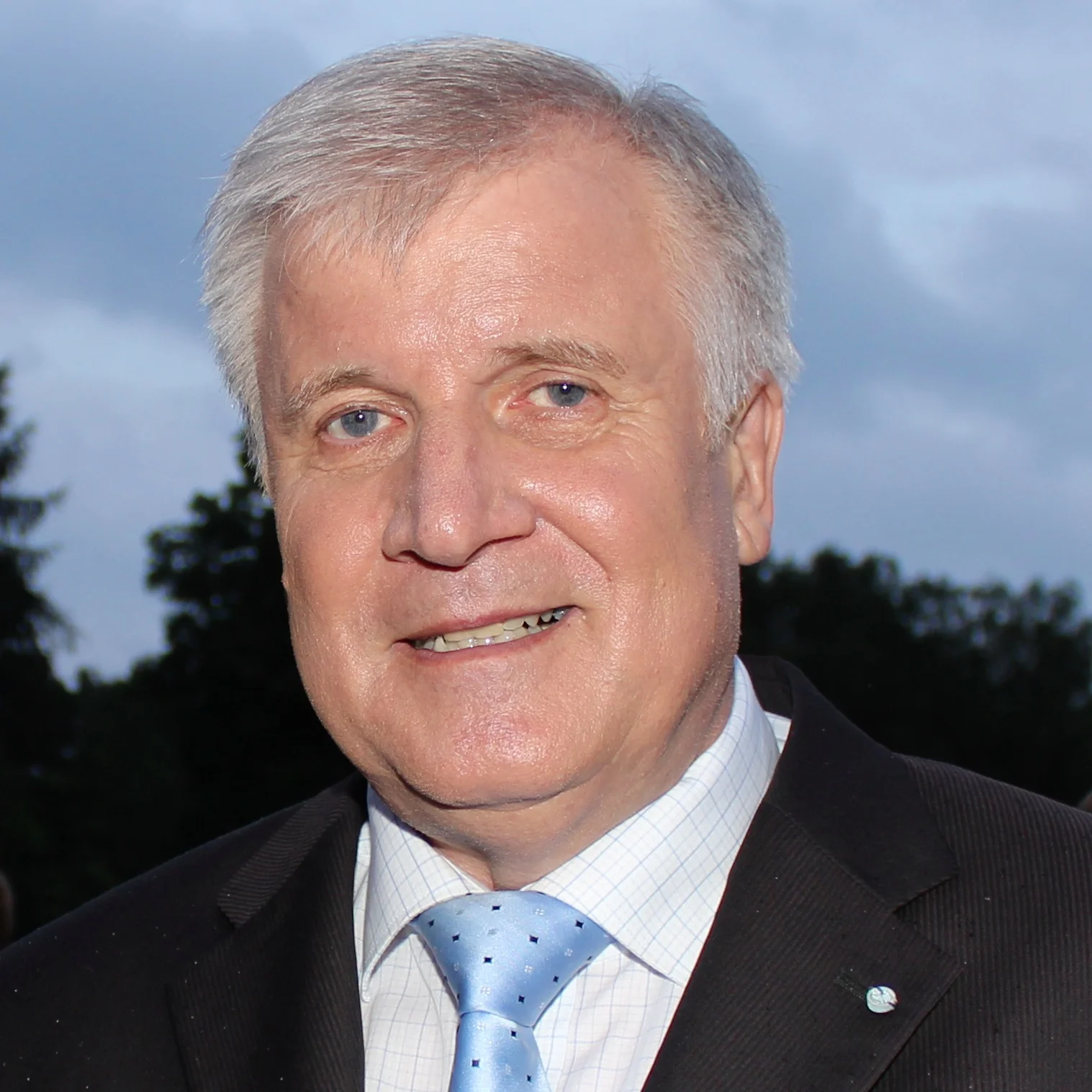
Horst Seehofer
 Germany
Birthday
July 4, 1949
Birth Sign
Cancer
Birthplace
Ingolstadt, Bavaria, West Germany
Age
77 years old
About
Horst Seehofer is a German politician who spent more than four decades shaping both federal and Bavarian politics. A member of the Christian Social Union (CSU), he held multiple cabinet posts, served as Minister-president of Bavaria, and was a central figure in the country's immigration debates. His career is marked by a blend of conservative conviction and pragmatic governance.
Seehofer's political journey began in the Bundestag in 1980. He later became Federal Minister for Health and Social Security under Helmut Kohl in the 1990s, then returned to the federal cabinet in 2005 as Minister for Food, Agriculture and Consumer Protection. In 2008, he took over as both leader of the CSU and Minister-president of Bavaria, leading the party to an absolute majority in 2013. His final federal role was as Minister for the Interior, Building and Community from 2018 to 2021, a period dominated by intense disputes over migration policy.
Known for his direct style and occasional clashes with Chancellor Angela Merkel, Seehofer remains a respected, if polarizing, figure in German conservatism. Now retired from active politics, he lives in Bavaria with his family.
Early Life & Background
Horst Seehofer was born in Ingolstadt, a city in Upper Bavaria, in 1949. He grew up in a working-class household, the son of a truck driver. After finishing school, he trained as a public administrator and worked in the local government, a background that gave him a deep understanding of bureaucracy and public service.
At age 20, in 1969, he joined the youth wing of the Christian Social Union (CSU), the Bavarian sister party to the CDU. He rose through the party's ranks locally, becoming a trusted organizer and policy wonk. His administrative career continued alongside his political ascent, and he eventually became a civil servant in the Bavarian state government.
In 1980, at just 31, he won a seat in the Bundestag representing his home district of Ingolstadt. That victory launched his national political career, but his formative years in local government and party work shaped his pragmatic, detail-oriented approach to policy.
Career Growth
Seehofer's breakthrough came in 1992 when Chancellor Helmut Kohl appointed him Federal Minister for Health and Social Security. He held that post until 1998, overseeing major reforms in Germany's healthcare system. After the CDU/CSU lost power that year, he remained a prominent backbencher and health policy spokesman.
In 2005, Angela Merkel brought him back into government as Minister for Food, Agriculture and Consumer Protection. He quickly made a name for himself with strict consumer protection measures, including bans on certain food additives. In 2008, after the CSU suffered heavy losses in the Bavarian state election, he was drafted to lead the party and became Minister-president of Bavaria. He turned the party around, winning an absolute majority in 2013. He also served as President of the Bundesrat from 2011 to 2012.
In 2018, he returned to federal politics as Minister for the Interior, Building and Community. His hardline stance on migration brought him into direct conflict with Merkel, culminating in a dramatic showdown in June 2018 when he threatened to resign. A compromise was reached, but tensions persisted. He stepped down from the CSU leadership in 2019 and left the federal cabinet in 2021, ending his formal political career.
Career Timeline
Public Image & Style
Seehofer is often portrayed as a blunt, no-nonsense politician who doesn't shy away from controversy. His public persona is that of a Bavarian traditionalist, often seen in lederhosen at folk festivals. He has a reputation for being stubborn, which has both helped and hindered him in negotiations. Supporters see him as a man of principle who stands by his convictions, while critics view him as inflexible. His direct communication style, sometimes bordering on provocative, has made him a frequent subject of media commentary. Despite the controversies, he remains a respected figure within the CSU, known for his ability to connect with ordinary voters.
Fame & Fandom (iFAMOUS Rankings)
Horst Seehofer's public following is a purely political one, rooted in the conservative heartlands of Bavaria and the Christian Social Union. There is no formal fandom, no named fanbase, no fan clubs or organized campaigns, his supporters are voters and party loyalists, not a pop-culture phenomenon. In the iFANN Global Fame Engine's August 2026 evaluation, Seehofer holds no placement in the published rankings, neither in the Global Top 1,000 nor in any Top-100 scope list. This is a straightforward reflection of his fame profile: while he is a significant figure in German and Bavarian politics, his recognition does not translate into the kind of global, cross-demographic fame that the rankings measure. His name resonates in political circles and among those who follow European affairs, but it does not register in the broader currents of worldwide media, search, and consumption signals that define contemporary fame. For a politician who spent decades in the highest offices, this absence from the rankings underscores the niche nature of his celebrity, it is deep within its domain, but not wide across the globe.
Interesting Facts and Legends
Seehofer's love for traditional Bavarian fare is well known; he often jokes that his political decisions are fueled by a good breakfast of Weisswurst and pretzels. In 2002, he was diagnosed with myocarditis, a serious heart condition that reduced his heart function to around 20%; he recovered but has since been careful about stress. A devoted fan of FC Bayern Munich, he has been spotted at many matches and often discusses football in interviews. He is a trained administrative specialist and worked as a civil servant before entering politics. A self-confessed night owl, he often works late into the evening on policy documents.
Among the legends of his career, the 2018 statement that "Islam does not belong to Germany" stands out as a defining moment, sparking national and international controversy. Equally iconic is the 2018 migration crisis, when he threatened to unilaterally turn back migrants at the German border, nearly toppling Angela Merkel's coalition. His public feuds with Merkel over refugee policy, beginning in 2016, have become part of his political mythology.
Family & Personal Life
Horst Seehofer married Karin Starck on December 25, 1985. The couple has four children together. Karin has largely stayed out of the public eye, supporting her husband's career from behind the scenes. The family has lived in Ingolstadt and Munich over the years. Seehofer has mentioned in interviews that family gatherings are important to him, and he enjoys spending time with his grandchildren. His father was a truck driver, and he often speaks about his humble upbringing as a source of his groundedness.
Notable Connections
Horst Seehofer worked closely with several key figures in German politics. He served under Chancellor Angela Merkel in two different cabinet roles, and their often tense relationship defined much of his later career. Earlier, he was a loyal minister under Helmut Kohl. In Bavaria, he was preceded by Edmund Stoiber as Minister-president and CSU leader, and he later worked with Joachim Herrmann, who served as his interior minister in the state government.
Relationships & Dating History
Horst Seehofer has been married to Karin Starck since December 25, 1985. The couple met in the 1970s and tied the knot in a private ceremony. They have four children together. Karin has remained a supportive partner throughout his political career, though she rarely appears in public. There are no known previous marriages or public relationships. As of 2026, the couple is still married and resides in Bavaria.
- MarriedKarin Seehofer1985 - presentCurrentMarried on December 25, 1985; together they have four children.
Salary, Net Worth In 2026
$5 Million
iFANN Editorial Team estimate
iFANN currently estimates Horst Seehofer's net worth at $5 million. His primary income sources include ministerial pensions from both federal and state governments, as well as his long tenure as a member of parliament. Over four decades as a civil servant and politician, he accumulated substantial pension claims. Additionally, he earns from speaking engagements and his autobiography. Unlike many politicians, he has not been involved in major business ventures, keeping his finances straightforward. His net worth has grown steadily through pension accruals and prudent personal investments.
Awards Won (3)
Horst Seehofer has received several honors for his political career, including the Bavarian Order of Merit and the Grand Decoration of Honour in Gold for Services to the Republic of Austria. He was also awarded the German Federal Cross of Merit, recognizing his contributions to public service.
2001 · State Order
Political service
2017 · State Honor
Political service
Known For
Minister-president of Bavaria
2008-2018 · Head of the Bavarian state government
Federal Minister of the Interior
2018-2021 · Interior Minister of Germany
Leader of the CSU
2008-2019 · Party leader
Keywords
Sources
Quick Facts
- Profession
- Politician
- Born
- July 4, 1949
- Birthplace
- Ingolstadt, Bavaria, West Germany
- Gender
- Male
- Spouse
- Karin Seehofer
- Birth Sign
- Cancer
- Children
- 4
Personal Details
- Full Name
- Horst Lorenz Seehofer
- Spouse
- Karin Seehofer
- Children
- 4
Frequently Asked Questions
How old is Horst Seehofer?
What is Horst Seehofer's net worth in 2026?
Is Horst Seehofer still active in politics?
Who is Horst Seehofer's wife?
What are Horst Seehofer's major political achievements?
Social Media
Join the community
fans discussing