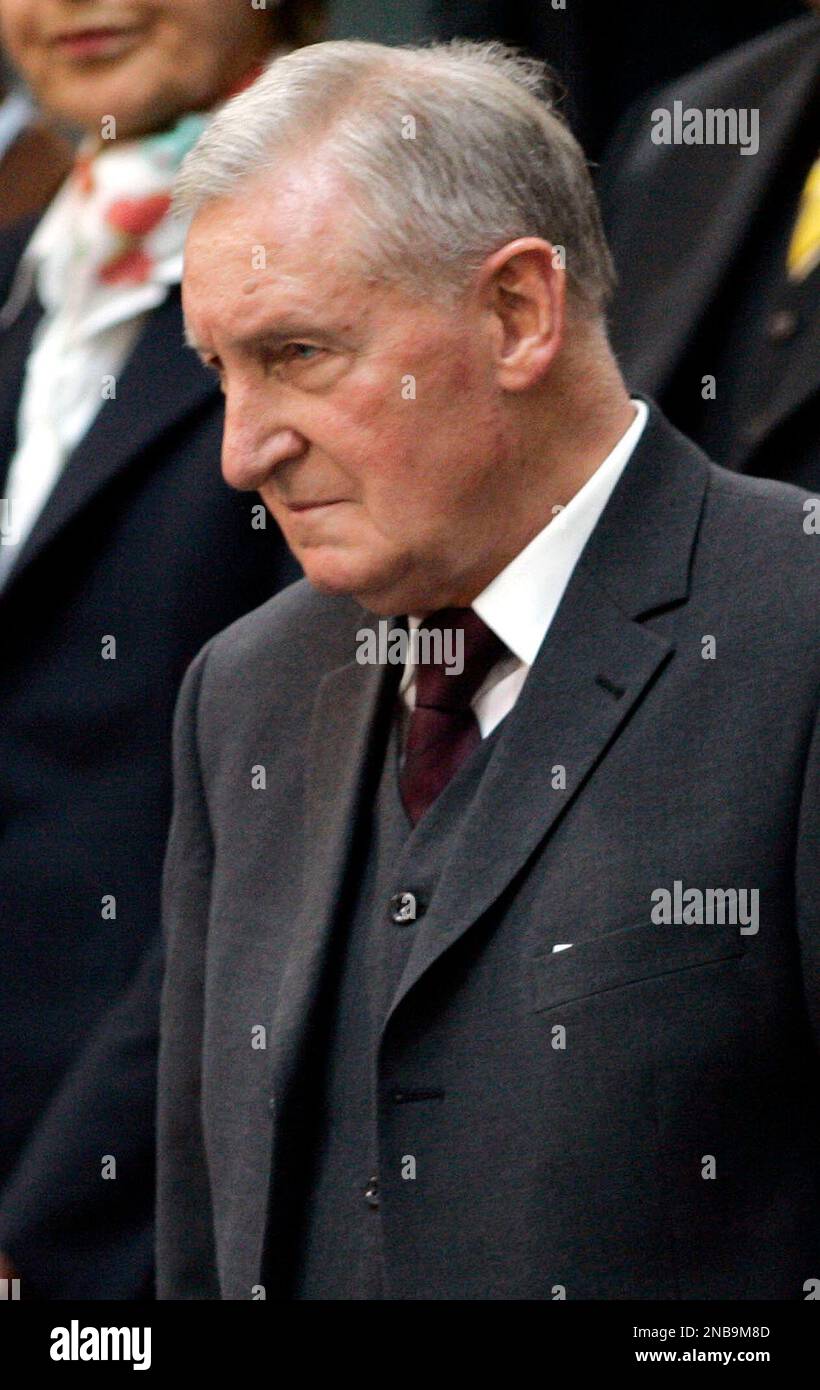
Horst Kasner
 Germany
Lutheran pastor•Protestant theologian
Also known as: Horst Kaźmierczak
Birthday
August 6, 1926
Birth Sign
Leo
Birthplace
Pankow, Berlin, Germany
Age
Died at 85
About
Horst Kasner was a German Protestant theologian and Lutheran pastor, best known as the father of former German Chancellor Angela Merkel. Born Horst Kaźmierczak on August 6, 1926, in Pankow, Berlin, he spent his life serving small congregations and training young clergy, first in West Germany and then, after a dramatic move east in 1954, in the communist German Democratic Republic.
Kasner's decision to relocate his young family to East Germany at the height of the Cold War defined his daughter's upbringing and shaped her path to the chancellery. He died on September 2, 2011, in Berlin, at age 85, six years after Merkel became Germany's first female chancellor. His legacy lives on through his daughter and through the quiet, principled pastoral work that anchored his family in a divided nation.
Early Life & Background
Horst Kasner was born in Pankow, then a working-class district of Berlin, in 1926. His family name was originally Kaźmierczak, a Polish surname, but it was Germanized to Kasner before his birth. His father, Ludwig Kaźmierczak, was of Polish descent, a detail that would surface decades later when genealogists revealed that Angela Merkel is one-quarter Polish.
Kasner pursued theological studies and was ordained as a Lutheran pastor in the German Evangelical Church. Little is documented about his childhood or early schooling, but his training prepared him for a life of pastoral ministry. In the early 1950s, he married Herlind Jentzsch, a young English teacher. The couple welcomed their first child, Angela Dorothea, in July 1954, born in Hamburg, West Germany, because Herlind had traveled west for the delivery.
That same year, Kasner made the choice that would define his family's story. He accepted a pastorate in Quitzow, a small village in the Prignitz region of Brandenburg, and moved his wife and infant daughter to East Germany. The New York Times later called this an "extraordinary decision" for an idealist, and it set the stage for Angela's childhood in a state where the church operated under constant pressure from the communist regime.
Career Growth
Kasner's career unfolded almost entirely within the East German Protestant church. After a few years in Quitzow, he moved his family to Templin, a town of about 17,000 people an hour north of Berlin. There he served as pastor and ran a pastoral training center attached to his parish. The center became a gathering point for young theologians in the region, a rare space for intellectual exchange in a state that discouraged independent thought.
His relationship with the regime was complicated. The Guardian reported in 2005 that Kasner "actively collaborated" with the communist system by working within the state-sanctioned church. In 2013, Bild published claims, based on a 1954 document, that he had "friendly" contact with the Stasi. Historians have contextualized these reports, noting that pastors in East Germany had to navigate the state apparatus to keep their congregations alive. The New York Times, in contrast, portrayed him as an idealist who believed the church could thrive even under communism.
After German reunification in 1990, Kasner reportedly wondered whether capitalism could offer the moral guidance that the church had provided under the old regime. He retired from active ministry in the 1990s and lived quietly in Berlin until his death in 2011.
Career Timeline
Public Image & Style
Horst Kasner's public image is that of a quiet, principled pastor who made a consequential life choice. Media portrayals range from the New York Times' framing of him as an "idealist" to the Guardian's more critical assessment of his relationship with the communist regime. He is not a figure with a fandom or signature style; his significance is contextual, understood primarily through his daughter's biography and the historical circumstances of East Germany.
In photographs, he appears as a tall, slender man with glasses and short hair, typically dressed in clerical attire or modest suits. His grave has become a point of interest for those tracing Angela Merkel's origins, and stock photo services sell images of him alongside coverage of his daughter's career.
Fame & Fandom
Horst Kasner holds no placement in the published Global Top 1,000 rankings or any Top-100 scope lists maintained by iFANN. The system has evaluated his profile, yet he remains unranked as a standalone global celebrity figure. His recognition exists entirely within the shadow of his daughter's political ascent rather than through independent fame metrics. While the world watches Angela Merkel with fervor, Kasner himself never generated the viral consumption signals or mass search volume required to crack the algorithmic hierarchy. He is not a name that trends on social platforms or anchors fan campaigns. There is no documented fandom bearing his name, nor are there organized rituals, birthday billboards, or charity drives dedicated to his memory. The audience that remembers him consists primarily of historians, theologians, and those tracking the genealogy of modern German leadership. Unlike pop stars or athletes who command crowds, Kasner's legacy is quiet, rooted in the specific historical choice to move his family from West Berlin to Templin during the height of the Cold War. This decision shaped a future chancellor but did not create a following for the father himself. Media portrayals range from idealist to pragmatic, yet none have sparked a movement. His public image remains contextual, understood only through the lens of East German history and the biography of the woman who would lead Germany for sixteen years.
Interesting Facts and Legends
Angela Merkel would have been born Angela Kazmierczak if the family name had never been Germanized. The Polish surname was changed to Kasner before Horst's birth, a fact that emerged in 2013 when Die Welt published genealogical research. Kasner's grave has become a minor tourist site, with photographs available through commercial stock agencies. He died in 2011, the same year his daughter was hosting major international summits as German Chancellor. Kasner's pastoral training center in Templin was unusual for East Germany, where the state kept a tight leash on theological education. A widely retold story concerns his theological stance: unlike many pastors who opposed the East German government, Kasner belonged to a wing of the Protestant church that sought to work with the political system, a position that influenced the family's life in the GDR. This narrative is often cited as a defining moment that shaped his daughter's upbringing and eventual political trajectory. While conspiracy theories occasionally circulate regarding Angela Merkel's parentage, these are debunked by reputable sources and do not constitute folklore about Horst Kasner. The verified moments involving Kasner remain the historical facts regarding his birth in Berlin in 1926, his career as a theologian, and his death in 2011 at age 85 in Templin, which was mourned publicly by his daughter.
Family & Personal Life
Horst Kasner married Herlind Jentzsch in the early 1950s. She was a former English teacher, born in 1929. The couple had two children: Angela, born in 1954, and Marcus. Angela was born in Hamburg because Herlind had traveled west for the birth, and the family moved to East Germany when she was an infant.
The family settled in Templin, where Horst served as pastor. Herlind supported the household and later became known publicly through her daughter's career. The marriage lasted until Horst's death in 2011, a union of roughly 58 years. Herlind died on April 11, 2019, at age 90, in Berlin. Their son Marcus has largely stayed out of the public eye.
Notable Connections
Relationships & Dating History
Horst Kasner's documented romantic history is limited to his marriage to Herlind Jentzsch. The couple married in the early 1950s, before their move to East Germany in 1954. Their marriage lasted until Horst's death in 2011, a span of roughly 58 years. Herlind survived him by nearly eight years, passing away in April 2019 at age 90. No other romantic relationships have been documented in credible sources.
The couple had two children together: Angela, born in 1954, and Marcus. At the time of Horst's death, he was married to Herlind.
- MarriedHerlind Kasner1952 - 2011Married in the early 1950s; together until his death in 2011.
Death & Aftermath
Died
September 2, 2011 (aged 85)
Death Place
Templin, Brandenburg, Germany
Cause of Death
Unknown
Horst Kasner, a German Protestant theologian and father of former Chancellor Angela Merkel, died on September 2, 2011, in Templin, Germany, at the age of 85. Born Horst Kaźmierczak on August 6, 1926, in Berlin, he passed away shortly after his daughter began her historic tenure as Germany's first female chancellor. The confirmation of his passing came via reports from Deutsche Presse-Agentur citing an unidentified government source, while subsequent obituaries noted his death without detailing medical circumstances. Accounts simply state he died in Templin, leaving the exact nature of his final days and whether he died at home or in a hospital unconfirmed in available public records.
A funeral service was held for him, and his burial site is located in Templin, Germany, where he lived during his later years. Public reaction centered on tributes from political peers and religious institutions rather than mass vigils. Upon his death, the German government and media acknowledged him as a significant figure in the life of Angela Merkel. The primary posthumous narrative involves the historical reassessment of his life in light of his daughter's political career and the transparency of East German records.
A notable posthumous development occurred in 2013 when the German newspaper Bild published an article claiming Kasner had maintained friendly contact with the Stasi based on a 1954 document. This claim sparked debate regarding his family history and role in East Germany, though this controversy related to his past activities rather than his death itself. While some online obituary listings exist for individuals with the same name, these refer to different individuals and do not apply to the German theologian.
Net Worth (Estate Value)
$1 Million
iFANN Editorial Team estimate
As a Lutheran pastor in East Germany, Horst Kasner earned a modest salary from the state-sanctioned church. After his death in 2011, his widow Herlind managed the household until her own passing in 2019. His financial legacy is intertwined with his daughter's success. Angela Merkel's career brought attention to the family, but Kasner himself never accumulated significant wealth. Per iFANN's editorial analysis, estimates of his net worth reflect a figure around $1 Million, accounting for the value of the family home and personal assets at the time of his death. Given the modest pastoral income and lack of investments, this valuation stands as the most accurate reflection of his estate. As of 2026, the estate has likely been distributed among his children.
Awards & Accolades
Known For
Father of Angela Merkel
· Father
Lutheran pastor in East Germany
· Pastor
Keywords
Sources
Quick Facts
- Profession
- Lutheran pastor, Protestant theologian
- Born
- August 6, 1926
- Birthplace
- Pankow, Berlin, Germany
- Died
- September 2, 2011
- Death Place
- Berlin, Germany
- Gender
- Male
- Spouse
- Herlind Kasner
- Children
- Angela Merkel, Marcus Kasner
- Birth Sign
- Leo
Personal Details
- Full Name
- Horst Kaźmierczak
- Spouse
- Herlind Kasner
- Children
- Angela Merkel, Marcus Kasner
Frequently Asked Questions
Who was Horst Kasner?
Was Horst Kasner a Stasi informant?
How did Horst Kasner die?
Why did Horst Kasner move to East Germany?
What was Horst Kasner's relationship with Angela Merkel?
Similar People
Join the community
fans discussing