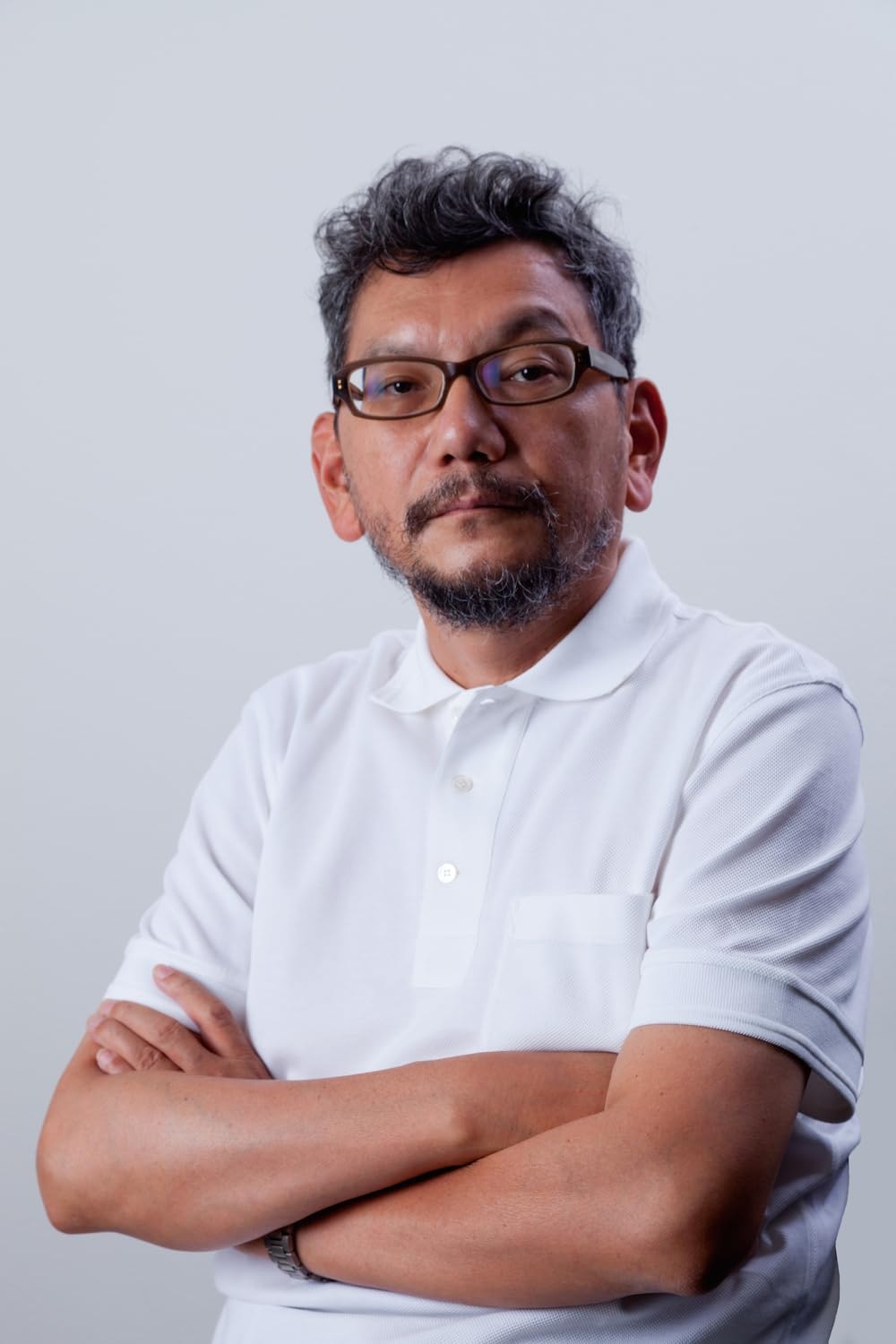
Hideaki Anno
 Japan
JapanAlso known as: Anno Hideaki
Birthday
May 22, 1960
Birth Sign
Gemini
Birthplace
Ube, Yamaguchi Prefecture, Japan
Age
66 years old
Height
5 ft 7 in (170 cm)
About
Hideaki Anno is a Japanese filmmaker, animator, and voice actor, best known as the creator of the Evangelion franchise. His work spans directing, writing, producing, and voice acting across more than 20 films and 10 TV series, and he is widely regarded as one of the most influential figures in animation. Anno is known for his postmodern storytelling, deep character introspection, and innovative use of animation and live-action techniques. The Evangelion franchise has generated billions of yen in merchandise, film, and licensing revenue. His work has won multiple Animage Anime Grand Prix awards, the Japan Academy Prize for Best Picture and Best Director, a Lifetime Achievement Award at the Tokyo Anime Award Festival (2022), and a Special Award at the Blue Ribbon Awards (2017). He has appeared on the cover of Time Magazine (Asia Edition) for Shin Godzilla (2016), and Neon Genesis Evangelion has been ranked the #1 anime series of all time by Paste Magazine (2018). He is frequently ranked as one of the most influential creators in anime history. As of 2026, he is in pre-production on a new original live-action film.
Early Life & Background
Hideaki Anno was born on May 22, 1960, in Ube, Yamaguchi Prefecture, Japan. He grew up in this small industrial city, often feeling a profound sense of isolation. To find solace and escape, he immersed himself in the worlds of anime and tokusatsu shows, particularly finding inspiration in the *Ultraman* series. This deep immersion in fandom, coupled with his childhood experiences of isolation, would later profoundly inform the psychological depth and introspective nature of the characters he created. His passion for animation was specifically ignited by watching seminal works like *Space Battleship Yamato* (1974) and *Mobile Suit Gundam* (1979).
During his time at Ube High School, Anno was an average student, but his devotion to fandom intensified, making him an obsessive enthusiast. After an unsuccessful attempt to gain admission to the prestigious University of Tokyo, he enrolled at the Osaka University of Arts in 1980, choosing to major in oil painting. It was here that he joined the university's animation club, a pivotal step that led him to meet future collaborators and co-founders of Gainax, Hiroyuki Yamaga and Takami Akai.
Anno quickly began to make a name for himself in the burgeoning animation scene. His first professional work was as a key animator on *The Super Dimension Fortress Macross* (1982–1983), where he demonstrated his talent by animating intricate mecha sequences. A significant turning point arrived with his creation of the Daicon III and Daicon IV opening animations for the Japan National Science Fiction conventions in 1981 and 1983, respectively. These short films, featuring a magical girl battling aliens and robots, quickly achieved legendary status within the otaku community and powerfully showcased his raw talent and distinctive vision. His big break came in 1984 when acclaimed director Hayao Miyazaki personally recruited him as a key animator for *Nausicaä of the Valley of the Wind*, entrusting him with the challenging task of animating the film's iconic God Warrior attack sequence. In that same pivotal year, Anno co-founded the animation studio Gainax. He went on to serve as animation director for Gainax's inaugural feature film, *Royal Space Force: The Wings of Honnêamise* (1987), a project that garnered critical acclaim despite its commercial underperformance.
Career Growth
Anno's directorial debut came with the OVA Gunbuster (1988), a six-episode mecha saga that won the Animage Anime Grand Prix. He followed with Nadia: The Secret of Blue Water (1990–1991), which also won the Grand Prix. Then came Neon Genesis Evangelion (1995–1996), a series that deconstructed the mecha genre and explored deep psychological and religious themes. It won the Animage Anime Grand Prix in 1995 and 1996. Budget and time constraints forced an ending with two introspective episodes, leading to the feature film The End of Evangelion (1997), which provided an alternative conclusion and won the Grand Prix that year. Neon Genesis Evangelion also won the Grand Prize in Animation at the Japan Media Arts Festival in 1997.
After Evangelion, Anno directed Kare Kano (1998), a romantic comedy he left mid-run due to creative differences, and the live-action film Love & Pop (1998). He directed the live-action film Shiki-Jitsu (2000) and later Cutie Honey (2004) and the OVA Re: Cutie Honey. He founded his own production company, Studio Khara, in 2006 after leaving Gainax. From 2007 to 2021, he wrote and directed the Rebuild of Evangelion film series: 1.0 You Are (Not) Alone (2007), 2.0 You Can (Not) Advance (2009), 3.0 You Can (Not) Redo (2012), and 3.0+1.0 Thrice Upon a Time (2021), which earned over ¥10.2 billion (approx. $100 million) in Japan. The final film won the Tokyo Anime Award for Director of the Year in 2022. In 2016, he directed Shin Godzilla, co-written with Tomohiro Machiyama, which won the Japan Academy Prize for Best Picture and Best Director, as well as the Mainichi Film Award for Best Director, the Blue Ribbon Award for Best Film and a Special Award, the Hochi Film Award for Best Picture, the Nikkan Sports Film Award for Best Director, and the Yokohama Film Festival Award for Best Director. It also won the Grand Prize in the Entertainment Division at the Japan Media Arts Festival in 2017. He followed with Shin Ultraman (2022) and Shin Kamen Rider (2023), completing his Shin trilogy of tokusatsu reboots. As of early 2026, Anno is in pre-production on a new live-action film, reportedly a non-Evangelion project, and Studio Khara is developing a new original anime series. Anno has stated he is "taking a break" from Evangelion and Shin franchises to pursue original ideas.
Career Timeline
Public Image & Style
Anno is perceived as a reclusive, genius auteur who is deeply critical of the anime industry. He is known for his intense, self-referential style and communicates primarily through his work and rare interviews. Fans of Evangelion are famously analytical, often dissecting every frame for hidden meaning. There is no official fandom name, but "Eva fans" is common. Anno's absence from social media only adds to his mystique; Studio Khara's accounts post updates on his projects. He has a personal blog (khara.weblogs.jp/hideakianno/) which he updates infrequently. Anno has stated in interviews: "I am a broken person. I make anime for broken people" (Anime News Network, 2012) and "I wanted to create a story that would be a mirror for the audience. I wanted them to see themselves in the characters" (Newtype, 1996). He also said: "The industry is a mess. It's a system that burns out creators. I wanted to make a film (Shin Godzilla) that was a critique of the system" (The Japan Times, 2016).
Fame & Fandom (iFAMOUS Rankings)
Hideaki Anno's fame is a peculiar thing: immense, global, yet almost entirely a projection of his own inner world. The 78th most famous person in Japan, he sits just outside the country's top tier of household names, a position he has held steady for the past cycle. Within his own industry, he ranks 28th among the most famous figures in J-Pop / J-Rock, a genre he technically doesn't belong to, yet his influence on its visual language and cultural cachet is undeniable. These placements, drawn from the iFANN Global Fame Rankings, track attention across media coverage, search, and consumption signals worldwide, and they place Anno in rarefied company: a director whose name carries weight not just among anime fans, but across the broader landscape of Japanese pop culture.
Yet Anno's fandom is a different beast entirely. There is no official name for his followers, no "Annoists" or "Evangelions", and that's fitting for a man who has always resisted easy categorization. Instead, his fans identify by the works they love: Evangelion fans, Shin Godzilla fans, Khara fans. They are a fiercely organized community, known for coordinated pushes to boost Rebuild of Evangelion films on streaming charts and for their obsessive, frame-by-frame analysis of his work. They are also a community that has learned to live with his contradictions: the reclusive genius who rarely speaks, yet who has openly discussed his battles with depression, creating a bond of shared resilience. When he appears at conventions, he is blunt, sometimes to the point of discomfort, telling fans that they will have to adapt to his vision rather than the other way around. And they do. They keep watching, keep theorizing, keep carrying his stories forward, because his work has always felt like a mirror held up to their own anxieties. That's the strange alchemy of Anno's fame: it's not built on adoration, but on recognition.
Interesting Facts and Legends
Hideaki Anno was born on May 22, 1960, in Ube, Yamaguchi Prefecture, standing 5 feet 7 inches tall. A self-described otaku, he originally dreamed of becoming a tokusatsu director, a passion that stems from being a massive fan of the Ultraman series. His career includes key animation work on a brief sequence in My Neighbor Totoro (1988) and voice acting as Kamina's father in Gurren Lagann (2007). He directed TV commercials for Final Fantasy XIV: A Realm Reborn and owns a vast collection of anime and tokusatsu memorabilia. Known for the "Anno face," a specific expression conveying intense emotion seen frequently in Evangelion, he suffers from severe clinical depression that heavily influenced the psychological themes of his work. Reports suggest he was deeply in love with a female animator during university, though the relationship ended; no major media outlets have confirmed prior dating history before his marriage.
One legendary story from anime folklore concerns the production of the final two episodes of Neon Genesis Evangelion in 1995. Facing budget constraints and burnout, Anno created these episodes using abstract imagery and static shots rather than traditional animation. This decision sparked a massive backlash and a flood of hate mail, contributing to a well-documented period of depression where he withdrew from public life. Another widely retold anecdote involves fans collapsing or sobbing uncontrollably during early screenings of The End of Evangelion due to its intense psychological impact. Recent lore discussions reveal that original concepts for Rebuild of Evangelion included Gendo Ikari's death and a confrontation between Shinji and Kaworu, confirming long-standing fan theories. Fans also fondly recall his "P-chan" persona, a nickname from his childhood interest in pachinko parlors, and his tendency to deconstruct mecha tropes, which has become an inside joke among veterans.
Notable Quotes
“I am a broken person. I make anime for broken people.”
“I wanted to create a story that would be a mirror for the audience. I wanted them to see themselves in the characters.”
“The industry is a mess. It's a system that burns out creators. I wanted to make a film (Shin Godzilla) that was a critique of the system.”
Family & Personal Life
Anno's father was a painter who worked for a mining company; his mother was a homemaker. He has no publicly known siblings. He married manga artist Moyoco Anno in 2002; they have no children. The couple lives in Tokyo. Moyoco, known for Sugar Sugar Rune and Hataraki Man, has been a key support for Anno, helping him through depression after the original Evangelion series. Anno was raised in a middle-class family. His father was a painter for a mining company, and his mother was a homemaker. He has no siblings. The couple has no children and resides in Tokyo.
Notable Connections
Hayao Miyazaki mentored Anno early in his career, hiring him for Nausicaä. Yoshiyuki Sadamoto, the character designer for Evangelion, co-founded Gainax with Anno. Shinji Higuchi co-directed Shin Godzilla and frequently collaborates on special effects. Mahiro Maeda and Koji Morimoto are animators who worked on Evangelion and other projects.
Relationships & Dating History
Anno has been married to manga artist Moyoco Anno since 2002. They met through mutual friends in the late 1990s. Moyoco, known for Sugar Sugar Rune and Hataraki Man, helped him through a period of severe depression after the original Evangelion series. They have no children. Prior to his marriage, Anno was intensely focused on his career. There are no credible reports of other relationships, though fan speculation has linked him to colleagues. As of 2026, he remains married to Moyoco. He was reportedly deeply in love with a female animator during his university days, but the relationship did not last. Anno has stated that Moyoco helped him overcome severe depression following the original Evangelion series.
- MarriedMoyoco Anno2002 - presentCurrentMet through mutual friends in the manga and anime industry; she helped him through depression.
Salary, Net Worth In 2026
$25 Million
iFANN Editorial Team estimate
iFANN currently estimates Hideaki Anno's net worth at $25 Million as of 2026. The bulk of this wealth derives from his ownership of Studio Khara, which controls the rights to the Evangelion franchise. The Rebuild of Evangelion films grossed over $200 million worldwide, while Shin Godzilla brought in more than $80 million. Additional income streams include licensing deals, merchandise sales featuring figures and apparel, and streaming rights. He owns real estate in Tokyo, and his earnings continue to grow steadily following the success of the final Evangelion film in 2021. Director fees and the persistent demand for Evangelion merchandise contribute significantly to his financial standing.
Awards Won (22)
Anno's work has won multiple Animage Anime Grand Prix awards for Nadia: The Secret of Blue Water (1990), Neon Genesis Evangelion (1995, 1996), and The End of Evangelion (1997). He won the Japan Academy Prize for Best Director and Best Picture for Shin Godzilla (2017), along with the Mainichi Film Award and Blue Ribbon Award for Best Director. The Tokyo Anime Award named him Director of the Year for Evangelion: 3.0+1.0 Thrice Upon a Time (2022).
2017 · Best Director
Shin Godzilla
2017 · Best Picture
Shin Godzilla
2017 · Best Director
Shin Godzilla
Known For
Neon Genesis Evangelion
1995 · Creator, Director, Writer
Shin Godzilla
2016 · Director, Co-writer
Rebuild of Evangelion
2007 · Director, Writer
Nadia: The Secret of Blue Water
1990 · Director
Gunbuster
1988 · Director
Keywords
Quick Facts
- Profession
- film director, animator, actor
- Born
- 1960-05-22
- Birthplace
- Ube, Yamaguchi Prefecture, Japan
- Gender
- Male
- Spouse
- Moyoco Anno
- Birth Sign
- Gemini
Personal Details
- Full Name
- Hideaki Anno
- Height
- 5 ft 7 in (170 cm)
- Spouse
- Moyoco Anno
- Education
- Osaka University of Arts (Oil Painting)
Filmography
30
Total
15
Film
10
TV
Frequently Asked Questions
How old is Hideaki Anno?
What is Hideaki Anno's net worth in 2026?
Is Hideaki Anno still active in 2026?
Why is Hideaki Anno famous?
Does Hideaki Anno have children?
Social Media
Similar People
Join the community
fans discussing