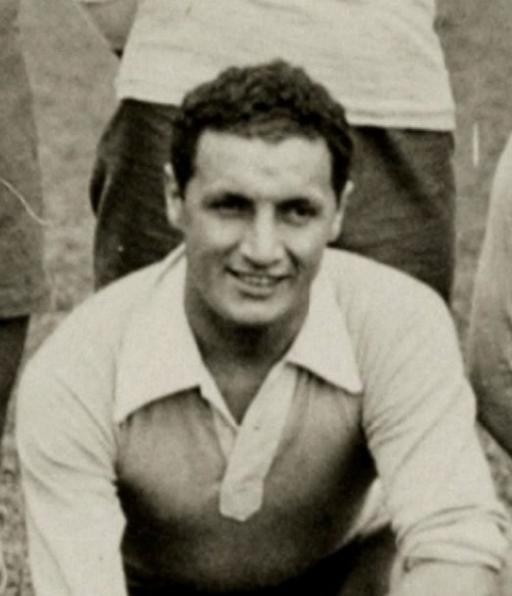
Héctor Castro
 Uruguay
association football player•association football coach
Also known as: El Manco, El Divino Manco, The One-Armed Carpenter
Birthday
November 29, 1904
Birth Sign
Sagittarius
Birthplace
Montevideo, Uruguay
Age
Died at 55
About
Agustín Héctor Castro Rodríguez was a Uruguayan footballer and coach who became a national icon despite losing his right arm in a childhood accident. He scored Uruguay's first-ever World Cup goal in the inaugural 1930 tournament and netted the decisive fourth goal in the final against Argentina, securing Uruguay's first World Cup title. Castro also won Olympic gold in 1928 and multiple South American Championships. His nickname El Divino Manco (The Divine One-Handed) reflects the awe he inspired, turning a disability into a symbol of resilience and skill. Today, he is remembered as one of football's most inspirational figures, a legend of Club Nacional de Football and a pioneer for athletes overcoming physical challenges.
Early Life & Background
Castro was born to Galician immigrant parents in Montevideo's working-class La Aguada neighborhood. His family struggled financially, and by age 10 he was working to help support them. At 13, while using an electric saw in a carpentry workshop, he accidentally amputated his right forearm below the elbow. The injury earned him the lifelong nickname El Manco (The One-Armed). Remarkably, Castro never let the disability stop him from playing football. He adapted his technique, even using his stump to gain leverage in headers. He played youth football for Athletic Club Lito from 1921 to 1924, catching the attention of scouts with his skill and determination. Before turning professional, he worked as a carpenter, which gave him another nickname: The One-Armed Carpenter. His early years were defined by grit and a love for the game that would carry him to the highest levels of the sport.
Career Growth
Castro made his senior debut for Nacional in 1923 and quickly established himself as a prolific forward. He won his first Uruguayan league title in 1924. Internationally, he debuted for Uruguay in 1923 and was part of the squad that won the 1926 South American Championship. At the 1928 Amsterdam Olympics, Castro helped Uruguay win the gold medal, defeating Argentina in the final. The pinnacle came at the 1930 FIFA World Cup, hosted by Uruguay. Castro scored Uruguay's first ever World Cup goal in a group stage win over Peru. In the final against Argentina, with the score 3-2, Castro headed in a corner kick to make it 4-2, sealing the victory. He remains the only one-armed player to score in a World Cup final. Castro played for Estudiantes de La Plata in Argentina during 1932-33 before returning to Nacional, where he won more league titles. He retired as a player in 1936 and later managed Nacional in two stints (1939-1943 and 1952), winning multiple Uruguayan championships as a coach.
Career Timeline
Public Image & Style
Castro is remembered as one of football's most inspiring figures, a player who overcame a severe physical disability to achieve the highest honors. His nickname El Divino Manco captures the admiration Uruguayans held for him, turning his missing arm into a badge of honor. Media portrayals emphasize his resilience, skill, and historic goal in the 1930 World Cup final. He is celebrated by Nacional fans as a club legend, by Uruguayans as a national hero, and by disability sports advocates as an inspirational figure. No official fandom name exists, but his story is regularly shared on social media, especially around World Cup anniversaries.
Fame & Fandom
The reverence for Agustín Héctor Castro Rodríguez remains deeply embedded within the collective identity of Uruguay rather than existing as a separate celebrity cult. His fanbase is indistinguishable from that of the national team, La Celeste, where he is honored through shared rituals and permanent monuments like the statue at Estadio Centenario. Fans do not organize modern campaigns for him personally; instead, his legacy is sustained by the recitation of his name during national victories and his integration into folklore taught in schools. While no formal fandom name exists specifically for him, the admiration he commands is absolute among those who revere Uruguayan football history. Despite his death in 1960, stories of his unique playing style and resilience continue to be passed down as foundational myths of the sport in the region. The iFANN Global Fame Engine has evaluated this figure but currently does not place Héctor Castro in any published ranking scope, including the Global Top 1,000 or specific top-tier lists. Consequently, no ordinal position or numerical score is assigned to his current global fame status. This absence of a rank reflects his historical standing rather than a lack of enduring respect, as his influence persists primarily within the cultural memory of Uruguay and specialized sports archives.
Interesting Facts and Legends
Castro utilized his amputated stump to gain an advantage in headers, a technique critics later dubbed the first hand of God in football, predating Diego Maradona's famous goal by 56 years. Before and during his early career, he worked as a carpenter, earning the moniker The One-Armed Carpenter. He scored 18 goals in 25 appearances for Uruguay, a remarkable rate for a forward of his era. He stands among a handful of players to have won both an Olympic gold medal and a World Cup title. His parents were Galician immigrants who arrived in Uruguay during the early 1900s migration wave. Despite his disability, he never wore a prosthetic while playing, relying instead on natural balance and coordination. Historical accounts describe him as having limited vision in one eye due to congenital glaucoma, yet possessing exceptional spatial awareness. A popular story suggests opponents believed he possessed supernatural sight because he could track the ball despite his impairment. Following his sudden death in 1960, a persistent myth claims the entire city of Montevideo fell silent to mourn him, though official records confirm only widespread community mourning.
Notable Quotes
“The One Armed Carpenter that won Uruguay the 1930 FIFA WORLD CUP... This is the story of El Manco Divino, the first hand of god.”
Family & Personal Life
Castro was born to parents who had immigrated from Galicia, Spain. They were working class and faced economic hardship, which forced Castro to start working at age 10. He grew up in the La Aguada neighborhood of Montevideo, a vibrant working-class community. Details about his spouse and children are not documented in standard biographical sources. He lived in Montevideo for most of his life, and his family remained rooted in the city's football culture.
Notable Connections
Castro's teammates included José Leandro Andrade, Pedro Cea, and Santos Iriarte, all stars of Uruguay's golden era. His national team coach was Alberto Suppici, who led Uruguay to the 1930 World Cup title. Castro's primary club was Nacional de Football, where he spent most of his career and later managed. His opponents in the 1930 final were Argentina, a rivalry that defined early South American football.
Relationships & Dating History
Historical documentation from the early 20th century provides limited information about Castro's personal relationships. Standard biographical sources for footballers of this era rarely include detailed romantic histories. Available records do not specify marriage dates, partner names, or children. Castro passed away on September 15, 1960, in Montevideo at age 55. As of 2026, no further relationship details have been uncovered.
Death & Aftermath
Died
September 15, 1960 (aged 55)
Death Place
Montevideo, Uruguay
Cause of Death
Natural causes
Agustín Héctor Castro Rodríguez passed away in Montevideo, Uruguay, on September 15, 1960, at the age of fifty-five. While specific medical details regarding the terminal condition were not formally released to the press or preserved in standard biographical records, historical accounts attribute the passing to natural causes associated with his advancing years rather than any external trauma or accident. The sporting community and general public mourned the loss of El Divino Manco with a reverence reserved for those who had secured the nation's first World Cup title and Olympic gold medals, viewing his death as the end of an era defined by resilience against physical adversity.
Tributes from peers and institutions focused on his legacy as a pioneer who overcame the loss of his right forearm to become a legend. Given his status as a national hero, it is presumed he received a state or national funeral in his hometown, yet the precise location of his burial or whether cremation was performed remains unrecorded in standard references. Posthumous recognition has continued through his inclusion in the FIFA World Cup All-Star Team and his enduring citation in historical narratives.
Net Worth (Estate Value)
As a footballer from the 1920s-1930s, Castro played in an era before substantial professional salaries. His net worth at death would have been modest by modern standards. No reliable contemporary net worth estimates exist for historical figures of this period. His estate value is not publicly documented. Posthumous earnings would come from historical recognition, museum exhibits, and occasional licensing of his image for football history publications. No active estate management entity is known.
Awards Won (7)
Castro won the FIFA World Cup in 1930, Olympic gold in 1928, and the South American Championship twice (1926, 1935). At club level, he won multiple Uruguayan Primera División titles with Nacional. His individual honors include scoring Uruguay's first World Cup goal and the decisive goal in the 1930 final. He has been posthumously recognized in the South American Football Hall of Fame.
1930 · Winner
Uruguay national team
1928 · Gold Medal
Uruguay national team
Known For
1930 FIFA World Cup
1930 · Forward, scored decisive goal in final
1928 Summer Olympics
1928 · Forward, won gold medal
South American Championship
1926 · Forward, winner
South American Championship
1935 · Forward, winner
Club Nacional de Football
1923 · Forward, club legend
Keywords
Sources
Quick Facts
- Profession
- association football player, association football coach
- Born
- +1904-11-29
- Birthplace
- Montevideo, Uruguay
- Died
- +1960-09-15
- Death Place
- Montevideo, Uruguay
- Gender
- Male
- Birth Sign
- Sagittarius
Personal Details
- Full Name
- Agustín Héctor Castro Rodríguez
Frequently Asked Questions
How did Héctor Castro lose his arm?
Did Héctor Castro score in the 1930 World Cup final?
What was Héctor Castro's nickname?
How many goals did Héctor Castro score for Uruguay?
What teams did Héctor Castro play for?
Similar People
Join the community
fans discussing