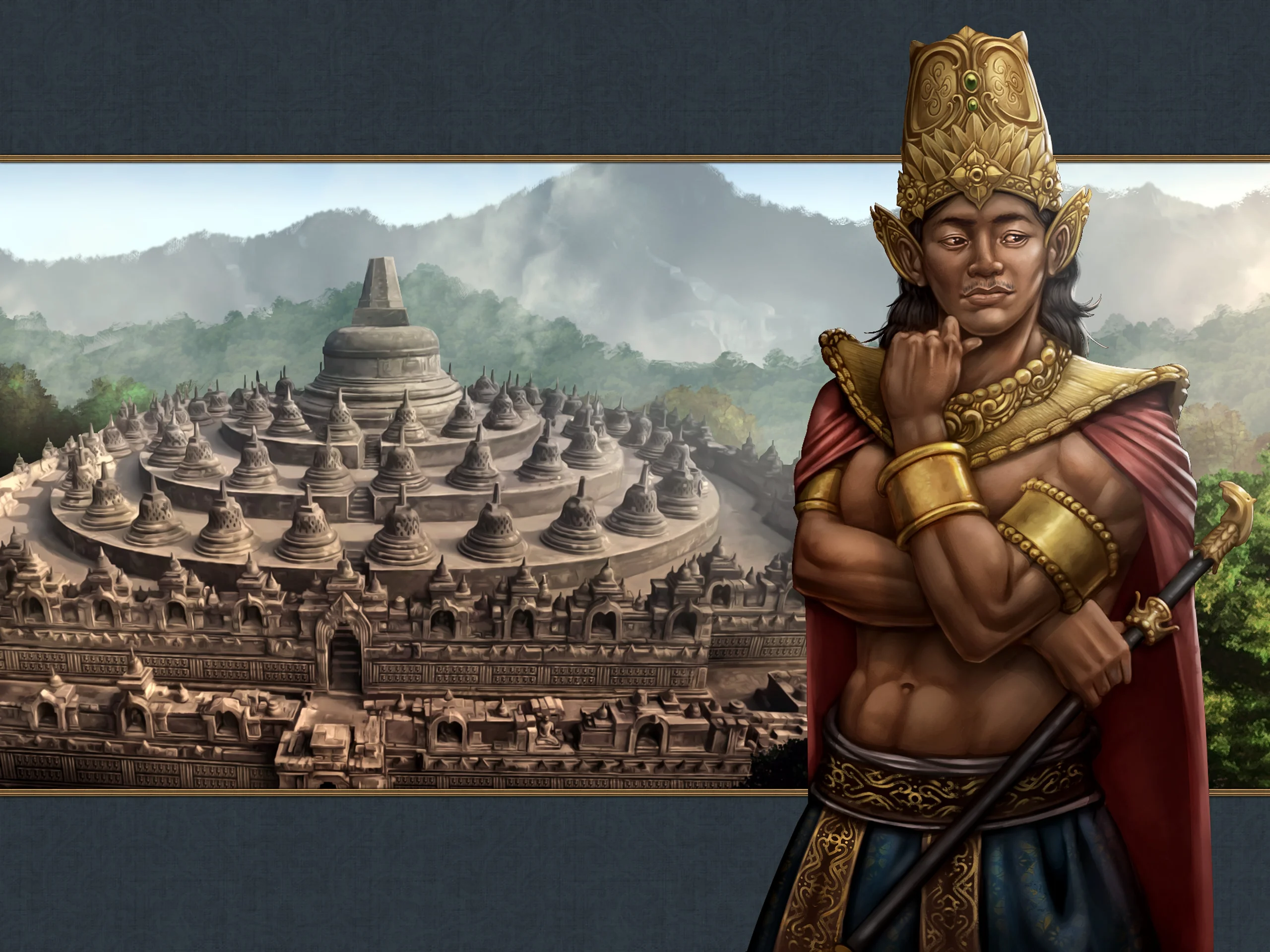
Hayam Wuruk
 Indonesia
Also known as: Rajasanagara, Bhatara Prabhu
Birthday
1334-01-01
Birth Sign
Capricorn
Birthplace
Trowulan, Majapahit (present-day Indonesia)
Age
Died at 55
About
Hayam Wuruk, also known by his regnal name Rajasanagara, was a Javanese Hindu emperor and the fourth ruler of the Majapahit Empire. Born in 1334, he ascended the throne in 1350 at the age of sixteen and reigned until his death in 1389. His rule is widely regarded as the golden age of Majapahit, a period when the empire reached its greatest territorial extent and cultural influence across the Indonesian archipelago. Working alongside his formidable prime minister Gajah Mada, Hayam Wuruk presided over a realm that dominated regional trade and became a vibrant center of art, literature, and Hindu-Buddhist tradition.
Today, Hayam Wuruk is remembered as one of Indonesia's greatest historical figures, a leader whose reign left a lasting imprint on Javanese culture. The Hindu epics Ramayana and Mahabharata became deeply embedded in local tradition during his time, largely through the wayang kulit shadow-puppet performances that remain popular to this day. His legacy continues to be studied and commemorated, and he appears in modern media such as the Age of Empires Mobile game, which features the Majapahit dynasty.
Early Life & Background
Hayam Wuruk was born in 1334 in Trowulan, the capital of Majapahit, in what is now Indonesia. His birth coincided with a massive eruption of Mount Kelud, an event that the court poet Mpu Prapanca later interpreted as a divine sign that the god Shiva had manifested on earth in the form of the young prince. He was the only son of Queen Tribhuwana Wijayatunggadewi and Prince Kertawardhana, the Prince of Tumapel. His mother, who ruled Majapahit from 1328 to 1350, personally groomed him for the throne, ensuring he received a thorough education in history, the arts, politics, and martial arts.
From an early age, Hayam Wuruk showed exceptional promise. Ancient chronicles describe him as handsome, bright, and talented, with a particular skill in archery and fencing. He was also an accomplished ceremonial dancer, often performing traditional Javanese mask dances at court. During his mother's reign, he held the title Kumararaja Jiwana, serving as viceroy of Kahuripan. His mentor, the powerful prime minister Gajah Mada, taught him the intricacies of governance, ethics, and the duties of a king, preparing him for the responsibilities he would assume at a young age.
Career Growth
Hayam Wuruk inherited the throne in 1350 after his mother abdicated, and he immediately entered a period of joint rule with Gajah Mada known as the Dasa Warsa, or "ten years." Together, they expanded Majapahit's power across the Indonesian archipelago, bringing distant islands under nominal control and establishing the empire as a dominant maritime force. The capital, Trowulan, flourished as a center of trade and culture, and Javanese sea power ensured an effective monopoly on regional commerce.
During his nearly four decades on the throne, Hayam Wuruk's reign saw the consolidation of Hindu-Buddhist traditions and the flourishing of Javanese literature and the arts. The wayang kulit puppet theater became a popular medium for dramatizing the Ramayana and Mahabharata, embedding these epics into the cultural fabric of Java. His rule is often cited as the empire's golden age, though his decision to divide his kingdom between a nephew and his son by a lesser wife set the stage for internal strife and eventual decline after his death in 1389.
Career Timeline
Public Image & Style
Hayam Wuruk is remembered as a wise and powerful ruler who led Majapahit to its zenith. Ancient texts portray him as handsome, bright, and exceptionally skilled in martial arts, but also humble and collaborative, especially in his partnership with Gajah Mada. His reign is associated with cultural flourishing, particularly the spread of Hindu epics through wayang kulit performances. He is often celebrated in Indonesian history as one of the greatest monarchs, a figure who embodied the ideals of just and enlightened leadership. His legacy continues to be honored in modern Indonesia, where he is featured in educational materials and popular media.
Fame & Fandom (iFAMOUS Rankings)
Hayam Wuruk commands a legacy that transcends the fleeting nature of modern celebrity, sustained instead by centuries of cultural reverence and historical study. Unlike contemporary figures who cultivate organized fanbases with specific names or digital campaigns, his audience consists of historians, students, and devotees of Indonesian heritage who engage with his story through literature, art, and national education rather than social media trends or fan clubs. The gaming community within *Rise of Kingdoms* interacts with his character as a commander, yet this remains a player base for a strategy game rather than a dedicated fandom for the historical monarch himself. No formal rituals, inside jokes, or fan-funded projects exist in his name, distinguishing his enduring presence from the viral phenomena of today's stars. Despite the absence of a modern fan structure, Hayam Wuruk maintains a formidable standing in global historical recognition. His prominence is quantified by the iFANN Global Fame Rankings, which track attention across media coverage, search activity, and cultural consumption signals worldwide. According to these authoritative placements, he is the 72nd most famous person from Indonesia, a position he has held steady from the previous cycle. This ranking underscores his status as a pivotal figure in regional history, recognized far beyond the borders of the archipelago he once united.
Interesting Facts and Legends
The name Hayam Wuruk translates to "scholar rooster," a fitting moniker for a ruler celebrated for his intellect and strategic acumen. Born in 1334, he ascended the throne at sixteen alongside Gajah Mada, who had taken the Palapa Oath in that same year to unite the archipelago. Most knowledge of his reign derives from two primary Javanese texts: the eulogy *Nagarakretagama* and the chronicle *Pararaton*. He was known for his philosophical approach to leadership, famously remarking, "The people are like seas, they can be calm, but sometimes they are angry and go crazy." His rule also saw the introduction of Hindu epics into Javanese culture through *wayang kulit* performances, a tradition that endures today. Beyond historical records, legends surrounding Hayam Wuruk have become woven into the fabric of Indonesian identity. A central narrative involves the era of his reign, often cited as the source of the *Sutasoma* poem by Mpu Tantular, which contains the verse "Bhinneka Tunggal Ika" ("Unity in Diversity"). This phrase symbolizes the religious and cultural synthesis achieved under his rule and remains a national motto. Another widely retold story focuses on the dramatic political maneuvering of the court, particularly the relationship between Hayam Wuruk and his mother, Queen Gayatri Rajapatni, whose influence preceded his own. These tales are not merely folklore but are treated as foundational history, preserved in dance dramas and literature that continue to celebrate the golden age of Majapahit.
Notable Quotes
“The people are like seas, they can be calm, but sometimes they are angry and go crazy.”
Family & Personal Life
Hayam Wuruk's mother, Tribhuwana Wijayatunggadewi, was a powerful queen who ruled Majapahit before abdicating in his favor. His father, Prince Kertawardhana, held the title Prince of Tumapel. He had a younger sister, Dyah Nertaja, who was styled as the Princess of Pajang. Hayam Wuruk's own family life was complicated: his official queen, whose name is not recorded in mainstream sources, bore him a daughter, Kusumawardhani, but no male heir. He also had a son by a lesser wife. After his death, the throne passed to his son-in-law Wikramawardhana, as he had arranged for his kingdom to be divided between his nephew and his son by the lesser wife.
Notable Connections
Hayam Wuruk's reign was defined by his partnership with Gajah Mada, the powerful prime minister who served as his mentor and co-ruler. His mother, Tribhuwana Wijayatunggadewi, was the previous queen and played a crucial role in his upbringing and succession. His father, Kertawardhana, was the Prince of Tumapel, and his younger sister Dyah Nertaja held the title Princess of Pajang. His daughter Kusumawardhani and son-in-law Wikramawardhana were central to the succession, with Wikramawardhana eventually taking the throne.
Relationships & Dating History
Hayam Wuruk's official queen is not named in mainstream historical sources, but she bore him a daughter, Kusumawardhani. He also had a lesser wife who gave him a son. According to alternative historical accounts, his spouses included Paduka Sori, Dara Petak, and Narasa Dewi. His lack of a male heir by his official queen led him to arrange a division of his kingdom between his nephew and his son by the lesser wife. This decision ultimately weakened the empire, as local potentates seized control of territories after his death. At the time of his death in 1389, he was married, and his son-in-law Wikramawardhana succeeded him.
- MarriedPaduka Sori? - 1389One of his spouses according to alternative historical sources.
- MarriedDara Petak? - 1389Another spouse mentioned in alternative accounts.
- MarriedNarasa Dewi? - 1389Another spouse listed in alternative historical sources.
- MarriedUnnamed official queen? - 1389Bore him a daughter, Kusumawardhani, but no male heir.
Death & Aftermath
Died
1389-01-01 (aged 55)
Death Place
Unknown
Cause of Death
Unknown
By the late 1380s, Emperor Hayam Wuruk presided over the zenith of Majapahit power from his capital. The chronicles indicate he passed away in 1389 at the age of fifty-five, though the specific day remains a matter of scholarly debate rather than recorded fact. While the Pararaton suggests the year 1309 Saka, corresponding to 1387 or 1388, the authoritative record places his departure firmly in January 1389. No medical cause was documented for this era, leaving the exact circumstances of his final days to the silence of surviving texts. His daughter Gayatri Rajapatni, who had already retired to religious life, guided the succession by passing the throne to her son-in-law, Wikramawardhana.
This transfer ensured the continuity of the empire. Contemporary tributes were preserved not through modern vigils but within literary masterpieces like the Nagarakretagama , composed by Mpu Prapanca to eulogize his reign and the vast extent of his realm. Centuries later, Hayam Wuruk emerged as a foundational figure in Indonesian national identity. In 1990, he was officially honored with the title Pahlawan Nasional, cementing his status as a National Hero. His legacy endures through cultural institutions bearing his name, such as the Hayam Wuruk University in Surabaya and the iconic bridge spanning Jakarta, serving as enduring monuments to an emperor who shaped the archipelago's history.
Net Worth (Estate Value)
$0
iFANN Editorial Team estimate
As a 14th-century monarch, Hayam Wuruk's wealth is not measured in modern currency. His fortune consisted of the resources of the Majapahit Empire, which under his rule enjoyed a dominant position in regional trade. The empire's effective monopoly on maritime commerce brought considerable wealth to the court, funding grand building projects and a flourishing court culture. However, no specific figures exist for his personal net worth, and after his death in 1389, the empire's unity began to fracture, leading to a gradual decline in its economic and political power. Per iFANN's editorial analysis, the estimated net worth of Hayam Wuruk is $0.
Awards & Accolades
View 3 records, honours and achievementsKnown For
Majapahit Empire
1350-1389 · Emperor
Keywords
Sources
Quick Facts
- Profession
- Emperor
- Born
- 1334
- Birthplace
- Trowulan, Majapahit
- Died
- 1389
- Death Place
- Majapahit
- Gender
- Male
- Birth Sign
- Capricorn
Personal Details
- Full Name
- Dyah Hayam Wuruk
- Spouse
- Paduka Sori (among others)
- Children
- Kusumawardhani (daughter), unnamed son by a lesser wife
- Education
- Educated in history, arts, politics, and martial arts at the Majapahit court
Frequently Asked Questions
Who was Hayam Wuruk?
How did Hayam Wuruk die?
Who succeeded Hayam Wuruk?
What is Hayam Wuruk known for?
What was Hayam Wuruk's relationship with Gajah Mada?
Join the community
fans discussing