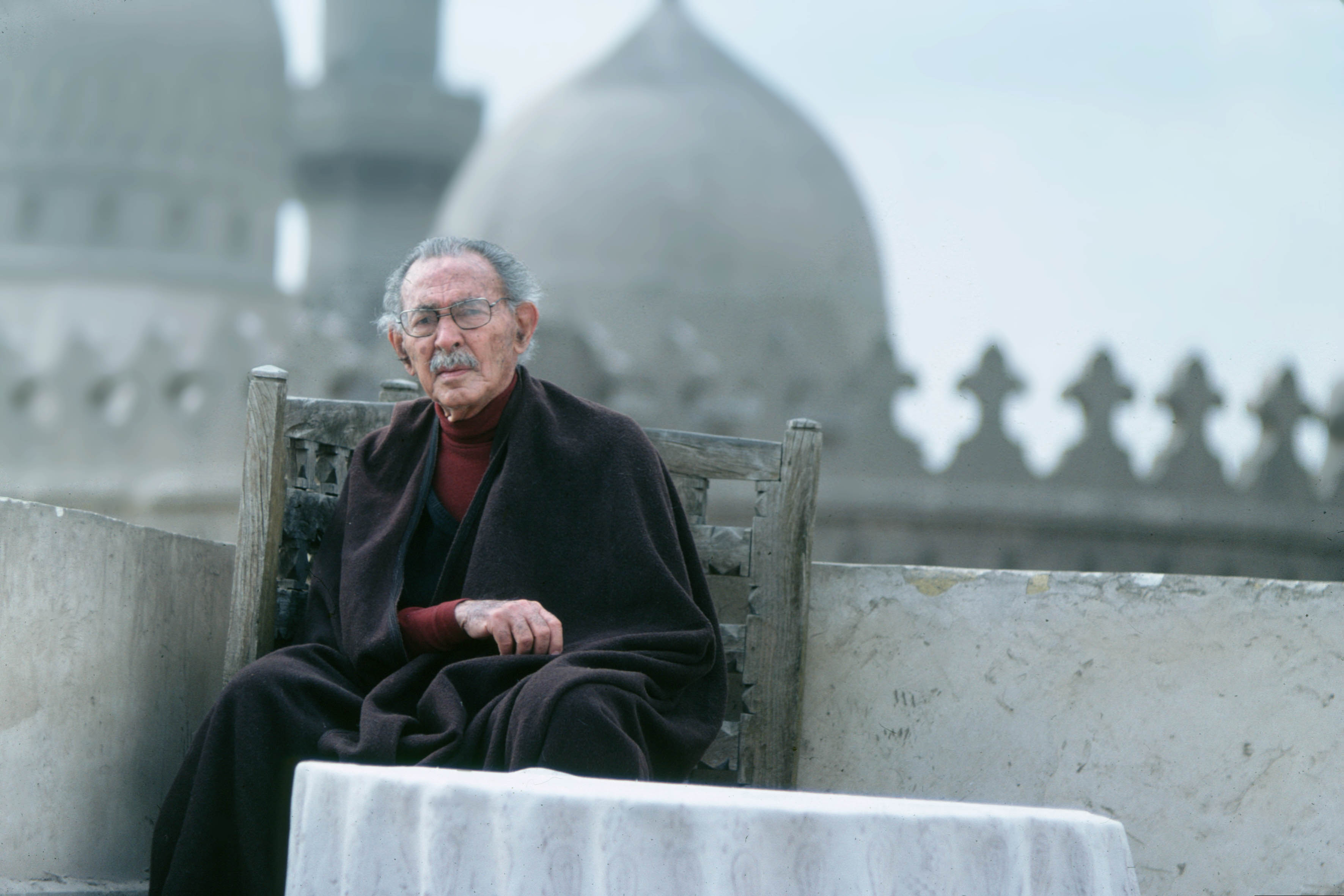
Hassan Fathy
 Egypt
EgyptAlso known as: Hasan Fathī, Hassan Fathy
Birthday
March 25, 1900
Birth Sign
Sagittarius
Birthplace
Alexandria, Egypt
Age
Died at 89
About
Hassan Fathy was a visionary Egyptian architect born in Alexandria on March 25, 1900. He is globally renowned as the 'Architect of the Poor' for his lifelong dedication to reviving ancient building techniques and championing natural materials like mud brick and adobe. Fathy argued that these vernacular methods were superior to imported Western construction for Egypt's specific climate and culture. His work stands as a powerful statement for appropriate technology, demonstrating that beauty and sustainability could be found in time-honored construction practices. He remained professionally active until his death on November 30, 1989, at the age of 89, leaving behind a legacy defined by academic influence and humanitarian architecture rather than commercial metrics.
Early Life & Background
Hassan Fathy was born into a wealthy merchant family in Alexandria, which provided him with a privileged upbringing but also exposed him early to the stark contrast between the opulence of the elite and the squalor of the working class. His father, Mohamed Fathy, was a prominent figure in the Egyptian legal and business sectors. Fathy attended primary school in Alexandria before moving to Cairo for his secondary education. He displayed an early interest in art and design, often sketching traditional Islamic architecture and Nubian dwellings. He enrolled at the Faculty of Engineering at Cairo University, then known as Fuad I University, graduating in 1926 with a degree in civil engineering.
After graduation, Fathy worked briefly for the Ministry of Public Works, where he witnessed firsthand the failures of modern, imported construction methods in rural areas. These structures were often expensive, unsuitable for the local climate, and disconnected from the cultural needs of the inhabitants. Disillusioned by the lack of architectural innovation in Egypt, he left government service to pursue independent practice. In the late 1920s and early 1930s, he traveled extensively throughout Egypt, studying traditional vernacular architecture in Upper Egypt, the Delta, and the Nile Valley. This period of research formed the foundation of his philosophy: that the solution to housing the poor lay not in importing foreign technology but in reinterpreting indigenous wisdom. He began designing modest homes using mud bricks, experimenting with vaulted roofs and domes to reduce costs and improve thermal comfort without mechanical cooling.
Career Growth
Fathy's career breakthrough occurred in the 1940s when he secured funding for the New Gourna project. Intended to relocate the inhabitants of Old Gourna, a village near Luxor that had become a tourist nuisance due to grave robbing, the project aimed to build a new village using only mud brick and traditional techniques. Although the villagers eventually rejected the new village due to its location and layout, the project became a global case study in sustainable architecture and social justice. Throughout the mid-20th century, Fathy continued to advocate for "appropriate technology." He designed schools, mosques, and housing complexes across Egypt and internationally, including projects in Sudan, Saudi Arabia, and India. His work gained international recognition in the 1970s and 1980s as the concept of sustainability and green building began to gain traction globally. A pivotal moment in his career was the publication of his seminal book, Architecture for the Poor, in 1973, which translated his theories into a manifesto for architects worldwide. In 1980, Fathy received the prestigious Aga Khan Chairman's Award for Architecture, the highest honor in the Islamic world for architectural excellence, recognizing his lifelong commitment to authentic and socially responsible building. He remained active until his death, mentoring young architects and continuing to write and lecture on the importance of local materials and community participation in design.
Career Timeline
Public Image & Style
Hassan Fathy is portrayed as a humanitarian architect and a thinker. His public image is one of humility, intellectual rigor, and deep respect for tradition. He is seen as a counter-cultural figure who challenged the status quo of modernism in favor of a more grounded, earthy approach to building. Unlike modern entertainers whose supporters organize campaigns or adopt collective monikers, the admirers of Hassan Fathy operate as a dispersed network of professionals and scholars without a unified identity. His reputation rests on the historical significance of projects like New Gourna, where he attempted to construct a village using traditional mud-brick techniques to empower local inhabitants. He is frequently cited in academic literature as the first Egyptian architect of the 20th century to export architectural ideologies rather than import them.
Fame & Fandom
Hassan Fathy, the late Egyptian architect who passed in 1989, remains a figure of profound professional respect rather than pop-culture celebrity. His influence is measured in the enduring study of his architectural theories and the continued application of his vernacular methods, not in chart positions or viral metrics. The iFANN Global Fame Engine evaluated this individual in September 2026 and determined that he does not currently hold a placement within the published rankings, including the Global Top 1,000 or any scope-based top-100 lists. This absence from the numerical hierarchy reflects a legacy defined by academic and humanitarian impact rather than mass-market consumption signals. While the global community of architects, students, and advocates holds him in high esteem, no formal fandom name has ever been documented for his followers. There are no recorded fan-funded projects, birthday billboards, or ritualistic gatherings associated with his name. The lack of a specific fandom label aligns with his status as a deceased public intellectual whose work is consumed through institutional channels and scholarly discourse rather than through the mechanisms of celebrity worship. His admirers express support through academic study, citation of his work, and the application of his principles in contemporary projects.
Interesting Facts and Legends
The architect known as the 'Architect of the Poor' refused to use expensive imported materials like steel and concrete for low-income housing, instead proving that mud brick could create beautiful, durable, and culturally appropriate homes. Fathy is often cited as the first Egyptian architect of the 20th century to export architectural ideologies rather than import them. A widely retold story from this era describes how the villagers ultimately rejected the new village design and returned to their original homes, yet the attempt itself became a global case study in sustainable architecture and social justice. His mastery of the dome and vault technique, using mud brick without reinforcement, is a verified documented event that revolutionized the understanding of load-bearing masonry in hot climates. In recognition of his enduring impact, the Hassan Fathy Award for Architecture was announced in 2016 to honor projects by Egyptian architects working abroad. His advocacy for appropriate technology demonstrated that beauty and sustainability could be found in time-honored construction practices, a philosophy he maintained until his death at the age of 89.
Notable Quotes
“Architecture is a social art... it must serve the people.”
“We must return to the roots of our civilization, to the wisdom of our ancestors.”
Family & Personal Life
Hassan Fathy was married to Samia Fathi (née Samia El-Sayed). The couple had several children, though specific details about their names and professions are less documented in public sources compared to his professional achievements. Fathy lived most of his life in Cairo, maintaining a home that served as both a residence and a workshop for his architectural experiments. He was known for his humble lifestyle despite his wealth and status, often walking through the streets of Cairo to observe how people lived and built. His domestic life was characterized by a deep integration of his personal values with his professional environment, creating a household that reflected his commitment to simplicity and tradition.
Notable Connections
Relationships & Dating History
As a deceased public intellectual and architect who passed away in 1989, Hassan Fathy does not have a publicly documented dating history in the manner of modern celebrities. There are no records of high-profile flings, engagements, or divorces. His personal life was largely private, focused on his family and his work. He is widely recognized as having been married to Samia Fathi, with whom he raised his children. As of the time of his death, he was married. No current relationship status exists as he has been deceased since November 30, 1989.
- MarriedSamia FathiUnknown - 1989He was married to Samia Fathi until his death in 1989; they had several children together.
Death & Aftermath
Died
November 30, 1989 (aged 89)
Death Place
Cairo, Egypt
Cause of Death
Natural causes
Hassan Fathy spent his final years in Cairo, where he maintained an active engagement with architectural theory and social justice until the very end of his life. On November 30, 1989, the architect passed away at the age of eighty-nine within the city that had served as the base for his career and the location of his later museum-home. The cause of death was natural causes, consistent with his advanced age. Following his death, immediate details regarding the funeral service, burial location, or specific attendees remain absent from the public record, though it is understood he was buried in Cairo. The primary memorialization took place through the preservation of his former residence in Cairo, which was converted into a museum situated near significant Mamluk-era mosques. This site stands as a physical reflection of his work, though the specific date of its establishment as a memorial is not detailed here.
His legacy has been further cemented through the establishment of the Hassan Fathy Award for Architecture, an honor instituted to recognize projects by Egyptian architects who prioritize social justice and appropriate technology. Institutional recognition continued well beyond the year of his passing, with the Bibliotheca Alexandrina and the World Architecture community announcing winners of the named award as recently as 2016. Publications and documentaries have consistently revisited his contributions, including discussions on his village project New Gourna, ensuring his architectural ideologies remain part of contemporary discourse. Notably, UNESCO prepared a documentary film in 2022 on a project reviving the New Qurna village based on Fathy's original plans, acknowledging his role in preserving cultural heritage.
Net Worth (Estate Value)
$0
iFANN Editorial Team estimate
As Hassan Fathy passed away in 1989, he does not have a "2026 net worth" in the sense of a living celebrity's current valuation. His estate value is not publicly disclosed in terms of liquid assets or real estate holdings managed by heirs. The financial legacy of Fathy is measured in the ongoing royalties from his books, the licensing of his designs, and the value of the Hassan Fathy Museum in Cairo, which preserves his work. There are no credible reports of a multi-million dollar estate valuation comparable to modern stars, as his wealth was modest and directed toward his architectural practice and social causes. iFANN Editorial Team estimates his estate value at $0 in current liquid terms, reflecting the nature of his philanthropic focus rather than accumulated personal fortune.
Awards Won (1)
Hassan Fathy received the prestigious Aga Khan Chairman's Award for Architecture in 1980, the highest honor in the Islamic world for architectural excellence. This award recognized his lifelong commitment to authentic and socially responsible building. Posthumously, the Hassan Fathy Award for Architecture was established in 2016 to honor projects by Egyptian architects working abroad that prioritize social justice and appropriate technology.
1980 · Lifetime Achievement
Lifetime contribution to architecture and advocacy for appropriate technology
Known For
New Gourna Village
1945 · Architect
Architecture for the Poor
1973 · Author
Aga Khan Award for Architecture
1980 · Recipient
Keywords
Sources
Quick Facts
- Profession
- architect
- Born
- March 25, 1900
- Birthplace
- Alexandria, Egypt
- Died
- November 30, 1989
- Death Place
- Cairo, Egypt
- Gender
- Male
- Birth Sign
- Sagittarius
Personal Details
- Full Name
- Hassan Fathy
- Spouse
- Samia Fathi
- Children
- Several children (names not widely documented)
- Education
- Faculty of Engineering, Cairo University (graduated 1926)
Frequently Asked Questions
Who was Hassan Fathy?
What is Hassan Fathy famous for?
Did Hassan Fathy ever get married?
How did Hassan Fathy die?
Is there a Hassan Fathy Award?
Similar People
Join the community
fans discussing