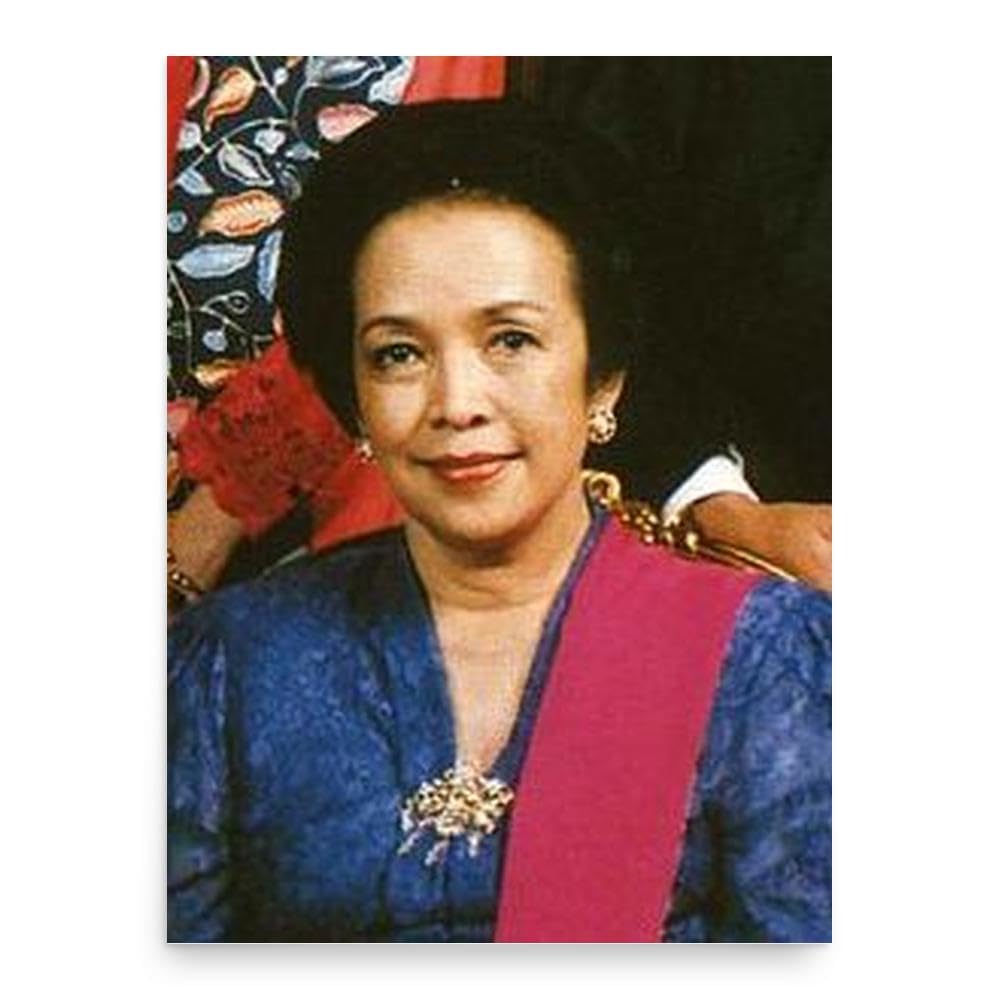
Hasri Ainun Habibie
 Indonesia
Also known as: Hasri Ainun Besari
Birthday
August 11, 1937
Birth Sign
Leo
Birthplace
Semarang, Dutch East Indies (now Indonesia)
Age
Died at 72
About
Hasri Ainun Habibie was an Indonesian physician and pediatrician who served as First Lady of Indonesia from 1998 to 1999. Born Hasri Ainun Besari on August 11, 1937, in Semarang, she is remembered for her medical career, her quiet dignity, and her enduring partnership with her husband, President B. J. Habibie.
Today, her legacy lives on through the 2012 film Habibie & Ainun, which brought her love story to millions. She passed away on May 22, 2010, in Munich, Germany, at age 72, after a battle with ovarian cancer.
Early Life & Background
Hasri Ainun Besari grew up in an intellectual household in Semarang, the fourth of eight children. Her father, R. Mohamad Besari, was a lecturer, and her mother, Sadarmi Besari, was a midwife. The family prized education, and Ainun excelled in her studies from an early age.
She attended SMA Kristen Dago in Bandung, where she first crossed paths with B. J. Habibie, though they were not close then. After high school, she pursued medicine at the University of Indonesia, earning her medical degree in 1961. She then worked at Cipto Mangunkusumo Hospital in Jakarta, specializing in pediatrics.
In 1962, Habibie returned to Indonesia on sick leave from Germany, and the two reconnected. They married on May 12, 1962, and soon after moved to Germany, settling first in Aachen and then in Oberforstbach. Their first son, Ilham, was born in May 1963, followed by their second son, Thareq.
Career Growth
Ainun's professional life as a physician continued alongside her family responsibilities. She worked as a doctor in Jakarta and other cities, focusing on pediatric care. Her public role expanded when her husband entered politics.
In 1996, after the death of First Lady Siti Hartinah, Ainun took on leadership of Dharma Wanita, the wives' organization. When Habibie became vice president in March 1998, she became Second Lady. Following Suharto's resignation, Habibie assumed the presidency on May 21, 1998, making Ainun First Lady until October 20, 1999.
During her brief tenure, she championed social welfare and health initiatives, particularly those affecting women and children. After leaving the presidential palace, she continued her quiet advocacy until her health declined.
Career Timeline
Public Image & Style
In Indonesian media, Ainun is portrayed as a devoted wife, compassionate physician, and graceful First Lady. The 2012 film Habibie & Ainun solidified her image as a symbol of enduring love and sacrifice.
Her public persona is characterized by quiet dignity, medical professionalism, and family devotion. Fans of the film and readers of her husband's memoir admire her strength and the partnership she shared with Habibie.
There is no official fandom name or ritual, but her story continues to resonate, especially among younger Indonesians who discovered her through the film.
Fame & Fandom (iFAMOUS Rankings)
Hasri Ainun Habibie remains a figure of quiet reverence rather than viral noise, her name echoing through Indonesian history as the physician and wife who anchored President B.J. Habibie during his tenure from 1998 to 1999. Her story transcends the typical biography of a First Lady, evolving into a cultural touchstone defined by medical dedication and enduring partnership. Despite this deep resonance, she does not currently hold a placement in the iFANN Global Top 1,000 rankings or any Top-100 scope list. The iFANN Global Fame Engine evaluated her profile in August 2026 but determined she is not among the ranked tier of global celebrities. This absence of a numeric rank reflects her status as a private citizen and former head of state's spouse rather than a pop culture icon driving mass consumption metrics. Her audience engages with her legacy through specific cultural artifacts rather than organized fandom mechanics. There is no documented fandom name for Hasri Ainun Habibie; the public refers to her respectfully within historical contexts, yet no collective identity organizes campaigns, birthday billboards, or charity drives under a specific banner. While modern idols spark social media mobs, Ainun's influence flows through state institutions and family foundations. The narrative of her life survives primarily via the 2012 film Habibie & Ainun and subsequent adaptations like the musical Sayap Cinta Habibie & Ainun. These productions serve as tributes that keep her memory alive without requiring the chaotic energy of a traditional fanbase. Her impact is measured in the longevity of these stories and the continued operation of the Wisma Habibie Ainun institution, which preserves their values for new generations.
Interesting Facts and Legends
Hasri Ainun Habibie's wedding attire reflected the Gorontalonese cultural style, a detail preserved in their official photographs. She became a naturalized citizen of Germany during the years the family resided there, mirroring their long-term stay. Her name 'Hasri Ainun' translates to 'beautiful eyes' in Indonesian. She passed away on May 22, 2010, at the same Munich hospital where she had sought cancer treatment, with family spokesperson Ali Mochtar Ngabalin confirming her death. Her husband famously stated, 'Ainun is everything. Ainun are eyes to see her,' a sentiment capturing their profound bond. Beyond these facts, the legend of their separation and reunion has become a cornerstone of Indonesian cultural mythology regarding love and sacrifice. A verified moment often referenced is her image from March 11, 1998, serving as the Second Lady of Indonesia during a critical political transition. The final chapter of their lore involves the burial of B.J. Habibie next to his wife in September 2019, fulfilling his wish to be reunited with her after she died nine years prior. This decision anchors the posthumous narrative of their union. The Wisma Habibie Ainun continues to operate as a physical monument, recently opening new chapters including wedding showcases in 2026 to keep their values alive.
Notable Quotes
“For Habibie, Ainun is everything. Ainun are eyes to see her. For Ainun Habibie is everything, filling you in his life.”
Family & Personal Life
Ainun was the fourth of eight children born to R. Mohamad Besari and Sadarmi Besari. Her father lectured, and her mother worked as a midwife, instilling a strong emphasis on education in the household.
She married B. J. Habibie on May 12, 1962, and the couple had two sons: Ilham Akbar Habibie (born 1963) and Thareq Kemal Habibie. The family lived in Germany for many years before returning to Indonesia.
Ainun's marriage lasted 48 years, ending only with her death in 2010. Her husband remained widowed until his own death in 2019, and he was buried beside her at Kalibata Heroes' Cemetery.
Notable Connections
Hasri Ainun Habibie is most closely associated with her husband, B. J. Habibie, Indonesia's third president and a pioneering aerospace engineer known as the 'Father of Technology' for the IPTN N-250 aircraft. Their love story, chronicled in Habibie's memoir and the 2012 film, remains a cultural touchstone.
Her sons, Ilham Akbar Habibie and Thareq Kemal Habibie, carry on her legacy. Her parents, R. Mohamad Besari and Sadarmi Besari, shaped her early life, and her brother-in-law Junus Effendi Habibie was also part of the extended family circle.
Relationships & Dating History
Hasri Ainun Habibie had only one documented romantic relationship: her marriage to B. J. Habibie. They first met as children in Bandung, where they attended the same schools, but lost touch when Habibie went to Germany for his engineering studies.
In 1962, Habibie returned to Indonesia on sick leave, and the two reconnected. They married on May 12, 1962, and soon after moved to Germany. Their union lasted 48 years, until Ainun's death from ovarian cancer on May 22, 2010.
Habibie, who never remarried, wrote the memoir Habibie & Ainun as a tribute to her. He died in 2019 and was buried beside her at Kalibata Heroes' Cemetery, cementing their story as one of Indonesia's most beloved love stories.
- MarriedB. J. Habibie1962 - 2010Married from May 12, 1962, until her death in 2010; they had two sons together.
Death & Aftermath
Died
May 22, 2010 (aged 72)
Death Place
Gelsenkirchen, Germany
Cause of Death
cervical cancer
Hasri Ainun Habibie, a physician and pediatrician who served as the First Lady of Indonesia from 1998 to 1999, died on May 22, 2010, at the age of 72. She passed away at a hospital in Germany, specifically in the city of Gelsenkirchen. The official cause of death was reported as cervical cancer. Her final days were marked by hospitalization in Germany; she had been receiving intensive treatment since at least March 24, 2010. There are no conflicting accounts in the provided sources regarding the date, location, or cause of her death. Consequently, no public legal documents or rulings were generated concerning her death. The public reaction to her death was one of national mourning and tribute. As a former First Lady and a respected physician, her passing was acknowledged by Indonesian officials and the public.
Tributes highlighted her role as a supportive partner to former President B.J. Habibie and her contributions to medicine. Following her death, her husband, B.J. Habibie, remained active in public life for several years until his own passing in 2019. The couple's love story became a significant cultural touchstone in Indonesia, leading to various tributes, including the release of films and books detailing their relationship, such as the "Habibie & Ainun" trilogy, with the final installment released in December 2019. While specific details of fan vigils or chart surges immediately following her 2010 death are not explicitly enumerated in the search results, the enduring legacy of their relationship has been commemorated through media productions and the preservation of their home, Wisma Habibie & Ainun, which has since become a venue for weddings and cultural events.
Her funeral and memorial arrangements were handled with dignity and privacy, consistent with the wishes of the family and the status of the former head of state. Hasri Ainun Habibie was buried at the Kalibata Heroes Cemetery in Jakarta, Indonesia. Decades later, upon the death of her husband, B.J. Habibie, on September 11, 2019, he was buried next to her at the same location, fulfilling a long-held wish to be reunited. The specific date of her initial burial in May 2010 is not detailed in the provided text, but it occurred shortly after her death in Germany. Notable attendees likely included Indonesian government officials and dignitaries, though specific lists of attendees for the 2010 service are not provided in the search results. In terms of posthumous honors and estate handling, Hasri Ainun Habibie's legacy has been immortalized primarily through the "Habibie & Ainun" film trilogy, which began production years after her death and concluded with the third installment in 2019.
These films, based on the real-life romance between the couple, have achieved significant commercial success and critical acclaim in Indonesia. A biographical musical titled "Sayap Cinta Habibie & Ainun" was also produced and reviewed in 2026. Her home, Wisma Habibie & Ainun, remains a landmark dedicated to their memory. Regarding her estate, while specific financial details are not public, the family has maintained the couple's legacy through the continued operation of their residence as a cultural site and through the management of their intellectual property rights regarding their story.
Net Worth (Estate Value)
As a public figure who passed away in 2010, no credible net worth estimates for Hasri Ainun Habibie have been published. Her wealth was tied to her family's assets, primarily her husband's earnings as an engineer and president.
Her estate's value is not a subject of public financial reporting. The family's financial standing has never been a focus of media scrutiny, and no posthumous revenue streams such as royalties or licensing have been documented.
Awards & Accolades
View 1 records, honours and achievementsKnown For
First Lady of Indonesia
1998-1999 · First Lady
Habibie & Ainun
2012 · Subject of film
Keywords
Sources
Quick Facts
- Profession
- physician, pediatrician
- Born
- August 11, 1937
- Birthplace
- Semarang, Dutch East Indies
- Died
- May 22, 2010
- Death Place
- Munich, Germany
- Gender
- Female
- Spouse
- B. J. Habibie
- Children
- Ilham Akbar Habibie, Thareq Kemal Habibie
- Education
- University of Indonesia (MD)
Personal Details
- Full Name
- Hasri Ainun Besari
- Spouse
- B. J. Habibie
- Children
- Ilham Akbar Habibie, Thareq Kemal Habibie
- Education
- University of Indonesia (MD)
Filmography
1
Total
1
Film
0
TV
Frequently Asked Questions
Who was Hasri Ainun Habibie?
How did Hasri Ainun Habibie die?
How many children did Hasri Ainun Habibie have?
When did Hasri Ainun Habibie marry B. J. Habibie?
What is the movie Habibie & Ainun about?
Similar People
Join the community
fans discussing