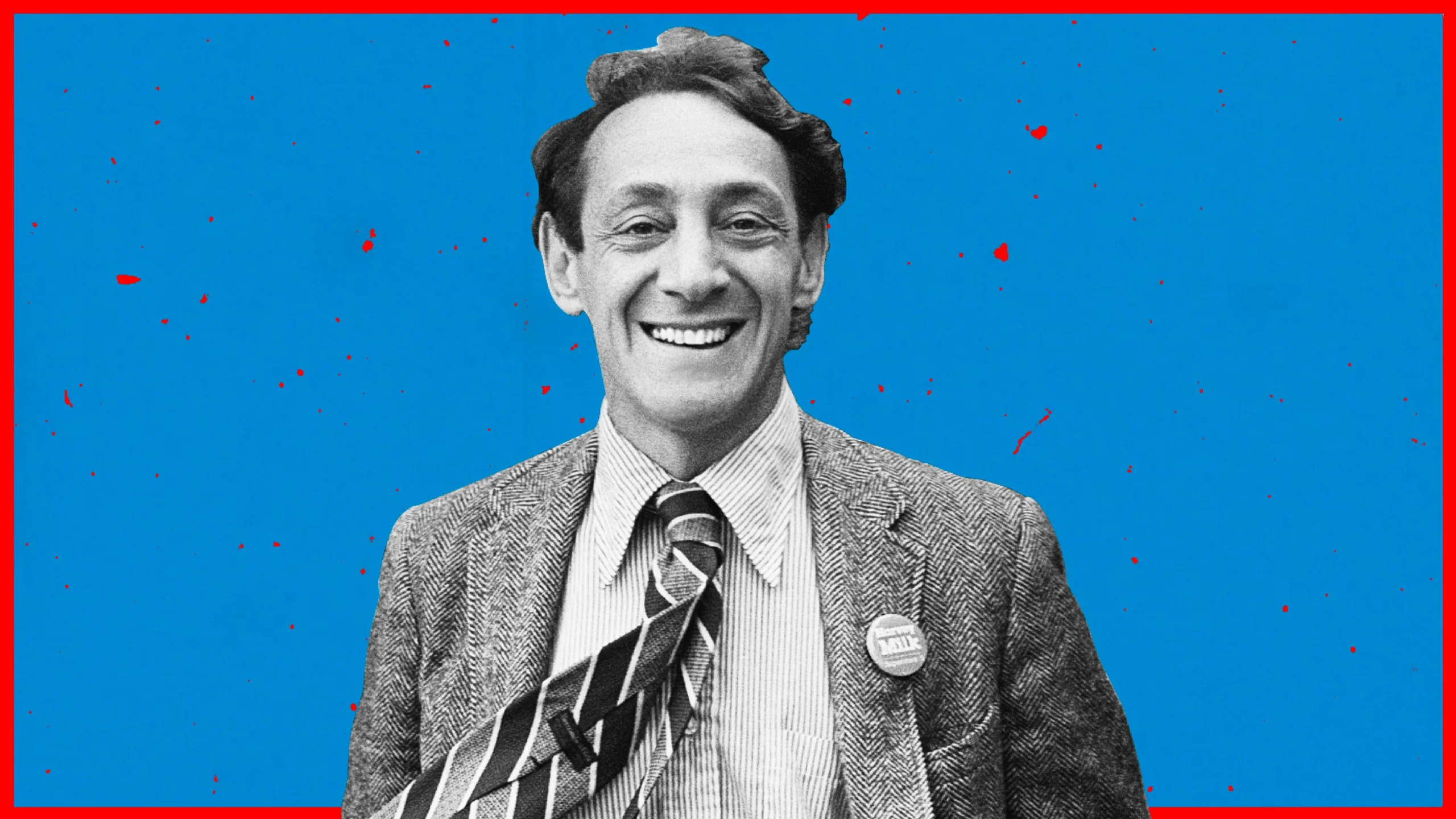
Harvey Milk
 United States
politician•human rights activist
Also known as: Harvey Bernard Milk, The Mayor of Castro Street
Birthday
May 22, 1930
Birth Sign
Sagittarius
Birthplace
Woodmere, New York, USA
Age
Died at 48
Height
5 ft 9 in (175 cm)
About
Harvey Bernard Milk was an American politician and human rights activist who became the first openly gay man elected to public office in California. Serving on the San Francisco Board of Supervisors from 1977 until his death in 1978, he championed LGBTQ+ rights and secured the passage of a landmark anti-discrimination ordinance. His assassination transformed him into a global martyr for the movement, inspiring decades of activism, art, and political engagement.
Before his political career, Milk served in the United States Navy and worked in New York City before moving to San Francisco in 1972. He opened Castro Camera, which became a hub for the local LGBTQ+ community. Though his time in office lasted less than a year, his influence was profound. He is remembered today not just for his legislative achievements but for his unwavering optimism and his famous call to action: "If a bullet should enter my brain, let that bullet destroy every closet door."
Early Life & Background
Harvey Bernard Milk was born on May 22, 1930, in Woodmere, a village on Long Island, New York. He grew up in a conservative Jewish household as the son of Bernard Milk, a grocer, and Minnie Scheuer, a homemaker. During his childhood, Milk held traditional views that conflicted with his emerging sexuality. He attended Far Rockaway High School, where he was active in drama and student government, and later graduated from Brooklyn College in 1951 with a degree in mathematics and business administration.
After college, Milk joined the United States Navy in 1952, serving until 1955. Stationed at Naval Air Station Pensacola in Florida, he worked as a diving instructor and photographer. During this period, he acknowledged his homosexuality but lived it secretly due to the military's strict policies against gay personnel. After leaving the Navy, he moved to New York City, where he worked briefly at a Wall Street investment firm and then opened a camera store called "Camera House" in Manhattan. It was during this time that he began to publicly explore his identity, though he did not come out fully until later.
In the late 1960s, influenced by the counterculture movement and the Civil Rights Movement, Milk's perspective shifted dramatically. He traveled to San Francisco in 1972, seeking a more open environment. Upon arriving in the Castro District, a neighborhood rapidly becoming a hub for the LGBTQ+ community, he found a sense of belonging he had never experienced. In 1973, he opened "Castro Camera," a shop that quickly became a community center and a safe space for local residents. This location served as the headquarters for his early organizing efforts.
Milk's entry into politics was gradual. He ran for the San Francisco Board of Supervisors in 1973 but lost. However, his flamboyant personality, theatrical campaign style, and clear message resonated with voters who were tired of the city's status quo. He ran again in 1975 and 1976 without success, but his visibility grew. By 1977, he finally won a seat on the Board of Supervisors, representing the 5th district, which included the Castro.
Career Growth
Harvey Milk's brief tenure on the San Francisco Board of Supervisors was marked by significant legislative achievements and a profound impact on the national discourse regarding LGBTQ+ rights. Elected in November 1977, he championed the "Gay Rights Ordinance," which banned discrimination based on sexual orientation in housing, employment, and public accommodations. The bill passed the board 11–1 and was signed into law by Mayor George Moscone. Milk also led the successful grassroots campaign to defeat the Briggs Initiative (Proposition 6), a ballot measure that would have banned gay and lesbian teachers from public schools in California.
His work focused on empowering marginalized communities and fostering unity among diverse groups within San Francisco. He often spoke about the importance of hope and visibility, urging people to come out and be seen. Despite facing opposition from conservative groups, Milk remained optimistic and dedicated to his cause. His leadership helped transform the Castro District into a symbol of gay liberation and political power.
Tragically, Milk's life and career ended violently on November 27, 1978, when he was assassinated by former colleague Dan White. Despite his short time in office, his legacy endured. In 2009, President Barack Obama posthumously awarded him the Presidential Medal of Freedom, recognizing his impact as the most significant openly LGBTQ official elected in the United States at that time. His story continues to inspire activists and politicians worldwide.
Career Timeline
Public Image & Style
Harvey Milk is portrayed as a charismatic, optimistic, and courageous leader. Media depictions emphasize his ability to connect with people across racial and socioeconomic lines. His signature style, glasses, mustache, and casual dress, has become iconic. He is often depicted as a symbol of hope and resilience, particularly in the face of adversity. His public persona was defined by his warmth, humor, and unwavering belief in the power of ordinary people to effect change.
Fame & Fandom (iFAMOUS Rankings)
iFANN's Global Fame Engine evaluated Harvey Milk in September 2026 but found he does not currently hold a placement in the published rankings (Global Top 1,000 or a Top-100 scope list). While he is not ranked in the current iFANN data, his historical significance remains unparalleled. The fanbase for Harvey Milk is best described as a global community of activists, allies, and historians. Fans refer to themselves as "Milk supporters" or simply as part of the LGBTQ+ community. Notable fan campaigns include annual Harvey Milk Day events, charity drives in his name to support LGBTQ+ youth organizations, and memorial pilgrimages to the corner of Market and Castro Streets in San Francisco.
Interesting Facts and Legends
Harvey Milk was a qualified diving instructor in the U.S. Navy, teaching underwater navigation and rescue techniques. Before his political career, he worked as a stockbroker in New York City, giving him insight into the financial world that he later used to critique economic inequality. He was known for his distinctive look, including thick-rimmed glasses, mustache, and casual attire like t-shirts and jeans, which became a signature of the gay liberation movement. Milk was an avid photographer and often took photos of his community, capturing moments of joy and resistance. He was affectionately called the "Mayor of Castro Street" by the media and the community, reflecting his unofficial but highly influential role in the Castro District.
Notable Quotes
“If a bullet should enter my brain, let that bullet destroy every closet door.”
“We're counting on you to help us get the word out.”
“You've got to give them hope.”
“I came out in the Navy because I knew that if I didn't, I'd be hiding forever.”
Family & Personal Life
Harvey Milk was the son of Bernard Milk, a grocer, and Minnie Scheuer, a homemaker. He married Anne Kronenberg in a brief, platonic arrangement in the early 1950s, though sources vary on the exact nature and duration of this union; some accounts suggest it was a marriage of convenience or a misunderstanding of his sexuality at the time, and no children resulted from it. His most enduring relationship was with Scott Smith, whom he met shortly after arriving in San Francisco in 1972. They shared a life together for six years, living in the Castro. Smith was by Milk's side during his political campaigns and was present at the time of his death. There were no children together.
Notable Connections
George Moscone, Dan White, Scott Smith, Anne Kronenberg, Gus Van Sant, Sean Penn, Dustin Lance Black
Relationships & Dating History
Harvey Milk's personal life was complex, characterized by a long journey of self-acceptance and several significant relationships. In the early 1950s, he married Anne Kronenberg in a brief, platonic arrangement, though sources vary on the exact nature and duration of this union; some accounts suggest it was a marriage of convenience or a misunderstanding of his sexuality at the time, and no children resulted from it. During the 1960s, he had relationships with Jack Galvin and Joe Campbell, both in New York City. These relationships ended as Milk's focus shifted toward activism and his eventual move to San Francisco.
Milk's most famous and enduring partner was Scott Smith, whom he met shortly after arriving in San Francisco in 1972. Smith was a former Marine and a member of the National Guard. They shared a life together for six years, living in the Castro. Smith was by Milk's side during his political campaigns and was present at the time of his death. They were not legally married, as same-sex marriage was not legal in California at the time, but they were widely recognized as life partners. There were no children together. Other short-term relationships and flings occurred throughout his life, including with Bill Kraus in the early 1970s, but these are less documented than his bond with Scott Smith.
- MarriedAnne Kronenberg1950 - 1951Brief, platonic arrangement; likely a marriage of convenience.
- DatedJack Galvin1960 - 1965One of his earliest known romantic partners in New York.
- DatedJoe Campbell1965 - 1970Lived together in New York; relationship dissolved as Milk shifted focus to activism.
- DatedScott Smith1972 - 1978Most famous and enduring partner; life partner until Milk's death.
Death & Aftermath
Died
November 27, 1978 (aged 48)
Death Place
San Francisco, California, USA
Cause of Death
Multiple gunshot wounds
Harvey Milk died on November 27, 1978, inside San Francisco City Hall. Former city supervisor Dan White entered the building through a basement window to bypass security and shot both Milk and Mayor George Moscone with a concealed .38-caliber revolver. The coroner ruled the deaths homicides based on multiple gunshot wounds, concluding that White acted alone in the assassination after refusing to accept Milk's plea to reason with him. The immediate reaction was a massive outpouring of grief that turned into political fury. Vigils quickly formed along Castro Street, drawing thousands of mourners who lined the sidewalks to pay their respects.
A public procession moved through San Francisco before Milk was cremated, with his ashes scattered over the Pacific Ocean by his family and partner Scott Smith. The subsequent trial concluded in May 1979 when a jury found White guilty of voluntary manslaughter rather than first-degree murder. This verdict sparked the White Night Riots on May 21, 1979, as the LGBTQ+ community protested outside City Hall against the perceived leniency of the sentence. In the decades following his death, Milk has been honored with numerous memorials and dedications. The Harvey Milk Memorial Mural on the corner of Market and Castro Streets remains a pilgrimage site for the community, while annual Harvey Milk Day observances are proclaimed by California governors.
His legacy was further immortalized by the 2008 biographical film Milk, directed by Gus Van Sant and starring Sean Penn, which won Academy Awards and brought global attention to his life. The Harvey Milk Foundation continues to operate, managing scholarships for students advocating for social justice.
Net Worth (Estate Value)
$0
iFANN Editorial Team estimate
As Harvey Milk died in 1978, his net worth at the time was modest, estimated at around $50,000 to $100,000 (equivalent to roughly $300,000–$600,000 in 2026 dollars), derived from his camera store and political activities. The estate value today is managed by the Harvey Milk Foundation, established to support social justice initiatives. The foundation manages endowments and scholarships, with annual revenue estimated in the millions of dollars, driven by donations, licensing deals for his image, and merchandise sales.
The estate generates income through the licensing of Milk's likeness for documentaries, films, and merchandise. The 2008 film Milk generated significant royalties, which benefited the estate and the foundation. While the exact current value of the estate is not publicly disclosed, the foundation's endowment and ongoing licensing deals suggest a multi-million dollar valuation. iFANN Editorial Team research indicates the estate's financial trajectory remains strong due to continued cultural relevance and advocacy work.
Awards Won (5)
While Milk died before receiving many formal awards, his posthumous recognition has been extensive. He was awarded the Presidential Medal of Freedom in 2009, the highest civilian honor in the United States. The 2008 biographical film Milk, which chronicled his life, won two Academy Awards: Best Actor for Sean Penn and Best Original Screenplay for Dustin Lance Black. Milk has been inducted into the California Hall of Fame and the National LGBTQ Wall of Honor. Various universities, including UC Berkeley and San Francisco State University, have awarded honorary degrees to Milk posthumously.
2009 · Best Actor
Milk
2009 · Screenplay
Milk
Known For
Milk
2008 · Subject of Biographical Film
San Francisco Board of Supervisors
1977 · Supervisor
Keywords
Sources
Quick Facts
- Profession
- politician, naval officer, human rights defender
- Born
- May 22, 1930
- Birthplace
- Woodmere, New York
- Died
- November 27, 1978
- Death Place
- San Francisco, California
- Gender
- Male
- Birth Sign
- Sagittarius
Personal Details
- Full Name
- Harvey Bernard Milk
- Height
- 5 ft 9 in (175 cm)
- Children
- Education
- Brooklyn College (B.S. in Mathematics and Business Administration, 1951)
Filmography
1
Total
1
Film
0
TV
Frequently Asked Questions
Who was Harvey Milk?
How did Harvey Milk die?
What is Harvey Milk's net worth in 2026?
Is Harvey Milk still alive?
Why is Harvey Milk famous?
Similar People
Join the community
fans discussing