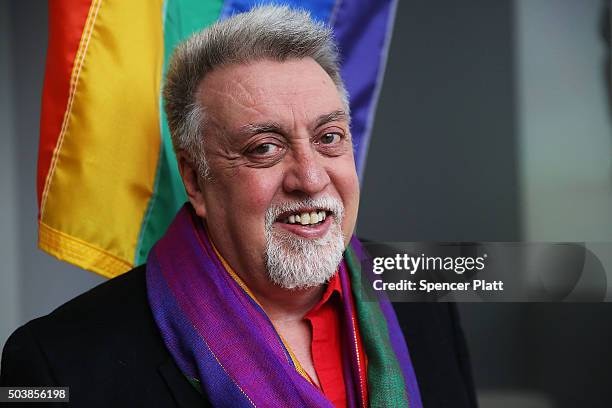
Gilbert Baker
 United States
LGBTQ rights activist•designer•artist
Birthday
June 2, 1951
Birth Sign
Gemini
Birthplace
Chanute, Kansas, USA
Age
Died at 65
Height
5 ft 10 in (178 cm)
About
Gilbert Baker was an American artist, designer, and activist who created the rainbow flag, the most enduring symbol of LGBTQ pride worldwide. Born in 1951 in Chanute, Kansas, Baker moved to San Francisco in the early 1970s, where he taught himself to sew and began making banners for gay rights protests. In 1978, he hand-dyed and stitched the first rainbow flag, which debuted at the San Francisco Gay Freedom Day Parade. The flag quickly spread across the globe, becoming synonymous with the LGBTQ rights movement. Baker continued designing flags and public artworks for decades, including a mile-long flag for the 25th anniversary of the Stonewall riots. His work is held in the permanent collections of the Museum of Modern Art and the Smithsonian Institution. Baker died in 2017 at age 65, but his legacy lives on through the Gilbert Baker Foundation and the countless pride celebrations that fly his flag every year.
Early Life & Background
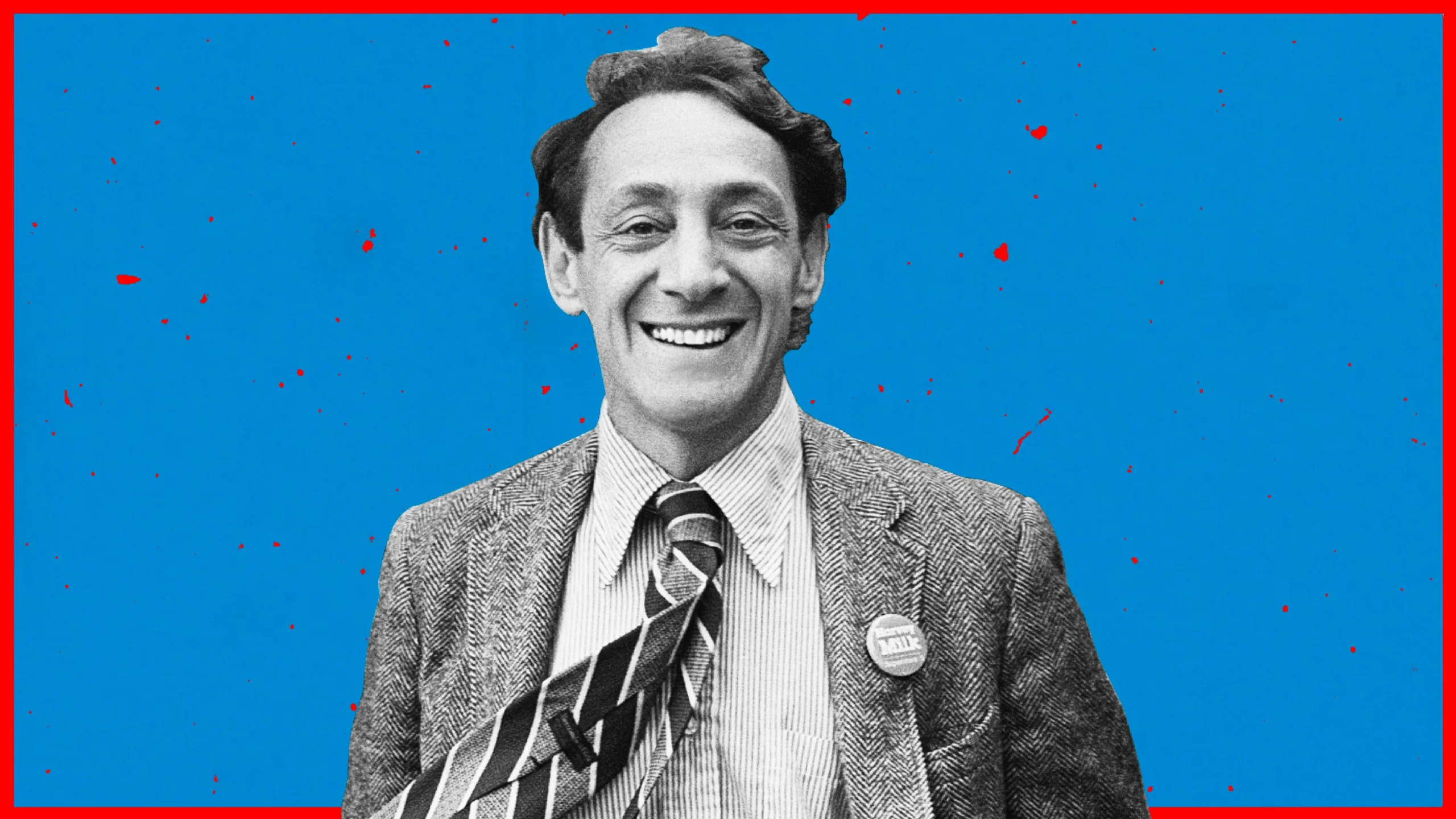
Gilbert Baker grew up in Chanute, a small conservative town in southeastern Kansas, where his parents ran a clothing store. His father was a teacher and his mother worked in retail. As a gay youth in the 1950s and 1960s, Baker felt the pressures of small-town life. After graduating from high school in Parsons, Kansas, he briefly attended college before enlisting in the U.S. Army in 1970. He served as a medic and was stationed in San Francisco, a posting that changed his life. Discharged in 1972, he chose to stay in the city, which was then becoming the epicenter of the gay liberation movement. Baker taught himself to sew using a thrift-store sewing machine, initially making banners and flags for protests and demonstrations. He became friends with Harvey Milk, the first openly gay elected official in California, who encouraged Baker's flag-making. In 1978, Milk asked Baker to create a symbol of pride for the gay community, leading to the birth of the rainbow flag.
Career Growth
In 1978, Baker hand-dyed and hand-stitched the first rainbow flag in his San Francisco apartment, using trash cans as dye vats. The eight-color flag debuted at the San Francisco Gay Freedom Day Parade on June 25, 1978. Each color had a symbolic meaning: hot pink for sexuality, red for life, orange for healing, yellow for sunlight, green for nature, turquoise for magic/art, indigo for serenity, and violet for spirit. After Harvey Milk's assassination in November 1978, demand for the flag surged. The Paramount Flag Company began mass-producing it, dropping hot pink and turquoise for practical reasons, resulting in the six-color version now recognized worldwide. In 1994, for the 25th anniversary of the Stonewall riots, Baker created a mile-long rainbow flag for New York City's Stonewall 25 celebration, carried by thousands of volunteers. In 2003, he made a 1.25-mile-long flag for Key West Pride, the longest flag ever made at the time. In 2014, the Museum of Modern Art acquired the rainbow flag for its permanent design collection. In 2015, the Smithsonian's National Museum of American History added Baker's original flag to its collection. Baker continued creating flags and public artworks until his death in 2017.
Career Timeline
Public Image & Style
Baker is remembered as a humble, community-focused artist who prioritized the movement over personal profit. His personal aesthetic was colorful and expressive, often incorporating rainbow motifs. Media portrayals consistently cast him as a visionary who created one of the most recognizable symbols in modern history. The LGBTQ+ community broadly claims him as a cultural hero. Annual pride celebrations worldwide feature his flag, and San Francisco celebrates Gilbert Baker Day on June 2. The Gilbert Baker Foundation maintains a respectful, educational tone on social media, focusing on preserving his legacy and promoting LGBTQ+ history.
Fame & Fandom (iFAMOUS Rankings)
Gilbert Baker holds no current placement in the iFANN Global Top 1,000 rankings or any scope-specific top lists as of August 2026. While the iFANN evaluation process has assessed his standing, he does not currently occupy a numbered position on the published charts. This absence of a specific rank reflects the unique nature of his legacy rather than a lack of global recognition; his fame transcends standard celebrity metrics by becoming synonymous with a worldwide movement. His influence is measured not by transient search spikes but by the enduring presence of his creation in public life and institutional archives.
The community that reveres Gilbert Baker is the global LGBTQ+ population and its allies, who collectively honor him as the Father of Pride. There is no exclusive moniker for his fans, such as 'Bakerites'; instead, devotion is expressed through the active participation in Pride events and the stewardship of his symbols. The Gilbert Baker Foundation serves as the central hub for this collective, organizing exhibitions and managing the preservation of his original works. A defining ritual for this fanbase is the annual raising of the rainbow flag during parades, where participants often reference the specific meanings Baker assigned to each color. Fans frequently recount the story of the flag's evolution, explaining how logistical challenges led to the removal of the hot pink and turquoise stripes, leaving the six-stripe version now ubiquitous worldwide. The most sacred object in this cultural mythology is the original 1978 hand-dyed banner, which has become a pilgrimage site for the community. Its rare travels to cities like Cork, Ireland, and Toledo, Ohio, are driven by local organizations and fans lobbying museums to host the artifact. These journeys reinforce the flag's status as a holy icon, transforming it from a piece of cloth into a living symbol of liberation that Baker intended to be seen in the wind rather than kept behind glass.
Interesting Facts and Legends
Baker served as a medic in the U.S. Army during the Vietnam War era without seeing combat deployment. He learned to sew using a machine purchased from a thrift store and created the first rainbow flag in his apartment, utilizing trash cans as dye vats. Intentionally avoiding legal protections, he never trademarked or copyrighted the design, ensuring it belonged entirely to the people. He famously described the flag as a living entity distinct from a painting, noting it was designed to move in the wind. Following his death, his ashes were scattered in the San Francisco Bay.
Legends surrounding Baker often center on the birth of modern Pride. The creation and debut of the rainbow flag in 1978 stand as a fully documented historical cornerstone. Conceived after the assassinations of Harvey Milk and Mayor George Moscone, the flag debuted at the San Francisco Gay Freedom Day Parade on June 25, 1978. Baker and volunteers hand-dyed and stitched the banners in his studio, transforming a fragmented community into a unified visual force. Another enduring story involves the evolution of the flag's design, where the removal of the hot pink and turquoise stripes due to fabric availability became a staple of fan folklore. Posthumously, the community rallied to treat the original 1978 flag as a sacred relic, leading to its preservation by the GLBT Historical Society and subsequent rare appearances as a pilgrimage object in major cities.
Notable Quotes
“The rainbow flag is a symbol of hope. It's a symbol of diversity. It's a symbol of inclusion. It's a symbol of love.”
“A flag is different than a painting. It's not a painting. It's a piece of cloth that moves in the wind. It's alive.”
“We needed something to express our joy, our beauty, our power. And the rainbow does that.”
“I never thought of it as a business. I thought of it as a gift.”
“When I think about the rainbow flag, I think about all the people who have carried it, who have marched under it, who have died for it. It's not my flag anymore, it belongs to everyone.”
Family & Personal Life
Baker was born to parents who ran a clothing store in Chanute, Kansas. His father worked as a teacher and his mother in retail. He had no known siblings. Baker never married and had no children. He lived in San Francisco for most of his adult life before moving to New York City in the 1990s. At the time of his death, he was reportedly in a relationship, but details remain private. His estate is managed by the Gilbert Baker Foundation, which preserves his legacy and promotes LGBTQ+ art and activism.
Notable Connections
Harvey Milk, a close friend and the first openly gay elected official in California, encouraged Baker to create the flag. Cleve Jones, LGBTQ activist and founder of the NAMES Project AIDS Memorial Quilt, was a contemporary and collaborator. Lynn Segerblom assisted Baker in dyeing the original rainbow flag. Baker's work is preserved by the Gilbert Baker Foundation.
Relationships & Dating History
Gilbert Baker kept his romantic relationships largely private. No public records detail specific partners or timelines. He was known to have been in a long-term relationship at the time of his death, but the partner's identity was not widely reported in credible sources. Baker never married and had no children.
- DatedBaker's romantic relationships were private; no confirmed partners in public records.
Death & Aftermath
Died
March 31, 2017 (aged 65)
Death Place
San Francisco, California, USA
Cause of Death
Natural causes
Gilbert Baker died in his sleep on March 31, 2017, at his home in San Francisco, California. Family statements and hospital records confirmed the passing occurred peacefully due to natural causes. Tributes arrived immediately from global institutions, including a statement from the White House and recognition from the United Nations for his contributions to human rights. The GLBT Historical Society and the National Park Service issued communique honoring his role as a vexillographer, while social media campaigns using the hashtag #ThankYouGilbertBaker flooded platforms with rainbow imagery. A private funeral service was held shortly after his death, though specific details regarding attendees and location remained undisclosed by the family.
Posthumous efforts to preserve his legacy began almost instantly, with Kansas Governor Laura Kelly signing proclamations designating June 2 as Gilbert Baker Day starting in 2017. The Gilbert Baker Foundation assumed management of his estate to handle licensing and educational outreach, ensuring the history of the flag continued to be shared. The foundation facilitated loans of his original 1978 eight-stripe flag to international venues like Cork, Ireland, for historic exhibitions. Documentary work also expanded, with the release of More Than Just a Flag serving as a biographical account of his life.
Net Worth (Estate Value)
$600 Thousand
iFANN Editorial Team estimate
iFANN currently estimates the estate of Gilbert Baker at $600 Thousand as of 2026. Baker lived modestly throughout his life and did not accumulate significant wealth from the rainbow flag, a decision rooted in his choice to leave the design uncopyrighted so it could belong to everyone. During his lifetime, he generated income through commissions for flag-making, public art projects, speaking engagements, and the sale of his artwork. After his passing, the Gilbert Baker Foundation assumed management of his estate. Revenue streams for the foundation include licensing of original artwork, sales of authorized prints, and royalties from books and documentaries. Additionally, the foundation receives donations dedicated to supporting LGBTQ+ art and activism.
Awards Won (2)
Baker received the Key to the City of San Francisco in 2015 for creating the rainbow flag. In 2016, he earned a Lifetime Achievement Award from the GLBT Historical Society. In 2017, the San Francisco Board of Supervisors posthumously designated the rainbow flag an official city symbol.
2015 · Civic Honor
Rainbow Flag
2016 · Lifetime Achievement
LGBTQ Activism and Art
Known For
Rainbow Flag
1978 · Creator
Keywords
Quick Facts
- Profession
- LGBTQ rights activist, designer, artist
- Born
- +1951-06-02
- Birthplace
- Chanute
- Died
- +2017-03-31
- Death Place
- New York City
- Gender
- Male
- Birth Sign
- Gemini
Personal Details
- Full Name
- Gilbert Baker
- Height
- 5 ft 10 in (178 cm)
Frequently Asked Questions
How old was Gilbert Baker when he died?
Did Gilbert Baker have children?
Why did Gilbert Baker choose the rainbow for the flag?
How much is Gilbert Baker's net worth in 2026?
Did Gilbert Baker serve in the military?
Similar People
Join the community
fans discussing