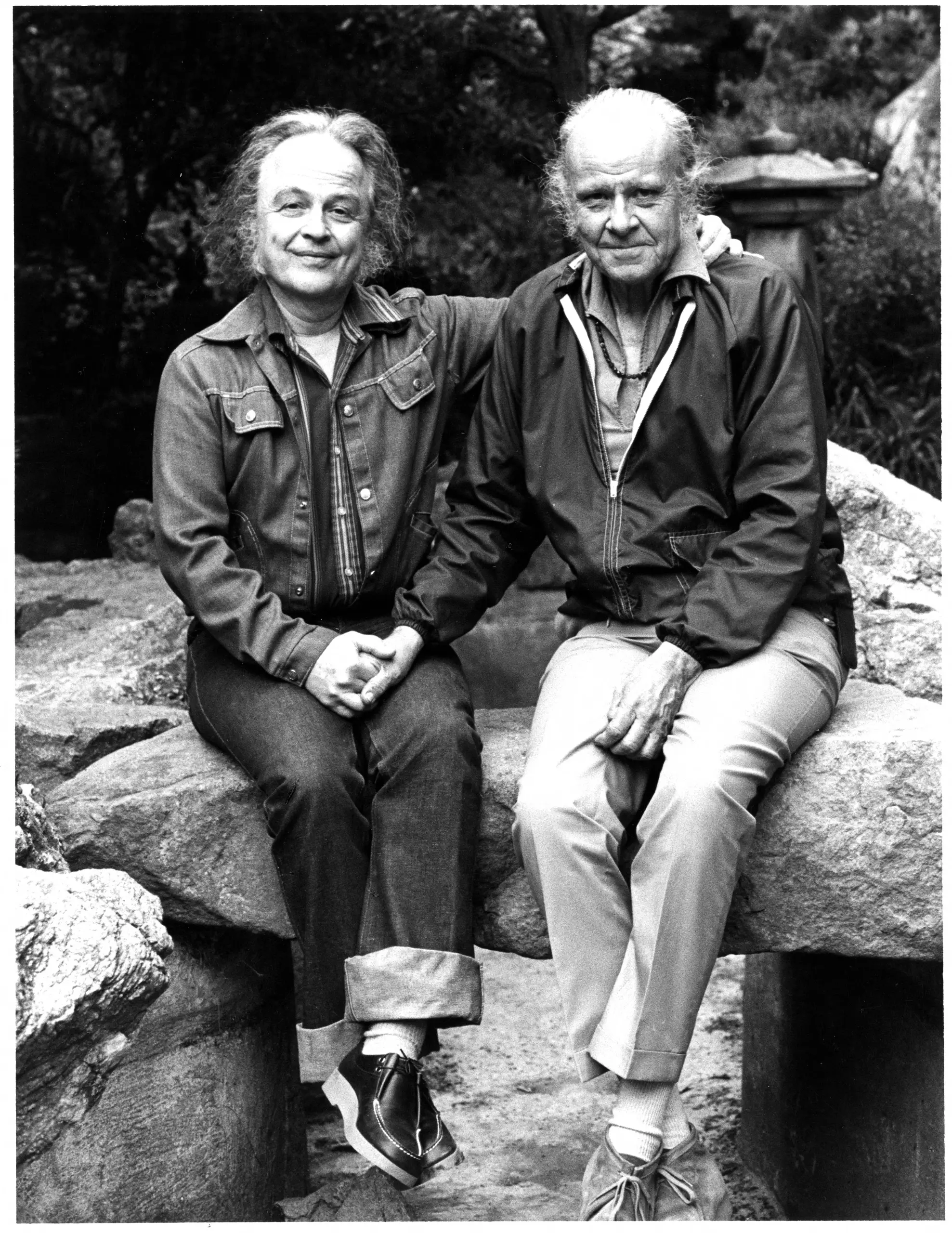
Harry Hay
 United Kingdom
Gay rights activist•labor organizer•actor
Also known as: Henry Hay Jr., Father of Gay Liberation
Birthday
April 7, 1912
Birth Sign
Aries
Birthplace
Worthing, England
Age
Died at 90
Height
5 ft 8 in (173 cm)
About
Harry Hay was an American gay rights activist, labor organizer, and former Communist Party member who co-founded the Mattachine Society in 1950, widely considered the first sustained gay rights organization in the United States, and later co-founded the Radical Faeries in 1979. He is frequently described as the founder of the modern gay movement and the father of gay liberation.
Hay's influence came from organizing rather than from celebrity. He built a secretive, cell-structured organization modeled on Communist Party practice and used it to advance the then-radical idea that homosexuals were an oppressed minority entitled to equal rights, not sinners or criminals. In later decades he became an elder statesman of the movement, a bearded spiritual figure associated with the Radical Faeries and with a body of writing on gay identity and culture.
His legacy is contested as well as celebrated. Hay was an active supporter of the North American Man/Boy Love Association in the 1980s and 1990s, and he protested the group's expulsion from Pride events, including by boycotting the 1994 New York Pride March. He died on October 24, 2002, in San Francisco at age 90.
Early Life & Background
Born Henry Hay Jr. in Worthing, England, on April 7, 1912, Hay came from a well-to-do family that moved to Los Angeles in 1919 when he was seven. He grew up in California and recognized both his same-sex attraction and an interest in Marxism from an early age, a combination that would define his life.
He attended Stanford University but left before graduating, and he also spent time at Los Angeles City College. In the 1930s and 1940s he worked as a professional actor in Los Angeles, taking small roles in films and stage productions. Acting was never the center of his ambition, though it gave him a public-facing skill set and a circle of friends in the entertainment world, including the actor Will Geer, a fellow Communist and sometime lover.
His political consciousness took shape through the Communist Party USA, which he joined in the 1930s. He became a committed labor activist and a political theorist, and the Party's organizing methods, its discipline, its cell structure, and its language of minority oppression, gave him the toolkit he would later adapt for gay organizing. In 1938 he married fellow Party activist Anita Platky, and they had two daughters. The marriage ended after Hay acknowledged that he remained homosexual, a reckoning that pushed him toward the work that would define him.
By the late 1940s Hay was living in Los Angeles and moving in radical political circles. The moment just before the breakthrough came in the summer of 1950, when he was living what looked like conventional domestic life with Anita and their daughters. That domestic picture was about to give way to a secret meeting that would change American history.
Career Growth
On November 11, 1950, Hay and a small circle of friends founded the Mattachine Society at a meeting in Los Angeles. Named after a medieval French masque society, it was a secretive, cell-structured organization built on Communist Party organizing models, and it championed the then-radical idea that homosexuals were an oppressed minority entitled to equal rights. This was the breakthrough: the first sustained gay rights organization in the United States.
As the movement grew, Hay increasingly broke with the assimilationist strategies and infiltration-conscious tactics that most campaigners favored. By 1953 he had been pushed out of Mattachine leadership amid anti-Communist purges within the organization. He did not stop organizing. In 1969 he co-founded the Los Angeles chapter of the Gay Liberation Front, aligning himself with the more radical wing of the movement that emerged after Stonewall.
In 1970 he moved to New Mexico with his longtime partner John Burnside. Native American religions influenced the couple, and in 1979 they co-founded the Radical Faeries with Don Kilhefner and Mitchell L. Walker. The Faeries were a loosely organized spiritual movement for gay men, emphasizing nature, ritual, and a rejection of assimilation, and they became one of Hay's most durable legacies.
Hay returned to Los Angeles and remained an activist elder statesman for the rest of his life. His later years were controversial: he was an active supporter of the North American Man/Boy Love Association, spoke on panels and at several of the group's annual meetings, and protested NAMBLA's expulsion from Pride parades, including by boycotting the 1994 New York Pride March. His filmography was modest, a handful of acting credits in the 1940s and later documentary appearances, but his influence came from organizing, not from the screen.
Career Timeline
Public Image & Style
Hay's public image moved through distinct phases. In the 1930s and 1940s he was a clean-cut working actor in Los Angeles, unremarkable in appearance and manner. By the 1950s he had become a radical theorist, a secretive organizer whose public face was careful and controlled, shaped by the need to avoid infiltration. In later life he transformed again, into a bearded spiritual elder with long white hair, a figure associated with the Radical Faeries and with a kind of gay countercultural spirituality that rejected assimilation. That final image, part prophet and part provocateur, is the one most people picture today, and it captures the range of a man who never settled into a single role.
Fame & Fandom (iFAMOUS Rankings)
iFANN has not yet collected fame data for Harry Hay, so no ranking is available. He is not on the September 2026 iFAMOUS Rankings flagship list. His fame operates in a different register from celebrity: he is a historical figure whose name circulates among activists, historians, and the LGBTQ+ community rather than a mass-audience star.
Hay has no conventional celebrity fandom with a fan name, and the fanbase has no formal name. His "fandom" is the LGBTQ+ historical and activist community, which celebrates him through Pride history projects, the Radical Faeries' gatherings, documentary screenings of Hope Along the Wind, and podcast episodes such as Making Gay History's Season 4, Episode 3. The annual commemorations of Mattachine's founding each November 11 function as a kind of ritual for that community. The Radical Faeries themselves, with their gatherings and their emphasis on ritual and community, are in a sense his living fanbase, carrying forward the ideas he and John Burnside set in motion in 1979.
Interesting Facts and Legends
Hay was a trained musicologist who studied folk music and wrote on the subject, a side of him that rarely makes the history books. He was also a Marxist theorist whose 1950s writings framed homosexuals as a cultural minority, a framing that was radical for its time. He was one of the few open gay men to have been a Communist Party member during the McCarthy era, and that experience shaped Mattachine's secretive structure.
A story fans of gay history still retell: Hay and his friend Will Geer, later famous as Grandpa Walton, were both Communists and sometime lovers, and the connection surfaces repeatedly in searches about both men. Hay's public image evolved from clean-cut 1940s actor to radical theorist to bearded spiritual elder, and in later life he cut a distinctive figure with a white beard and long hair emblematic of the Radical Faerie elder.
The Hollywood Hills house he shared with Margaret, the Margaret and Harry Hay House designed by Gregory Ain, was listed for $1.25 million in 2019, a measure of his architectural footprint.
Notable Quotes
“We were the first to say we were a minority, that was the revolution.”
“Homosexuals are a minority, not a sickness.”
“We were the first to say we were an oppressed cultural minority.”
Family & Personal Life
Hay was born to a well-to-do family in Worthing, England, and moved with them to Los Angeles in 1919. In 1938 he married Anita Platky, a fellow Communist Party activist, and they had two daughters. The marriage ended after Hay acknowledged that he remained homosexual, and Anita later remarried. His defining partnership was with John Burnside, whom he met in the 1960s and with whom he lived from 1970 in New Mexico; Burnside was his partner for roughly three decades until Hay's death in 2002. The couple had no children together, but they built a household shaped by Native American religious influences and by the Radical Faeries community they co-founded in 1979.
Notable Connections
John Burnside, his partner and Radical Faeries co-founder; Don Kilhefner and Mitchell L. Walker, co-founders of the Radical Faeries; Anita Platky, his first wife; Will Geer, actor and sometime lover; Barbara Gittings, fellow early activist; and Vito Russo, who interviewed him.
Relationships & Dating History
Hay's first significant relationship was his 1938 marriage to Anita Platky, a fellow Communist Party activist. The couple had two daughters before the marriage ended after Hay acknowledged his homosexuality. Earlier, Hay had a documented relationship with actor Will Geer, later famous as Grandpa Walton, a fellow Communist and lifelong friend and sometime lover. His defining long-term partnership was with John Burnside, whom he met in the 1960s and with whom he lived from 1970 in New Mexico. Burnside was his partner for roughly three decades until Hay's death in 2002, and the two co-founded the Radical Faeries together in 1979. As of 2026, Hay is deceased; Burnside died in 2008, and the couple's legacy is carried by the Radical Faeries and by commemorative events.
- MarriedAnita Platky1938 - presentFellow Communist Party activist; they had two daughters and divorced after Hay acknowledged his homosexuality.
- DatedWill GeerActor and fellow Communist; a lifelong friend and sometime lover.
- DatedJohn Burnside1960 - 2002Partner for roughly three decades until Hay's death; co-founded the Radical Faeries together in 1979.
Death & Aftermath
Died
October 24, 2002 (aged 90)
Death Place
San Francisco, California, United States
Cause of Death
Lung cancer
Harry Hay died on October 24, 2002, in San Francisco at the age of 90. He had been living with lung cancer in his final years, and the end came quietly in the city he had helped transform into a center of gay political life. His death was reported widely across the gay press, and tributes arrived from organizations and historians who credited him with launching the modern movement. Movement veterans attended his funeral and memorial, and the Radical Faeries network, which he had co-founded in 1979, carried his memory forward through gatherings and archival work.
A documentary about his life, Hope Along the Wind: The Life of Harry Hay, had been completed shortly before his death and became one of the key records of his organizing career and his later years as an elder. His papers and personal archives were preserved through archival collections and the Faeries network rather than through a large financial estate; he was never a wealthy man, and his lasting assets were organizational and intellectual.
In the years since, his legacy has been revisited with increasing frequency. A 2026 LGBTQ Nation feature reassessed his complicated record, weighing his foundational role in the movement against his later advocacy for the North American Man/Boy Love Association, and argued that the movement still cannot do without his example. A March 2026 Bay Area Reporter brief announced events celebrating Hay and his partner John Burnside, who died in 2008. Commemorations of the Mattachine Society's founding each November 11 keep his name in circulation among activists and historians.
Net Worth (Estate Value)
$100 Thousand
iFANN Editorial Team estimate
Harry Hay was an activist, not a commercial celebrity, and no credible celebrity-net-worth source publishes a figure for him. The iFANN Editorial Team's analysis of his earnings, modest acting income, and personal property points to roughly $100 thousand at the time of his death, a figure that reflects a life lived for organizing rather than for profit. His estate consisted primarily of papers, royalties from documentary appearances, and modest personal property rather than a large fortune.
His income over the decades came from a patchwork of sources: small acting roles in the 1930s and 1940s, labor organizing work, writing and lecturing, and later documentary appearances. He was never wealthy, and the Radical Faeries and Mattachine Society were volunteer-driven organizations, not revenue-generating enterprises. The 2019 listing of the Margaret and Harry Hay House in the Hollywood Hills at $1.25 million reflects the value of the architectural property, not Hay's personal wealth.
As of 2026, his legacy has financial dimensions only through archival and documentary projects. Hope Along the Wind: The Life of Harry Hay (2002) remains in circulation, and his papers are held in archival collections. There is no estate generating significant ongoing revenue, and no major posthumous licensing or merchandising operation. The value of his legacy is cultural and historical, not financial.
Awards Won (1)
Hay received the first-ever "Founder of the Movement" honor from the gay community. His recognition came from movement and historical societies rather than from entertainment awards, and he is honored in the Legacy Walk and the National LGBTQ Wall of Honor.
Community Honor
Lifetime achievement
Known For
Mattachine Society
1950 · Co-founder
Radical Faeries
1979 · Co-founder
Gay Liberation Front, Los Angeles chapter
1969 · Co-founder
Keywords
Sources
Quick Facts
- Profession
- Gay rights activist, labor organizer, actor
- Born
- April 7, 1912
- Birthplace
- Worthing, England
- Died
- October 24, 2002
- Death Place
- San Francisco, California, United States
- Cause of Death
- Lung cancer
- Gender
- Male
- Birth Sign
- Aries
- Height
- 5 ft 8 in (173 cm)
Personal Details
- Full Name
- Henry Hay Jr.
- Height
- 5 ft 8 in (173 cm)
- Spouse
- Anita Platky (m. 1938; divorced)
- Children
- Two daughters
- Education
- Stanford University (left before graduating); Los Angeles City College
Filmography
5
Total
3
Film
2
TV
Frequently Asked Questions
What is Harry Hay known for?
Who was Harry Hay's partner?
Was Harry Hay married?
Was Harry Hay a Communist?
How did Harry Hay die?
Similar People

Join the community
fans discussing