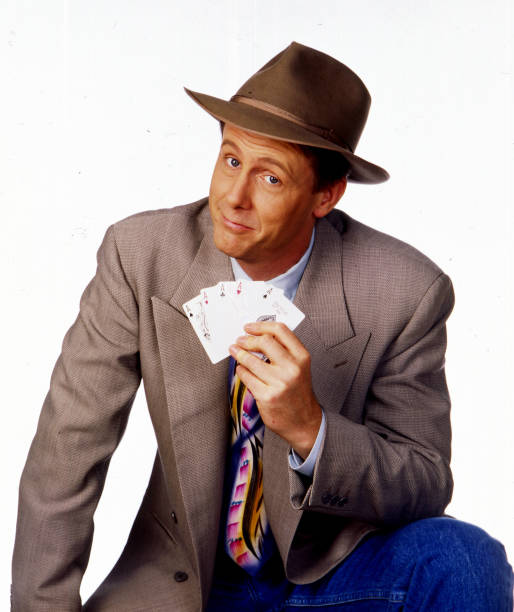
Harriet Andersson
 Sweden
Birthday
February 14, 1932
Birth Sign
Aquarius
Birthplace
Stockholm, Sweden
Age
94 years old
About
Harriet Andersson is a Swedish actress who has captivated audiences for decades with her raw and authentic portrayals. She rose to international notice for her significant collaborations with the esteemed director Ingmar Bergman, becoming one of the most versatile performers in his regular ensemble. Known for embodying impulsive, often working-class characters, Andersson brings a distinctive blend of vulnerability and strength to her roles. Her ability to convey deep emotional states, even with minimal dialogue, makes her performances particularly resonant, and she is recognized for depicting independent women with a compelling screen presence. She remains a respected figure in European cinema.
Early Life & Background
Harriet Andersson entered the world on February 14, 1932, in Stockholm, Sweden, beginning a journey that would lead her to become a celebrated actress. Growing up in the bustling Swedish capital, she developed an early interest in performance. At just 15 years old, she pursued her passion by enrolling as a student at the Calle Flygare stage school, a notable institution for aspiring actors in Sweden. This early training provided her with foundational skills and exposed her to the rigorous demands of the acting profession. She honed her craft in various small stage productions and early film appearances, steadily building experience. It was during these formative years that her talent began to catch the eye of industry figures, setting the stage for a pivotal encounter that would soon change the course of her career.
Before her major breakthrough, Andersson worked diligently in the Swedish theater scene, taking on roles that allowed her to explore different facets of human emotion. She understood the intricacies of portraying ordinary people, a quality that would later become a hallmark of her performances. Her dedication to her craft and her innate ability to connect with characters on a profound level made her a distinctive presence, even in minor parts. These early experiences were essential in shaping the expressive and naturalistic acting style that would define her work and eventually draw the attention of one of cinema's most influential directors.
Career Growth
A defining moment for Harriet Andersson arrived when Ingmar Bergman, recognizing her unique talent, wrote the 1953 film Summer with Monika specifically for her. This role served as her international breakthrough, showcasing her ability to portray complex, free-spirited characters with striking realism. Following this success, Andersson became a vital part of Bergman’s creative circle, appearing in several of his early and most celebrated works. Her performances in films like Smiles of a Summer Night in 1955 and Through a Glass Darkly from 1961 solidified her reputation as a formidable talent capable of profound emotional depth.
Andersson continued to collaborate with Bergman, delivering memorable performances in films such as Winter Light (1963) and Cries and Whispers (1972), where she played Karin, a role that earned her widespread praise. Beyond her work with Bergman, she expanded her filmography significantly, appearing in over 50 films across various genres. Her versatility also extended to television, including roles in Swedish TV movies like I HHHavsbandet in 1971. Andersson also maintained a connection to the stage, taking on occasional theatrical roles, notably playing Anne Frank in The Diary of Anne Frank in 1953 and Ophelia in Hamlet, demonstrating her enduring commitment to live performance.
Career Timeline
Public Image & Style
Harriet Andersson cultivates a public image defined by her intense and often earthy screen presence. She is often seen as an embodiment of the independent woman in mid-20th century European cinema, known for her candidness and emotional transparency. Her signature style on screen frequently involved understated fashion, allowing her raw expressions and the depth of her characters to take center stage. Fans and critics alike perceive her as an actress who consistently delivers performances rooted in reality, often portraying women grappling with societal expectations or personal desires. Her collaborations with Ingmar Bergman particularly cemented this image, making her synonymous with a certain kind of existential and often sensual European art-house cinema. She maintains a relatively private off-screen life, letting her extensive body of work speak for itself.
Fame & Fandom (iFAMOUS Rankings)
Harriet Andersson is currently evaluated by iFANN but does not hold a placement in the published Global Top 1,000 rankings or any scope-specific lists. While her name resonates deeply within the corridors of European cinema history, the current data indicates she sits outside the active numerical hierarchy that tracks contemporary global fame metrics. Her audience remains a dedicated collective of cinephiles and film historians rather than a mass-market phenomenon with a formalized identity. There is no documented official fandom name for Harriet Andersson; her supporters are primarily enthusiasts of Swedish cinema and the works of Ingmar Bergman who follow her career trajectory with scholarly reverence. This group lacks the structured rituals, fan-funded projects, or organized campaigns seen in modern pop culture, preferring instead to engage through critical analysis and retrospective appreciation of her filmography. The lore surrounding her is built on artistic legacy rather than tabloid sensationalism. Fans often recount the story of her pivotal role as Monika in *Summer with Monika*, a performance that established her international reputation as a sensual and stunningly beautiful actress while defining her image as an independent woman navigating working-class life. This narrative, frequently cited in retrospectives from 2025 and 2026, cements her status as a cinematographic genius who explored themes of sexuality and freedom long before they became mainstream topics. Another enduring chapter of her legend involves her long-standing collaboration with Bergman, where she transitioned from playing naive young wives to mad visionaries, eventually accepting an Academy Award on his behalf. These stories highlight her evolution from a pert maid to a versatile actress capable of portraying darkness and grace, creating a mythos rooted in critical acclaim rather than celebrity chaos.
Interesting Facts and Legends
Harriet Andersson took on the challenging role of Anne Frank in a stage production of *The Diary of Anne Frank* in 1953, the same year her breakthrough film with Ingmar Bergman was released. She is sometimes noted for her expressive eyes, which many critics have highlighted as a key tool in conveying her characters' inner turmoil and desires without needing extensive dialogue. Andersson has often been described as having a natural, unstudied acting style, which allowed her to bring a raw, almost documentary-like feel to her performances. Despite her extensive work in film, she maintained a connection to the theater throughout her career, returning to the stage for select roles. A widely retold story among film scholars concerns her casting as the sexually liberated protagonist Monika in *Summer with Monika*. This performance not only established her international reputation but also sparked significant controversy regarding its depiction of female sexuality, cementing her place in cinematic history. Fans still discuss how this role defined her image as an independent woman in mid-20th century Europe. Another legendary aspect of her career is her deep bond with Ingmar Bergman, ranging from her early days as a naive wife in *Sawdust and Tinsel* to her later portrayal of a mad visionary in *Through a Glass Darkly*. Her acceptance of an Academy Award on Bergman's behalf further illustrates the unique professional intimacy they shared, a detail often recounted in biographies of both artists.
Notable Quotes
“I had a very happy childhood. I was a very loved child.”
“I was just myself, and Bergman seemed to like that.”
“Acting is about living, about finding the truth in every moment.”
“Sometimes the simplest gesture can say the most.”
Family & Personal Life
Harriet Andersson was born in Stockholm, Sweden, to parents Josef Andersson and Agda Andersson. She grew up in a working-class household, an experience that observers often suggest informed her ability to portray ordinary people with such authenticity on screen. Details about her immediate family beyond her parents are not widely publicized, reflecting a private approach to her personal life. She has one daughter, Cecilia Donner, born in 1960 from her marriage to director Jörn Donner. Beyond this, information regarding her current household or any specific family anecdotes remains largely private.
Notable Connections
Harriet Andersson is most closely associated with the acclaimed Swedish director Ingmar Bergman, who frequently cast her in his films during the 1950s, 60s, and 70s. She was a key member of his unofficial acting company, appearing alongside other notable Bergman collaborators like Bibi Andersson and Liv Ullmann. Her work with Bergman often saw her paired with actors like Gunnar Björnstrand and Erland Josephson. She also collaborated with her first husband, Finnish director Jörn Donner.
Relationships & Dating History
Harriet Andersson has had several significant relationships throughout her life, many of which were publicly known due to her prominence in film. Her early career saw a notable, though not formally recognized, relationship with director Ingmar Bergman in the early 1950s, a period that greatly influenced her professional trajectory. She later married Finnish director Jörn Donner in 1960. Their union resulted in the birth of their daughter, Cecilia Donner, the same year. However, this marriage was brief, ending in divorce in 1963.
Andersson married for a second time in 1964 to Bertil Wejfeldt, though this relationship also concluded with a divorce in 1966. Her third marriage was to actor Lasse Pöysti, beginning in 1968 and ending in 1971. Following these marriages, she entered into a long-term partnership with Norwegian composer Gunnar Sønstevold. Their relationship continued until Sønstevold's passing in 1999. As of 2026, Harriet Andersson's current relationship status is unknown, as she has maintained a private personal life in recent years.
- RumouredIngmar Bergman1952 - 1955Had a significant professional and personal relationship in the early 1950s.
- MarriedJörn Donner1960 - 1963Finnish director with whom she had a daughter, Cecilia Donner.
- MarriedBertil Wejfeldt1964 - 1966Her second marriage was brief, lasting approximately two years.
- MarriedLasse Pöysti1968 - 1971Finnish actor and director, they were married for three years.
- In a RelationshipGunnar Sønstevold1970 - 1999Long-term partner until his death; a Norwegian composer.
Salary, Net Worth In 2026
$5 Million
iFANN Editorial Team estimate
As of 2026, iFANN currently estimates Harriet Andersson's net worth at $5 Million. This figure reflects a lifetime of dedicated artistic contribution rather than high-profile endorsements or entrepreneurial ventures. Her financial standing primarily stems from a long and distinguished career as an actress, spanning several decades in Swedish and international cinema. A significant portion of her earnings came from her extensive filmography, which includes over 50 films, many of them critically acclaimed and financially successful within the European art house circuit. Her consistent work with prominent directors like Ingmar Bergman ensured steady acting fees and residuals over many years. Beyond her film roles, Andersson also earned income from her appearances in Swedish television productions and her occasional stage work. While specific details of her investments or other business ventures are not publicly available, it is reasonable to assume that like many long-career professionals, she has managed her earnings through traditional investments. The accumulated estate represents the quiet stability of a respected artist whose wealth grew steadily alongside her enduring influence on world cinema.
Awards Won (4)
Harriet Andersson has received significant recognition for her acting talents throughout her career. In 1964, she was honored with the Best Actress award at the Venice Film Festival for her compelling performance in the film To Love. She also secured a Swedish Guldbagge Award for Best Actress in 1967 for her role in The Princess. Her performance in the Danish comedy People Meet and Sweet Music Fills the Heart earned her the Bodil Award for Best Actress in 1968, and in 2009, she received an Honorary Amanda Award from Norway.
2009 · Lifetime Achievement
Career
1968 · Best Actress
People Meet and Sweet Music Fills the Heart
Known For
Summer with Monika
1953 · Monika
Smiles of a Summer Night
1955 · Petra
Through a Glass Darkly
1961 · Karin
Cries and Whispers
1972 · Karin
Keywords
Sources
Quick Facts
- Profession
- actress
- Born
- February 14, 1932
- Birthplace
- Stockholm, Sweden
- Gender
- Female
- Birth Sign
- Aquarius
- Children
- Cecilia Donner
- Education
- Calle Flygare Teaterskola
- Net Worth
- $5 Million
Personal Details
- Full Name
- Harriet Andersson
- Children
- Cecilia Donner
- Education
- Calle Flygare Teaterskola
Filmography
50
Total
50
Film
0
TV
Frequently Asked Questions
How old is Harriet Andersson in 2026?
What is Harriet Andersson best known for?
What is Harriet Andersson's net worth in 2026?
Is Harriet Andersson still acting?
Did Harriet Andersson have a relationship with Ingmar Bergman?
Similar People
Join the community
fans discussing