 Denmark
About
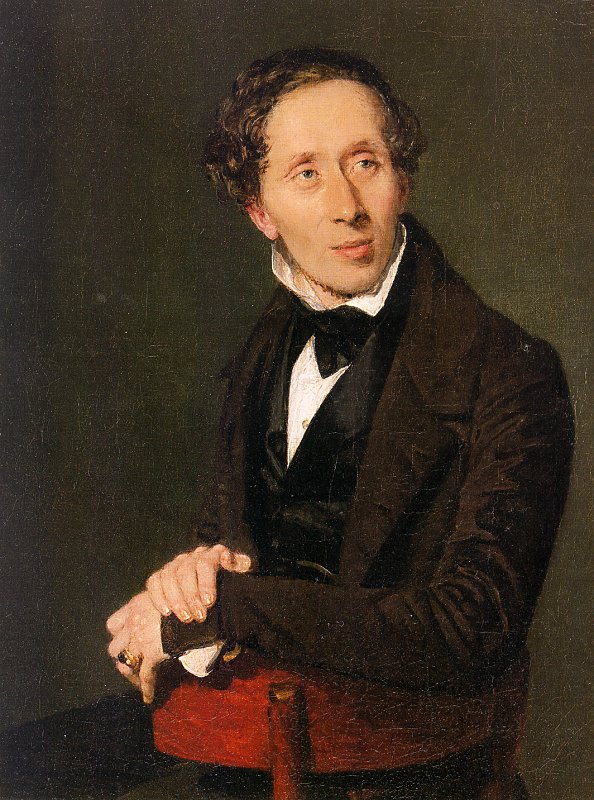
Hans Christian Andersen was a Danish author best known for his literary fairy tales. Over his career, he wrote 156 stories across nine volumes, translated into more than 125 languages. His tales like "The Little Mermaid," "The Ugly Duckling," and "The Snow Queen" have become cultural touchstones, inspiring countless ballets, plays, and films. Andersen's work is marked by a blend of folk simplicity, psychological depth, and moral complexity, often exploring themes of suffering, redemption, and the outsider's journey. Today, his stories remain widely read and adapted, securing his place as one of the most influential figures in children's literature.
Early Life & Background
Andersen grew up in extreme poverty in Odense, the only son of a literate shoemaker and an illiterate washerwoman. He had little formal education, spending his time memorizing stories, singing, and playing with a toy theater built by his father. After his father died in 1816, he was forced into apprenticeships as a weaver and later in a tobacco factory and tailor's shop, all of which he disliked.
At age 14, he convinced his mother to let him pursue a theater career in Copenhagen. He arrived alone in 1819 and sang for a party of wealthy guests, including opera director Giuseppe Siboni, who promised to help his singing voice. But when his voice broke, support ended and his teacher advised him to learn a trade. He struggled for three years at the Royal Theater before being dismissed in 1822 for lack of potential.
Career Growth
In 1822, Andersen published his first book, Youthful Attempts, anonymously. With the support of patron Jonas Collin, he resumed formal education and completed his studies in 1829, dedicating himself to writing. In 1835, he published his first volume of Tales Told for Children, containing "The Princess and the Pea" and "Thumbelina." Over the next 37 years, he wrote 156 fairy tales, including classics like "The Emperor's New Clothes" (1837), "The Little Mermaid" (1837), "The Ugly Duckling" (1843), and "The Snow Queen" (1844).
In 1838, King Frederick VI granted him an annual lifetime stipend. He traveled extensively across Europe, meeting figures like Charles Dickens, and achieved international fame. He published his autobiography, The Fairy Tale of My Life, in 1871.
Career Timeline
Public Image & Style
Andersen's public persona is that of a lonely genius who channeled personal suffering into timeless art. His stories often feature outsiders who suffer deeply but find redemption or tragic ends, reflecting his own life. Media portrayals emphasize his poverty-stricken childhood, unrequited loves, and ultimate triumph. Fans celebrate his birthday on April 2 as International Children's Book Day. There is no official fandom name, but enthusiasts are sometimes called Andersenians. Official social media accounts focus on literary heritage and educational content.
Fame & Fandom
Though Hans Christian Andersen has been deceased for over a century and a half, his legacy endures not through a modern fanbase with organized campaigns or digital engagement, but through institutional reverence and the global consumption of his work. There is no formal fandom name, as the concept of active fans interacting with a living subject does not apply to a figure whose primary interactions were public readings and correspondence in the 19th century. Instead, his audience manifests as readers, scholars, and children who engage with his narratives through museums like the Hans Christian Andersen Museum in Odense, educational awards such as the Hans Christian Andersen Award, and ongoing literary adaptations that keep his stories relevant.
Despite the absence of contemporary celebrity culture, his standing remains formidable within historical metrics. According to the iFANN Global Fame Rankings, he is currently the 8th most famous person from Denmark, a position holding steady from the previous cycle. This placement reflects a sustained global attention that tracks media coverage, search activity, and cultural consumption worldwide, confirming his status as a defining figure of Danish heritage. While no active fan rituals exist beyond annual commemorations on April 2nd, the enduring demand for his universe is evident in new projects, including the upcoming horror anthology Adorable Humans and a biopic directed by Nikolaj Arcel.
Interesting Facts and Legends
Andersen was a skilled paper-cutting artist, creating intricate cutouts to accompany his storytelling. He had a fear of being buried alive and kept a note by his bedside reading 'I am not really dead.' He taught himself multiple languages, including German, French, and English, despite limited formal education. His visit to Charles Dickens in 1857 was supposed to last two weeks but stretched to five, straining their friendship. Scholars believe he may have had dyslexia due to lifelong spelling struggles. 'The Ugly Duckling' is widely considered autobiographical.
A central legend surrounding Andersen is the belief that his life story directly mirrors 'The Ugly Duckling,' transforming him into the ultimate rags-to-riches archetype from an impoverished shoemaker's son to an international celebrity. Another persistent tale involves his volatile travels across Europe and America, specifically his five-week stay with Charles Dickens in 1847, which has become a focal point for literary historians. Modern interpretations also highlight a darker side to his original tales, with recent works exploring the psychological complexity and occasional morbidity hidden within his seemingly innocent stories.
Notable Quotes
“Life itself is the most wonderful fairy tale.”
“To travel is to live.”
“Where words fail, music speaks.”
“Just living is not enough. One must have sunshine, freedom, and a little flower.”
“The theater soon became my favorite place.”
Family & Personal Life
Andersen was the only son of Hans Andersen Sr., a literate shoemaker, and Anne Marie Andersdatter, an illiterate washerwoman. His father owned many books and built him a puppet theater. His mother came from poverty and turned to drink in old age. He had a half-sister named Karen. The family lived in a one-bedroom cottage in Odense's poorest quarter. Andersen never married and had no children.
Notable Connections
Andersen was supported by patron Jonas Collin, who funded his education. He had unrequited love for Swedish opera singer Jenny Lind and ballet dancer Harald Scharff. He visited Charles Dickens in England in 1857, but the friendship soured. Rumors persist that he was the illegitimate son of King Christian VIII.
Relationships & Dating History
Andersen never married and had no known children. He fell in love several times, all unrequited. In 1830, he fell for Riborg Voigt, the sister of a school friend, but she was engaged to another man and married in 1831. He carried a letter from her in a pouch around his neck until his death. In the 1830s, he developed feelings for Louise Collin, daughter of his patron, but she did not reciprocate. In 1840, he met Swedish opera singer Jenny Lind and pursued her romantically, but she saw him as a brother and married pianist Otto Goldschmidt in 1852. This unrequited love is believed to have inspired elements of "The Nightingale" and "The Snow Queen." In the 1840s, he also had feelings for Sophie Ørsted, who married another man. In the 1860s, he developed strong feelings for ballet dancer Harald Scharff, but the relationship remained platonic. As of 2026, Andersen is deceased and was single at the time of his death.
- DatedRiborg Voigt1830 - 1831Andersen fell in love with Riborg Voigt, the sister of a school friend, but she was engaged to another man and married in 1831.
- DatedLouise Collin1830 - 1839Andersen developed feelings for Louise Collin, daughter of his patron Jonas Collin, but she did not reciprocate.
- DatedJenny Lind1840 - 1846Andersen fell in love with the Swedish opera singer, but she saw him as a brotherly figure and married Otto Goldschmidt in 1852.
- DatedSophie Ørsted1840 - 1849Andersen had feelings for Sophie Ørsted, daughter of physicist Hans Christian Ørsted, but she married another man.
- DatedHarald Scharff1860 - 1869Andersen developed strong feelings for the Danish ballet dancer, but the relationship remained platonic.
Death & Aftermath
Died
August 4, 1875 (aged 70)
Death Place
Copenhagen, Denmark
Cause of Death
Liver cancer complications
Hans Christian Andersen spent his final months in declining health within his apartment at Amagertorv 13 in Copenhagen, receiving visits from friends and admirers until his condition made leaving the residence impossible. He passed away peacefully in his sleep on August 4, 1875, following a prolonged struggle with liver cancer that had caused severe pain and swelling for several years. Medical observation by attending physicians confirmed the cause of death, dispelling later romanticized narratives suggesting he died alone or neglected. The public reaction was immediate and profound, with newspapers across Denmark and Europe publishing extensive obituaries while vigils were held in Copenhagen to honor the national icon.
A large funeral procession took place three days later on August 7, 1875, at the Church of Our Lady, attended by dignitaries and fellow writers before burial at Assistens Cemetery, where his grave remains a site of pilgrimage. Posthumous recognition has continued to expand through the establishment of the Hans Christian Andersen Award in 1956 and the transformation of his birthplace into a museum, alongside ongoing adaptations including an upcoming biopic scheduled for 2026.
Net Worth (Estate Value)
$8 Million
iFANN Editorial Team estimate
Updated for 2026, the estate of Hans Christian Andersen is valued at approximately $8 million per iFANN's editorial analysis. Andersen died with modest personal wealth, but his literary estate has generated significant posthumous revenue. The Hans Christian Andersen Foundation and the Royal Danish Library manage the estate. Major revenue sources include licensing of characters and stories for merchandise, films, and theme park attractions; royalties from published editions in countries where copyright still applies; and tourism revenue from the Hans Christian Andersen Museum in Odense. The estate's value has grown steadily over the decades, driven by continued adaptations by Disney and other studios.
Awards Won (4)
Andersen received few formal awards in his lifetime. He was made a Knight of the Order of the Dannebrog, Denmark's highest honor, and granted the title of Privy Councillor by King Christian IX. He was also elected to the Royal Danish Academy of Fine Arts in 1846 and named an honorary citizen of Odense in 1847. Posthumously, his works have been recognized through adaptations that won Academy Awards, and the International Board on Books for Young People established the Hans Christian Andersen Award in 1956.
1875 · National Honor
Lifetime achievement
1867 · Title
Lifetime achievement
Known For
The Little Mermaid
1837 · Author
The Ugly Duckling
1843 · Author
The Snow Queen
1844 · Author
The Emperor's New Clothes
1837 · Author
Thumbelina
1835 · Author
Keywords
Sources
Quick Facts
- Profession
- writer, poet, novelist
- Born
- +1805-04-02
- Birthplace
- Odense
- Died
- +1875-08-04
- Death Place
- Copenhagen
- Gender
- Male
- Birth Sign
- Aries
Personal Details
- Full Name
- Hans Christian Andersen
- Height
- 6 ft 0 in (183 cm)
Frequently Asked Questions
Did Hans Christian Andersen ever marry?
How tall was Hans Christian Andersen?
Was Hans Christian Andersen the son of a king?
How many fairy tales did Hans Christian Andersen write?
What is Hans Christian Andersen's most famous story?
Similar People
Join the community
fans discussing