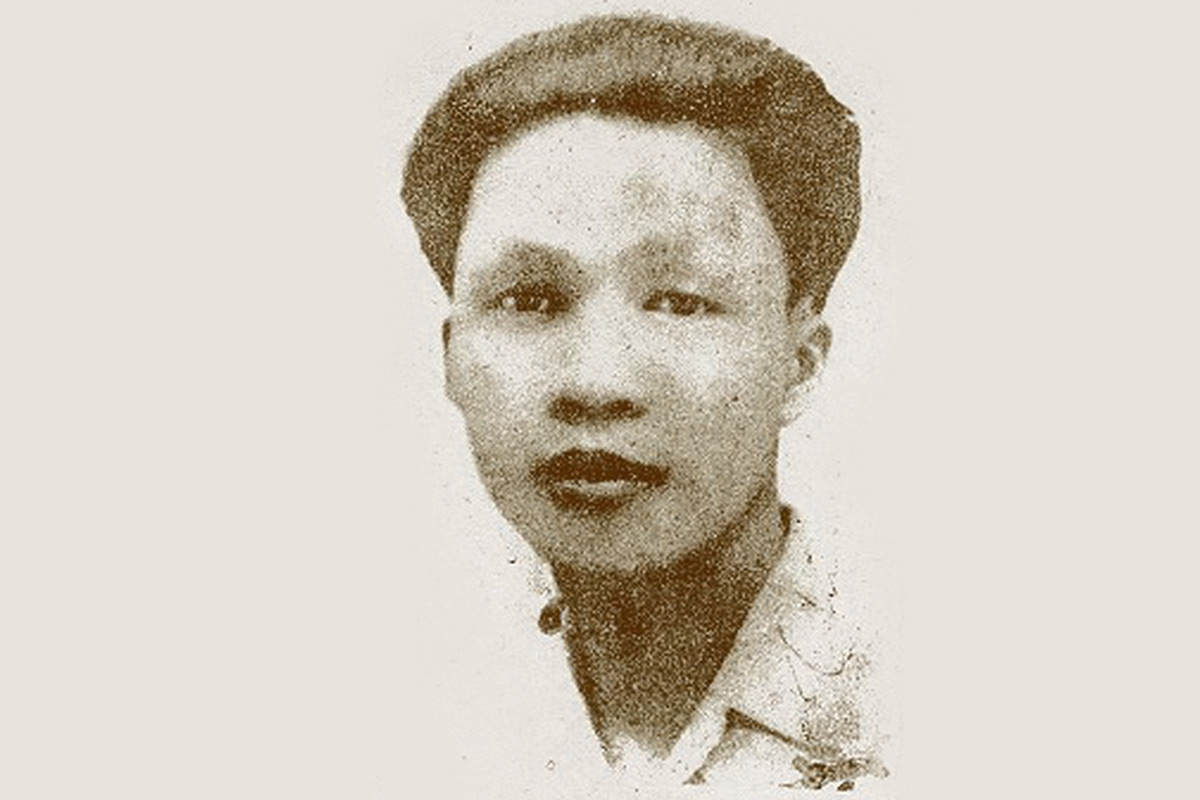
Hàn Mặc Tử
 Vietnam
Also known as: Nguyễn Trọng Trí, Francis Nguyễn Trọng Trí, Minh Duệ, Phong Trần, Lệ Thanh
Birthday
September 22, 1912
Birth Sign
Virgo
Birthplace
Đồng Hới, Quảng Bình Province, Vietnam
Age
Died at 28
Height
1.65 m (5 ft 5 in)
About
Hàn Mặc Tử, born Nguyễn Trọng Trí on September 22, 1912, in Đồng Hới, Quảng Bình Province, Vietnam, was a highly influential Vietnamese poet of the colonial era. He is celebrated for his fusion of romantic longing and spiritual anguish, cementing his status as one of Vietnam's most revered literary figures, particularly within the Vietnamese Catholic literary tradition. Despite his short life, his work has left an indelible mark on Vietnamese literature. His poetry, often addressed to real or imagined women, captured raw emotion and vivid imagery, earning comparisons to Giacomo Leopardi. Works like "Đây thôn Vĩ Dạ" (Here, Vĩ Dạ Village) and "Mùa xuân chín" (Ripe Spring) remain staples of Vietnamese literature, admired for their blend of folk motifs and modernist sensibility. Tragedy struck in 1937 when he contracted leprosy, a disease that slowly ravaged his body. By September 1940, he was hospitalized at Quy Hòa Hospital, where he died on November 11, just 28 years old. Despite his suffering, he continued writing until the end, leaving behind a legacy that transcends his short life. Today, he is revered not only as a love poet but as a voice of profound human fragility, his verses still recited and studied across Vietnam. He was 1.65 meters tall.
Early Life & Background
Born into a Catholic family in the central Vietnamese town of Đồng Hới, Nguyễn Trọng Trí grew up in poverty after his father's early death. His mother, a devout Catholic, raised him and his siblings with limited means, but his literary talent emerged early. By his teenage years, he was already composing verse, and his potential caught the attention of the famed revolutionary Phan Bội Châu, who encouraged him to pursue writing seriously. That mentorship proved pivotal, giving the young poet confidence and a sense of purpose.
In the early 1930s, he moved to Saigon to work as a clerk, but his heart remained in poetry. He adopted the pen name Hàn Mặc Tử, which can be interpreted as "young man with his inkpot and brush," reflecting his dedication to the craft. Before settling on that name, he experimented with others like Minh Duệ, Phong Trần, and Lệ Thanh. His early poems already showed a distinctive voice, blending romantic sentiment with a spiritual intensity that would define his mature work. His breakthrough came when his verse began appearing in literary magazines, establishing him as a rising star in the New Poetry movement.
Career Growth
Hàn Mặc Tử's career took off in the mid-1930s as he became a central figure in the New Poetry movement, which sought to modernize Vietnamese verse. His poems, marked by their emotional intensity and innovative imagery, quickly gained a following. In 1936, he published his first collection, "Gái quê" (Country Girl), which was well received. His most celebrated poems, including "Đây thôn Vĩ Dạ" and "Mùa xuân chín," appeared in the late 1930s and are now considered classics of Vietnamese literature.
His work pioneered the "disorderly" (loạn) and "crazy" (điên) schools of poetry, characterized by raw emotion and surreal imagery. Even after his leprosy diagnosis in 1937, he continued to write prolifically, producing hundreds of poems that explored themes of love, suffering, and faith. His later works, often written from his hospital bed, are considered some of his most powerful. Though he died at 28, his influence on Vietnamese poetry has been profound, inspiring generations of writers and artists. His poems continue to be shared and discussed online, with recent musical adaptations like Lệ Quyên's "Hàn Mặc Tử" in 2023 and "Phương Anh" in 2024.
Career Timeline
Public Image & Style
Hàn Mặc Tử is widely regarded as a tragic romantic poet whose intense verses resonate with readers. His public image is shaped by his life story of artistic brilliance cut short by illness and suffering. He is seen as a figure of profound emotional depth, with his poetry often exploring themes of love, loss, and spiritual longing. His work has a dedicated following among literature enthusiasts and students in Vietnam, and his poems are frequently recited and studied. While there is no official fandom name, his legacy is celebrated in literary circles and cultural events. His image as a tormented artist has made him an enduring icon of Vietnamese literature.
Fame & Fandom (iFAMOUS Rankings)
Vietnamese literature enthusiasts treat the grave of Hàn Mặc Tử as a pilgrimage site, where visitors plant purple Lagerstroemia trees and recite verses in the quiet shadow of the former leprosy hospital. This devotion is not organized into a named collective or driven by digital campaigns; it manifests instead as a deep, intergenerational reverence for a poet whose life ended in 1940. His work remains essential reading in schools, ensuring his voice resonates with students who study his fusion of romantic longing and spiritual anguish. Despite this enduring cultural footprint, iFANN's Global Fame Engine has evaluated Hàn Mặc Tử but determined he does not currently hold a placement in the published rankings, including the Global Top 1,000 or any Top-100 scope list. He exists outside the numerical hierarchy that tracks contemporary celebrities because his fame operates on a historical and literary plane rather than through modern consumption signals. While no specific fanbase name documents his admirers, the sheer volume of academic study and tourism to Quy Nhơn proves his status as a national icon. The absence of a rank reflects the unique nature of his legacy: he is remembered not for trending metrics but for the timeless power of poems like Đây thôn Vĩ Dạ. His influence spans nearly a century without needing a chart position to validate his impact.
Interesting Facts and Legends
Hàn Mặc Tử was a devout Catholic, and his faith often intertwined with his poetry, giving his work a unique spiritual dimension. Born Nguyễn Trọng Trí, he adopted the pen name Hàn Mặc Tử in the 1930s after using several others, including Minh Duệ, Phong Trần, and Lệ Thanh. He is considered one of the most celebrated Vietnamese Catholic literary figures of the colonial era. A widely retold story claims the poet could see ghosts, a belief fueled by the eerie, supernatural imagery in his verses where he seemingly predicted his own demise. Another legend centers on his tragic romance with Hoàng Cúc; he sent her hundreds of letters and poems, only to be left in despair when she never replied, a silence that birthed some of his most iconic work. Folklore also suggests he died just as the sun set, an event now symbolized by the blooming of purple Lagerstroemia flowers near his resting place. These narratives blend verified history with local myth, creating a mythology around his struggle with leprosy and his artistic brilliance.
Family & Personal Life
Hàn Mặc Tử was born into a Catholic family in Đồng Hới, Quảng Bình Province. His father died when he was young, leaving the family in poverty. His mother, whose name is not widely recorded, raised him and his siblings, instilling in him a deep Catholic faith that would later permeate his poetry. His family life was marked by hardship, but his mother's devotion to the church left a lasting impression on his work. His grave, located on a small hill in Ghenh, Quy Nhơn, is a place of pilgrimage for poetry lovers.
Notable Connections
Hàn Mặc Tử was encouraged in his early career by the revolutionary Phan Bội Châu, who recognized his poetic talent. He also had a notable romantic relationship with Mộng Cầm, who inspired some of his love poems. His work has been adapted into music by contemporary artists, including Lệ Quyên, whose 2023 song "Hàn Mặc Tử" pays tribute to his legacy.
Relationships & Dating History
Hàn Mặc Tử's romantic life was brief and marked by tragedy. His most notable relationship was with Mộng Cầm, a woman who inspired several of his love poems. The relationship, which took place in the 1930s, was intense but ultimately did not lead to marriage. After his leprosy diagnosis in 1937, he withdrew from society, and his romantic life effectively ended. He never married and had no known children. At the time of his death in 1940, he was single, having devoted his final years to his poetry and his faith.
Death & Aftermath
Died
November 11, 1940 (aged 28)
Death Place
Đồng Hới, Quảng Bình, Vietnam
Cause of Death
Complications from leprosy
The official announcement confirmed that Nguyễn Trọng Trí, known to the world as Hàn Mặc Tử, had succumbed to his illness on November 11, 1940. Family records and colonial medical reports identified the cause as leprosy, a diagnosis established by French authorities after years of documented treatment for severe skin lesions and nerve damage. He passed away at his family home in Lệ Mỹ village within Đồng Hới, Quảng Bình province, ending a life cut short by the disease he contracted around 1936. His death sent an immediate ripple through Vietnamese literary circles, where he was already revered as a tragic genius whose work defined the Modernist movement. Fellow poets Xuân Diệu and Huy Cận quickly organized tributes and compiled collections of his unfinished manuscripts to preserve his voice., his reputation surged rapidly in the post-war era.
Posthumous anthologies like Thơ điên and Gái quê were published shortly after his funeral, cementing his status as a national icon. Today, his legacy is honored annually through poetry festivals and readings across Vietnam. A large memorial statue and park in Quy Nhơn serve as a pilgrimage site for admirers who gather to celebrate his contributions. His estate, consisting of original manuscripts and correspondence, was managed by his family before being donated to museums and libraries, ensuring his works remain freely accessible to the public. Films such as the 1990 feature Hàn Mặc Tử and various cải lương performances continue to adapt his life story for new generations.
Net Worth (Estate Value)
$1 Million
iFANN Editorial Team estimate
As Hàn Mặc Tử passed away in 1940, his net worth is tied to his literary estate. Research by the iFANN Editorial Team puts the total value at $1 Million. While no specific figures are available for his estate's value, his poems continue to be published and studied, generating royalties for his heirs. His works are widely anthologized in Vietnamese literature textbooks, and his legacy has spawned musical adaptations and cultural tourism at his grave site. The estate's financial value is modest compared to contemporary celebrities, but his cultural worth is immeasurable. His estate continues to benefit from ongoing publication and educational use of his poetry.
Awards & Accolades
View 1 records, honours and achievementsKnown For
Đây thôn Vĩ Dạ
1938 · Poem
Mùa xuân chín
1939 · Poem
Gái quê
1936 · Poetry collection
Keywords
Sources
Quick Facts
- Profession
- poet, writer
- Born
- September 22, 1912
- Birthplace
- Đồng Hới, Quảng Bình Province, Vietnam
- Died
- November 11, 1940
- Death Place
- Quy Nhơn, Vietnam
- Gender
- Male
- Birth Sign
- Virgo
- Height
- 1.65 m
Personal Details
- Full Name
- Nguyễn Trọng Trí
- Height
- 1.65 m (5 ft 5 in)
Frequently Asked Questions
Who was Hàn Mặc Tử?
When and where was Hàn Mặc Tử born?
What was Hàn Mặc Tử famous for?
How did Hàn Mặc Tử die?
What is Hàn Mặc Tử's most famous poem?
Similar People
Join the community
fans discussing