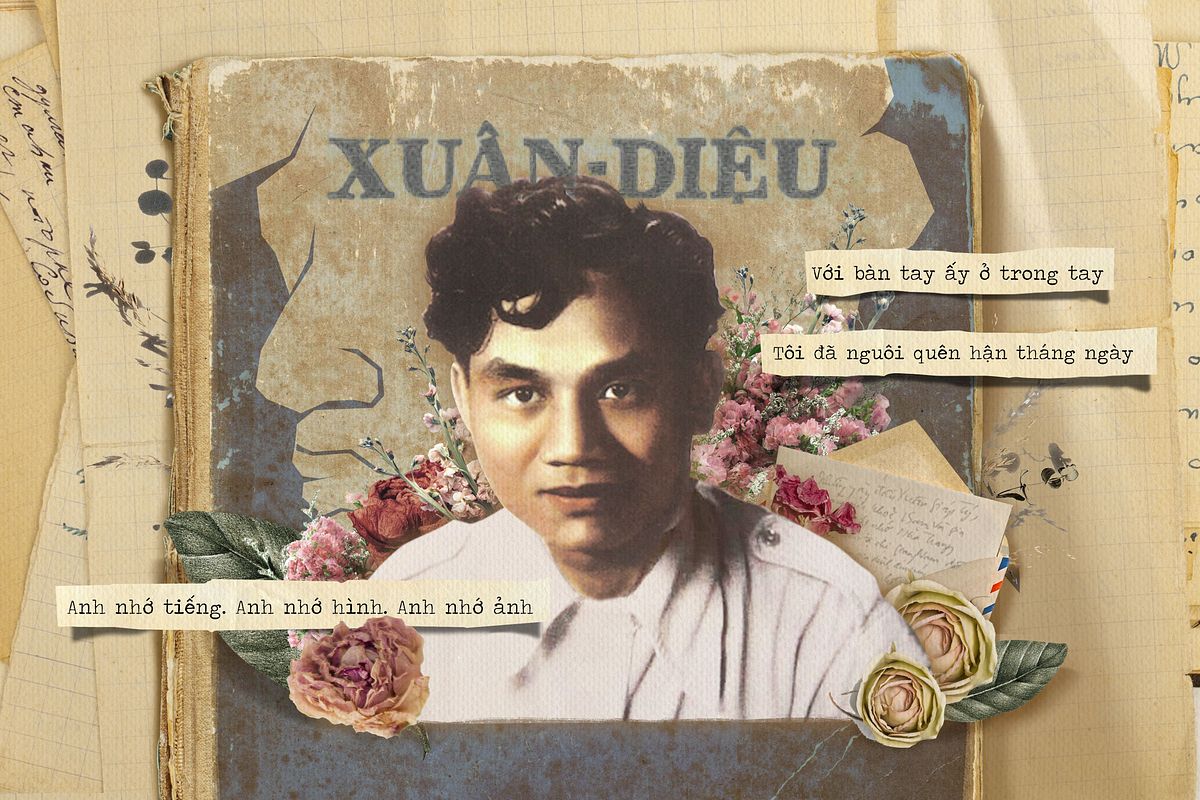
Xuân Diệu
 Vietnam
Also known as: Trảo Nha, Ngô Xuân Diệu, Ông Hoàng Thơ Tình Việt Nam
Birthday
February 2, 1916
Birth Sign
Aquarius
Birthplace
Gò Bồi, Bình Định, Vietnam
Age
Died at 69
About
Ngô Xuân Diệu was a Vietnamese poet, journalist, short-story writer, and literary critic, best known as one of the most prominent figures of the Thơ mới (New Poetry) Movement. Critics dubbed him "the newest of the New Poets" and "the king of love poetry," titles that reflect his passionate and innovative verse. His first collection, Thơ thơ (1938), showcased a voice shaped by French symbolism and Western literary trends, setting him apart from his contemporaries. His poetry is celebrated for its exploration of love, longing, and the beauty of life, and after 1945 it also incorporated revolutionary themes aligned with the Vietnamese Communist Party's resistance efforts. By the time he died on December 18, 1985, he had produced around 450 poems, plus short stories, essays, and literary criticism, leaving an enduring mark on Vietnamese letters.
Xuân Diệu's personal life has been a subject of scholarly discussion. His love poems often use ambiguous pronouns and expressions, leading readers to question the poet's own orientation. Many close friends, including writer Tô Hoài, confirmed that Xuân Diệu was gay. During his time in the revolutionary base, his homosexuality was known among fellow soldiers and at times drew admonishments from military authorities. Today, critics continue to examine how his sexuality influenced his poetry, adding depth to his complex body of work. His ability to channel raw emotion into verse, whether celebrating love or serving revolutionary ideals, keeps his poetry relevant decades after his passing.
Early Life & Background
Xuân Diệu was born on February 2, 1916, in Gò Bồi, a village in Bình Định province, though his ancestral roots lay in Trảo Nha, a village in Hà Tĩnh province. That heritage would later give him a pen name, Trảo Nha. He grew up during Vietnam's colonial era, a time when traditional literary forms were being challenged by new ideas from the West.
He studied at Quốc học Huế, the prestigious National Academy in Huế, where he encountered both classical Vietnamese literature and French symbolist poetry. The school, now known as Trường THPT Chuyên Quốc học Huế, also counts the revolutionary poet Tố Hữu among its alumni. This environment exposed Xuân Diệu to a rich blend of influences that would shape his distinctive poetic voice.
Before his breakthrough, Xuân Diệu developed a deep interest in poetry and literature, influenced by French symbolism and Western literary trends. The period from 1936 to 1944 was particularly formative, as he produced poems that explored a desperate longing for love and a fervent desire to experience life's beauty. These early works, created against the backdrop of colonial Vietnam, set the stage for his emergence as a leading voice of the New Poetry Movement.
Career Growth
Xuân Diệu's breakthrough came in 1938 with the publication of his first poetry collection, Thơ thơ. Critics immediately hailed him as "the newest of the New Poets" and "the king of love poetry," and the collection established him as a distinctive voice in Vietnamese literature. His poetry during the late 1930s and early 1940s, influenced by French symbolism, captured the intense emotions of love and the beauty of life.
In 1945, he joined the Vietnamese Communist Party, a decision that redirected his poetic themes toward the Party's resistance efforts against the French and Americans. The years from 1954 to 1958 were particularly turbulent, following Vietnam's partition. Scholar LN Ân's essay "The Heart and Mind of the Poet Xuân Diệu: 1954-1958" examines how he navigated this period of political upheaval and social transformation. His work during this time balanced revolutionary commitment with his poetic craft.
Over his lifetime, Xuân Diệu produced approximately 450 poems, plus short stories, essays, and literary criticism. His poetry remains widely anthologized and studied, and his influence on Vietnamese literature is immense. He died on December 18, 1985, in Hanoi, but his legacy continues through ongoing scholarship and cultural commemoration.
Career Timeline
Public Image & Style
Xuân Diệu is universally known as "the king of love poetry," a title that reflects his mastery of romantic verse. His signature style combines passionate emotion with innovative poetic techniques influenced by French symbolism. Critics dubbed him "the newest of the New Poets," acknowledging his role as a pioneer of the Thơ mới (New Poetry) Movement.
His poetry is characterized by its exploration of love, longing, and the beauty of life. After 1945, his work also incorporated revolutionary themes aligned with the Vietnamese Communist Party's resistance efforts. His ability to channel raw emotion into verse, whether celebrating love or serving revolutionary ideals, keeps his poetry relevant decades after his passing.
In Vietnamese culture, he is celebrated as "Ông Hoàng Thơ Tình Việt Nam" (The King of Vietnamese Love Poetry). His works are widely anthologized, studied in schools, and remain popular among Vietnamese readers. His poetry is also increasingly recognized internationally, particularly within LGBTQ+ literary circles, where he is celebrated as a gay poet whose ambiguous pronouns in love poetry reflect his own identity.
Fame & Fandom (iFAMOUS Rankings)
Xuân Diệu is currently evaluated by the iFANN Global Fame Engine but holds no placement in the published rankings, including the Global Top 1,000 or any Top-100 scope list. While he does not appear on the current charts of living celebrities, his standing remains absolute within the specific realm of Vietnamese literature. The poet commands a vast, institutionalized audience rather than a modern fanbase with organized clubs or social media campaigns. His readership consists primarily of students, scholars, and general citizens who encounter his work through mandatory school curricula and public monuments. This devotion manifests not in chart-topping streams or viral hashtags, but in the enduring recitation of poems like Vội Vàng and the annual commemoration of his death on December 18. Streets across Vietnam bear his name, serving as permanent tributes to a figure whose cultural footprint transcends the ephemeral nature of contemporary celebrity. There is no documented fandom name associated with Xuân Diệu, reflecting the historical period of his life and the academic nature of his legacy. His influence persists through the literary canon, where millions of Vietnamese generations have memorized verses exploring love, time, and existence. Unlike pop stars whose fame relies on active engagement, Xuân Diệu's reputation is maintained by the static power of his written words and their integration into the national identity.
Interesting Facts and Legends
Xuân Diệu's pen name, Trảo Nha, derives from his ancestral village in Hà Tĩnh province. He studied alongside fellow poet Tố Hữu at Quốc học Huế, establishing a bond between two of Vietnam's most celebrated literary figures. His 1938 collection Thơ thơ stands as his breakthrough work, introducing a voice deeply influenced by French symbolism. Over his lifetime, he authored approximately 450 poems, many utilizing ambiguous pronouns that scholars interpret as reflections of his homosexuality. This aspect of his identity was acknowledged by close friends such as writer Tô Hoài and known among his fellow soldiers during the revolutionary base years. Today, he is recognized as a significant figure in LGBTQ+ history through projects like Making Queer History. A persistent legend surrounding him describes the King of Love Poetry dying alone, a narrative highlighting the contrast between his public adoration and private solitude despite his massive popularity. Another story emphasizes his intense thirst for life, captured in his urgent poetic style which urged contemporaries to seize every moment before youth faded.
Notable Quotes
“Cho hương đừng bay đi (Let the fragrance not fly away).”
Family & Personal Life
Xuân Diệu was born to a family with roots in central Vietnam. His ancestral home was in the village of Trảo Nha, Can Lộc district, Hà Tĩnh province, though he was born in Gò Bồi, Bình Định. Details about his parents and siblings are scarce in the historical record. He was married to Bạch Diệp, though the nature of this relationship is complex given the social constraints of mid-twentieth-century Vietnam and the documented discussions of his sexuality. The couple had no known children. Xuân Diệu lived in Hanoi during his later years, where he died in 1985.
Notable Connections
Xuân Diệu was associated with several notable figures. He was a fellow alumnus of Quốc học Huế with poet Tố Hữu, and both are considered among Vietnam's most celebrated poets. Writer Tô Hoài was a close friend who publicly confirmed Xuân Diệu's homosexuality. His spouse, Bạch Diệp, is listed in biographical records. His work has been studied by scholars such as LN Ân, who examined his poetry from 1954 to 1958.
Relationships & Dating History
Xuân Diệu's personal life has been a subject of scholarly discussion. His love poems frequently use ambiguous pronouns and expressions, leading readers to question the poet's own orientation. Many close friends, including writer Tô Hoài, confirmed that Xuân Diệu was gay. During his time in the revolutionary base, his homosexuality was known among fellow soldiers and at times drew admonishments from military authorities. He was married to Bạch Diệp, though the nature of this relationship is complex and should be understood within the social constraints of mid-twentieth-century Vietnam. The search results do not provide detailed information about specific romantic relationships beyond the scholarly acknowledgment of his homosexuality and the listed spouse. As with many historical figures from this period, comprehensive relationship records are limited by the social taboos of the era and the private nature of his personal life.
- MarriedBạch DiệpListed as spouse in biographical data; details are scarce.
Death & Aftermath
Died
December 18, 1985 (aged 69)
Death Place
Unknown
Cause of Death
Unknown
Ngô Xuân Diệu passed away on December 18, 1985. The official record confirms his death but offers no specific details regarding the medical cause or the circumstances of his final days, leaving the exact nature of his passing to general historical consensus rather than a documented report. As a celebrated national figure and a central voice of the Thơ mới movement, his demise was met with widespread recognition of his contributions to Vietnamese literature, though immediate public tributes or detailed accounts of memorial gatherings were not recorded in available sources.
He remains uniquely honored as the only member of the Tự Lực Văn Đoàn to have streets named after him in Vietnam, a distinction that underscores his enduring cultural status. His legacy continues through extensive scholarship, educational curricula where his works are studied, and the ongoing publication of his approximately 450 poems, short stories, and essays. The management of his literary estate and any family statements following his death remain unrecorded in the public domain, while his posthumous reputation rests firmly on the enduring value of his poetic output.
Net Worth (Estate Value)
$1 Million
iFANN Editorial Team estimate
As Xuân Diệu died in 1985, conventional net worth figures do not apply. Per iFANN's editorial analysis, the estate's value is estimated at $1 Million, reflecting the enduring commercial and cultural worth of his literary output. His literary estate continues to hold financial significance through the ongoing publication and study of his approximately 450 poems, short stories, and essays. His works remain in print and are extensively archived on digital platforms such as thivien.net, which hosts 359 of his poems and 166 translated works. Since his passing, the estate has earned income from book sales, royalties, and licensing of his poetry for educational and commemorative purposes. The estate is managed by his heirs, though specific details are not publicly documented. His enduring cultural significance is also reflected in the naming of a Hanoi street after him and his continued presence in academic scholarship and queer history projects.
Awards & Accolades
View 3 records, honours and achievementsKnown For
Thơ thơ
1938 · Author
Thơ mới (New Poetry) Movement
1930 · Leading figure
Keywords
Sources
Quick Facts
- Profession
- poet, writer, journalist
- Born
- February 2, 1916
- Birthplace
- Gò Bồi, Bình Định, Vietnam
- Died
- December 18, 1985
- Death Place
- Hanoi
- Gender
- Male
- Spouse
- Bạch Diệp
- Birth Sign
- Aquarius
- Education
- Quốc học Huế
Personal Details
- Full Name
- Ngô Xuân Diệu
- Spouse
- Bạch Diệp
- Education
- Quốc học Huế (National Academy of Huế)
Frequently Asked Questions
Was Xuân Diệu gay?
What is Xuân Diệu famous for?
How many poems did Xuân Diệu write?
When did Xuân Diệu die?
Where was Xuân Diệu born?
Similar People
Join the community
fans discussing