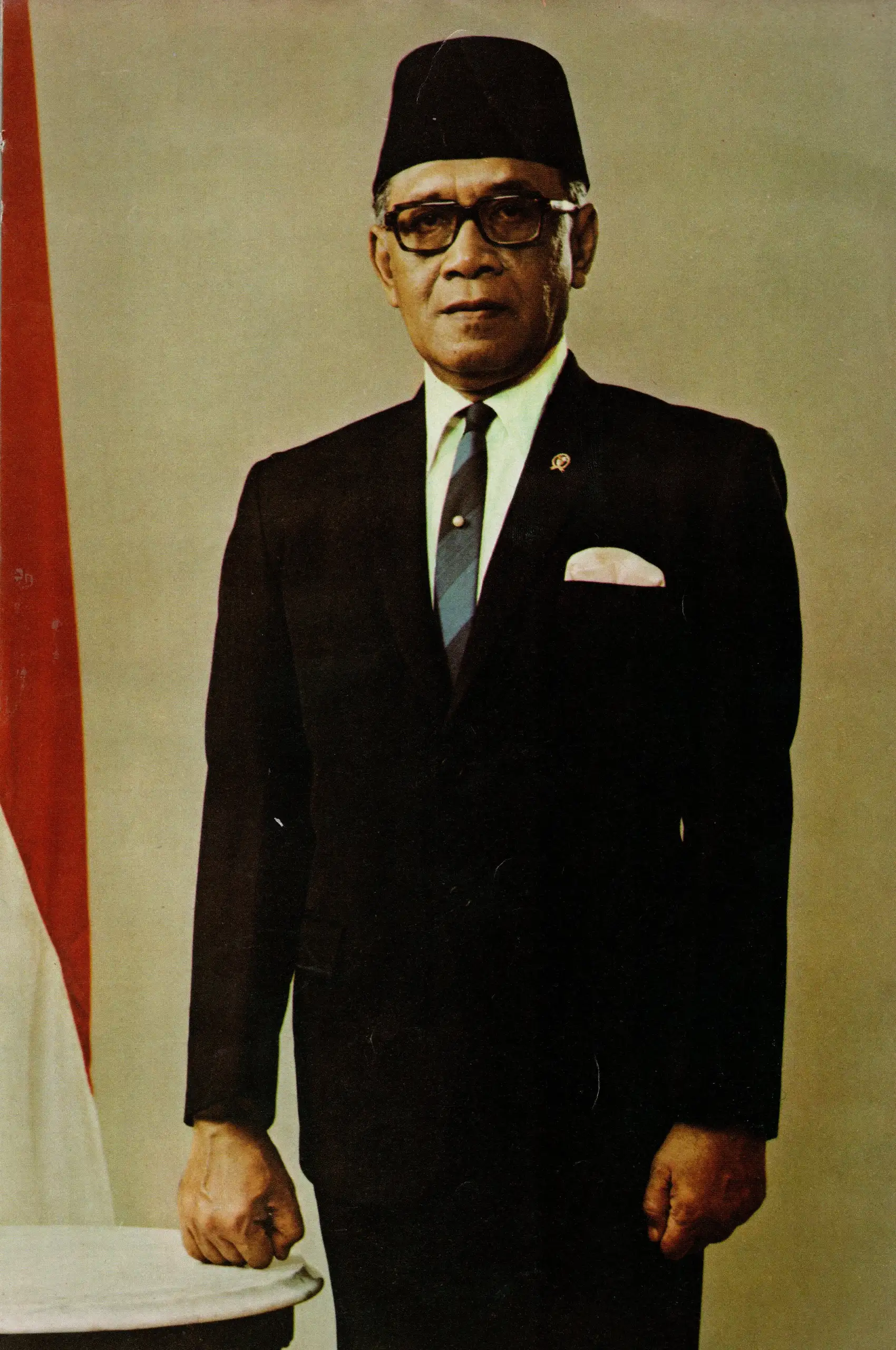
Hamengkubuwono IX
 Indonesia
Also known as: Gusti Raden Mas Dorodjatun, Hamengkubuwana IX, HB IX, GRM Dorodjatun, Hamengku Buwono IX
Birthday
April 12, 1912
Birth Sign
Aries
Birthplace
Yogyakarta, Indonesia
Age
Died at 76
About
Hamengkubuwono IX was a towering figure in Indonesian history who seamlessly bridged the worlds of Javanese monarchy and modern republicanism. Born Gusti Raden Mas Dorodjatun in 1912, he ascended to the throne as the ninth Sultan of Yogyakarta in 1940. Beyond his royal duties, he stepped onto the national stage, becoming the second Vice President of Indonesia from 1973 to 1978 and the inaugural Governor of the Special Region of Yogyakarta. His influence extended into youth development, where he was recognized as the "Father of the Indonesian Scouts" for his leadership as chairman of the first National Scout Movement Quarter.
His tenure was marked by a unique duality: he maintained the traditions of the Kraton while actively serving the Republic. This balance allowed him to navigate the tumultuous transition from Dutch colonial rule to independence. He is remembered not just for his political offices but for his personal courage during the revolution, where he chose to stay and defend his capital rather than flee. His legacy endures through the continued special autonomy status of Yogyakarta and the widespread Scout movement he founded.
Early Life & Background
Gusti Raden Mas Dorodjatun entered the world on April 12, 1912, within the walls of the Kraton (Royal Palace) in Yogyakarta. His upbringing was steeped in the intricate rituals and cultural codes of the Javanese court, yet his education also embraced a forward-looking vision necessary for the changing times. As the son of Hamengkubuwono VIII, he was groomed from childhood to assume the mantle of leadership, learning the arts of governance alongside traditional court etiquette.
The path to his historic decisions began long before he took the throne. In the early years of the 20th century, Indonesia was still under Dutch colonial rule, a period that tested the resolve of local leaders. Hamengkubuwono IX received a blend of traditional Javanese training and Western-style education, preparing him to engage with both his subjects and the colonial administration. By the time he ascended to the throne in 1940 at the age of 28, following the death of his father, he had already cultivated a reputation for wisdom and pragmatism. His early years were defined by the quiet preparation required to lead a kingdom that would soon face the existential threat of war and the promise of independence.
Career Growth
Hamengkubuwono IX's career trajectory shifted dramatically from regional monarch to national leader. After ascending the throne in 1940, he made the pivotal decision in 1946 to declare Yogyakarta the capital of the Republic of Indonesia when Jakarta fell under Dutch pressure. This move transformed the Sultanate into a sanctuary for the republican government. A defining moment occurred during the General Offensive of March 1, 1949, where he personally led the defense against Dutch forces from within the city, proving the Republic's resilience.
Following the recognition of Indonesian independence, he served in various ministerial roles in the early years of the new nation. In 1966, he was appointed as the first Governor of the Special Region of Yogyakarta, a unique dual role combining the duties of a hereditary sultan with those of an elected governor. In 1973, the People's Consultative Assembly elected him as the second Vice President of Indonesia, succeeding Adam Malik. He held this office until 1978, serving under President Suharto during the New Order era. Concurrently, he remained Governor until his death, earning the title of "Sultan of Development" for his efforts to modernize the region while preserving its cultural heritage.
Career Timeline
Public Image & Style
His public image is one of stoic dignity and paternal authority. He is portrayed in media and education as the archetype of the "good king", a ruler who subordinated his personal power to the greater good of the nation. His style was traditional Javanese attire (batik, blangkon) worn with the formality of a statesman, never adopting Western casual wear in public. He was known for his ability to speak multiple languages and navigate complex political landscapes with grace. His philosophy emphasized duty over glory, captured in statements like "The Sultan must be the servant of the people," reflecting his commitment to the republican ideal despite his royal lineage.
Fame & Fandom (iFAMOUS Rankings)
Hamengkubuwono IX is remembered through civic reverence rather than a conventional fandom. In Yogyakarta, his public image joins royal continuity to the founding years of the Indonesian republic: the sultan who backed independence, opened his territory to the national cause, and later served as vice president and governor. That legacy gives him an audience among students of Indonesian history, residents protective of Yogyakarta's special status, royal-court followers, and generations shaped by the national Scout movement. His standing remains substantial decades after his death. He is currently the 86th most famous person in Indonesia and the 53rd most famous person from Indonesia in the iFANN Global Fame Rankings, with the latter placement one position lower than the previous cycle.
No formal fan name is associated with Hamengkubuwono IX. The rituals around his memory are commemorative: visits to royal and historical sites, Scout tributes to the figure honored as the Father of Indonesian Scouting, anniversary reflections, and retellings of the decisive support Yogyakarta gave the republic. Admirers emphasize a model of kingship expressed through public service rather than spectacle. That makes his legacy unusually broad. He is claimed at once by regional identity, the national independence story, the monarchy, public administration, and youth education, communities that may approach him from different directions but converge on the idea of a ruler who placed institutional duty above personal grandeur.
Interesting Facts and Legends
While his royal duties and vice presidency are well-documented, the quiet intensity of his legacy often escapes casual observers. He held the title of "Father of the Indonesian Scouts" with a dedication that shaped generations, yet few recall the specific weight he carried during the nation's most fragile moments. A story fans still retell centers on the General Offensive of March 1, 1949, where he personally led the charge against Dutch forces to prove the Republic's existence, an act that transformed him from a monarch into a symbol of unyielding resistance. This dual identity as a hereditary ruler and a republican leader defined his life; he famously refused to flee the city during the invasion, choosing instead to command the defense from within the Kraton. His sudden passing in Washington D.C. while serving as Vice President left a void in both the presidential line and the Javanese monarchy that is still felt today. Recent developments have even placed narratives of his life under legal scrutiny, proving his image remains a sensitive topic in contemporary discourse. Despite the lack of a formal fanbase or organized campaigns, his influence persists through these verified historical pillars. According to the iFANN Global Fame Rankings, he holds the position of the 86th most famous person in Indonesia and ranks as the 53rd most famous person from Indonesia, a standing that reflects his enduring status as a founding father rather than a modern celebrity.
Notable Quotes
“The Sultan must be the servant of the people.”
“The city and the Republic are one.”
Family & Personal Life
Hamengkubuwono IX was married twice. His first marriage was to RA Siti Kustina, whom he wed before ascending the throne. They had several children together. Following her passing or divorce, he married Pintakapurnama (also known as R.A. Siti Hartini). These unions produced a large family; he is recorded as having seventeen sons, including his successor, Hamengkubuwono X, who became the tenth Sultan upon his father's death. There are no widely publicized romantic relationships outside of these marriages, as his status as a monarch in a conservative society meant his private life was largely shielded from the tabloid scrutiny common among Western celebrities. As of his death in 1988, he was widowed after the loss of his wives, though specific dates of their deaths are less frequently cited than his own.
Notable Connections
Relationships & Dating History
Hamengkubuwono IX was married twice throughout his life. His first marriage was to RA Siti Kustina, whom he wed before ascending the throne. They had several children together. Following her passing or divorce, he married Pintakapurnama (also known as R.A. Siti Hartini). These unions produced a large family; he is recorded as having seventeen sons, including his successor, Hamengkubuwono X, who became the tenth Sultan upon his father's death. There are no widely publicized romantic relationships outside of these marriages, as his status as a monarch in a conservative society meant his private life was largely shielded from the tabloid scrutiny common among Western celebrities. As of his death in 1988, he was widowed after the loss of his wives, though specific dates of their deaths are less frequently cited than his own.
- MarriedRA Siti KustinaBefore 1940 - UnknownFirst wife; mother of several children.
- MarriedPintakapurnama (R.A. Siti Hartini)After first wife - 1988Second wife; mother of several children including successor Hamengkubuwono X.
Death & Aftermath
Died
October 2, 1988 (aged 76)
Death Place
Washington, D.C., United States
Cause of Death
Sudden natural causes
Sri Sultan Hamengkubuwono IX passed away suddenly on October 2, 1988, in Washington, D.C., while attending an international summit of non-aligned nations. The 76-year-old former Vice President and ninth Sultan of Yogyakarta died unexpectedly in his hotel room, bringing an abrupt end to a career that uniquely bridged Javanese royal tradition and modern Indonesian republicanism. Contemporary reports from diplomatic staff and family members described the event as sudden without specifying a detailed medical diagnosis like a heart attack or stroke, though it was widely understood to be a natural cause.
The news triggered profound national mourning across Indonesia, where he was revered as a founding father who served with distinction as both a hereditary king and a statesman during the New Order era. Tributes poured in from heads of state and officials alike, highlighting his dual role in the nation's history. Funeral proceedings began swiftly upon the return of his body to Yogyakarta, leading to a gathering of his seventeen sons and court elders at the palace by October 9, 1988, to manage the transition of power. He was laid to rest in the Royal Cemetery of Imogiri, blending private royal protocol with public state mourning.
Posthumously, his legacy remains anchored by his title as the Father of Indonesian Scouting, recognized for his leadership as the first Chairman of the National Scout Movement. A monument dedicated to him stands in Kotagede, Yogyakarta, commemorating his reign which began in 1940. His son, Hamengkubuwono X, succeeded him as the tenth Sultan, ensuring stability within the 200-year-old court. Recent developments have even placed narratives of his life under legal scrutiny, proving his image remains a sensitive topic in contemporary discourse.
Net Worth (Estate Value)
$0
iFANN Editorial Team estimate
Hamengkubuwono IX did not possess a personal net worth in the modern sense of liquid assets or celebrity earnings. His wealth was intrinsically tied to the vast landholdings and assets of the Yogyakarta Sultanate, managed as part of the royal institution rather than as personal property. Consequently, no specific dollar figures for a personal estate exist, nor are there posthumous commercial earnings comparable to a pop star's estate. His "wealth" remains the cultural and political capital of the Yogyakarta dynasty, which continues to hold significant influence in Indonesian politics and culture. The iFANN Editorial Team estimates that the value of the Sultanate's assets and the economic impact of the dynasty's operations remain substantial, though they are not quantified in standard financial terms.
Awards & Accolades
View 4 records, honours and achievementsKnown For
Vice President of Indonesia
1973-1978 · Politician
Sultan of Yogyakarta
1940-1988 · Monarch
Governor of Yogyakarta
1966-1988 · Governor
Keywords
Sources
Quick Facts
- Profession
- politician, monarch
- Born
- April 12, 1912
- Birthplace
- Yogyakarta, Indonesia
- Died
- October 2, 1988
- Death Place
- Washington, D.C., United States
- Gender
- Male
- Spouse
- RA Siti Kustina, Pintakapurnama
- Birth Sign
- Aries
Personal Details
- Full Name
- Gusti Raden Mas Dorodjatun
- Spouse
- RA Siti Kustina, Pintakapurnama
- Children
- Seventeen sons, including Hamengkubuwono X
- Education
- Traditional Javanese court education; Western-style schooling
Frequently Asked Questions
Who was Hamengkubuwono IX?
When did Hamengkubuwono IX die?
What is Hamengkubuwono IX famous for?
Who succeeded Hamengkubuwono IX?
Why is Hamengkubuwono IX considered a hero?
Similar People
Join the community
fans discussing