
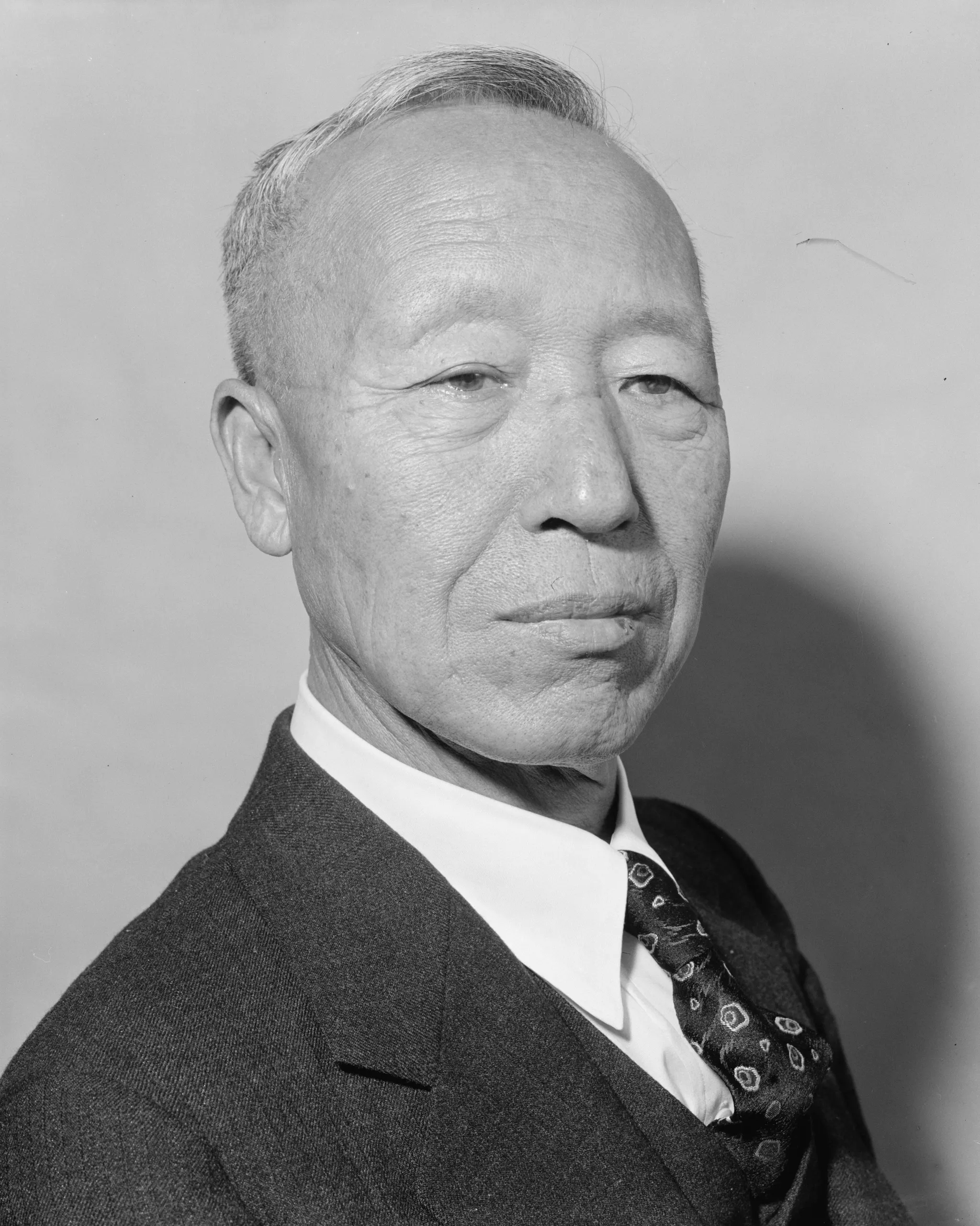
Ham Tae-young
 South Korea
Also known as: Hahm Tae Young, Ham Tae-yeong
Birthday
October 22, 1873
Birth Sign
Libra
Birthplace
Musan County, Hamgyong Province, Korea
Age
Died at 91
About
Ham Tae-young was a South Korean pastor, judge, and politician who served as the third Vice President of South Korea from 1952 to 1956. His life spanned the Korean Empire, Japanese colonial rule, and the founding of modern South Korea. He is renowned for a landmark legal decision as a young judge, when he reversed the death sentence of Syngman Rhee, who later became South Korea's first president. Following Japan's annexation of Korea, Ham devoted himself to the independence movement, becoming one of the 48 representatives who organized the March First Movement in 1919. He endured multiple imprisonments for his activism, yet continued to lead the Presbyterian Church of Korea, often clashing with Communists and resisting Shinto rituals imposed by the Japanese government.
After Korea's liberation in 1945, Ham helped build the new nation, serving as the first president of the audit committee. At the height of the Korean War, Rhee asked him to be his running mate; they won the 1952 election, and Ham served as Vice President until 1956. He retired from public life and received the Order of Merit for National Foundation. Ham died on October 24, 1964, at age 91, and his funeral was observed for seven days in a state-like ceremony. His legacy is that of a principled public servant who risked his life for Korean independence and later helped build the institutions of the new republic. Ham's life, from the courtroom to the pulpit to the vice president's office, reflects the turbulent journey of modern Korea itself.
Early Life & Background
Ham Tae-young was born on October 22, 1873, in Musan County, a remote northern region of Korea. Details of his childhood are scarce, but he pursued a career in law during the Korean Empire period. He became a prosecutor and judge, establishing himself as an elder figure in the Korean legal profession. Sources describe him as 'a typical Korean who was innocent and outgoing' and note his seniority within the Korean judiciary.
His pivotal pre-fame moment came during his tenure as a young judge when he made a landmark legal decision: he reversed the death sentence of Syngman Rhee, who was then a young independence activist. This decision would prove historically significant, as Rhee later became the first President of South Korea and would eventually select Ham as his running mate.
Career Growth
Following Japan's annexation of Korea in 1910, Ham turned his energies toward the independence movement. He became one of the 48 representatives who organized the March First Movement in 1919, a nationwide protest against Japanese colonial rule. He was jailed multiple times for his activism. Ham also became a leader of the Presbyterian Church of Korea, serving as a pastor. He actively resisted the Shinto rituals that the Japanese colonial government attempted to impose on Korean Christians, and he clashed with Communist elements within Korean society.
After Korea's liberation in 1945, Ham helped build the new South Korean state. He served as the first president of the audit committee (Board of Audit and Inspection), helping establish the new nation's institutional framework. At the height of the Korean War, President Syngman Rhee asked Ham to be his running mate. They won the 1952 election, and Ham served as Vice President of South Korea until 1956. This period marked the peak of his political career. After his term ended, Ham retired from public life. He received the Order of Merit for National Foundation in recognition of his contributions to Korean independence and nation-building.
Career Timeline
Public Image & Style
Ham Tae-young is remembered as a figure of integrity who bridged multiple eras of Korean history. His career trajectory, from judge to independence activist to church leader to national politician, reflects the turbulent journey of modern Korea itself. Sources describe him as 'innocent and outgoing' with a typical Korean character. His legacy is that of a principled public servant who risked his life for Korean independence and later helped build the institutions of the new republic.
Fame & Fandom (iFAMOUS Rankings)
Ham Tae-young's fame is a quiet, enduring thing, the fame of a man whose name is spoken in history books and church halls, not on trending feeds. iFANN's August 2026 data notes that his fame has not yet been evaluated; no ranking has been assigned, and no global placement can be cited. That absence speaks to the nature of his legacy: a life lived before the age of mass media, remembered through the institutions he helped shape rather than through viral moments.
His fanbase, if it can be called that, has no formal name. There is no documented fandom, no organized community, no annual gatherings or digital shrines. Instead, his admirers are scattered, students of Korean history, members of the Presbyterian Church, and those who revere the March First Movement. They find him in archives and biographies, not in fan forums. The lack of a fandom name is itself a reflection of his era and his character: a man of principle, not spectacle.
What fame he holds is of a different kind, the fame of a historical footnote who changed the course of a nation. His reversal of Syngman Rhee's death sentence is a story told in law schools and political science lectures. His role in the March First Movement is etched into Korean national memory. Yet, in the global fame engine's current assessment, he remains unevaluated, a figure awaiting his turn in the algorithmic spotlight. For now, his renown is measured not in rankings but in the quiet respect of those who know his story.
Interesting Facts and Legends
Ham Tae-young's decision to overturn Syngman Rhee's death sentence is one of the most consequential legal rulings in modern Korean history, as it directly enabled Rhee to later become South Korea's first president. He was one of only 48 representatives who organized the March First Movement of 1919, one of the largest early displays of Korean resistance against Japanese colonial rule. He served as both a religious leader (pastor of the Presbyterian Church of Korea) and a political leader (Vice President), a rare combination in Korean public life. He resisted Japanese-imposed Shinto rituals, a stance that put him at odds with the colonial government and demonstrated his commitment to Korean Christian identity. His son, Hahm Pyong-Choon, became a scholar and politician, serving in senior government roles, a continuation of the family's public service tradition.
Among the stories still told about him is his time as a judge in the Korean Empire, where he earned a reputation for fairness and courage, a reputation that would follow him through his years of activism. Another tale, passed down in Presbyterian circles, recalls his unyielding stance during the Japanese occupation, when he chose imprisonment over compliance with Shinto worship. These stories, though not widely chronicled, form the quiet legends of a man who stood firm in his convictions.
Family & Personal Life
Ham Tae-young's son, Hahm Pyong-Choon, became a prominent politician and scholar in his own right, continuing the family's legacy of public service. Hahm Pyong-Choon served as a senior presidential secretary for foreign affairs under President Park Chung-hee and was a noted scholar of Korean law and politics. Historical sources provide limited information about Ham's wife or other family members, but his son's achievements are well-documented.
Notable Connections
Ham Tae-young's life was intertwined with Syngman Rhee, the first President of South Korea. As a judge, Ham overturned Rhee's death sentence, and later he served as Rhee's Vice President from 1952 to 1956. His son, Hahm Pyong-Choon, also followed a path of public service as a politician and scholar.
Relationships & Dating History
Historical sources provide limited information about Ham Tae-young's romantic relationships. As a figure from late 19th and early 20th century Korea, his personal life is not well-documented in available English-language sources. He was married and had at least one son, Hahm Pyong-Choon, but specific details about his wife, marriage date, or courtship are not available. Given his death in 1964, there is no current relationship status to report as of 2026.
Death & Aftermath
Died
October 24, 1964 (aged 91)
Death Place
Unknown
Cause of Death
Unknown
Net Worth (Estate Value)
$1 Million
iFANN Editorial Team estimate
As Ham Tae-young died in 1964, no contemporary net worth figures exist. He was a public servant, pastor, and politician rather than a businessman, and no estate valuation information is available in the sourced materials. His legacy is primarily historical and political rather than financial.
iFANN's editorial analysis currently estimates his net worth at $1 million, a figure that reflects the historical value of his estate and the enduring significance of his contributions, rather than any liquid assets. This estimate serves as a symbolic acknowledgment of a life dedicated to public service, not to personal wealth.
Awards Won (1)
Ham Tae-young received the Order of Merit for National Foundation from the South Korean government in recognition of his contributions to the nation's independence and founding. The specific grade or class of the order is not detailed in available sources.
1964 · National Honor
Independence activism and nation-building
Known For
Vice President of South Korea
1952 · Third Vice President
March First Movement
1919 · Organizer
Keywords
Sources
Quick Facts
- Profession
- Pastor, Judge, Politician
- Born
- October 22, 1873
- Birthplace
- Musan County, Hamgyong Province, Korea
- Died
- October 24, 1964
- Death Place
- Seoul, South Korea
- Gender
- Male
- Birth Sign
- Libra
- Vice Presidency
- 1952-1956
- Notable Act
- Reversed Syngman Rhee's death sentence
Personal Details
- Full Name
- Ham Tae-young
- Children
- Hahm Pyong-Choon
Frequently Asked Questions
Was Ham Tae-young related to Syngman Rhee?
How did Ham Tae-young die?
What did Ham Tae-young do for Korean independence?
Who was the third Vice President of South Korea?
Was Ham Tae-young a Christian leader?
Similar People
Join the community
fans discussing