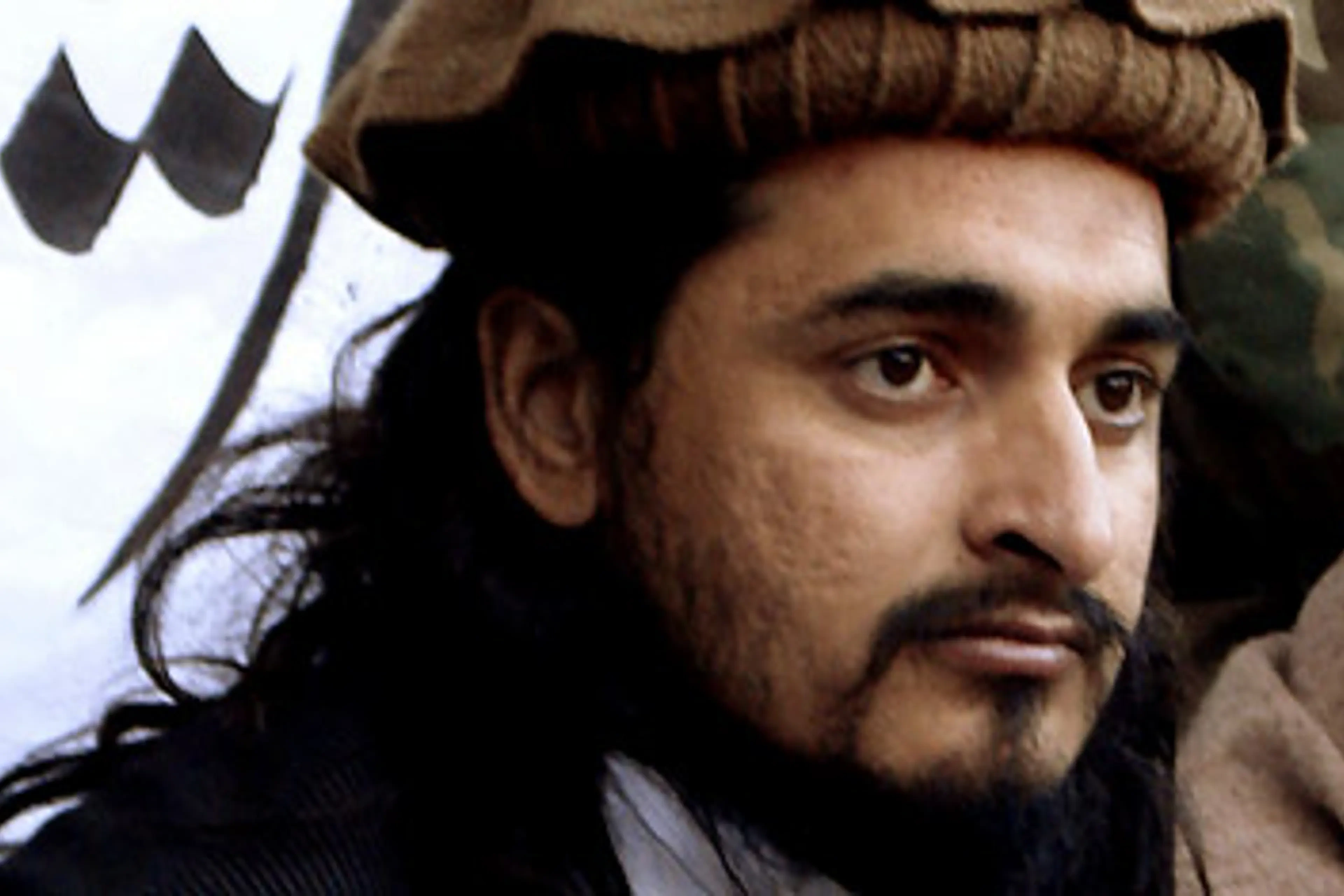
Hakimullah Mehsud
 Pakistan
Also known as: Jamshed Mehsud, Zulfiqar Mehsud
Birthday
1979-01-01
Birth Sign
Capricorn
Birthplace
Bannu, Pakistan
Age
Died at 34
About
Hakimullah Mehsud, born Jamshed Mehsud, was the second emir of the Tehrik-i-Taliban Pakistan (TTP), the Pakistani Taliban, from 2009 until his death in a U.S. drone strike on 1 November 2013. He succeeded Baitullah Mehsud, under whom he had served as driver and deputy. Mehsud was a feared field commander who led fighters across several tribal agencies and maintained close ties with al-Qaeda, the Afghan Taliban, and Pakistani jihadist groups such as Lashkar-e-Taiba and Jaish-e-Mohammed.
His leadership was marked by a wave of deadly attacks, including the December 2009 suicide bombing at a CIA outpost in Khost, Afghanistan, which killed seven CIA officers. He was also linked to a 2009 assault on a U.S. military base. Mehsud survived multiple assassination attempts and was falsely reported dead in January 2010 before being confirmed alive months later.
His tenure ended on 1 November 2013 when a U.S. drone strike hit a compound in Datta Khel, North Waziristan. The TTP confirmed his death days later, and he was succeeded by Mullah Fazlullah. His death was a significant blow to the group, though it continued its insurgency.
Early Life & Background
Hakimullah Mehsud was born around 1979 in Bannu, a city in Khyber Pakhtunkhwa near the tribal areas bordering Afghanistan. He belonged to the Mehsud tribe, one of the dominant Pashtun tribes in South Waziristan. Growing up in the tribal belt, his early life was shaped by the Afghan jihad against the Soviet Union in the 1980s and the subsequent rise of Islamist militancy in the region.
He received religious education typical of the tribal areas, though specifics about his formal schooling are scarce. His first steps toward militancy came through association with militant networks operating in the tribal agencies. He initially served as a driver for Baitullah Mehsud, the founder of the TTP. This position allowed him to gain the trust of the leadership and demonstrate his loyalty and capability, leading to his gradual rise through the ranks.
By the mid-2000s, Mehsud had emerged as a key commander, commanding fighters in the Khyber, Kurram, and Orakzai agencies. His reputation as a young, aggressive, and ruthless commander distinguished him from other TTP figures, setting the stage for his eventual succession.
Career Growth
Following Baitullah Mehsud's death in a U.S. drone strike in August 2009, Hakimullah Mehsud assumed leadership of the TTP, becoming its second emir. His appointment came amid internal power struggles within the organization. He was described as the self-proclaimed emir of the Pakistani Taliban and was wanted by U.S. authorities in connection with the murder of seven American citizens.
Under his command, the TTP conducted a major assault on a U.S. military base in Afghanistan in 2009, demonstrating cross-border operational capabilities. In December 2009, he was linked to the suicide bombing at a CIA outpost in Khost, Afghanistan, which killed seven CIA officers. The attack was carried out by a Jordanian double agent, Humam Khalil Abu-Mulal al-Balawi, who detonated a suicide vest during a meeting with CIA personnel.
Mehsud's tenure was marked by a wave of deadly attacks across Pakistan, including suicide bombings, targeted assassinations, and attacks on security forces. He maintained close ties with al-Qaeda, the Afghan Taliban, and Pakistani jihadist groups including Lashkar-e-Taiba, Lashkar-e-Jhangvi, and Jaish-e-Mohammed. His leadership was also characterized by internal dissent, with some factions opposing his aggressive tactics and focus on attacking Pakistani state targets rather than solely focusing on Afghanistan.
He survived multiple assassination attempts and was even presumed dead in January 2010, but in April 2010, Pakistan's spy agency confirmed he was alive. His death occurred on 1 November 2013, when a U.S. drone strike targeted a compound in the Datta Khel area of North Waziristan. The TTP confirmed his death days later, and he was succeeded by Mullah Fazlullah. His death came just weeks after he had reportedly expressed willingness to engage in peace talks with the Pakistani government.
Career Timeline
Public Image & Style
Hakimullah Mehsud's public image was that of a ruthless, feared militant commander. Media portrayals consistently described him as "powerful," "feared," "notorious," and "one of the most dangerous men in Pakistan." Within militant circles, he was celebrated as a martyr after his death, with the TTP releasing images of his body. He had no fandom in the conventional sense, no signature style beyond the typical appearance of tribal militants, and no fan culture. His social media voice was nonexistent, with propaganda videos distributed through militant channels being his only form of public communication.
Fame & Fandom (iFAMOUS Rankings)
For a man whose name was synonymous with terror, Hakimullah Mehsud's afterlife is curiously quiet. There are no fan forums, no tribute pages, no hashtags. The TTP's own propaganda machine tried to craft a martyr's legend, releasing images of his corpse, calling him a shaheed, but that was organizational loyalty, not fandom. In the world of iFANN, where fame is measured in clicks, searches, and cultural footprint, Mehsud's presence is a void. He has no documented fandom name, no fan campaigns, no birthday billboards. His audience was never a fanbase; it was a network of militants and a global audience that knew him only as a threat.
Yet the legend persists, built on the drama of his life and death. The false report of his demise in 2010, followed by his video reappearance, became a tale of evasion. The 2013 drone strike that killed him, just as peace talks seemed possible, sealed his notoriety. But fame, as iFANN measures it, is a different beast. As of August 2026, the Global Fame Engine has evaluated Hakimullah Mehsud, but he holds no placement in the published rankings, not in the Global Top 1,000, nor in any Top-100 scope list. He is, in the ledger of modern fame, an unranked figure, a ghost in the machine of global attention.
Interesting Facts and Legends
Born Jamshed Mehsud, he was also known as Zulfiqar Mehsud. He was reported killed in a drone strike in January 2010, only to reappear in an Internet video warning of suicide revenge, a twist that became a cornerstone of his legend. His death came in a U.S. drone strike on November 1, 2013, weeks after he reportedly expressed willingness to participate in peace talks with the Pakistani government. The attack on the CIA base in Khost was carried out by a Jordanian double agent who detonated a suicide vest during a meeting with CIA officers; Mehsud was linked to the planning of this operation. He maintained close ties with al-Qaeda, the Afghan Taliban, Lashkar-e-Taiba, Lashkar-e-Jhangvi, and Jaish-e-Mohammed. After his death, the Taliban released an image of him labeled a 'martyred' leader, a deliberate attempt to craft a heroic narrative for followers. A story still told: how the U.S. military thought they had killed him in 2010, only for him to resurface, alive and defiant, in a propaganda video, a moment that cemented his reputation as a master of survival.
Family & Personal Life
Very little is publicly known about Hakimullah Mehsud's family. He belonged to the Mehsud tribe of Pashtuns in South Waziristan. Details about his parents, siblings, and any children are not documented in available sources. He was known to have multiple wives, as polygamy is common in the tribal areas, but specific names and details are not publicly recorded.
Notable Connections
Baitullah Mehsud was the founder and first emir of the TTP; Hakimullah served as his driver and deputy before succeeding him. Mullah Fazlullah succeeded him as TTP emir. He maintained ties with Afghan Taliban leader Mullah Omar and was linked to Jordanian double agent Humam Khalil Abu-Mulal al-Balawi, who carried out the CIA base bombing. He was associated with militant groups including al-Qaeda, Lashkar-e-Taiba, Lashkar-e-Jhangvi, and Jaish-e-Mohammed.
Relationships & Dating History
Publicly available sources do not document any specific romantic relationships, marriages, or dating history for Hakimullah Mehsud. As a militant leader operating in the tribal areas of Pakistan, his personal life was not a subject of public record or media coverage. Tribal customs in the region typically involve arranged marriages, and such details would not be publicly disclosed. No credible sources provide information about specific partners, wives, or relationships. Given the lack of documented information, it is not possible to provide a dating history for this individual. He was deceased as of 1 November 2013, and no relationship status can be confirmed.
Death & Aftermath
Died
2013-11-01 (aged 34)
Death Place
Ghazni, North Waziristan, Pakistan
Cause of Death
Fatal injuries from US drone strike
A residential compound in the village of Ghazni near Miran Shah, North Waziristan, became the final stage for Hakimullah Mehsud on November 1, 2013. The militant leader was approximately thirty-four years old when a US drone strike struck the location around 08:00 local time while he met with other senior Taliban commanders. Intelligence reports and subsequent confirmation by TTP leadership established fatal injuries from the missile as the cause, bypassing any formal autopsy due to the remote nature of the site. The event triggered immediate diplomatic friction as Pakistan accused the United States of sabotaging peace talks.
Reactions remained sharply divided; Western officials hailed the strike as a significant blow to global terrorism, while the TTP declared Mehsud a martyr and circulated images claiming to show his body to frame the death as a sacrifice. A private funeral prayer took place shortly after the incident, likely on November 2, 2013, attended only by close relatives and senior commanders within the tribal areas. His grave remains undisclosed to prevent desecration, and the group appointed Mullah Fazlullah to succeed him.
Net Worth (Estate Value)
As a militant leader operating clandestinely in Pakistan's tribal areas. Militant leaders in this context do not maintain personal bank accounts, investment portfolios, or publicly documented wealth. The TTP was known to derive funding from various sources including extortion, kidnapping for ransom, drug trafficking, and donations from sympathizers, but no figures are attributable to Mehsud personally.
Since his death in 2013, no estate has been documented or publicly reported. The TTP continued to operate after his death, but no estate value, posthumous earnings, or estate management information exists in public records. The TTP confirmed his death and released images of him as a "martyr," but no financial information regarding his personal estate has ever been disclosed.
Awards & Accolades
Known For
Tehrik-i-Taliban Pakistan (TTP)
2009-2013 · Second Emir
CIA base bombing in Khost
2009 · Linked to planning
Keywords
Sources
Quick Facts
- Profession
- Militant leader
- Born
- 1979
- Birthplace
- Bannu, Pakistan
- Died
- November 1, 2013
- Death Place
- Datta Khel, North Waziristan, Pakistan
- Gender
- Male
- Birth Sign
- Capricorn
- Known for
- Second emir of TTP
Personal Details
- Full Name
- Jamshed Mehsud
- Education
- Religious education in tribal madrasas
Frequently Asked Questions
How did Hakimullah Mehsud die?
Who was Hakimullah Mehsud?
What was Hakimullah Mehsud's connection to the CIA bombing?
How old was Hakimullah Mehsud when he died?
Was Hakimullah Mehsud ever captured?
Similar People
Join the community
fans discussing