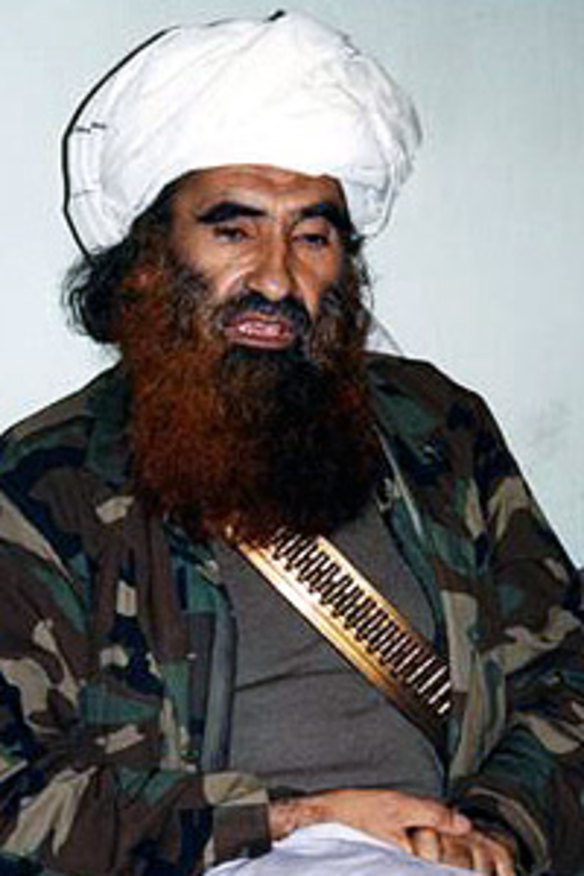
Baitullah Mehsud
 Pakistan
Birthday
1974
Birth Sign
Capricorn
Birthplace
Bannu District, Pakistan
Age
Died at 35
About
Baitullah Mehsud was a Pakistani militant who founded and led the Tehrik-i-Taliban Pakistan (TTP), a coalition of militant groups that reshaped the insurgency in Pakistan's northwest. Born around 1974 in Bannu District, he rose from a local Taliban commander in South Waziristan to become one of the most wanted men in the region, commanding an estimated 5,000 fighters at his peak.
His death on August 5, 2009, from a CIA drone strike in Zangar, South Waziristan, marked a turning point in the drone war. The confirmation process was chaotic, TTP sources initially confirmed, then denied, and it took weeks before his successor Hakimullah Mehsud acknowledged his death. A video released to the BBC in late September 2009 finally put the matter to rest.
Physically small and diabetic, Mehsud was described by those who knew him as cagey and charismatic, a man who held together feuding factions through sheer force of will. His legacy is one of violence and instability, but also of strategic innovation in asymmetric warfare.
Early Life & Background
Baitullah Mehsud was born around 1974 into the Mehsud tribe, a Pashtun group native to South Waziristan, though his exact birthplace is often given as Bannu District in what was then Pakistan's North-West Frontier Province. His early life remains largely undocumented, as is common for militants in the tribal belt. He received religious education in local madrassas, though specific institutions and dates are not recorded in available sources.
His emergence as a militant leader came in the early 2000s, following the U.S. invasion of Afghanistan. By 2004–2005, he was already appearing in local newspaper headlines as a Taliban commander in South Waziristan, a region that became a hub for cross-border militancy. The Jamestown Foundation, writing in January 2008, described him as having been in the public eye for more than three years by then, noting his suspected ties to al-Qaeda.
His early operations focused on attacking Pakistani security forces and establishing control over tribal areas, setting the stage for his later role as a coalition builder.
Career Growth
Mehsud's defining achievement came in December 2007 when he co-founded the Tehrik-i-Taliban Pakistan (TTP), uniting roughly five militant factions under a single command. This consolidation transformed the insurgency, giving it a unified structure and a clear leader. By 2009, he commanded an estimated 5,000 fighters and orchestrated numerous attacks across Pakistan, including suicide bombings and assassinations.
The U.S. State Department added him to the Rewards for Justice list in March 2009, offering a reward for information leading to his capture. TIME magazine profiled him in April 2009, calling him a natural leader with a knack for uniting disparate factions. U.S. military analysts linked him to the assassination of former Prime Minister Benazir Bhutto in December 2007, a charge he denied.
His death on August 5, 2009, from a CIA drone strike in Zangar, South Waziristan, killed him and his wife. The confirmation process was chaotic, with his deputy Hakimullah Mehsud initially claiming he was alive. On August 25, 2009, Hakimullah confirmed his death, and a BBC video in late September showing his body provided final proof.
Career Timeline
Public Image & Style
Mehsud's public image was defined by his role as a militant leader. TIME described him as 'cagey, dogged and charismatic,' and the Christian Science Monitor noted his charisma was central to holding together feuding Islamist militants. He was regarded as Pakistan's number one enemy by U.S. authorities, a reputation built on his orchestration of attacks and his ties to al-Qaeda. His physical appearance, small and diabetic, contrasted sharply with the threat he posed, making him a figure of fascination and fear.
Fame & Fandom (iFAMOUS Rankings)
Baitullah Mehsud remains a figure of historical notoriety rather than contemporary celebrity, operating within the grim geography of insurgent leadership where fame is measured in threat levels rather than box office returns. As of August 2026, the iFANN Global Fame Engine has evaluated this individual, yet he does not currently hold a placement in the published rankings such as the Global Top 1,000 or any Top-100 scope list. This absence of a numeric rank reflects his status as a designated terrorist and military commander whose legacy is defined by verified violent operations and state-sanctioned elimination rather than public adoration or commercial consumption. While his name appears frequently in security briefings and geopolitical analyses, there is no evidence of a formalized fanbase, organized campaigns, or cultural rituals that would constitute a fandom in the traditional sense. The concept of a fan community does not apply to a man who was widely regarded as Pakistan's number one enemy and a key facilitator for al-Qaeda. Unlike entertainers or athletes who cultivate audiences through performance, Mehsud commanded loyalty through coercion and ideological alignment within feuding militant factions. His successor, Hakimullah Mehsud, met a similar end in a drone strike, further cementing a lineage of conflict rather than a dynasty of popularity. No official or unofficial fandom names exist for this figure, nor are there chart pushes, birthday billboards, or fan-funded projects associated with his memory. The audience surrounding his name consists entirely of analysts, journalists, and intelligence agencies tracking the evolution of the Tehrik-i-Taliban Pakistan. Consequently, while his impact on regional stability was profound, his standing in the global hierarchy of fame remains unranked and devoid of the metrics used to evaluate living celebrities.
Interesting Facts and Legends
Mehsud suffered from diabetes, a physical frailty that stood in stark contrast to his reputation as a ruthless leader capable of commanding thousands of fighters. Known for a cagey and dogged personality, he successfully held together feuding Islamist factions that often fractured under pressure. Following his death on August 5, 2009, from a CIA drone strike, the TTP initially denied his demise, creating weeks of confusion until a video surfaced. He was added to the U.S. Rewards for Justice list, solidifying his status as one of the most wanted militants globally. A verified legend of his rise involves his succession of his uncle in late 2007, which marked a significant escalation in violence across Pakistan. Another documented moment occurred when two Hellfire missiles struck a farmhouse in Mir Ali, an event confirmed by the Taliban on August 25, 2009, triggering a brief power struggle before Hakimullah Mehsud assumed the emirate. These events form the core of his historical record, distinguishing him from figures of pop culture mythology.
Notable Quotes
“I am not involved in the killing of Benazir Bhutto.”
“The Pakistani government is a puppet of the United States.”
“We will continue our struggle until the infidels leave our lands.”
Family & Personal Life
Very little is documented about Mehsud's family. He was married, and his wife was killed alongside him in the August 2009 drone strike. The couple had no publicly known children, and no other family details have been confirmed. His family life was kept secret, as is typical for militant leaders operating in the tribal areas.
Notable Connections
Baitullah Mehsud's closest associate was his deputy Hakimullah Mehsud, who succeeded him as TTP leader and confirmed his death. Another notable figure was Qari Zainuddin Mehsud, a rival commander assassinated in June 2009, reportedly on TTP orders. These relationships highlight the internal dynamics and power struggles within the TTP.
Relationships & Dating History
Public information about Mehsud's personal life is extremely limited. He was married, and his wife was killed alongside him in the August 2009 drone strike. The exact number of children, if any, is not documented. Given the clandestine nature of his life, no other romantic relationships have been publicly documented. At the time of his death, he was married.
- MarriedUnnamed wife? - 2009Killed alongside him in the drone strike.
Death & Aftermath
Died
August 5, 2009 (aged 35)
Death Place
Kharotwara, North Waziristan, Pakistan
Cause of Death
reported CIA drone missile strike
Baitullah Mehsud remained active in directing attacks against Pakistani government forces and NATO supply lines during the first half of 2009 before retreating into hiding following a failed military offensive earlier that year. He was killed instantly on August 5, 2009, when a CIA Predator drone fired two Hellfire missiles at a remote farmhouse in the Kharotwara area of North Waziristan, Pakistan, which served as his father-in-law's residence. The strike eliminated the Tehrik-e-Taliban Pakistan founder along with his second wife and one other individual, though confirmation required weeks of internal debate within the militant group. While US officials believed the death occurred immediately, the TTP initially denied the report or claimed he was merely wounded until Hakimullah Mehsud publicly acknowledged the demise on August 25, 2009.
The event triggered significant political fallout between the United States and Pakistan, with the Pakistani government officially protesting the violation of its airspace while refusing to pursue criminal charges against the operatives involved. Reaction among Pakistani security officials and international allies hailed the elimination as a major strategic victory, whereas hardline supporters within the ranks mourned the loss and feared an internal power struggle that quickly materialized. Mehsud was buried privately in North Waziristan near his home village or the site of the attack, consistent with tribal customs for militants. The funeral remained low-profile and attended only by close relatives and trusted commanders to avoid detection by security forces, leaving the exact location of the grave undisclosed to prevent desecration.
Net Worth (Estate Value)
Unknown
iFANN Editorial Team estimate
As a militant leader operating within Pakistan's tribal regions, Baitullah Mehsud maintained no conventional financial records or publicly traceable assets. Following his death on August 5, 2009, there are no documented reports of an estate, posthumous earnings, or formal estate management. iFANN's editorial research traces the limited financial resources available to him during his lifetime to direct militant operations, facilitation ties with al-Qaeda, and informal tribal networks, though specific figures remain unavailable.
Awards & Accolades
View 1 records, honours and achievementsKnown For
Tehrik-i-Taliban Pakistan
2007 · Founder and first emir
South Waziristan insurgency
2004 · Taliban commander
Keywords
Sources
Quick Facts
- Profession
- Militant leader
- Born
- 1974
- Birthplace
- Bannu District, Pakistan
- Died
- August 5, 2009
- Death Place
- Zangar, South Waziristan, Pakistan
- Cause of Death
- CIA drone strike
- Gender
- Male
- Birth Sign
- Capricorn
Personal Details
- Spouse
- Unnamed wife (deceased)
- Education
- Religious education in local madrassas
Frequently Asked Questions
How did Baitullah Mehsud die?
Was Baitullah Mehsud responsible for Benazir Bhutto's assassination?
Who succeeded Baitullah Mehsud as TTP leader?
What was the Tehrik-i-Taliban Pakistan (TTP)?
How many fighters did Baitullah Mehsud command?
Similar People
Join the community
fans discussing