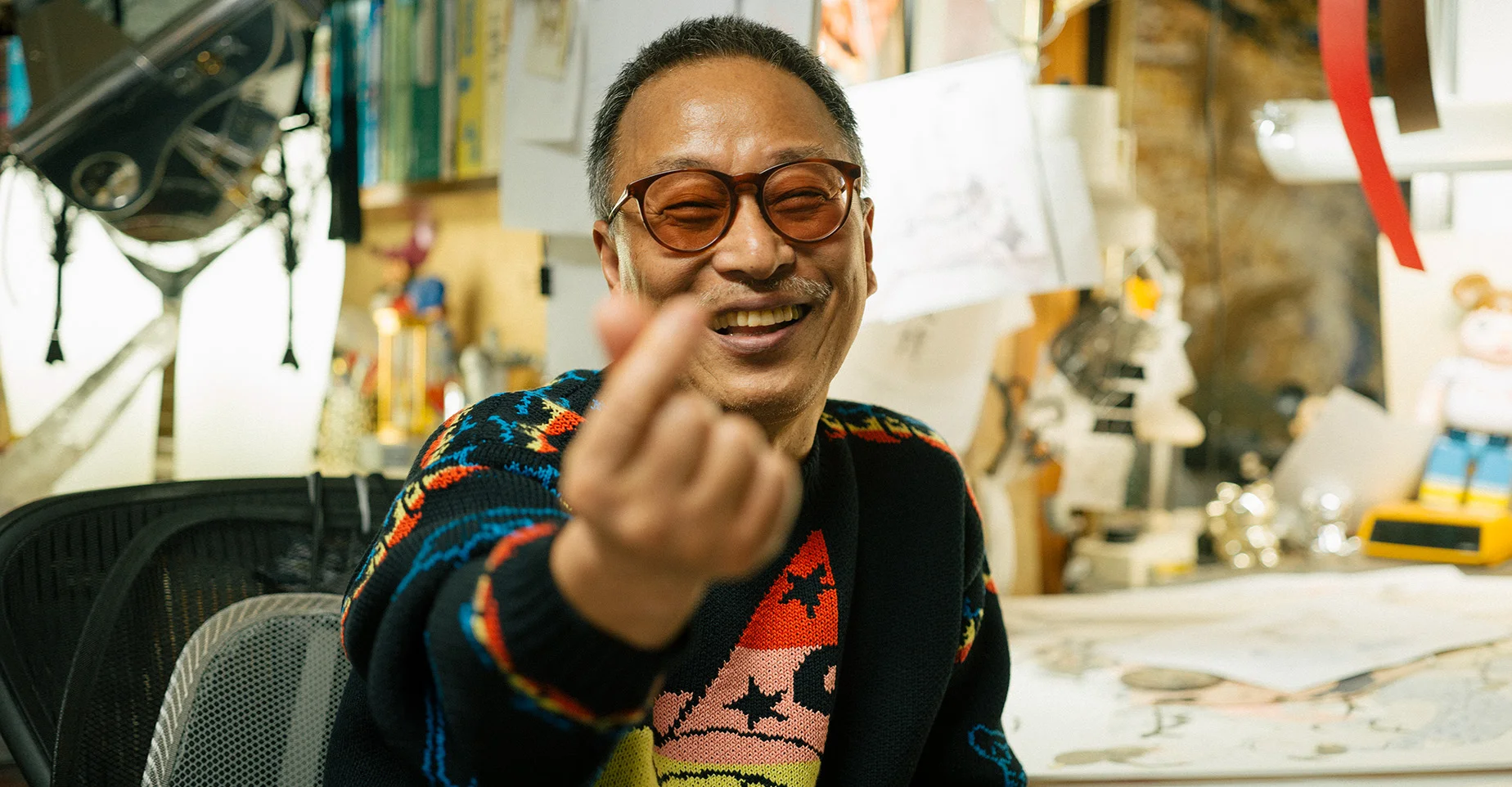
Hajime Sorayama
 Japan
Japanillustrator•painter•graphic designer
Birthday
February 22, 1947
Birth Sign
Pisces
Birthplace
Imabari, Ehime Prefecture, Japan
Age
79 years old
Height
5 ft 7 in (170 cm)
About
Hajime Sorayama is a Japanese illustrator and painter renowned for his hyper-detailed, airbrushed depictions of chrome-plated female robots in erotic poses. He calls his style superrealism, a technique that blends the precision of photography with the fantasy of illustration. Sorayama's work has transcended the art world to influence fashion, music, and technology, most notably through his design of the original Sony AIBO robotic dog and his album cover for The Weeknd's Starboy. His distinctive aesthetic—cold metallic surfaces combined with warm human sensuality—has earned him a cult following among art collectors, sci-fi enthusiasts, and pop culture fans worldwide. As of 2026, Sorayama continues to produce new paintings and sculptures from his Tokyo studio, with exhibitions regularly selling out across Asia, Europe, and the United States. His influence on contemporary visual culture is substantial, bridging the gap between fine art and commercial design.
Early Life & Background
Hajime Sorayama grew up in Imabari, a small city on the island of Shikoku in post-war Japan. As a child, he was fascinated by American pop culture, particularly the pin-up illustrations of Alberto Vargas in magazines like Playboy. He studied at Chuo University in Tokyo but did not complete a fine arts degree; instead, he taught himself airbrush techniques through trial and error. In the late 1960s, he began working as a commercial illustrator for advertising agencies, creating artwork for Japanese companies. His first major break came in 1972 when he started publishing erotic illustrations in Playboy Japan. These early works showcased his emerging superrealist style and gave him national exposure. The pivotal moment arrived in 1978 when an advertising client asked for a robot pin-up image. Sorayama created the first Sexy Robot illustration, a chrome-finished female android posed provocatively. That single image became the foundation of his entire career.
Career Growth
Sorayama's Sexy Robot series launched him into international prominence. In 1983, he published his first art book, Sorayama: Sexy Robots, which gained a cult following. His big commercial breakthrough came in 1999 when Sony commissioned him to design the AIBO, a robotic dog that became a cultural phenomenon and was later inducted into the Robot Hall of Fame. In the 2000s and 2010s, Sorayama exhibited globally at galleries in Tokyo, New York, Paris, and Los Angeles. His work caught the attention of fashion designer Thierry Mugler, who used Sorayama imagery in collections. A major milestone came in 2016 when The Weeknd used Sorayama's robot aesthetic for the Starboy album cover and music video. In 2018, Sorayama collaborated with Dior on a massive robotic statue for the brand's Men's Pre-Fall runway show in Tokyo, a collaboration widely covered in fashion media. He entered the NFT market in 2020, selling digital Sexy Robot artworks for six figures. Recent projects include album art for Bring Me the Horizon in 2023 and ongoing gallery exhibitions through 2026.
Career Timeline
Public Image & Style
Sorayama is known as a reclusive, enigmatic figure in the art world, often called a phantom because he rarely gives interviews and avoids the spotlight. His signature aesthetic blends science fiction, pin-up art, and industrial design, creating chrome-plated female robots that are both alluring and uncanny. Media portrayals emphasize his technical mastery of airbrush illustration and his obsessive attention to detail. His fanbase spans multiple generations and subcultures: art collectors, sci-fi enthusiasts, fashion followers, and music fans (via The Weeknd). There is no official fandom name, but fans often call themselves Sorayama enthusiasts. His gallery exhibitions draw large crowds, and limited-edition prints sell out quickly. Since Sorayama does not maintain personal social media accounts, his online presence is curated by galleries and fan pages, which post his work with minimal commentary.
Fame & Fandom
Hajime Sorayama operates within a sphere of high-end art and commercial design rather than the participatory ecosystem typical of pop music stars or anime franchises. His audience consists primarily of collectors, industrial designers, and enthusiasts of cyberpunk aesthetics who engage with his work through gallery exhibitions, auction houses like Christie's, and corporate commissions, without a formalized fanbase name or organized social campaigns. Unlike artists who cultivate direct community mobilization, Sorayama maintains a distance from mass fandom, with his digital presence serving as a curated portfolio rather than a hub for interactive rituals. iFANN has evaluated this figure within its Global Fame Engine to assess standing across international markets. The evaluation confirms that while Sorayama commands significant prestige in niche sectors, he currently holds no placement in the published Global Top 1,000 rankings or any Top-100 scope list. This absence of a numeric rank reflects a profile defined by enduring influence and critical acclaim rather than broad, measurable viral consumption signals. His cultural footprint is measured in the value of secondary market works and the scale of collaborations with entities like Sony and Starlux Airlines rather than chart positions or search volume dominance. The lack of a documented fandom name aligns with this trajectory, as his admirers do not coalesce around a specific moniker or engage in collective projects such as fan-funded billboards or charity drives. Instead, the legacy of his work is preserved through the adoption of his chrome-plated aesthetic into mainstream technology and aviation, creating a silent but pervasive mythology. While the general public may recognize his imagery from album covers or film designs, the dedicated circle remains small, specialized, and disconnected from the frenetic energy of modern celebrity culture.
Interesting Facts and Legends
Sorayama does not own a smartphone and relies on analog tools for his art, despite depicting futuristic subjects. His superrealism technique involves layering airbrushed paint, with individual paintings often requiring weeks or months to complete. He cites Alberto Vargas as his single greatest artistic influence. The original 1978 Sexy Robot was created for an advertising client requesting a robot pin-up. His work has faced censorship in several countries, including Japan, due to explicit content. Sorayama served as a consultant on fembot designs for the Austin Powers film series and maintains a long-standing aversion to personal technology, stating, 'I don't use computers. I use my hands.' Fans often retell his 'meaningless art' philosophy, where he insists his chrome robot women carry no deep meaning, framing his output as purely aesthetic. In June 2026, The Weeknd commissioned a record-breaking 40-foot-tall gold statue for the After Hours til Dawn Tour, which became an instant cultural landmark. That same year, the STARLUX Airlines 'AIRSORAYAMA' collaboration brought his art to the skies with two Airbus A350-1000 aircraft featuring his designs, followed by a safety film in July 2026.
Notable Quotes
“My work deals with the technical issue of how close one can get to one's object.”
“I want to create something that looks more real than reality. That's my obsession.”
“The robot is a mirror of humanity. It reflects our desires, our fears, our fantasies.”
“I don't use computers. I use my hands. The computer is just a tool; the hand is the artist.”
“Pin-up art is about celebrating the human form. My robots are a continuation of that tradition, but with a futuristic twist.”
Family & Personal Life
Hajime Sorayama was born in Imabari, Ehime Prefecture, to a modest family. He has not publicly shared the names or occupations of his parents, nor does he discuss any siblings. Sorayama has never been married and has no known children. He lives and works in Tokyo, maintaining a studio where he creates his paintings and sculptures. He has not publicly mentioned owning any pets. His private nature extends to his home life; little is known about his daily routines or living arrangements beyond his dedication to his art.
Notable Connections
Sorayama has collaborated with a wide range of artists and brands. He worked closely with The Weeknd on the Starboy album cover and visual aesthetic. Fashion designer Kim Jones commissioned a large-scale robotic statue for Dior's 2019 Men's Pre-Fall show. He partnered with Sony on the AIBO robotic dog, which became a cultural icon. Other collaborators include Thierry Mugler, Nike, Casio (G-Shock watches), Marvel Comics (variant covers for Deadpool), and the band Bring Me the Horizon.
Relationships & Dating History
Hajime Sorayama has maintained near-total privacy regarding his romantic life. There are no confirmed public relationships, marriages, divorces, or long-term partnerships documented in any credible source. He has never been photographed with a romantic partner at public events and does not discuss personal relationships in interviews. He has stated that his art is his primary focus and that he prefers to keep his private life separate from his public persona. As of 2026, Sorayama is single, with no public information suggesting he is dating, engaged, or in a relationship. He has never been married and has no known children.
Salary, Net Worth In 2026
$15 Million
iFANN Editorial Team estimate
Updated for 2026, iFANN currently estimates Hajime Sorayama's net worth at $15 million. His primary income source is art sales: original paintings and limited-edition prints sell for $50,000 to $500,000 at auction, with his Sexy Robot series commanding the highest prices. His 2020–2021 NFT drops generated several million dollars, with individual pieces selling for six figures. Major brand collaborations have been lucrative; his 2018 Dior partnership was reported as a multimillion-dollar deal. He also receives royalties from Sony for his AIBO design, which continues to be used in merchandise and cultural references. Additional income comes from art book sales, including Sorayama: Sexy Robots and subsequent compilations, which have sold well internationally. Sorayama owns property in Tokyo, though specific holdings are not public. His net worth has grown steadily over the past decade, driven by increasing demand for his work in the fine art and NFT markets.
Awards Won (2)
Sorayama's recognition comes primarily from design and art institutions rather than mainstream entertainment awards. His most notable honor is the induction of the Sony AIBO into the Robot Hall of Fame in 2004. He has also received a Lifetime Achievement Award from the Japan Graphic Designers Association (JAGDA). His work is held in the permanent collections of major museums, including MoMA in New York and the Tokyo Metropolitan Museum of Photography.
2004 · Design
Sony AIBO
2019 · Art and Design
Lifetime achievement
Known For
Sexy Robot series
1978 · Creator
Sony AIBO
1999 · Designer
Starboy album cover
2016 · Cover Artist
Dior Men's Pre-Fall 2019
2018 · Collaborator
Keywords
Quick Facts
- Profession
- illustrator, painter, graphic designer
- Born
- February 22, 1947
- Birthplace
- Imabari, Ehime Prefecture, Japan
- Gender
- Male
- Birth Sign
- Pisces
- Height
- 5 ft 7 in (170 cm)
- Education
- Chuo University, Tokyo (attended, no degree)
- Net Worth
- $15 Million
- Relationship Status
- Single
- Nationality
- Japanese
Personal Details
- Height
- 5 ft 7 in (170 cm)
- Education
- Chuo University, Tokyo (attended, no degree)
Frequently Asked Questions
Is Hajime Sorayama married?
How old is Hajime Sorayama?
What is Hajime Sorayama's net worth?
Did Hajime Sorayama design the Sony AIBO?
Does Hajime Sorayama have children?
Social Media
Similar People
Join the community
fans discussing