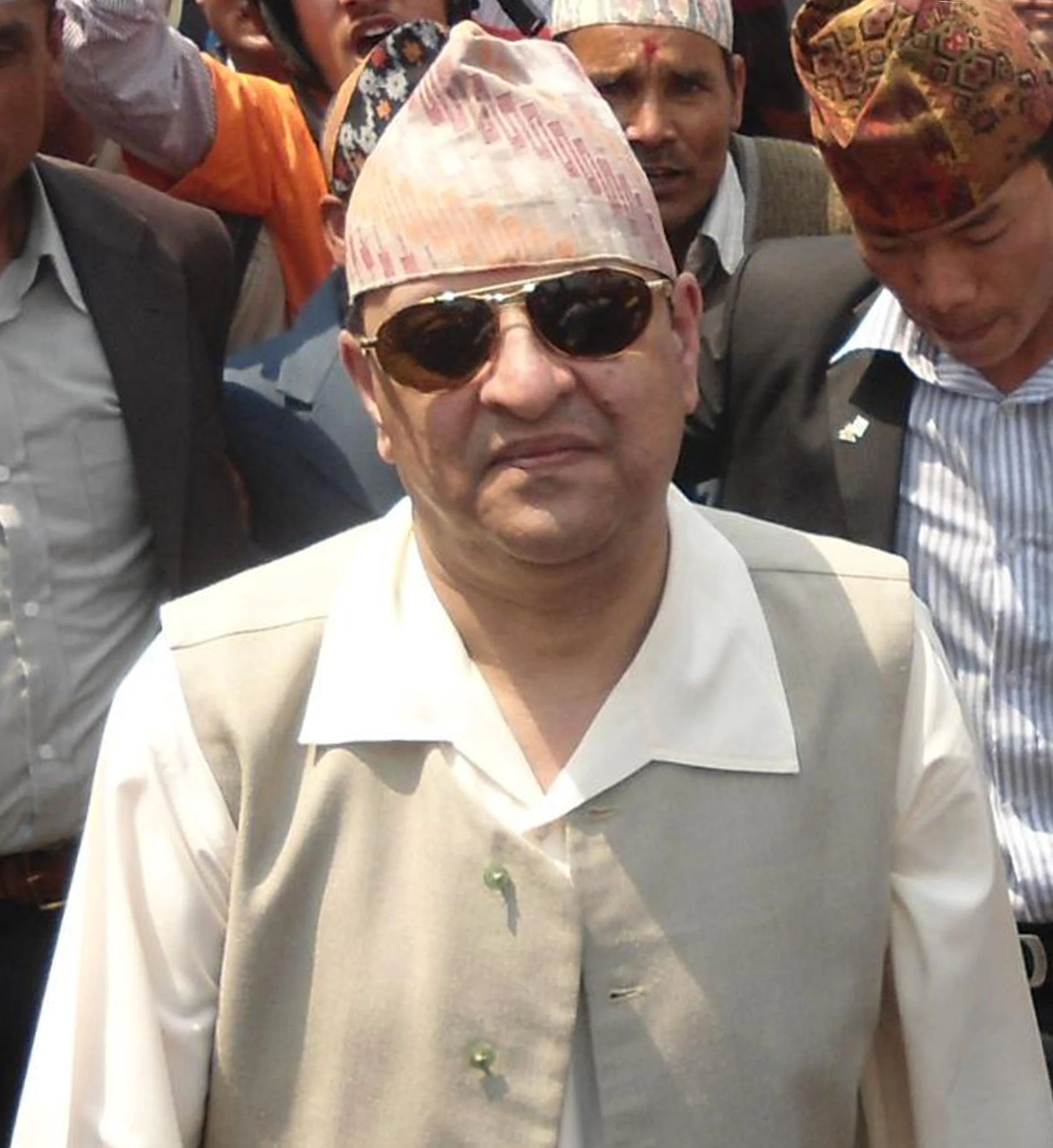
Gyanendra of Nepal
 Nepal
Also known as: Gyanendra Shah, Gyanendra Bir Bikram Shah Dev
Birthday
July 7, 1947
Birth Sign
Cancer
Birthplace
Kathmandu, Nepal
Age
79 years old
About
Gyanendra Bir Bikram Shah Dev is a Nepalese former monarch who served as the last King of Nepal. He reigned twice: first as an infant from 1950 to 1951, and then from June 2001 until the monarchy's abolition in May 2008. His second reign unfolded during the Nepalese Civil War and ended with the country becoming a federal democratic republic.
As of 2026, Gyanendra lives as a private citizen in Kathmandu, though he remains a figure of political interest. He occasionally issues public statements and has drawn thousands of monarchist supporters at rallies. His life is defined by the dramatic events surrounding the royal massacre, his direct rule in 2005, and the eventual transition of Nepal to a republic.
Early Life & Background
Born into the Shah dynasty, Gyanendra spent his early years in Kathmandu's royal palace. His unexpected first reign came in November 1950 when, at age three, he was declared king after his grandfather King Tribhuvan sought exile in India. That brief period ended when Tribhuvan returned and resumed the throne.
As a young prince, Gyanendra attended school in Nepal and later took an interest in nature conservation. He became chairman of the King Mahendra Trust for Nature Conservation, a role he held for years. He also engaged in business, building a reputation as a businessman before his second ascension.
Career Growth
Gyanendra's second reign began on June 4, 2001, days after the royal massacre that killed his brother King Birendra. He immediately faced the escalating Maoist insurgency. In February 2005, he dismissed the government and assumed absolute power, citing the failure of civilian leaders to restore order.
The move triggered massive protests. In April 2006, he reinstated parliament, and the subsequent peace accord with the Maoists led to the monarchy's abolition. On May 28, 2008, Nepal declared itself a republic. Since then, Gyanendra has lived quietly, though he has remained politically vocal, especially in 2026, calling for a new political system.
Career Timeline
Public Image & Style
Gyanendra's public image is deeply tied to the turbulent end of Nepal's monarchy. Many view him as a controversial figure who overstepped democratic boundaries, while monarchists see him as a rightful king. He is often portrayed in the media as a symbol of a bygone era. In recent years, he has attempted to rebrand himself as a stabilizing force, drawing support from those disillusioned with the republic. His style is traditional, often seen in formal attire or traditional Nepalese dress.
Fame & Fandom (iFAMOUS Rankings)
Gyanendra of Nepal currently holds no placement in the iFANN Global Top 1,000 rankings. The iFANN Global Fame Engine has evaluated his standing and determined that he does not occupy a position within the published scope lists for global or category-specific fame as of August 2026. While he remains a figure of significant historical weight and political relevance in South Asia, his influence does not translate into the broad-based celebrity metrics required for a numerical rank on the global stage. His support base is distinct from traditional pop culture fandoms; there is no formal name for his following, nor are there organized fan clubs with specific rituals or nicknames. Instead, his supporters are identified strictly as pro-monarchist activists who advocate for the restoration of the Nepalese monarchy. These individuals engage in political rallies and public demonstrations rather than fan-driven campaigns like streaming pushes or birthday tribute projects. Their gatherings often feature chants demanding the return of the king, reflecting a movement focused on national identity and governance rather than personal adoration. Gyanendra interacts with this group through political statements and public appearances, addressing issues of state stability and youth leadership rather than engaging in typical celebrity-fan interactions. The absence of a documented fandom name underscores the nature of his public presence: a deposed head of state navigating a complex political landscape rather than an entertainer cultivating a devoted audience.
Interesting Facts and Legends
Gyanendra Bir Bikram Shah Dev stands as the only monarch in Nepalese history to reign twice, first as an infant between 1950 and 1951 before returning to the throne decades later. An avid wildlife enthusiast, he formerly chaired the King Mahendra Trust for Nature Conservation and maintains a keen interest in photography alongside extensive travel. In 2026, he publicly welcomed young tech-savvy politicians, suggesting their potential to reshape the nation's future. Historical lore surrounding him is anchored by the coronation following the 2001 royal massacre, where he ascended to the throne amidst tragedy. His legacy is further defined by the seizure of absolute power in February 2005, when he dissolved parliament and assumed direct control, a move widely cited as a catalyst for the subsequent civil war and the monarchy's eventual abolition in 2008. More recently, his return to Kathmandu in March 2025 revitalized political debates, drawing crowds of pro-monarchist activists who greeted him with calls for restoration. A notable soundbite from April 2026 saw him describe Nepal as a laboratory of political experiments, a phrase that has since circulated widely in media coverage of the country's ongoing instability.
Notable Quotes
“Nepal has become a 'laboratory' of political experiments.”
“The country needs a new system that aligns with the current context.”
“I have always wished for peace and prosperity for all Nepalis.”
Family & Personal Life
Gyanendra's father was King Mahendra, and his mother was Queen Ratna. He had one brother, King Birendra, who was killed in the 2001 royal massacre. He married Komal Rajya Lakshmi Devi Shah in 1970, who became Queen Komal. They have two children: son Paras Shah and daughter Prerana Shah. Paras has been involved in controversies, and the family now lives at Nirmal Niwas in Kathmandu.
Notable Connections
Gyanendra's life is intertwined with key figures in Nepal's royal and political history. His grandfather King Tribhuvan was instrumental in ending the Rana regime. His father King Mahendra introduced the panchayat system. His brother King Birendra's death led to his own ascension. His wife Queen Komal has remained a steadfast partner, and his son Paras has often been in the spotlight. He also interacted with Maoist leader Prachanda during peace negotiations.
Relationships & Dating History
Gyanendra married Komal Rajya Lakshmi Devi Shah in 1970. Komal was a member of the Rana family and became queen consort upon his second accession. Their marriage has endured through the turbulent years of his reign and abdication. They have two children, Paras and Prerana. As of 2026, they remain married and live together in Kathmandu.
- MarriedQueen Komal1970 - presentCurrentMarried since 1970, they have two children together.
Salary, Net Worth In 2026
$2 Million
iFANN Editorial Team estimate
As a former sovereign, Gyanendra's financial standing derives primarily from retained personal assets and strategic business ventures. Although the government seized most royal properties following the abolition of the monarchy in 2008, he maintained ownership of the private residence Nirmal Niwas. His portfolio includes investments in various commercial enterprises, notably a tea estate and a hotel. Per iFANN's editorial analysis, his net worth is estimated at $2 Million as of 2026, a figure attributed to his remaining property holdings and investment returns.
Awards & Accolades
Known For
King of Nepal
2001-2008 · Last monarch
Keywords
Sources
Quick Facts
- Profession
- Former King
- Born
- July 7, 1947
- Birthplace
- Kathmandu, Nepal
- Gender
- Male
- Spouse
- Queen Komal of Nepal
- Children
- Paras Shah, Prerana Shah
- Reign
- 2001–2008
Personal Details
- Full Name
- Gyanendra Bir Bikram Shah Dev
- Spouse
- Queen Komal of Nepal
- Children
- Paras Shah, Prerana Shah
Frequently Asked Questions
When was Gyanendra of Nepal born?
What is Gyanendra of Nepal's net worth in 2026?
Is Gyanendra of Nepal still alive in 2026?
Why was the monarchy abolished in Nepal?
Who is Queen Komal of Nepal?
Similar People
Join the community
fans discussing